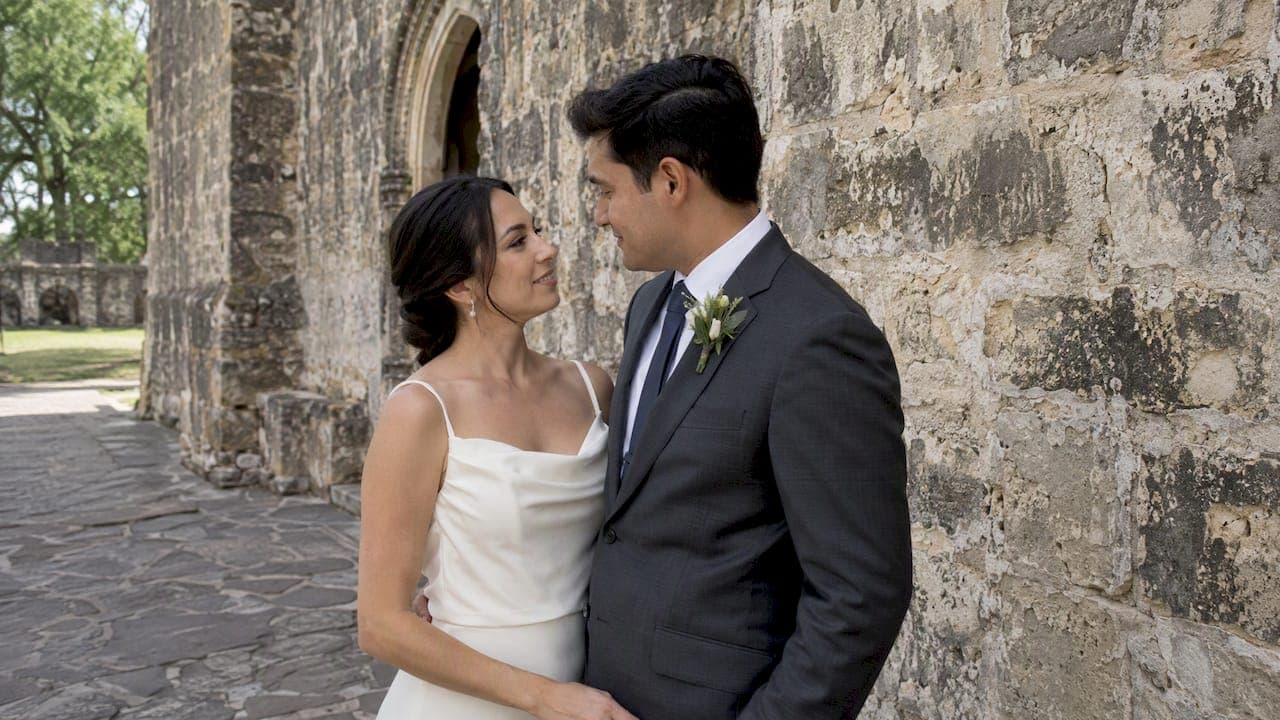
You can have wedding-day portraits and engagement photos at the San Antonio missions, but you cannot hold the wedding itself on the grounds of the national park. Portrait photography there needs a Special Use Permit, and your photographer usually has to apply for it weeks ahead. Downtown, San Fernando Cathedral is a separate case with its own church rules. This guide covers both, plus timing, light, a shot list and a few planning habits that keep the day calm.
TL;DR
- The National Park Service does not permit weddings at San Antonio Missions National Historical Park. Portraits are allowed with the right permit.
- Permit applications are due at least 30 days ahead with a $50 non-refundable fee. Larger events can need 90 days.
- San Fernando Cathedral is a working church. Ask the cathedral office what it allows for photographers and timing before you build a timeline around it.
- Hire a photographer who has worked these specific places. Venue knowledge matters more than aesthetic trends.
- Build a buffer into the schedule. Old stone, tight interiors and Texas sun reward a plan.
Table of Contents
- What "mission wedding photos" really means in San Antonio
- The permit rules at the San Antonio missions
- Engagement photos at the missions: the easiest way in
- San Fernando Cathedral wedding photos
- Light, time of day and the Texas factor
- A mission portrait shot list that earns its time
- How many photos you will actually get
- What mission photos cost
- Our perspective: plan the place before the poses
- A timeline that works for a mission portrait session
- Choosing a photographer for historic locations
- Work with us
- FAQ
- Sources
What "mission wedding photos" really means in San Antonio
The phrase covers two different plans, and the rules differ.
The four missions of the national park. San Antonio Missions National Historical Park includes Mission Concepción, Mission San José, Mission San Juan Capistrano and Mission Espada. Couples love them for the limestone arches, the stone walls, the open grounds and the golden light late in the day. These are active parish churches as well as park sites, which is part of the reason the rules exist.

San Fernando Cathedral. This is downtown, it hosts weddings, and it is run by the church, not the park service. Photographers who shoot there work within the cathedral's own guidelines for where they can stand and how long they can stay.
Many couples mix the two. They marry at a church or venue of their choice, then take portraits at a mission, or they do an engagement session at a mission months before the wedding. That second option is a smart one, and we come back to it below.
The permit rules at the San Antonio missions
This is the part couples most often get wrong, so read it closely.
According to the National Park Service, the park does not permit weddings on its grounds. Photography is allowed, but a Special Use Permit is required for portrait and commercial photography that uses models, uses props, requires exclusive use of a site, or happens outside 9:00 a.m. to 5:00 p.m. The park's own visitor page states that a Special Use Permit is required for all portrait photography and for commercial photography and videography.
The practical details from the park's permit page:
- Applications go in at least 30 days before the shoot.
- There is a non-refundable $50 application fee.
- Larger events can require 90 days of lead time.
There is one nuance. The park says that in most cases permits are not required for filming or still photography involving eight or fewer people, provided the activity stays within the conditions it lists. A wedding party plus a paid photographer and a videographer can cross those lines quickly, and the commercial and portrait language above still applies. We would not gamble on it. Ask your photographer which category your shoot falls into, and read the Superintendent's Compendium, which governs closed areas, exclusive use and ceremonies.
Rules change. Before you commit to a date, check the park's permit page or call the park. Treat anything you read in a blog, including this one, as a starting point.
Who files the permit
In practice, the photographer files it, because the permit is tied to the commercial activity. Ask any photographer you interview three things:
- Have you pulled a mission permit before, and for which sites?
- How far ahead do you submit, and what do you need from us?
- What happens to our schedule if the permit window is tight?
A photographer who has done it will answer without hesitation. One who hasn't will say "it should be fine."
Engagement photos at the missions: the easiest way in
If your heart is set on the missions, an engagement session is often the cleaner route. There is no ceremony timeline pressing on you, no guests waiting at a reception and no hair-and-makeup clock. You get unhurried time with the architecture, and you learn how you feel in front of a camera before the wedding.
We have written a separate piece on taking engagement photos at Mission San José, which is a good place to start if you want a feel for the setting. Our engagement photography page explains how we approach these sessions.
A second advantage: a session at a mission becomes the source of your save-the-date, your welcome sign and your wedding website photos, all from a location that says San Antonio without a word of text.
San Fernando Cathedral wedding photos
San Fernando Cathedral draws a steady stream of searches for good reason. The interior is ornate, the plaza outside is photogenic and the building sits in the middle of downtown San Antonio.
What to know before you plan:
- It is a church first. Photographers work around the liturgy, not the other way round. Expect limits on movement, flash and positions during the ceremony.
- Rules can differ by priest and by season. Time limits for photos after the ceremony, how many photographers or videographers may work inside and where family portraits can happen are questions for the cathedral office, not for a blog. Get the answers in writing if you can.
- Interiors are dim and contrasty. A photographer comfortable in low light is not a luxury here. Ask to see full church ceremonies in the portfolio, not only outdoor portraits.
- Plan the portraits outside the sanctuary. The plaza, nearby streets and downtown buildings give you variety once the church portion is done, and they do not depend on the church's timing.
We do not publish the cathedral's rules because they are the cathedral's to state. Call them, then hand the answers to your photographer so the timeline matches.
Light, time of day and the Texas factor
San Antonio light is strong. On a summer afternoon, limestone reflects it hard, shadows under arches go black and faces squint. A few principles help:
- Golden hour is your friend. The hour before sunset turns the stone warm and softens skin tones. Check sunset time for your date and work backward.
- Mind the permit hours. The park's standard window is 9:00 a.m. to 5:00 p.m., and activity outside it requires a permit. In summer, golden hour falls well after 5:00 p.m., so sunset sessions at the missions need explicit permission. Ask early.
- Use open shade at midday. Deep arches and tree cover give soft light when the sun is high. A photographer who knows the grounds will walk you to the right spot.
- Plan for heat. Water, a shaded waiting spot and a touch-up kit matter more than another outfit. Rushed, overheated couples photograph worse than rested ones.
- Spring and fall are kinder. Mild weather means longer sessions and fewer sweaty faces, though bluebonnet season and festival weekends bring crowds.
Zola's planning advice makes the same point in general terms: look for a photographer who understands your venue's light, rules and logistics, such as historic cathedrals or outdoor mission grounds, instead of picking only on trendy style.
A mission portrait shot list that earns its time
Don't hand your photographer a 60-item Pinterest board. Hand them a short list and the story behind it.
- Wide establishing frame. The two of you small against the arch or facade, so the place reads clearly.
- Walking portrait. Moving together along a stone wall or courtyard path. Movement relaxes people.
- Close and quiet. Foreheads together, hands, the detail of rings against rough limestone.
- Family and wedding party. Short and organized. Name the groupings in advance.
- Detail frames. Invitations, shoes, bouquet on a textured surface.
- One bold, editorial frame. Dramatic light or composition that you would put on the wall.
The point is a mix of wide, medium and tight images, with a few that feel like documentary moments and not posed ones. Our own style blends both, and you can read how we describe it in our guides to editorial wedding photography and fine art wedding photography.
How many photos you will actually get
Couples often ask whether a mission portrait session eats into the gallery. It does not need to, if you plan the hours.
Professional photographers commonly shoot 2,000 to 4,000 frames at a full-day wedding and deliver roughly 400 to 800 edited images for solo coverage, or 700 to 1,200 with a second shooter. A common yardstick is 50 to 100 finished images per hour of coverage. Those are industry ranges, not a promise from any one studio, so ask for your photographer's number in writing.

The lesson for mission portraits: an extra 45 minutes at the site is a small share of the day and often yields the images you frame. Put it in the timeline deliberately, with travel time, instead of squeezing it between the ceremony and the reception entrance.
What mission photos cost
We do not publish prices on our site, so we will not quote any here. For context, 2026 industry data puts the national average for a full-day wedding photography package at $3,000 to $4,400, with the middle half of couples spending between $1,500 and $5,300. Photography typically takes about 9% of the total wedding budget.
What moves the number most is hours of coverage, the number of shooters and add-ons like albums or an engagement session. Location and permits for places like the missions add planning time, which is another reason to ask about them up front. Request a written quote that lists hours, shooters, delivery timing and permit handling.
Our perspective: plan the place before the poses
We photograph weddings and engagements in San Antonio, and the places you are drawn to here, the missions, the cathedral, the old stone, are beautiful for a reason. They are also places with rules and with light that does not forgive a rushed schedule.
Here is how we think about it. Great mission photos come from three decisions made weeks before the day: the date and time of light, the permit and venue paperwork, and a timeline that gives you room to breathe. Poses are the easy part. Our approach blends editorial and documentary styles, so we want a few composed frames and a lot of real moments, and both need time and calm.
We also push couples toward an engagement session first. It lets us see how you move, you see how we work and a mission becomes familiar ground before the wedding day. If you are choosing between spending an extra hour on the wedding day or doing a session earlier, we usually favor the session.
Finally, protect the pictures. A wedding day cannot be redone. We explain our backup routine in our wedding day photo backup guide. The widely used 3-2-1 rule means 3 copies of every file, on 2 types of media, with 1 off-site. Ask every photographer you interview how they handle it.
— Todd
A timeline that works for a mission portrait session
Here is a sample frame for a fall wedding with a late-afternoon ceremony, built around the park's standard 9:00 a.m. to 5:00 p.m. window. Adjust for your date and your permit.
| Time | What happens |
|---|---|
| 10:00 a.m. | Getting ready, detail photos |
| 12:30 p.m. | First look at a venue or a park of your choice |
| 2:00 p.m. | Travel to the mission, arrive with a 20-minute buffer |
| 2:30 p.m. | Couple portraits in open shade, then family and wedding party |
| 4:15 p.m. | Wrap before the park window closes, travel to ceremony |
| 5:30 p.m. | Ceremony |
| Sunset | A few quick portraits outdoors at the reception venue |
The exact times will shift. What matters is the buffer, the order (couple first while you are fresh) and a plan that does not rely on the mission being the only place you can take pictures. If you want video too, our guide to hour by hour wedding videography timelines shows how photo and video schedules can share the same day without fighting each other.
Choosing a photographer for historic locations
Before you sign, check these things:
- Portfolio at the actual place. Ask for full galleries from the missions or the cathedral, not a highlight reel.
- Permit experience. They should know the application steps and lead times.
- Low-light skill. Churches are dark. Ask to see ceremony images from one.
- Backup equipment. Experts warn that a single equipment failure without an equivalent backup can wreck a photographer's reputation. A pro carries a second body, spare lenses and extra cards.
- Communication. Fast replies before the wedding predict calm on the day.
- A clear delivery timeline. Ask when you will see previews and the full gallery.
If you are also comparing editing styles, our explainers on fine art photo editing and the role of style in wedding imagery can help you decide what you want your gallery to look like. Fine art and editorial styles can cost more because of the time involved in stylized retouching, though experience, hours and second shooters remain the main cost drivers.
Work with us
We are a San Antonio wedding and engagement photography and videography studio. If you want portraits that feel like this city, start with our San Antonio wedding photographer page, see our engagement sessions, or look at wedding videography. Tell us your date, your venue and the places you love, and we will help you map out the photo plan, including what to check on permits. You can also reach us through the Larson Pro Photography site.
FAQ
Can we get married at the San Antonio missions?
Not on the national park grounds. The National Park Service says it does not permit weddings at San Antonio Missions National Historical Park. Photographs are possible with the right permit, and some missions function as parish churches with their own rules, so ask the specific parish about ceremonies.
Do we need a permit for wedding or engagement photos at the missions?
Usually yes. The park requires a Special Use Permit for portrait and commercial photography, applied for at least 30 days ahead with a $50 non-refundable fee. Very small, casual groups can fall under a different rule, so confirm with the park, and ask your photographer to handle the application.
What time of day is best for photos at a mission?
Late afternoon gives the warmest light, but the park's standard permit-free window ends at 5:00 p.m., so sunset sessions need permission. Midday works in open shade, and spring and fall are more comfortable than summer.
Can we take photos at San Fernando Cathedral after the ceremony?
Often yes, but the cathedral sets the limits on timing, locations inside and the number of photographers or videographers. Call the cathedral office, get the rules in writing and share them with your photographer before you finalize the timeline.
Sources
- Special Use Permits, San Antonio Missions National Historical Park (NPS)
- Things To Know Before You Come, San Antonio Missions (NPS)
- Special Use Permit Page, San Antonio Missions (NPS)
- Superintendent's Compendium, San Antonio Missions (NPS)
- Wedding Photography Statistics 2026, Pix
- Wedding Photographer Cost, Zola Expert Wedding Advice
- Becoming the Uber-Photographer, Eric Kim
- Wedding Photography startup costs, StartCosts