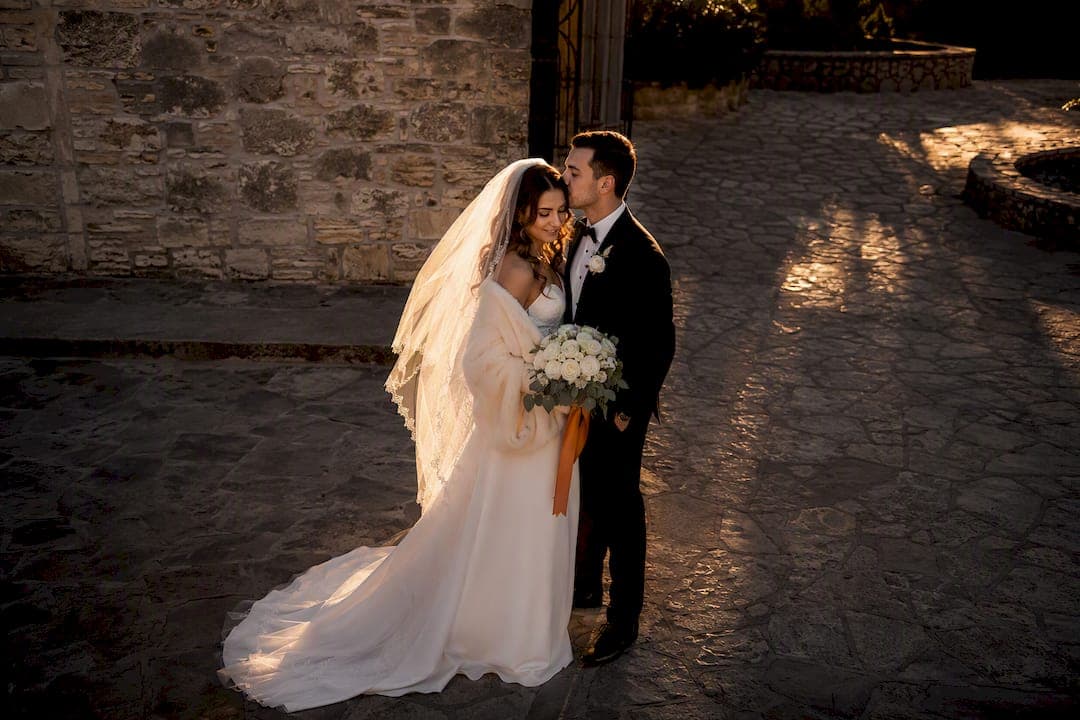
Prioritize a short, protected golden-hour portrait window over almost anything else on your timeline. If your venue is dark or you're marrying at midday, the fix is to hire a photographer with a real lighting plan, not luck. Your first move: block 10 to 20 minutes for portraits and schedule a scout, in person or by photo, with your photographer. Larson Pro Photography does this kind of pre-wedding venue walkthrough as standard practice, and it's the single biggest lever couples underuse.
TL;DR:
- Schedule a 10 to 20-minute portrait session during the golden hour, and conduct a venue walkthrough at the same time of day to anticipate lighting conditions.
- Confirm that the venue’s sunset direction and potential obstructions are understood, and request sample galleries shot in similar lighting environments.
- Use apps and maps to precisely match the sunset window to your wedding date, building in buffers for weather or delays, particularly in Texas where light shortens to as little as 20 minutes.
- Prepare for indoor reception lighting challenges by coordinating with your venue about dimmer controls, light fixtures, and acceptable use of flash or continuous lighting.
- Rent outdoor lighting with weatherproofing and backup power, and avoid outdoor setups during peak summer heat and humidity to prevent issues with wind, storms, or excessive shadowing.
Table of Contents
- What Should You Confirm With Your Photographer and Venue First?
- When Is Golden Hour in San Antonio, and How Do You Protect It?
- What Goes Wrong With Indoor Reception Lighting, and How Do Photographers Fix It?
- Which Lighting Technique Fits Your Moment?
- What Camera Settings Work for Common Wedding Moments?
- What Gear Should Your Photographer Bring?
- How Do You Scout a Venue and Build the Right Timeline?
- How Do You Plan Lighting That Matches Your Venue's Style?
- Where Do San Antonio Couples Rent or Source Wedding Lighting?
- Do You Need a Permit for Outdoor or Historic Venue Lighting?
- What Electrical Setup Does Wedding Lighting Actually Need?
- How Does San Antonio Weather Affect Outdoor Lighting Choices?
- San Antonio's Light Is Different. Plan Like It.
- How Larson Pro Photography Plans Your Lighting Before the Wedding
- Sources
What Should You Confirm With Your Photographer and Venue First?
Before you sign anything, run through a short list with your photographer and your venue coordinator. Small confirmations now save you from bad surprises on the day.
- Ask which direction the sun sets relative to your ceremony and portrait spots, and whether trees, buildings, or a parking garage will block it early.
- Confirm the venue's flash policy, who controls the house lights, and whether a quiet corner exists for portraits away from guests.
- Reserve 10 to 20 minutes during golden hour for portraits, or schedule a first look earlier in the day to protect that window for sunset instead.
- Request sample galleries from your shortlisted photographer shot in your venue, or one with similar light, so you're judging real conditions, not a portfolio's best day.
That last point matters more than couples realize. A photographer's portfolio shot at ten different venues on ten perfect afternoons tells you almost nothing about how they'll handle your specific ballroom or backyard.
When Is Golden Hour in San Antonio, and How Do You Protect It?
Golden hour runs roughly 30 to 60 minutes before sunset, but that's a national average, not a San Antonio number. In southern latitudes like Texas, the sun drops toward the horizon at a steeper angle, which shortens the truly flattering light to as little as 20 minutes on some evenings. Plan earlier than you think you need to, and build in a buffer, because that window closes faster here than it does in wedding blogs written for the Northeast.
Start portraits 20 to 45 minutes before sunset, and guard at least 10 to 20 minutes alone with your photographer inside that stretch. Apps like PhotoPills and The Photographer's Ephemeris map the sun's exact path over your venue, and a good scout matches that map to your actual wedding date and ceremony time, not a generic sunset chart.
Pro Tip: Do your walkthrough at the same time of day you'll actually be taking photos. A courtyard that looks gorgeous at 10 a.m. can turn into flat, shadowless mush by 7 p.m.
If the clock or the weather doesn't cooperate, open shade, window light, and deliberate backlight all give a photographer a fallback that still looks intentional rather than rescued.
What Goes Wrong With Indoor Reception Lighting, and How Do Photographers Fix It?
Most reception halls mix tungsten bulbs, LED uplighting, and fluorescent overheads in the same room, and each throws a different color temperature. Cameras register that mismatch far more harshly than your eyes do, which is why photos from a warm, cozy ballroom sometimes come back with orange faces next to greenish tablecloths.
Photographers choose between flash and continuous LED depending on the shot. Dragging the shutter, using a slower shutter speed paired with flash, keeps the ambient string lights and candlelight glowing in the background instead of going black, which matters most during first dances and toasts.
On-site fixes that make the difference:
- Off-camera flash with a softbox or shoot-through umbrella to soften harsh light on faces.
- Bounce flash off a ceiling or wall for a natural fill that doesn't scream "flash photo."
- Color-correction gels on flash heads to match the venue's tungsten or LED cast.
- A locked white-balance setting rather than auto, so skin tones stay consistent shot to shot.
Ask your venue ahead of time whether house lights dim, which fixtures can be switched off during portraits, and whether you're allowed to place light stands near the dance floor. Some historic halls in San Antonio restrict stands on hardwood or stone floors, so this is worth confirming during your walkthrough, not on wedding morning.
Which Lighting Technique Fits Your Moment?
Every wedding photographer works from the same core toolkit: backlight, sidelight, fill flash, and pocket light. The skill is knowing which one solves the problem in front of them.
Backlight puts the sun or a flash behind the subject, which reduces squinting and creates a rim glow around hair and veils. It's a favorite for golden-hour couple portraits, but it needs a touch of fill light on the faces or you end up with silhouettes instead of a bride.
Sidelight, coming from roughly a 45-degree angle, carves shape and dimension into a face. It's the classic look for portraits shot near a large window, since the light wraps one side and lets the other fall into soft shadow.
Fill flash and reflectors do quieter work. They lift shadows just enough to balance the ambient exposure without anyone noticing a flash went off, which keeps candid moments looking unstaged.
Pocket light, a small burst of controlled off-camera flash, rescues group shots where people are casting shadows on each other, a common problem with bridal parties standing close together in open sun.
| Technique | Best for | Light source |
|---|---|---|
| Backlight | Couple portraits, veil shots, rim glow | Sun or flash behind subject |
| Sidelight (45°) | Window portraits, dimensional faces | Window or angled flash |
| Fill flash / reflector | Balancing shadows invisibly | Reflector or low-power flash |
| Pocket light | Group shots, patchy shade | Controlled off-camera flash |
For couples and wedding parties with darker skin tones, contrast can be used deliberately rather than corrected away. Talk with your photographer about how they plan to shape light for your specific skin tone. It's a conversation worth having during the scout, not during the first look.
What Camera Settings Work for Common Wedding Moments?
Photographers often lean on a rough exposure rule: about 20% highlights, 60% midtones, and 20% shadows in a well-balanced frame. It's a simplification, but it keeps decisions fast when the timeline is tight.
These are starting points photographers adjust once they see the actual camera, lens, and room. Treat the table as a reference, not a formula to follow blindly.
What Gear Should Your Photographer Bring?
A predictable result comes from redundant, well-chosen equipment, not luck. Ask your photographer what they're bringing and what happens if a battery dies mid-reception.
- A 5-in-1 reflector for cheap, fast fill light during golden hour and open shade portraits.
- Speedlights with wireless triggers for off-camera flash flexibility.
- A large softbox or octabox for soft, flattering bridal portraits.
- One or two battery-powered monolights for reception coverage without hunting for outlets.
- LED panels and grids for continuous, adjustable accent light on the dance floor.
- Backup batteries and spare triggers, because gear fails at the worst possible moment.
Ask directly whether they carry backups for every core item. A photographer with one flash and no spare is one dead battery away from missing your first dance.
How Do You Scout a Venue and Build the Right Timeline?
Walk the venue at the same time of day your portraits will actually happen, not whenever your schedule allows. Photograph window directions, note open-shade corners, and check sunset sightlines from the spots you're most likely to use.
- Ask the venue about lighting control: dimmers, which fixtures switch off, and any no-flash zones.
- Confirm whether photographers get roof or rooftop access, or any elevated vantage point, for sunset shots.
- Build a simple timeline: ceremony ends, then a protected 10 to 20 minute golden-hour portrait block (or a first look earlier if sunset timing is tight), then cocktail hour begins.
- Bring specific questions to your scouting meeting: Where does the sun set relative to the altar? Is there a covered space for a rain backup? Can we access this hallway for photos during the reception?
Pro Tip: If your ceremony runs late, plan a first look before the ceremony instead of gambling on sunset timing. It's the single easiest way to guarantee your golden-hour window happens no matter what the day throws at you.
A planning guide from a working wedding photographer echoes the same core idea: the earlier you lock a realistic timeline, the less your photos suffer from rushed light later.
How Do You Plan Lighting That Matches Your Venue's Style?
Lighting isn't just a technical fix, it's part of how your wedding actually looks and feels in every photo you'll frame afterward. A rustic barn venue calling for string lights and lanterns reads completely differently in photos than a downtown hotel ballroom lit by crystal chandeliers, and your photographer's approach needs to match that aesthetic rather than fight it.
Start by naming the mood you want: warm and intimate, bright and airy, or dramatic and moody. String lights strung across a reception tent create a soft, dotted glow that photographs beautifully after dark, but they also drop the ambient light level, so your photographer needs to plan flash or LED support well before the cake cutting. Chandeliers and sconces in historic ballrooms often run warm and dim, gorgeous to the eye, tricky for a camera unless someone's already thought through white balance.
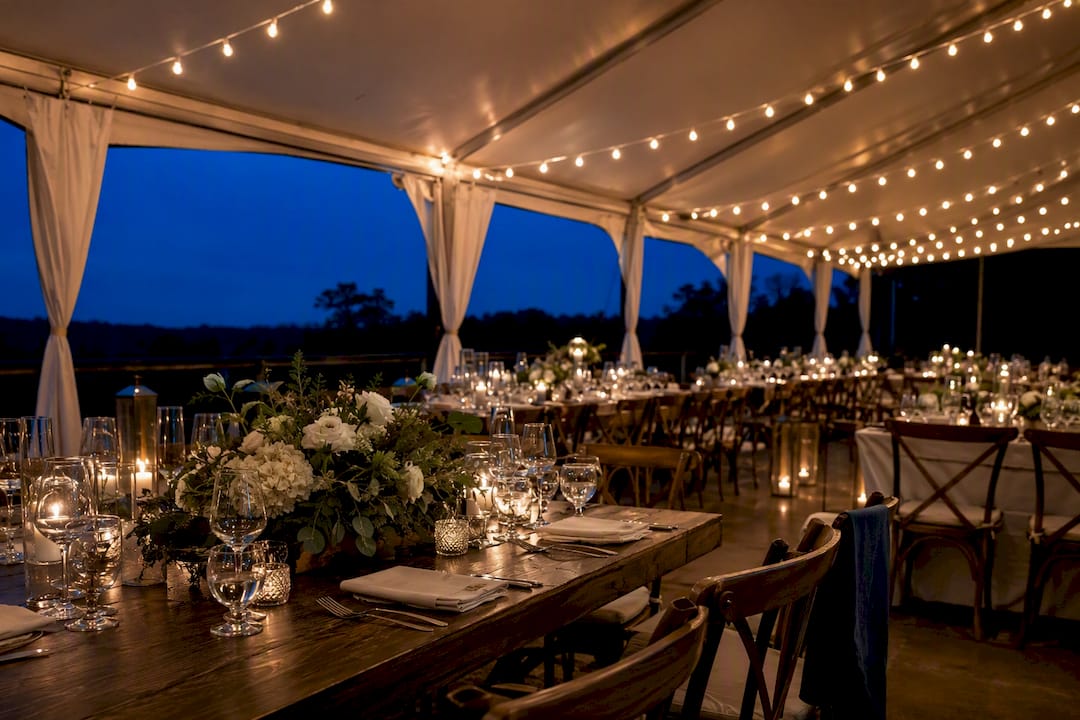
Candles deserve a special mention. They add romance in person and in photos, but open flame near florals or draping often triggers venue restrictions, so confirm candle rules alongside your lighting plan, not after the centerpieces arrive.
The goal is coordination, not decoration. Your florist, your day-of coordinator, and your photographer should all know what light sources will exist in the room at 8 p.m., because that's the information that determines whether your reception photos look intentional or accidental. A quick three-way conversation two months out solves more problems than any last-minute lighting rental ever will.
Where Do San Antonio Couples Rent or Source Wedding Lighting?
San Antonio has a healthy market of event rental companies that supply string lights, uplighting, chandeliers, and lanterns for weddings, and most venues can point you toward vendors they've worked with before. If your venue already has house lighting, chandeliers, sconces, or built-in string lights, you may need nothing extra beyond what your photographer brings for portraits.
For couples adding lighting elements like market lights over a reception tent or lanterns lining a garden aisle, timing the rental delivery and setup matters as much as the fixtures themselves. Most rental companies install the afternoon of the wedding and strike everything the following morning, so confirm that window doesn't conflict with your ceremony setup or vendor load-in.
Ask any rental company directly about backup power, weatherproofing for outdoor installations, and whether their crew coordinates setup timing with your other vendors. A lighting installer who shows up during your first-look photos isn't doing you any favors, no matter how good the fixtures look once they're plugged in.
Do You Need a Permit for Outdoor or Historic Venue Lighting?
Historic venues and public outdoor spaces in San Antonio often carry their own restrictions on lighting installations, separate from whatever your venue coordinator tells you about house rules. Structures on the National Register or in designated historic districts can limit where stands, cabling, or mounted fixtures attach to walls or facades, since drilling or clamping onto historic material is frequently prohibited outright.
Public parks and city-owned event spaces typically require a separate events permit if you're bringing in generators, extended string lighting, or anything beyond what the venue itself supplies. Rules vary by property and by department, so the only reliable path is asking your specific venue's events office directly, rather than assuming another San Antonio venue's rules apply to yours.
Private venues generally have more flexibility, but many still restrict open flame, adhesive mounting, or anything that could mark walls and floors. Build this question into your first venue tour: what lighting additions are allowed, what requires written approval, and what's off the table entirely. Getting that answer early avoids a stressful conversation with a venue manager the week of your wedding.
What Electrical Setup Does Wedding Lighting Actually Need?
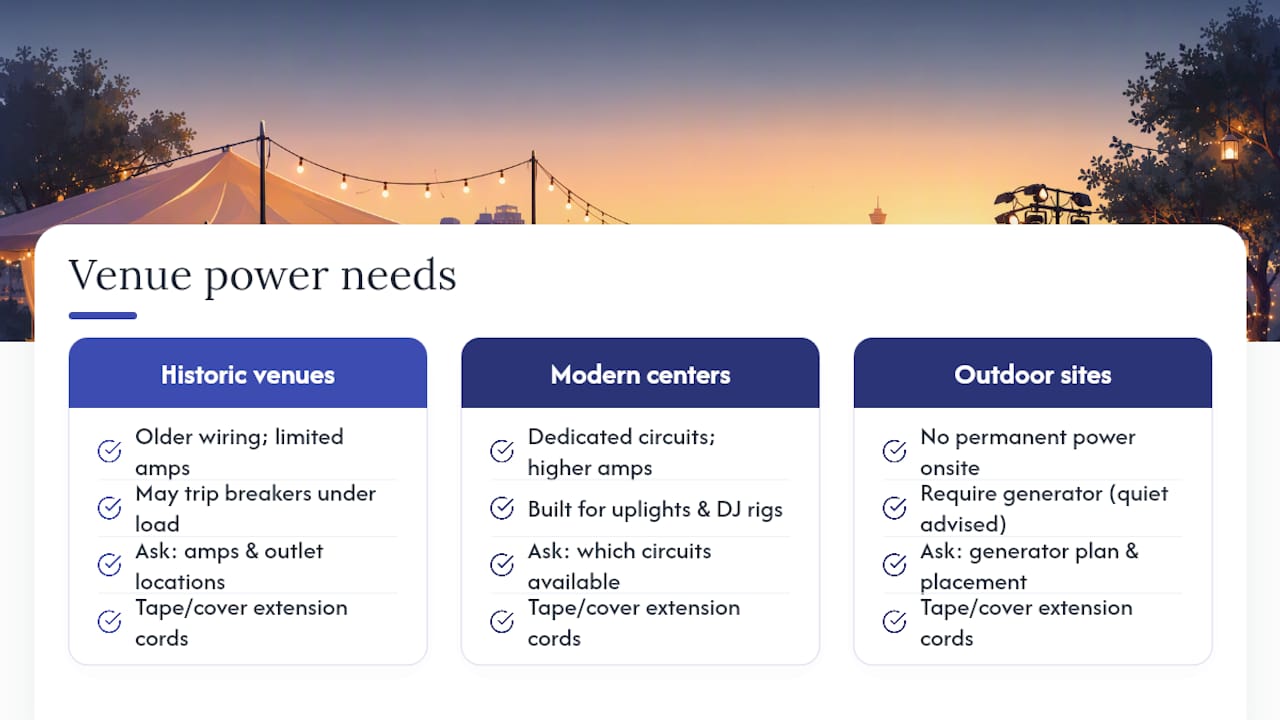
Every lighting fixture, from a photographer's flash to a rental company's string lights, needs power from somewhere, and venues vary wildly in what they can supply. Historic ballrooms sometimes run on older electrical systems that can't handle a dozen uplights and a DJ rig without tripping a breaker, while modern event centers usually have dedicated circuits built for exactly this load.
Outdoor venues, gardens, ranches, and backyard setups often have no permanent power source at all, which means generators become part of the plan. A quiet generator matters more than couples expect, since a loud one running during your ceremony vows is impossible to edit out of a wedding video.
Ask your venue coordinator directly how many amps are available near your reception space and where the nearest outlets sit relative to your dance floor and head table. Your photographer's gear, monolights, LED panels, chargers, draws relatively little power, but a rental company's full lighting package can pull considerably more, so that conversation belongs with your lighting vendor, not just your photographer.
Extension cords across walkways need to be taped down or covered, both for safety and because a bride tripping over a cable is not the photo anyone wants. This is a small detail that a good day-of coordinator usually catches, but it's worth confirming during setup regardless.
How Does San Antonio Weather Affect Outdoor Lighting Choices?
San Antonio's climate shapes outdoor lighting decisions more than most couples plan for. Summer weddings, roughly May through September, often bring intense afternoon heat and harsh overhead sun that makes midday portraits nearly unworkable without heavy shade or diffusion, pushing the golden-hour window into an even more critical piece of the timeline.
Humidity and sudden thunderstorms are common in late spring and early fall, which matters for any string lights, lanterns, or open-flame candles set up outdoors. Weatherproof-rated fixtures and a covered backup plan aren't optional extras here, they're standard practice for any outdoor San Antonio wedding between April and October.
Wind is the quieter risk. Hanging lanterns and draped string lights can sway or detach in gusts that regularly roll through in spring, so secure mounting matters as much as the fixtures themselves. Ask your rental company how their installations are anchored, and ask your venue whether they've had wind issues with similar setups in the past.
Winter weddings, while cooler and often more comfortable for guests, bring earlier sunsets, meaning your golden-hour portrait window shifts significantly earlier in the day. A 6 p.m. ceremony in December loses usable daylight fast, so your timeline needs to account for that shift months in advance, not the week of the wedding.
San Antonio's Light Is Different. Plan Like It.
San Antonio's sun drops at a steeper angle than a lot of national wedding advice accounts for, and that steeper drop is exactly why the golden-hour window here runs shorter and less forgiving than what you'll read on a generic wedding blog. Plan conservatively. Start portraits earlier than feels necessary, and build in a buffer for a ceremony running fifteen minutes long, because it will.
Local venues add their own wrinkle. Historic halls with low ceilings and warm uplighting look romantic to the eye and inconsistent to a camera, throwing color casts that only a photographer working with gels or off-camera flash can neutralize cleanly. A photographer who scouts your specific venue, rather than relying on general experience, catches these mismatches before they become a wedding-day surprise. Larson Pro Photography builds that walkthrough into the planning process precisely because a venue that photographed beautifully for someone else's noon wedding can behave completely differently at your 7 p.m. reception.
The couples who get the best light aren't the ones who spent the most on lighting equipment. They're the ones who protected ten minutes of golden hour on a timeline that had every incentive to eat into it.
— Todd
How Larson Pro Photography Plans Your Lighting Before the Wedding
Larson Pro Photography builds a lighting plan around your specific venue and timeline, not a generic checklist. That means a pre-wedding scout, a plan for backup lighting if your reception hall runs dark, and a portrait schedule that protects your golden-hour window instead of leaving it to chance.
You can see how that planning shows up in the actual results on the client gallery, where past weddings across San Antonio show the lighting choices in action, not just in theory. If you're still finalizing your venue, the engagement session page is also a low-pressure way to test how a photographer reads your specific light before your wedding day arrives. Bring venue photos, your ceremony start time, and your must-have shot list to your first planning conversation, and check the wedding services page to see current availability for your date.
Sources
- Golden hour photography (The Knot)
- Lighting techniques that separate consistently great wedding photos (Fstoppers)
- Wedding portrait lighting techniques: practical setups (JFPhotos)