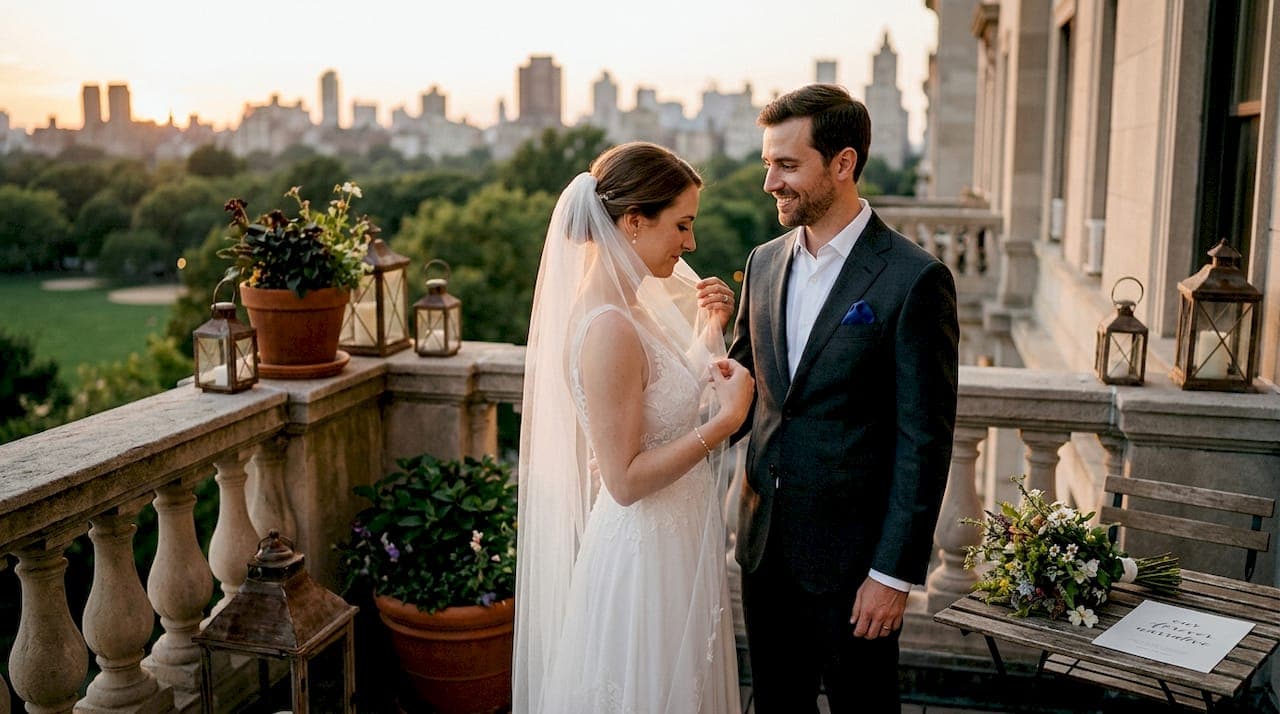
Editorial wedding photography is defined as a fashion-inspired, highly directed style that produces magazine-quality images through intentional composition, controlled lighting, and guided posing. Unlike candid or documentary coverage, it treats your wedding portraits like a high-end photo shoot for Vogue or Martha Stewart Weddings, where every frame is deliberately constructed. The industry often calls this "styled wedding photography" because the photographer actively shapes the visual story rather than simply observing it. If you have ever scrolled through a wedding gallery and thought the images looked almost too beautiful to be real, you were likely looking at editorial style wedding photos.
What is editorial wedding photography and how is it defined?
Editorial wedding photography borrows directly from fashion magazines, using dramatic angles, strong lighting, intentional styling, and highly directed poses to create visually striking images. The word "editorial" comes from the publishing world, where photos are crafted to tell a story within a specific visual language. Applied to weddings, it means your photographer is not waiting for moments to happen. They are constructing them.
The result is a gallery that looks polished, cinematic, and consistent in tone. Couples who choose this approach often want their wedding images to feel like art, not just documentation. Venues like the Hotel Emma in San Antonio or grand estates with architectural detail are natural fits because the environment itself becomes part of the composition.
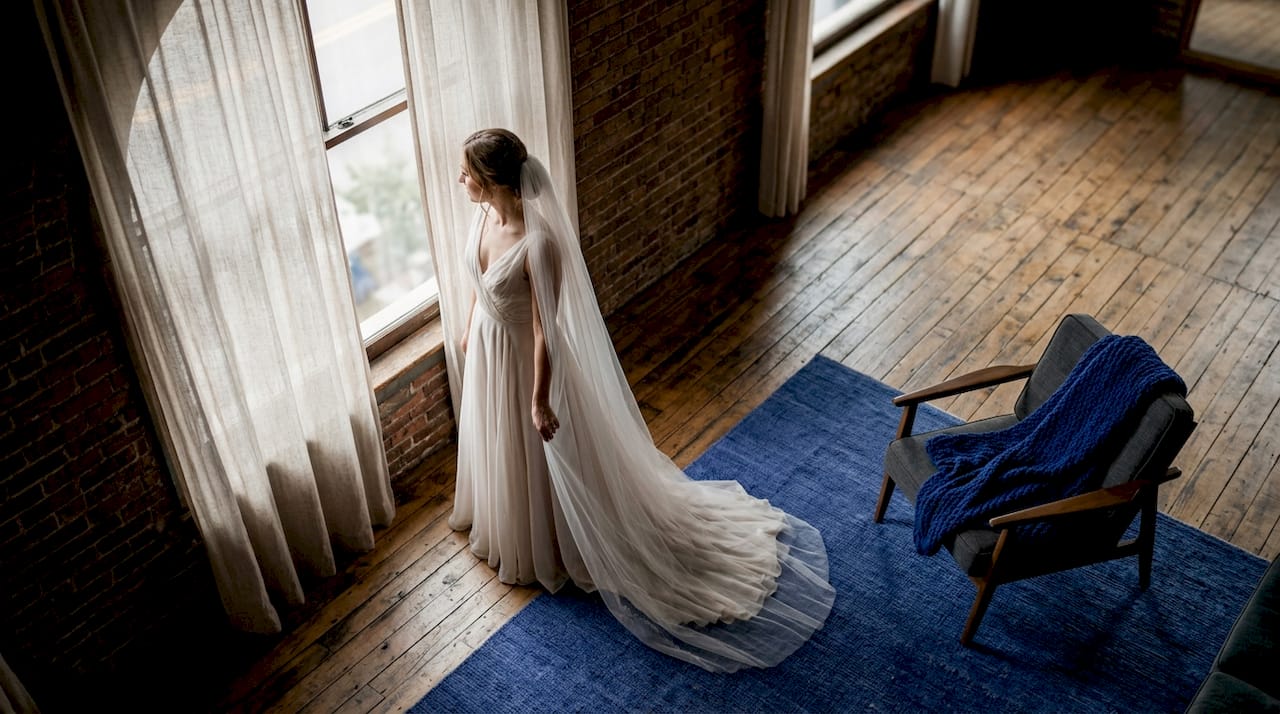
This style requires active collaboration between couple and photographer, which is what separates it from photojournalism. You are not a passive subject. You are a participant in a creative process, and the best results come when both sides communicate clearly about the desired aesthetic before the wedding day.
How editorial photography differs from documentary and other styles
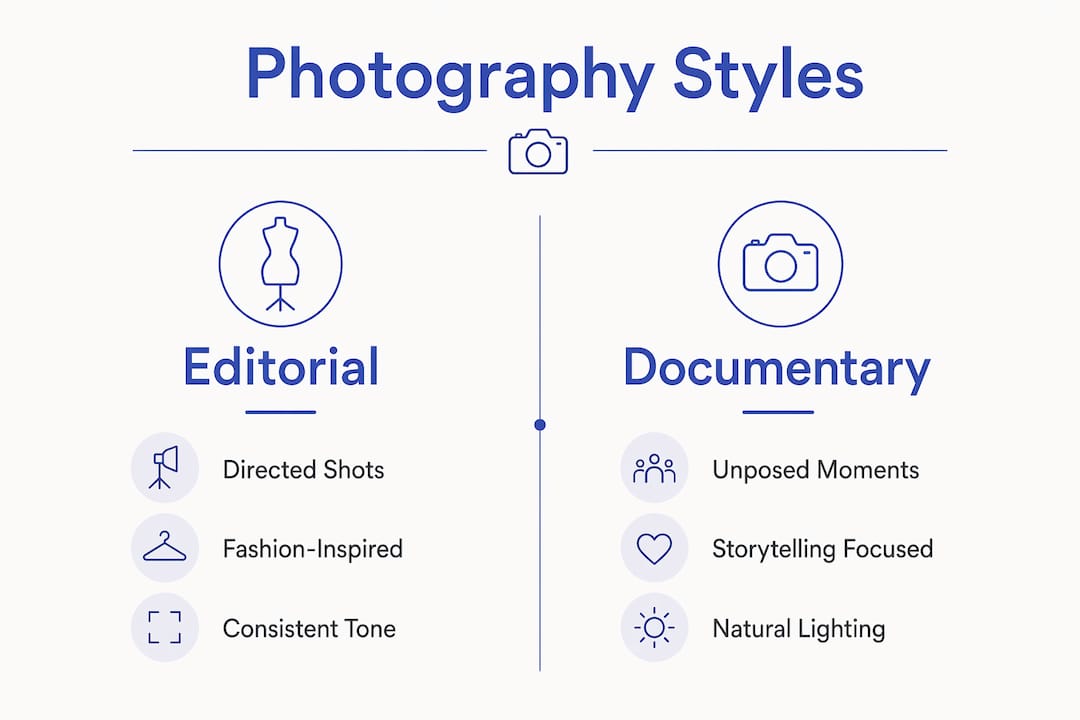
Understanding the differences in wedding photography styles comes down to one core distinction: direction versus observation. Editorial uses direction and curated composition, choosing angles, backgrounds, and guiding the couple through every frame. Documentary emphasizes observing moments with minimal interruption, letting emotion unfold naturally.
Here is how the major styles compare:
| Style | Approach | Best for | Typical coverage |
|---|---|---|---|
| Editorial | Directed, composed, fashion-inspired | Couples who want polished portraits | Portrait sessions, detail shots |
| Documentary | Observational, candid, unposed | Couples who want raw emotion | Ceremony, reception moments |
| Fine art | Painterly, light-driven, artistic | Couples wanting timeless imagery | Portraits and venue details |
| Hybrid | Blends direction with observation | Most couples | Full wedding day coverage |
Editorial portraits and details get more intentional composition and lighting guidance, while documentary coverage mainly captures ceremony and reception moments through observation. This is why most photographers apply different instincts to different parts of the day. The ceremony calls for documentary restraint. The portrait session calls for editorial construction.
The hybrid approach is worth understanding because it represents how most skilled photographers actually work. Rather than committing entirely to one philosophy, they read the room. They direct during portraits and step back during the first dance. This flexibility is what produces a gallery that feels both beautiful and emotionally true.
What to expect during an editorial wedding photography session
An editorial portrait session typically runs 45 to 90 minutes and involves the photographer guiding you through poses, location changes, and styling adjustments to achieve the desired dramatic effect. That is significantly longer than a standard portrait block, and the difference shows in the final images.
Here is what a typical editorial portrait workflow looks like:
- Location scouting and setup. Your photographer selects two or three distinct spots at your venue based on light quality, background texture, and visual contrast.
- Lighting configuration. Reflectors, off-camera flash, or natural window light are positioned to sculpt the scene before you step in front of the camera.
- Guided posing. The photographer directs your body position, eye line, and interaction with your partner, adjusting details like hand placement and fabric drape.
- Emotional prompts. Good editorial photographers layer in prompts that produce genuine reactions, like asking you to whisper something in your partner's ear, so the image feels directed but not stiff.
- Location transition. You move to the next spot, and the process repeats with a different visual mood.
The goal is not to make you look like a model. The goal is to make you look like the best version of yourselves in a setting that feels intentional. Couples who understand wedding photography terms before their shoot tend to feel more comfortable during direction because they know what to expect.
Pro Tip: Practice a few poses in front of a mirror before your wedding day. You do not need to memorize anything. You just need to feel less self-conscious when a photographer asks you to tilt your chin or shift your weight. That comfort translates directly into better images.
Benefits and potential challenges of editorial wedding photography
The clearest benefit of editorial style wedding photos is visual consistency. Because the photographer controls composition, light, and posing, the gallery has a unified aesthetic from the first frame to the last. That consistency is what makes editorial galleries feel like a magazine spread rather than a random collection of snapshots.
Couples who prefer being directed and want dramatic, fashion-inspired images gravitate toward editorial photography, while those wanting candidness lean toward documentary. This is not a judgment about which style is better. It is a recognition that the right choice depends entirely on your personality and vision.
The benefits are real and specific:
- Dramatic, polished portraits that work beautifully for large prints, albums, and wall art
- Consistent visual quality across the entire gallery, regardless of venue lighting conditions
- Intentional detail shots of rings, florals, and venue elements that look styled rather than grabbed
- Strong social media presence because editorial images perform well on platforms like Instagram and Pinterest
The challenges are equally real. More posing means more time away from your guests during portrait sessions. There is also a risk that images feel artificial if the photographer over-directs without reading your natural chemistry. A common pitfall is treating editorial as just pose-and-smile. Successful editorial mixes observation with targeted direction to maintain authenticity.
Pro Tip: Ask your photographer to show you two or three galleries from past weddings where they blended editorial portraits with candid reception coverage. If those galleries feel both polished and emotionally alive, that photographer has mastered the balance you want.
How to choose the right photographer for editorial wedding photography
Choosing a photographer for editorial coverage requires more scrutiny than reviewing a pretty portfolio. The images need to show consistent technical skill, not just one or two standout shots from ideal conditions.
Here is what to evaluate and ask:
- Portfolio review. Look specifically for fashion-inspired directed images across multiple weddings and venues. One stunning gallery could be luck. Five consistent galleries indicate skill.
- Style range. Ask whether the photographer also shoots documentary coverage. The most effective approach is hybrid fluency, where ceremony uses documentary instincts and portraits use editorial direction.
- Session length. Confirm how much time is allocated for portrait sessions. Anything under 30 minutes will not produce true editorial results.
- Direction style. Ask how they guide couples who feel awkward in front of a camera. The answer reveals whether they rely on mechanical posing or genuine emotional connection.
- Client testimonials. Look for reviews that specifically mention feeling comfortable during direction and loving the final images. Generic five-star reviews tell you nothing about the editorial experience.
You can also review recent wedding photography trends to understand how editorial techniques are evolving in 2026, particularly around cinematic color grading and location-driven composition. The photographers who stay current with these shifts produce galleries that feel fresh rather than dated.
Key takeaways
Editorial wedding photography produces the most visually striking results when a skilled photographer combines deliberate direction during portrait sessions with documentary observation during the ceremony and reception.
| Point | Details |
|---|---|
| Editorial is defined by direction | The photographer actively composes, lights, and guides every portrait rather than waiting for moments. |
| Hybrid fluency is the gold standard | The best photographers apply editorial techniques to portraits and documentary instincts to ceremony coverage. |
| Sessions run 45 to 90 minutes | Allocate enough time in your wedding schedule for a proper editorial portrait block. |
| Authenticity requires skill | Over-direction produces stiff images. The photographer must balance posing with genuine emotional prompts. |
| Style fit matters | Couples who enjoy being guided get the most from editorial photography. Candid-first couples may prefer documentary. |
Why I think most couples misunderstand editorial photography
Most couples come to me thinking editorial means stiff and posed. They have seen bad examples where the couple looks like they are auditioning for a catalog rather than celebrating their wedding. That is not editorial photography. That is poor direction.
True editorial work is about control in service of emotion. When I position a couple near a window at the St. Anthony Hotel in San Antonio and ask them to slow dance without music, I am directing the scene. But the laugh that follows, the way she leans into him, that is real. My job is to create the conditions for genuine moments, not manufacture fake ones.
The couples who get the most out of this style are the ones who trust the process and communicate openly before the wedding day. Tell your photographer what you love and what makes you uncomfortable. Share the images that inspired you. The more specific you are, the more the final gallery will feel like yours rather than a generic editorial template.
I also want to push back on the idea that documentary is always more authentic. A blurry, poorly lit candid is not more honest than a beautifully composed portrait. Both can be emotionally true. The difference is craft. Editorial photography simply applies more craft to the portrait segments of your day, and that investment shows in every image.
— Todd
See editorial wedding photography in action at Larsonprophotography
Larsonprophotography specializes in exactly the hybrid approach described throughout this article, combining editorial direction during portrait sessions with documentary coverage of your ceremony and reception. Based in San Antonio, the team has worked across venues ranging from intimate garden ceremonies to grand ballroom receptions, applying the same commitment to polished, emotionally rich imagery at every scale. Browse the wedding photography portfolio to see how editorial techniques translate across real weddings, or explore the client gallery for full wedding day coverage. Personalized consultations are available to match the visual style to your specific venue, aesthetic, and personality.
FAQ
What is the difference between editorial and documentary wedding photography?
Editorial uses direction and curated composition to produce styled, magazine-quality images, while documentary captures candid moments with minimal interference. Most photographers blend both approaches across different parts of the wedding day.
How long does an editorial wedding portrait session take?
Editorial portrait sessions typically run 45 to 90 minutes and involve guided poses, location changes, and lighting adjustments. Plan your wedding day timeline accordingly to allow enough time for this block.
Is editorial wedding photography right for every couple?
Couples who enjoy being directed and want dramatic, fashion-inspired images get the most from editorial photography. Couples who prefer a fully candid experience may find documentary or fine art styles a better fit.
What should I look for in an editorial wedding photographer's portfolio?
Look for consistent technical quality across multiple weddings, not just one standout gallery. Ask specifically about how the photographer balances posing with natural moments to confirm they can deliver both polished portraits and emotionally authentic coverage.
Can editorial and documentary styles be combined in one wedding?
The most effective approach is hybrid fluency, where the photographer applies editorial direction during portrait sessions and documentary observation during the ceremony and reception. This combination produces the most complete and visually satisfying wedding gallery.