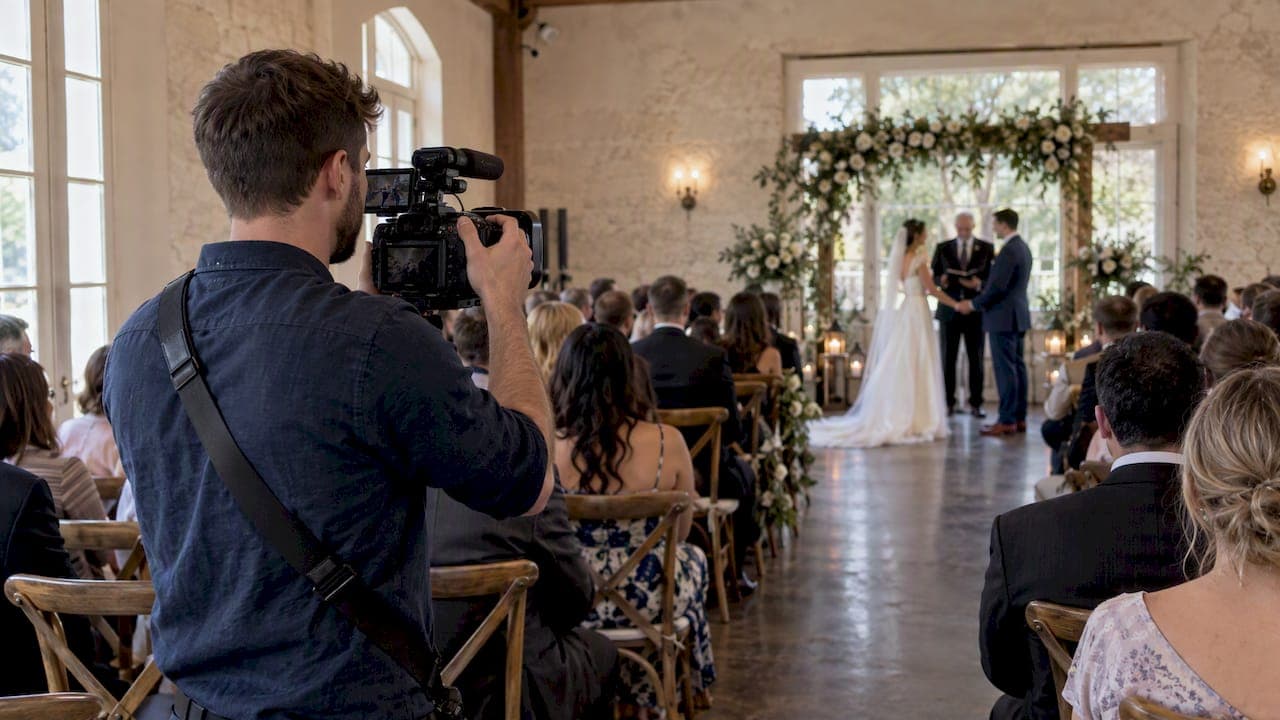
Most couples tend to book around 6 to 8 hours of wedding videography, with longer bookings of approximately 8 to 10 hours for a fuller day including speeches and additional reception footage. The real decision rule is simpler than any package chart: count from the first moment you truly want on film to the last one, then add buffer time. Hours below that range work for elopements and micro weddings, but skipping coverage of a priority moment to save money is the mistake couples regret most.
TL;DR:
- Booking at least 8 hours is recommended to capture key moments like speeches, send-offs, and multi-venue transitions, which shorter packages often miss.
- Travel time, buffer periods, and additional sessions at second locations should add approximately 30 to 45 minutes per segment, influencing the total hours needed.
- First look timing can reduce required hours by condensing portrait shots, but skipping it usually necessitates earlier arrival and more coverage hours.
- Overages cost between $200 and $400 per hour for late receptions, and vendors often exclude travel, setup, teardown, and editing from contracted hours.
- Couples should verify deliverable specifics, overtime policies, and insurance details in writing, not just rely on a fixed hour package or verbal quotes.
Table of Contents
- Coverage tiers: what each hour range actually captures
- Map hours to a sample timeline
- How first look timing changes your required hours
- What drives the price behind the hours
- Overtime, travel, and what happens after the cameras stop
- A checklist before you book your videographer
- How to think about booking hours for wedding videography
- How Larson Pro Photography packages your coverage
- Sources
- FAQ
Coverage tiers: what each hour range actually captures
Wedding videography packages tend to cluster around a handful of standard durations, and each one buys you a different slice of the day. Vendor listings commonly group dedicated videography coverage into blocks of 2 to 4, 4 to 6, 6, 8, and 10 hours, which makes comparing packages across vendors more straightforward than it first appears.
- 2 to 4 hours: fits elopements, courthouse ceremonies, or a ceremony-only booking, typically delivering a short highlight video and a handful of raw clips.
- 4 to 6 hours: suits micro weddings or a ceremony plus short portrait session, often adding a brief look at the start of the reception.
- 6 to 8 hours: the standard choice for most full-day weddings, covering getting-ready snippets, the ceremony, portraits, the reception entrance, and some dancing.
- 8 to 10 hours: stretches coverage to include the full speech lineup, more of the reception, and longer or multi-location portrait sessions.
- 10 or more hours: usually reserved for multi-venue days or couples who want a cinematic, full-length feature film rather than just a highlight reel.
Picking a tier starts with your guest list and venue logistics, not with a generic recommendation. A backyard wedding with one location needs far less travel time than a ceremony and reception split across two venues twenty minutes apart, even if both weddings last the same number of hours.
Map hours to a sample timeline
The clearest way to choose your hour count is to build a rough timeline first, then measure it. Start with the earliest moment you want filmed and the latest one, and the gap between them is your baseline hour count before buffers.
- 4 hour booking: videographer arrives for first look or early ceremony prep, films the ceremony, does a short portrait session, and wraps during the reception's first hour.
- 6 hour booking: arrival covers final getting-ready shots, then the ceremony, couple and family portraits, cocktail hour, and the reception entrance and first dance.
- 8 hour booking: adds coverage of both partners getting ready separately, a longer portrait session, speeches, and an hour or two of open dancing.
- 10 hour booking: extends into late reception moments like the bouquet toss, cake cutting, and a proper send-off, with room for a second outfit or venue change.
Build in 30 to 45 minutes of buffer for travel between locations, parking, and vendor handoffs, since timelines almost always drift later in the day rather than earlier. A practical approach is to draft the story arc you want captured first, then convert that arc into arrival and departure times, rather than picking a round number of hours and hoping it fits.
How first look timing changes your required hours
Whether you do a first look shifts your entire schedule, and with it, how many hours you need to book. A first look lets your videographer capture both partners' reactions in one condensed window, which often means portraits happen earlier and getting-ready coverage can be compressed into a shorter block before the ceremony.

Skipping the first look usually means your videographer needs to arrive earlier to film separate getting-ready scenes for each partner, since those moments can no longer be combined into one on-site visit. That earlier start adds hours even if the ceremony and reception stay the same length.
Multi-location portrait sessions add time on top of either approach. If you want shots at a second venue, a garden, or a downtown backdrop, factor in travel and outfit changes separately from the ceremony and reception blocks, since that drive time rarely shows up in a rough timeline until it is too late to adjust the booking.
What drives the price behind the hours
Package price tracks hours fairly closely, but it is not the whole story. Most couples pay between $1,500 and $5,000 for a wedding videographer, with budget packages running 3 to 5 hours, mid-tier packages around 6 to 8 hours, and premium packages reaching 8 to 12 or more hours.

The national average sits near $2,300, according to Paperlust's 2026 pricing guide, a figure shaped heavily by how much footage a package includes and what gets delivered from it.
Hours alone do not determine value. Two eight-hour packages can differ sharply depending on whether they include a full ceremony edit, a speeches reel, raw footage, or just a three-minute highlight. Editing and post-production are the real labor driver behind the price tag, since more recorded footage means more hours spent selecting clips, color grading, and mixing audio, and that work happens entirely outside your booked time. Common add-ons like a second shooter, drone footage, full raw files, or rush delivery each raise the price independent of how many hours you book, so it is worth pricing those separately from the base package when comparing vendors.
Overtime, travel, and what happens after the cameras stop
Booked hours usually cover only on-site filming, not the work before and after it. Travel to and from the venue, equipment setup, teardown, and every hour of editing typically fall outside the contracted window, even though they are part of what you are paying for.
- Overtime is commonly billed in the $200 to $400 per hour range once a reception runs past the contracted end time, so a schedule that drifts late can get expensive fast.
- Some vendors leave at the contracted end time regardless of what is happening at the reception, so confirming this point before the wedding avoids a bad surprise.
- Post-production turnaround for a highlight reel or full-length film commonly takes several weeks, depending on the vendor's workload and how much footage needs editing.
Pro Tip: Ask your videographer to put the overtime rate and billing increment (per 15 minutes or per full hour) directly in the contract, not just in a verbal quote.
Meal breaks, parking reimbursement, liability insurance, and backup equipment or backup shooters are worth confirming at booking rather than assuming they are included.
A checklist before you book your videographer
A short list of questions on your first call can prevent most of the surprises couples run into later.
- Ask for the exact start and finish time definitions, the overtime rate, and how travel outside the local area is billed.
- Confirm deliverables in writing: highlight reel length, full ceremony edit, speeches, raw footage access, and expected turnaround time.
- Verify whether one shooter or a second shooter will be filming, what insurance coverage they carry, and the cancellation or rescheduling terms.
These checkpoints matter more than the hour count on its own, since two vendors quoting the same eight hours can differ widely once you compare what actually gets filmed and delivered.
How to think about booking hours for wedding videography
Experience with weddings tends to confirm the same pattern: couples who book enough hours to cover first look through the first hour of dancing rarely regret it, while those who cut hours to save money almost always wish they had coverage of a speech or a send-off that got missed. A related case for booking 8 hours walks through why that range fits most full-day weddings, and a coordination guide covers how to keep a videographer's schedule aligned with the rest of your vendors.
— Todd
How Larson Pro Photography packages your coverage
Some videography services build coverage around the moments you actually want on film, not a fixed package chart, which means a consultation starts with your timeline rather than a price sheet. That conversation covers your ceremony structure (the order of a typical ceremony is worth reviewing beforehand), your must-have moments, and whether add-ons like a second shooter make sense for your venue.
If you are weighing hours against budget for a San Antonio or nearby wedding, visit the videography page to see package structures, or start with the wedding services page to request a consultation.
Sources
- How Much Does a Wedding Videographer Cost? (2026 Guide) - Paperlust
- How much do videographers charge? - Vidico
- Wedding videographer checklist - AWV Production
- Harmony Pictures + Updated Prices - The Knot
FAQ
What is the 30-5 rule for weddings?
This is not a standard, documented videography rule, and definitions of it vary widely depending on the source. Rather than relying on an informal rule, map your own must-have moments to a timeline and book hours based on that list.
How much for a videographer for 4 hours?
A 4 hour booking typically falls into the budget package tier, and most couples overall pay between $1,500 and $5,000 depending on deliverables and location. Shorter bookings usually include a brief highlight video rather than a full ceremony edit or speeches reel.
How long does it usually take to get a wedding video?
Turnaround depends on how much footage was recorded and the vendor's workload, but several weeks is a common range for a highlight reel. A full-length film with more editing typically takes longer than a short highlight.
Is 4 hours enough for a wedding photographer?
Four hours can work for a small or short ceremony-focused wedding, but it rarely covers getting ready, a full reception, and speeches in the same booking. Couples who want broader coverage typically choose 6 to 8 hours instead.