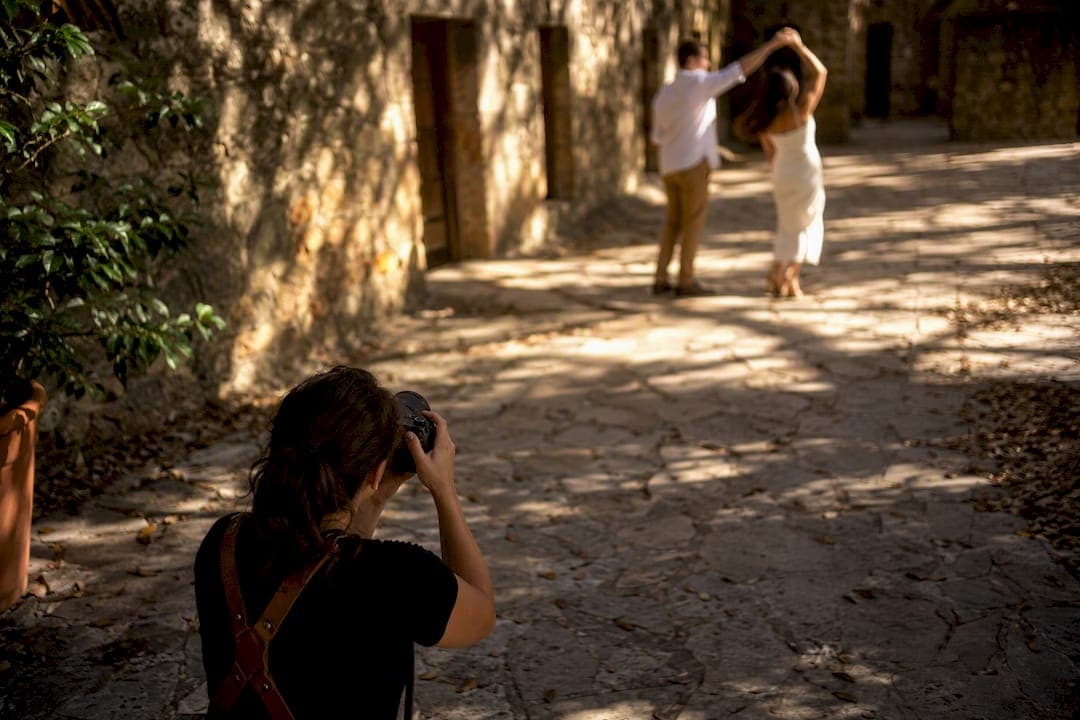
Small, low-impact engagement or wedding sessions at Mission San José are generally allowed without a permit, provided you keep the group size small, use only hand-carried gear, and shoot during the park’s public operating hours. Larger productions, exclusive site access, or anything involving props and stand-ins for photos need a Special Use Permit from San Antonio Missions National Historical Park. Before you book a date, confirm your plan clears park rules.
- Immediate next step: Email saan_permits@nps.gov or call Park Headquarters using the provided contact details to confirm your session type and start the paperwork if needed.
- One thing to remember: the compound closes its gates at 5:00 P.M. sharp, and the church interior is an active worship space, not a guaranteed photo backdrop.
Key Takeaways
Most Mission San José engagement sessions need no permit at all if the group stays small, the gear stays hand-carried, and the shoot happens during regular park hours.
| Point | Details |
|---|---|
| Check permit triggers first | Exclusive use, props, models, crews over eight, or off-hours shooting all require a Special Use Permit. |
| Apply early if needed | Submit at least 30 days ahead ($50 fee), or 90 days for events over 50 people. |
| Schedule around the light and the gate | Compound hours run 9:00 A.M. to 5:00 P.M.; mornings and late afternoons beat midday crowds and harsh sun. |
| Plan for weather and etiquette | Build a rain date into your booking and respect closures around the active church interior. |
| Hire local Mission San José experience | Larson Pro Photography coordinates permit logistics and plans sessions around the site's actual rules. |
Table of Contents
- What Triggers a Special Use Permit at Mission San José
- When Should You Schedule Mission San José Photos?
- What Happens During a Mission San José Session
- How to Choose the Right Photographer for This Site
- Why Local Experience at Mission San José Actually Matters
- Planning Around Texas Weather for an Outdoor Session
- How to Prepare for Your Mission San José Photo Session
- The Permit Process Is a Feature, Not a Hurdle
- Book Your Mission San José Session with Larson Pro Photography
- Sources
What Triggers a Special Use Permit at Mission San José
The park draws a clear line between a quiet couple's session and a full production. According to the National Park Service, permits aren't required for still photography involving eight or fewer people, shot with hand-carried equipment in public areas during regular hours, as long as it doesn't require exclusive use of a space or disrupt other visitors. Cross any of those lines and you need paperwork.
Here's what pushes a session into permit territory:
- Exclusive use of any part of the site, even briefly.
- Sets, props, or models used for anything beyond a couple and their photographer.
- Crews larger than eight people, including hair and makeup artists, assistants, and family members posing for group shots.
- Off-hours access, before 9:00 A.M. or after 5:00 P.M.
- Equipment beyond what one person can carry, such as lighting stands, reflectors mounted on stands, or drones.
If your session needs a Special Use Permit, plan for a $50 non-refundable application fee and a minimum 30-day lead time for standard requests, or 90 days for events with 50 or more people. Larger shoots may also carry cost-recovery charges tied to park staff time.
Pro Tip: Have your photographer submit the application. Most experienced Mission San José shooters keep a template ready with equipment lists, participant counts, and a rough site map, which speeds up NPS review considerably.
A responsible permit request typically includes proposed shoot times, an equipment inventory, headcount, and proof of insurance if the park asks for it. The Superintendent's Compendium spells out the compound's operating hours (9:00 A.M. to 5:00 P.M., gates locked after) and flags areas with extra restrictions, so read it before you lock in a time slot.
When Should You Schedule Mission San José Photos?
The best Mission San José landscape photos happen when the light is low and the crowds are thin, which usually means early morning or the last hour before closing. Midday sun bounces hard off the limestone facade and washes out the detail in the stonework that makes these photos memorable.
Since the park operates 9:00 A.M. to 5:00 P.M., your options are narrower than an open-air venue, but that constraint works in your favor. A 9:00 A.M. start beats the tour buses; a 4:00 P.M. session catches golden light raking across the mission's carved doorway.
- Shoot the famous rose window and front facade first thing, before foot traffic builds.
- Use shaded arcades and courtyard walkways for softer portrait light midday if you're stuck with a tighter window.
- Save the mission's east-facing walls for late afternoon glow.
Pro Tip: Ask your photographer to scout the compound at your exact booking time a week ahead. Shadows shift fast around the old stone walls, and what looks perfect at 10:00 A.M. can look flat by 11:00.
What Happens During a Mission San José Session
A typical engagement session at Mission San José runs 45 to 90 minutes, which is enough time for two to three locations around the compound and one or two outfit changes. Expect a gallery of 40 to 80 edited images delivered within one to two weeks, depending on your photographer's turnaround.
Gear stays simple by design. The hand-carried equipment rule means your photographer brings a camera, lenses, and maybe a small reflector, not lighting rigs or tripods set up in walkways. That's part of why closed-door interior shots of the church aren't something any photographer can promise. It's an active sacred space, and access depends entirely on whether services are underway.
On-site etiquette matters more here than at a rented venue:
- No climbing on walls, buttresses, or any historic structure, however photogenic the angle.
- No tying ribbons, signage, or decor to stonework or doors.
- Stay quiet and yield space if a service or blessing is happening nearby.
- Keep your group moving. Other visitors have the same right to enjoy the site.
Pro Tip: Good photographers time their shots between visitor waves rather than asking crowds to clear. It keeps the session polite and avoids ever needing a permit for exclusive use.
How to Choose the Right Photographer for This Site
Not every wedding photographer has actually worked inside a national historic site, and that gap shows up fast once you're standing at the gate wondering if your session needs paperwork. Look for someone who can show you real Mission San José images, not just generic San Antonio portraits, and who talks about the permit process like it's routine rather than an afterthought.
Ask direct questions before you book:
- Have you photographed at Mission San José before, and can I see that work?
- Do you handle the Special Use Permit application, or is that on me?
- What equipment will you actually bring on site?
- How do you handle tourist crowds during a session?
- What's your backup plan if weather or a scheduling conflict hits?
Watch for red flags, too. A photographer who shrugs off NPS rules, promises after-hours access without mentioning a permit, or gets vague about insurance and fees is a liability you don't want on your wedding day.
- Portfolio fit matters most. Mission San José has a distinct look, and someone who's shot it before knows where the light works.
- Permit coordination should be part of the service, not a surprise add-on.
- Clear deliverables (image count, gallery timing, print rights) should be spelled out before you pay a deposit.
Pro Tip: If a photographer can't answer a specific question about park hours or the eight-person rule, that's a sign they haven't actually worked the site before.
Why Local Experience at Mission San José Actually Matters
Larson Pro Photography has built its wedding and engagement work around San Antonio's historic backdrops, and Mission San José sessions are part of that regular rotation, not a one-off request. Todd, the studio's lead photographer, approaches each session the same way the park expects: low-impact, permit-aware, and planned around the compound's actual hours rather than guesswork.
That means:
- Coordinating permit paperwork directly with the park when a session calls for it.
- Scheduling around golden hour and the 9:00 A.M. to 5:00 P.M. window instead of hoping for the best.
- Knowing which corners of the mission photograph well at which time of day.
Treating a federally protected site with the same care as the couple standing in front of it, that's the difference between a session that runs smoothly and one that gets shut down mid-shoot.
Client galleries show the range of results this approach produces across San Antonio's historic venues.
Planning Around Texas Weather for an Outdoor Session
San Antonio weather doesn't always cooperate, and an outdoor session at a stone compound with no covered backup areas needs a real plan, not just hope for clear skies. Summer heat can hit triple digits by midday, which is one more reason morning or late-afternoon slots work better than a noon booking. Spring brings a real chance of sudden thunderstorms, and winter mornings can start with fog that actually photographs beautifully if your photographer knows how to use it.
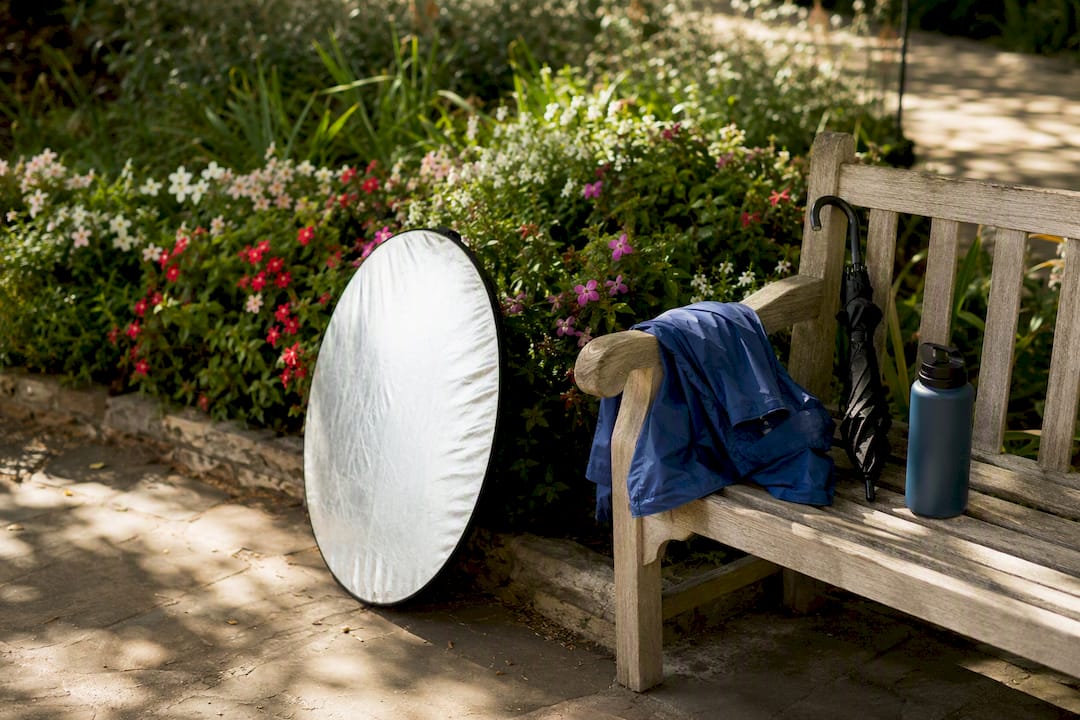
Build a rain date into your booking conversation from the start. Most experienced photographers hold a flexible date or a same-week alternative rather than locking you into one shot at good weather. If a storm rolls in mid-session, the mission's covered arcades and shaded walkways offer a workable fallback for a handful of portraits, though they won't replace your planned locations.
Check the forecast three days out, then again the morning of. Texas weather shifts fast enough that a clear forecast on Monday means little by Thursday. If your photographer suggests moving your call time by an hour to dodge a cloud bank or catch better light after a morning shower, take the advice. Some of the most striking Mission San José images come right after rain, when the stone darkens and the air clears out haze that would otherwise flatten your photos.
How to Prepare for Your Mission San José Photo Session
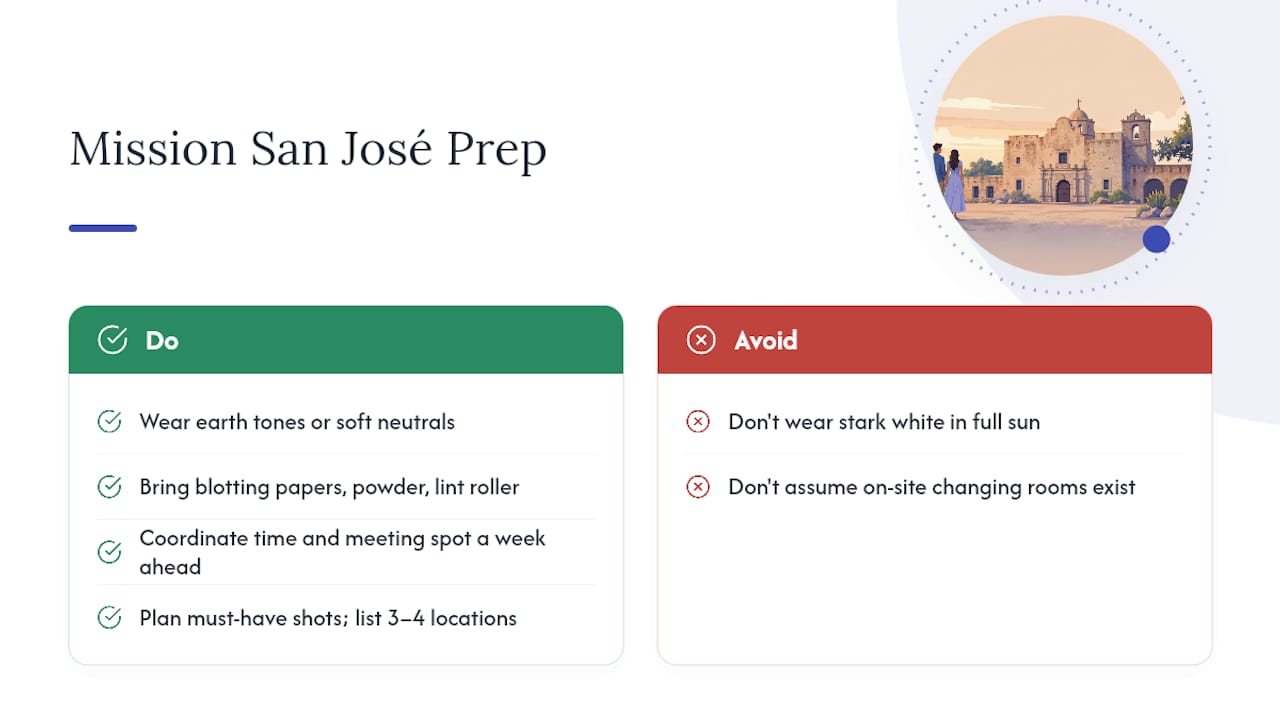
What you wear against limestone and warm stone tones matters more here than at a plain studio backdrop. Earth tones, soft neutrals, and muted jewel colors photograph beautifully against the mission's facade. Skip stark white-on-white outfits in full sun; they tend to blow out against the bright stone walls.
Bring a small kit: blotting papers or powder for midday shine, a lint roller, backup hair pins, and any props that matter to you personally, since the park's props rule is about scale and disruption, not sentimental items like a family heirloom ring box.
Coordinate timing with your photographer at least a week ahead, not the night before. Confirm your meeting spot at the compound, since parking and entrance points can be confusing for first-time visitors. If you're doing an outfit change, ask where that will happen. There's no changing room on site, so most couples use a vehicle or a nearby restroom.
Talk through your must-have shots in advance, whether that's a specific doorway, the rose window, or a particular courtyard corner. A quick reference list, even three or four location ideas, keeps the session efficient inside your booked time window. For broader guidance on choosing complementary backdrops around the city, this guide to San Antonio portrait locations is worth a read before your session.
The Permit Process Is a Feature, Not a Hurdle
Couples tend to hear "you might need a federal permit" and assume that means their dream photos are off the table. That's backward. The permit system exists precisely so a 300-year-old mission is still standing for the next couple's photos too, and understanding it early actually saves time compared to showing up unprepared and getting turned away mid-session.
The conventional wisdom online treats Mission San José like any other pretty backdrop you can just show up to. It isn't. It's an active National Park Service site with real preservation obligations, and the photographers who get the best results are the ones who plan around that reality rather than fighting it. Morning light, a small crew, and hand-carried gear will get most couples exactly the photos they want without ever touching permit paperwork.
What I'd prioritize first: confirm your session size and gear needs against the eight-person, hand-carried rule before you fall in love with a specific vision that requires more. Build your shot list around what the site actually allows, and you'll walk away with images that look effortless because the planning behind them was thorough.
Book Your Mission San José Session with Larson Pro Photography
Larson Pro Photography brings something most couples don't think to ask about until it's too late: actual experience navigating Mission San José's permit rules and site restrictions, so your session day isn't the first time anyone's dealt with the park's requirements. That local familiarity, paired with a portfolio built specifically around San Antonio's historic venues, means less guesswork on your part and fewer surprises on shoot day.
A typical engagement session includes a set window of shooting time on site, a fully edited online gallery delivered within a couple of weeks, and guidance on timing and locations built into the planning conversation before you ever show up. Permit coordination, when your session needs it, is handled as part of the process rather than left for you to figure out.
Ready to see if your date and vision line up with the park's rules? Visit the engagement session page to review packages and start your inquiry, or browse real client results first if you want to see the work before you reach out. For couples still shaping their overall vision, this piece on planning inclusive, meaningful sessions offers useful perspective on communicating your priorities to any photographer you hire.
Sources
- Special Use Permits - San Antonio Missions National Historical Park (U.S. National Park Service)