
Flip through a wedding album five years from now, and you'll feel everything: the nervous laugh before the first look, the way your grandmother wiped her eye during the ceremony, the chaotic joy of the reception floor. Those images are the only part of your wedding day that actually travels with you forever. Choosing the right San Antonio wedding photographer isn't just a vendor decision. It's one of the most personal choices you'll make during the entire planning process, and this guide will walk you through every step, from defining your style to signing a bulletproof contract, so you can book with total confidence.
Table of Contents
- What you need before you start
- How to build your shortlist of San Antonio photographers
- Interviewing candidates and reviewing their work
- Protecting yourself with a clear contract
- Getting the photos you really want: Must-have shots and timeline tips
- Our take: The common mistakes and what truly matters
- Ready for timeless San Antonio wedding photos?
- Frequently asked questions
Key Takeaways
| Point | Details |
|---|---|
| See full galleries | Review multiple full wedding galleries to ensure consistent quality and style. |
| Prioritize clear contracts | Make certain your contract covers coverage hours, deliverables, and rights to avoid surprises. |
| Prepare but trust | Share must-have shots but let your photographer guide the rest for authentic, candid moments. |
| Focus on fit and communication | Choose a photographer you feel comfortable with and who communicates promptly and clearly. |
| Lock in your date early | Book your wedding photographer as soon as possible to secure your top choice for your big day. |
What you need before you start
Before you browse a single Instagram grid or fill out a contact form, take an hour to get organized. Couples who skip this step often end up chasing photographers whose style doesn't match their vision, or they forget to ask about key deliverables until it's too late.
Start with your style. Understanding the difference between wedding photography styles before your search saves enormous time. Candid or documentary photography focuses on unposed, natural moments. Editorial style is more structured and fashion-forward. Classic photography leans on traditional posed portraits. Most photographers blend two or three approaches, but knowing which combination excites you helps narrow your search quickly.
Next, identify your must-capture moments. Think of the top three people or scenes you absolutely cannot miss. Maybe it's your father's face during the first dance, the full sweep of your ceremony at Mission San José, or a quiet moment between you and your partner before the doors open. Writing these down gives your photographer context that no generic shot list can provide.
Know your venue's quirks. San Antonio venues vary wildly in terms of lighting. The Pearl's outdoor courtyard delivers gorgeous golden-hour light but can be harsh midday. A traditional Catholic church ceremony may be dimly lit and restrict flash photography entirely. Sharing these details early helps a photographer plan their gear and approach. A good wedding photo checklist covers many of these logistics, and reviewing one before your first consultation gives you a head start.
Set your deliverable expectations. Not every photographer includes an album, prints, or unlimited digital downloads in their base package. Decide upfront what matters most to you: high-resolution digital files, a printed heirloom album, or both. Knowing this prevents sticker shock later.
| Preparation area | Questions to answer |
|---|---|
| Photography style | Candid, editorial, classic, or a blend? |
| Must-capture moments | Top 3 people, scenes, or traditions |
| Venue details | Lighting conditions, flash restrictions |
| Deliverables | Album, digital files, prints, timeline |
| Budget | Total range, including album add-ons |
As Brides recommends, prepare a "must-have" shot plan, but don't assume a huge moment-by-moment checklist is best. Share your key priorities and trust your photographer for the rest.
Pro Tip: Limit your must-have shot list to 20 items or fewer. Longer lists create pressure and can pull your photographer away from watching for those unplanned magic moments.
How to build your shortlist of San Antonio photographers
With your priorities set, you're ready to narrow your choices to the San Antonio photographers who fit your vision. The goal at this stage is efficiency: you want to identify two or three strong candidates rather than researching dozens.
Start close to home. Word-of-mouth from friends who got married in San Antonio is gold. If their photos moved you, ask for the photographer's name and whether they were easy to work with. Online reviews on platforms like Google and The Knot are useful for filtering obvious red flags. Look specifically for mentions of punctuality, communication, and how the photographer handled unexpected problems, like rain or a delayed ceremony.
Filter by style and fit. Browse portfolios with your style preferences in mind. Don't just look at the top three images on a homepage. Scroll deep. Look for variety in lighting conditions, venue types, and emotional range. A portfolio full of outdoor afternoon weddings might not reassure you if your reception is in a low-lit ballroom. Exploring San Antonio wedding photographers with a range of venue experience gives you a better sense of who can handle your specific day.
Verify availability and price range early. There's no point falling in love with someone's work if they're booked on your date or five thousand dollars above your budget. Most photographers list starting prices online, and a quick email or inquiry form can confirm availability before you invest more time.
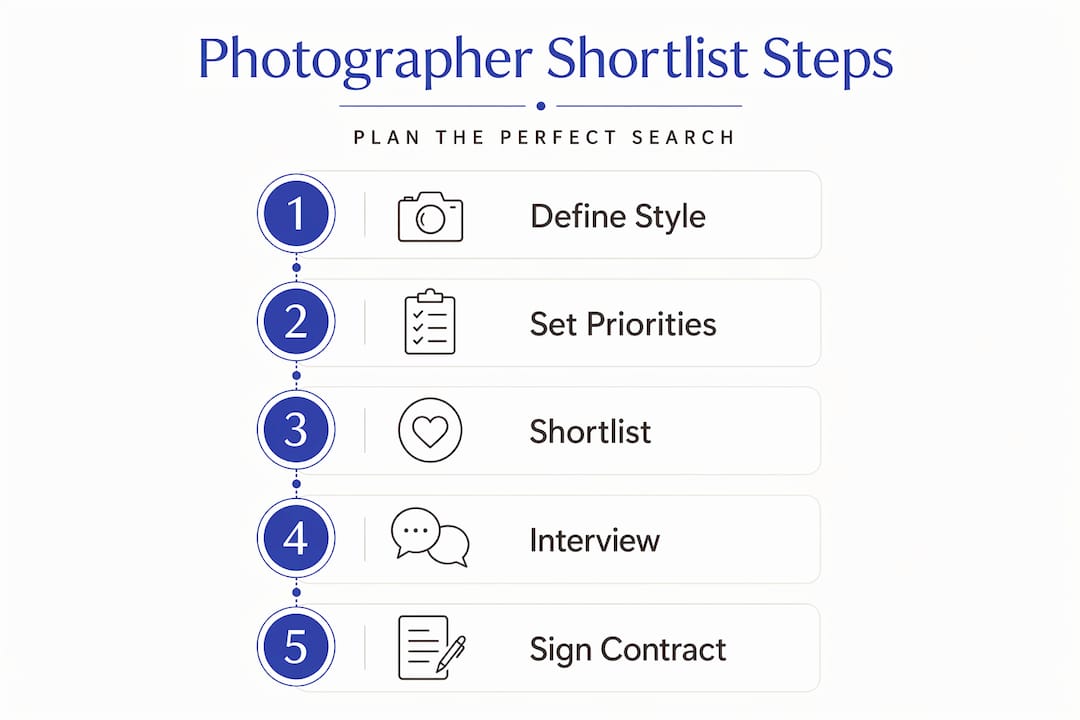
Here's a practical step-by-step approach to building your shortlist:
- Collect five to eight names from personal recommendations and online searches.
- Review each portfolio for style consistency and venue variety.
- Check public reviews for communication and professionalism patterns.
- Confirm basic availability for your wedding date via email.
- Compare starting prices and included deliverables side by side.
- Narrow to your top two or three for actual consultations.
According to insights from San Antonio wedding photographers you should know, build your short list based on style and fit first, then verify deliverables and process through interviews covering coverage scope and communication style.
Pro Tip: Ask specifically whether your prospective photographer has worked at your venue or a similar setting. Familiarity with a space means they already know the best angles, the tricky lighting windows, and where the most flattering backdrops are hiding.
Review must-have wedding shots before your consultations so you can speak confidently about what coverage matters most to you.
Interviewing candidates and reviewing their work
Once you have a shortlist, meeting your favorite photographers is essential to finding the right fit and avoiding mistakes. A beautiful portfolio tells you someone has talent. A conversation tells you whether you can trust them on one of the most important days of your life.
Never judge based on highlights alone. Every photographer has a curated gallery of their very best work. That's expected. What separates good from great is what an entire wedding gallery looks like from getting ready to last dance. As research on choosing a wedding photographer confirms, you should ask to view two or three complete wedding galleries, not just the highlight reels, to accurately evaluate consistency.
"Galleries reveal consistency, not just the best shots." When you scroll through a full wedding set, you'll see how a photographer handles low light, chaotic group photos, emotional close-ups, and wide venue shots all in one body of work. That's where the real story lives.
Use the interview to screen for reliability. Ask every candidate what happens if they have a personal emergency on your wedding day. A professional will have a clear backup plan: a trusted second shooter or a colleague who can step in with equivalent skill and a camera system that matches. A vague answer here is a serious warning sign.
Watch how they communicate before you even hire them. If a photographer takes four days to respond to your initial inquiry or sends confusing answers, that pattern tends to continue after booking. Fast, clear, and warm communication early on signals professionalism throughout. Use your research into current wedding photo trends to fuel questions about their creative process and how they approach new styles.
Key questions to ask every photographer you interview:
- Can I see two or three complete wedding galleries from recent events?
- What is your backup plan if you experience an emergency on my wedding day?
- How many weddings do you photograph each weekend?
- How would you describe your shooting style and how you direct couples?
- How do you handle challenging lighting at indoor or evening ceremonies?
- What is your typical turnaround time for delivering the final gallery?
Screening for red flags through focused interview questions around communication, backup plans, and verifiable full-gallery work helps you avoid the most common booking regrets couples experience after the fact.
Protecting yourself with a clear contract
When you feel good about a photographer, don't let excitement rush your decision. It's critical to lock down every detail in a contract before you pay a deposit.
A solid photography contract is not bureaucratic paperwork. It's a mutual agreement that protects both of you. Without it, misunderstandings around delivery timelines or image usage can cause real stress after your wedding.
Contract clarity is essential, covering hours of coverage, number of photographers, delivery timeline, usage rights, cancellation terms, and backup plans for photographer emergencies.
Here are the non-negotiable clauses every couple should confirm before signing:
- Hours of coverage. Exactly what time does coverage begin and end? What is the overtime rate if your timeline runs long?
- Number of photographers. Is a second shooter included? What is their experience level?
- Image delivery. How many edited images will you receive, and in what format?
- Turnaround timeline. When will your gallery be delivered? The industry standard is 4 to 12 weeks after your wedding date.
- Usage rights. Can you print and share your photos freely? Are there any restrictions?
- Cancellation and rescheduling. What happens to your deposit if you cancel? What if the photographer cancels?
- Backup plans. Who covers your wedding if the primary photographer has an emergency?
Before you sign, review this detailed breakdown of photographer contract questions to make sure you haven't missed any critical details.
Stat to know: The average wedding gallery delivery window is 4 to 12 weeks post-wedding. If a photographer promises delivery in one week, ask how they maintain quality at that pace. If they say six months, ask why and get it in writing.
Getting the photos you really want: Must-have shots and timeline tips
With contracts signed, make sure you and your photographer are fully aligned on what you want, without getting lost in the details. This step is about smart communication, not micromanagement.
Keep your shot list focused and personal. Your photographer is a professional who knows how to work a wedding. What they need from you is context, not a screenplay. A focused list might include:
- Immediate family portraits (list specific groupings)
- Your ceremony venue details: altar, florals, architectural features
- Specific traditions like a unity candle lighting or a cultural dance
- A quiet moment between you and your partner just after the ceremony
- The full dance floor during your favorite reception song
Communicate timing challenges in advance. If your grandmother uses a wheelchair or your family tends to run late for group photos, your photographer needs to know so they can build that into the schedule. A 30-minute buffer for family portraits isn't luxury; it's planning.
As Brides advises, share your key priorities, but trust your photographer with the rest. The unplanned moments, the ones that actually make people cry when they see the album, can't be scripted.
Pro Tip: Share your wedding day timeline with your photographer at least two weeks before the event. Walk them through the schedule, flag any tight transitions, and ask for their honest feedback. A good photographer will immediately spot gaps you didn't notice.
Reviewing the must-have shots guide together with your photographer gives you a shared language for priorities. And if you're also booking an engagement session, understanding the differences between engagement vs. wedding shoots helps you make the most of both experiences.
Our take: The common mistakes and what truly matters
Now that you know the steps, let's get honest about what really matters and the hidden traps couples often fall into here in San Antonio.
The biggest regret we hear from couples who are unhappy with their wedding photos isn't about price. It isn't about megapixels or whether the photographer used a mirrorless camera. It's almost always about connection and communication. They booked someone whose portfolio looked amazing but who felt distant during the consultation, or who never asked questions about the couple's story before the wedding day.
Digital samples are only half the story. You can spend hours analyzing editing styles and choosing your photo style preferences, but a 30-minute video call reveals things no gallery can: how the photographer reacts when you share a vulnerability, whether they listen as much as they talk, and whether they make you feel at ease. That ease is everything on your actual wedding day.
True professionals don't just take pictures. They quietly manage timelines, redirect stressful moments, and give you permission to stop worrying so you can just be present. The best photographers we know are part artist, part planner, and part people-person. When you find someone with all three qualities, the price difference between them and a cheaper option becomes irrelevant.
Here's our honest advice: trust your gut during the consultation at least as much as you trust the portfolio. A photographer who asks thoughtful questions about your relationship, your families, and what matters most to you on your wedding day is far more likely to deliver photos that genuinely move you than one who just quotes packages and sends a PDF.
Ready for timeless San Antonio wedding photos?
If this guide has helped you get clear on what you want, the next step is simple: look at real portfolios and have a real conversation.
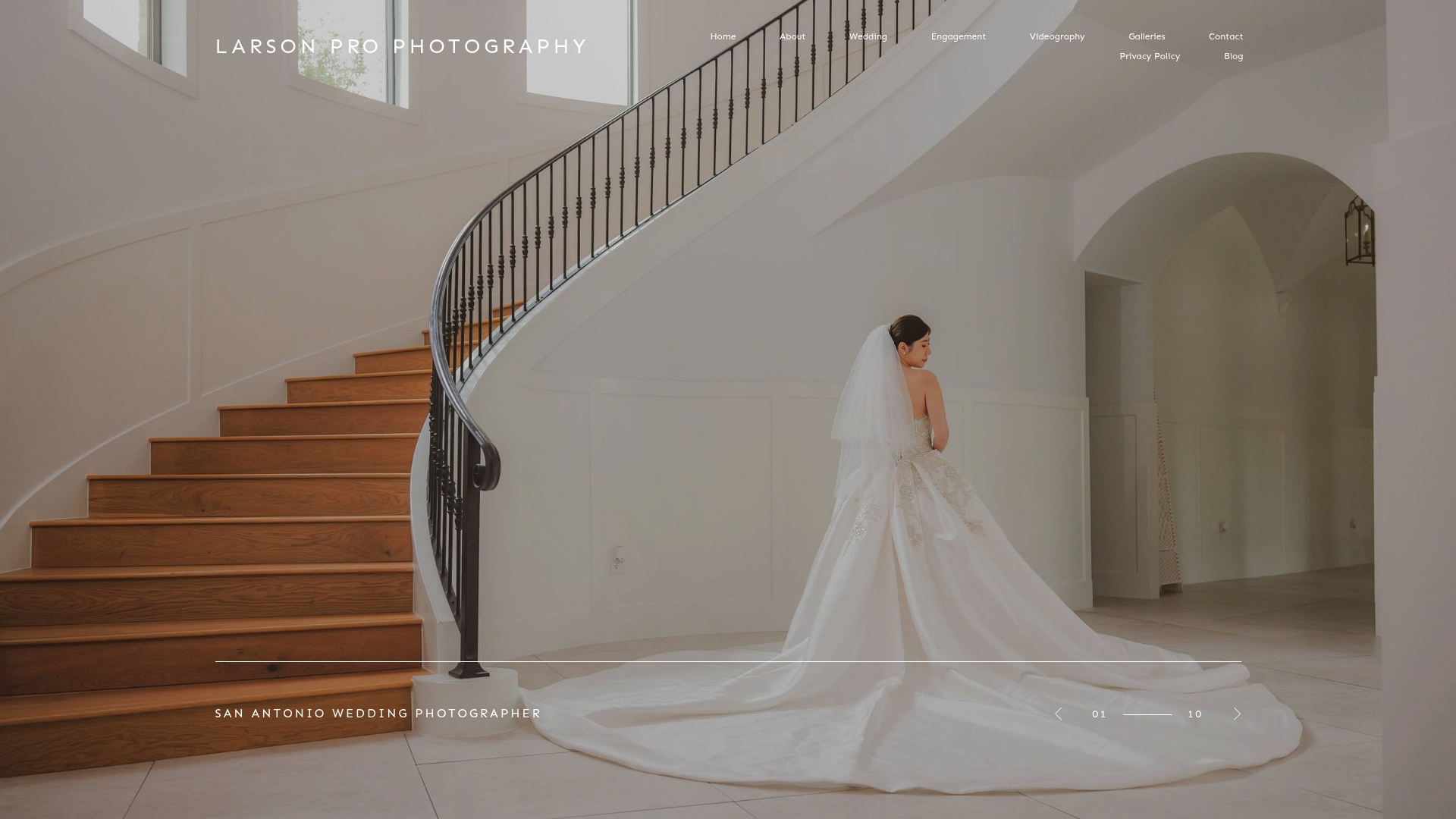
At Larson Pro Photography, we believe the booking process should feel as comfortable as the shoot itself. You're welcome to browse our full San Antonio wedding photography portfolio, including complete galleries from a wide range of venues across the city, to see the consistency we bring to every wedding. We also offer relaxed engagement session options that are a perfect way to get comfortable in front of the camera before your big day. We're currently booking 2026 weddings and would love to hear about yours. Reach out anytime for a no-pressure consultation.
Frequently asked questions
How early should I book a wedding photographer in San Antonio?
Book your photographer 9 to 12 months in advance to secure your preferred date, especially during peak spring and fall wedding seasons in San Antonio.
What should I look for in a photographer's portfolio?
Review at least two or three complete wedding galleries to check for consistency in lighting, emotional range, and venue variety, not just the best highlight shots.
What is a typical turnaround time for receiving wedding photos?
The average delivery window for a full edited gallery is 4 to 12 weeks after the wedding, depending on the photographer's workload and editing process.
Should I give my photographer a detailed shot list?
Provide your key must-have priorities, but keep the list focused. As Brides advises, a huge moment-by-moment checklist can limit a photographer's ability to capture spontaneous, meaningful moments.
How can I make sure I understand the contract terms?
Read every clause carefully before signing, paying special attention to hours, image rights, turnaround, and backup plans. Contract clarity prevents the most common disputes couples face after the wedding day.