Yes, add buffer time to your wedding day timeline, and the single move that saves most schedules is a 15-minute hinge placed right before your first look or, if you're skipping one, right before the ceremony. Photographer timing practice and planning resources like Brides point to the same fix again and again. Build your rules and a sample timeline around that one hinge, and the rest of the day tends to fall into place.
TL;DR:
- Adding a 15-minute buffer before the first look or ceremony significantly reduces schedule stress and is the most impactful point to build in extra time.
- Plan for 15 minutes of buffer for every two hours of scheduled activities, spreading around 75 minutes across a standard 10-hour wedding day.
- Extra time should be allocated for fragile points like getting ready, family formals, travel between venues, and sunset portraits, as these are more prone to delays.
- Assign a dedicated timekeeper and share the full timeline with vendors and the wedding party to ensure everyone stays aligned and on schedule.
- A well-structured timeline with built-in buffers prevents last-minute firefighting and creates a more relaxed wedding day experience.
Table of Contents
- Where to Add Buffer Time on Your Wedding Day
- How Much Buffer Should You Actually Build In?
- Sample Wedding Day Timeline With Buffer Built In
- Who Owns the Clock: Finalizing and Sharing Your Timeline
- What Photographers Wish Couples Knew About Timing
- Why Buffer Time Changes How a Wedding Day Feels
- Let Larson Pro Photography Help Protect Your Timeline
- Sources
- FAQ
Where to Add Buffer Time on Your Wedding Day
Not every part of the day needs the same amount of margin. Some spots are fragile, and that's where the buffer actually earns its keep.
- Getting ready: Hair and makeup runs late at a majority of weddings, so pad this block before it becomes a problem for everything downstream.
- Before first look or ceremony: This is the hinge. It's the single highest-leverage buffer in the whole day.
- Family and wedding-party formals: Gathering a dozen relatives who have wandered off for drinks always takes longer than anyone plans.
- Travel between venues: Traffic, parking, and unloading gear eat time that a tight schedule doesn't have to spare.
- Sunset portraits: Light doesn't wait, so this window needs protection more than almost any other slot in the day.
- Reception transitions: Grand entrances, dinner service, and toasts tend to slide later as the night goes on, and a little slack here keeps the DJ from chasing the clock.
Weddings with the fewest fire drills aren't the ones with the tightest schedules. They're the ones with breathing room stacked at exactly these seams, according to wedding timeline planning guidance.
How Much Buffer Should You Actually Build In?
Three rules cover almost every wedding day, regardless of guest count or venue style.
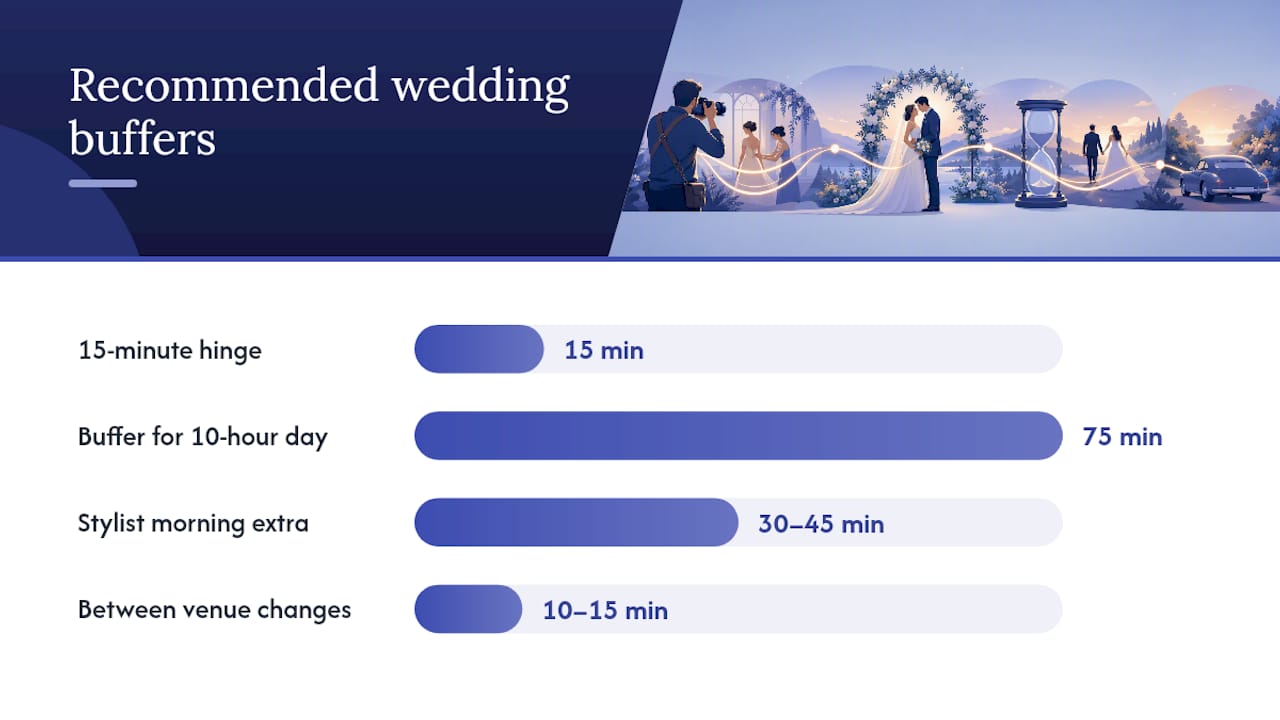
The 15-minute hinge rule. Five minutes disappears the moment a bustle snags or a groomsman can't find his jacket. Thirty minutes, on the other hand, tends to scatter people who drift off to check their phones or grab another drink. Fifteen minutes is long enough to absorb a real delay without giving anyone room to wander.
Planning resources back this up with a broader formula: budget roughly 15 minutes of buffer for every two hours of scheduled activity. A 10-hour wedding day, from first hair appointment to last dance, works out to about 75 minutes of buffer spread across the day rather than dumped in one place.
- Add 30 to 45 minutes on top of your stylist's time estimate for the morning block.
- Add 10 to 15 minutes between every venue change, even short ones.
- Increase every number above if you have a large wedding party, a long drive between ceremony and reception, or a forecast that looks unstable.
Sample Wedding Day Timeline With Buffer Built In
Here's a work-back example for a 4:00 PM ceremony that shows exactly where the margin lives.
| Time | Activity |
|---|---|
| 11:00 AM | Hair and makeup begins |
| 12:30 PM | Photographer arrives (30 minutes before couple is dressed) |
| 1:15 PM | 15-minute hinge before first look |
| 1:30 PM | First look and couple portraits |
| 2:15 PM | Wedding party portraits |
| 2:45 PM | Staggered family formals (immediate family first, extended family second) |
| 3:15 PM | Buffer before guests arrive; couple has private time |
| 4:00 PM | Ceremony |
| 4:30 PM | Cocktail hour begins |
| 5:15 PM | Reception entrance and dinner |
| Sunset portraits, timed to actual sunset | Sunset portraits, timed to actual sunset |
| Dancing, toasts, and grand exit | Dancing, toasts, and grand exit |
Two variants are worth planning around directly, rather than adjusting on the fly:
- No first look: Move the hinge to sit right before the ceremony instead of before portraits, since the ceremony start becomes the fixed anchor that everything else depends on.
- Early or late ceremony: Shift the whole timeline earlier or later, but keep the sunset portrait block anchored to actual sunset time for your date and location, not a round number.
Bigger guest lists mean longer formals, so add five extra minutes per additional family grouping. Multiple venues mean adding a full travel buffer, not just a few minutes, since loading a car and finding parking at a second location rarely goes as fast as it does on a test drive.
Who Owns the Clock: Finalizing and Sharing Your Timeline
A buffer only works if someone is actually watching it. Here's how to make that happen.
- Name one timekeeper. A planner, a coordinator, or a levelheaded friend should hold the master schedule and have the authority to adjust it on the day.
- Share the full timeline with vendors one to two weeks before the wedding, printed and in writing, not just texted the night before.
- Give the wedding party a one-page summary with just the times and locations that affect them, so nobody is digging through a 12-page vendor document.
- Decide in advance what gets cut first if time runs short. Tell your photographer which formal groupings matter most so the shot list has a built-in priority order.
Pro Tip: Turn unused buffer into something on purpose. A mocktail during the pre-ceremony hinge, five quiet minutes alone as a couple, or extra time for detail shots all make thirty spare minutes feel intentional instead of wasted.
What Photographers Wish Couples Knew About Timing
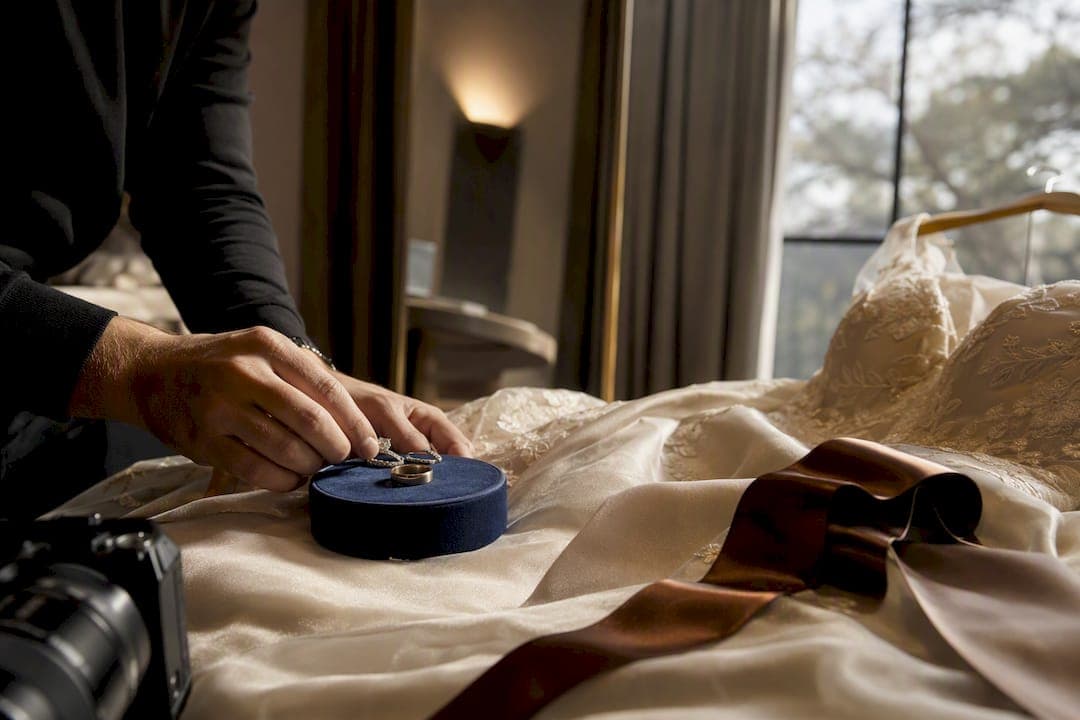
Most photographers ask to arrive about 30 minutes before the couple is dressed. That window lets them shoot the dress, the rings, and the invitation suite, and scout the light in the room, without ever interrupting hair and makeup.
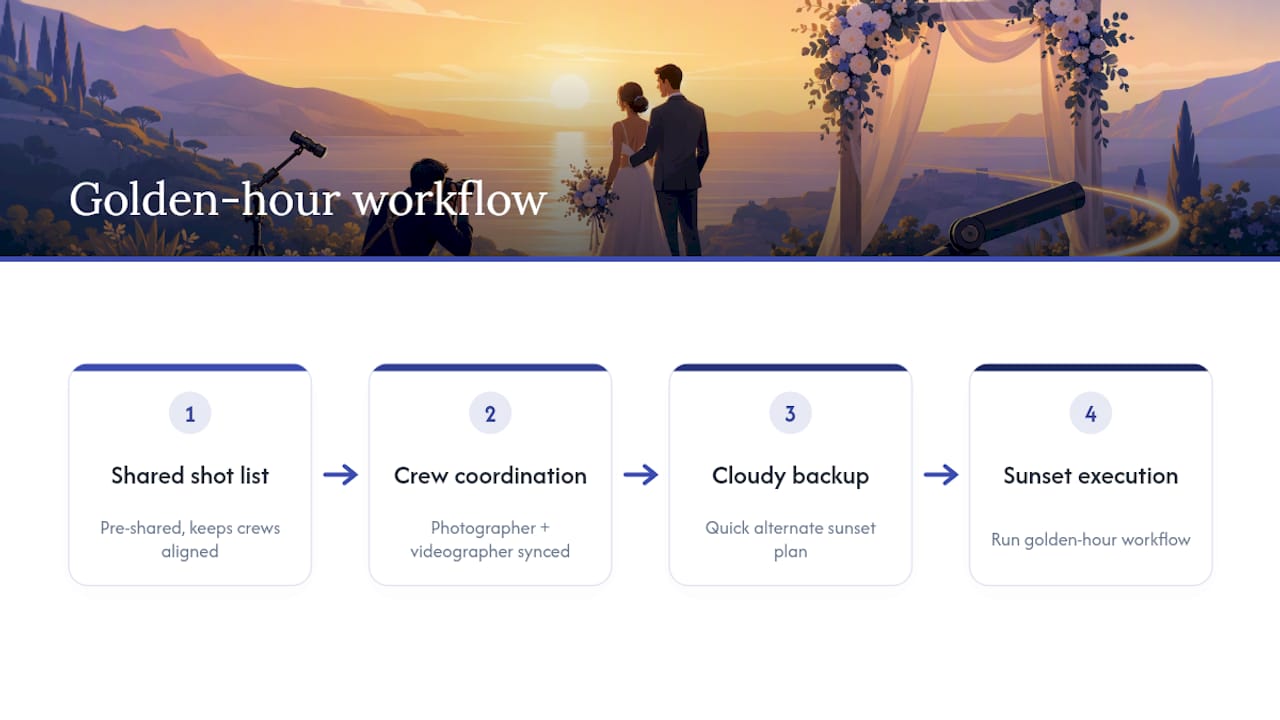
Good photographers fold detail coverage into that arrival window instead of asking for a separate block, which is part of why the 30-minute lead time works so well. Coordination with a videographer matters here too. Sharing a combined shot list ahead of time keeps two crews from working against each other, and a quick backup plan for cloudy skies keeps the sunset block from turning into a scramble. A well-built golden hour workflow depends on that kind of advance planning far more than luck.
Why Buffer Time Changes How a Wedding Day Feels
Buffer that goes unused doesn't disappear. It turns into a few quiet minutes before you walk down the aisle, or a breath before the reception doors open. Buffer that gets used does something just as valuable: it stops one late hair appointment from dragging the ceremony, the toasts, and the exit fifteen minutes behind schedule apiece. Build the margin in even when the draft timeline looks tight enough without it.
— Todd
Let Larson Pro Photography Help Protect Your Timeline
You've got the rules of thumb and the sample schedule. The harder part is coordinating them with an actual photographer who builds buffer into the plan instead of treating your timeline as an afterthought. A professional photographer can help couples map out arrival times, portrait windows, and sunset blocks before the wedding day even starts, so the hinge planned on paper actually holds up in real life.
An engagement session is also a low-pressure way to test-drive portrait pacing with your photographer before the wedding, so you both know how long a "quick" round of photos really takes. When you're ready to talk through your ceremony time, venue layout, and shot priorities, visit the Larson Pro Photography clients page to see packages and request a timing consult.
Sources
- The 15-Minute Buffer That Saves a Wedding Timeline | Tim Larsen
- How to build a wedding day timeline (with examples) — Brides
- Wedding Day Timeline Calculator 2026 – Hour by Hour Schedule
- Wedding Day Timeline — Complete Guide + Free Template (Bliss & Bone)
FAQ
What Is the 50/20/30 Rule for Weddings?
This term usually refers to budget allocation rather than timeline planning, splitting wedding spending across major categories like venue, attire, and vendors. It isn't a standard timing or buffer rule, so don't confuse it with the 15-minute hinge or the 15-minutes-per-two-hours guideline used for scheduling.
What Is the 30-5 Minute Rule for Weddings?
It's a version of the hinge concept: build a roughly 30-minute cushion into major blocks like getting ready, and a shorter 5-minute gap between quick transitions like walking from the bridal suite to the ceremony entrance. Most photographers still favor the 15-minute hinge specifically before the first look or ceremony, since it splits the difference between too short and too loose.
What Is a Typical Timeline for a 2:00 PM Ceremony?
The typical timeline includes starting getting ready in the morning, the photographer arriving about 30 minutes before the couple is dressed, a 15-minute hinge before the first look, portraits and formals in early afternoon, and the ceremony starting on schedule in the afternoon. Cocktail hour, dinner, and sunset portraits fill the remainder of the afternoon and evening.
What Counts as a Reasonable Amount of Buffer for a Wedding Day?
A reasonable total is around 15 minutes of buffer for every two hours of scheduled activity, which puts most 10-hour wedding days at roughly 60 to 90 minutes of total slack. Concentrate the biggest single chunk, the 15-minute hinge, right before your first look or ceremony rather than spreading every minute evenly.