
Effective coordination with videographers is the single most important factor in capturing your wedding day without gaps, conflicts, or missed moments. Wedding video production requires precise timing, clear role assignments, and shared planning documents distributed to every visual team member before the event. Without this structure, photographers and videographers end up competing for space, missing cues, and delivering footage that feels incomplete. The good news: a few deliberate steps taken weeks before your wedding day solve nearly every coordination problem couples and planners face.
How to coordinate with videographers: what to share first
The foundation of working with videographers is a single, unified set of planning documents shared with every vendor on your visual team. Sharing identical planning documents with both your photographer and videographer prevents coordination issues and small conflicts during the wedding day. That means one version of the truth, not separate documents with slightly different timelines or venue notes.
Your planning packet should include:
- The full event timeline with ceremony start, cocktail hour, reception, and any special segments
- Venue logistics including room layouts, restricted areas, and lighting conditions at different times of day
- Shot priority list covering must-have moments like the first look, ring exchange, and parent dances
- Family photo list with names and groupings so neither team wastes time organizing people
- Special traditions or customs that require specific camera positioning or audio capture
Video teams need additional notes beyond the timeline, including camera positions, lighting shifts, and moment importance that translate event plans into visual and technical cues. A photographer can adapt quickly to a missed shot. A videographer capturing audio cannot rewind. That asymmetry makes upfront information sharing non-negotiable.
Pro Tip: Create one master document in Google Docs or Notion and share the same link with your photographer, videographer, and planner. When you update it, everyone sees the change instantly.

How do you build a timeline that works for both photo and video?
A timeline built without input from your visual teams is a timeline built to fail. Building buffers of 10 to 15 minutes into your wedding schedule prevents delays from cascading into missed coverage. Weddings run late. Guests take longer to seat than expected. A buffer is not wasted time. It is insurance.
Here is a practical process for building a timeline that serves both teams:
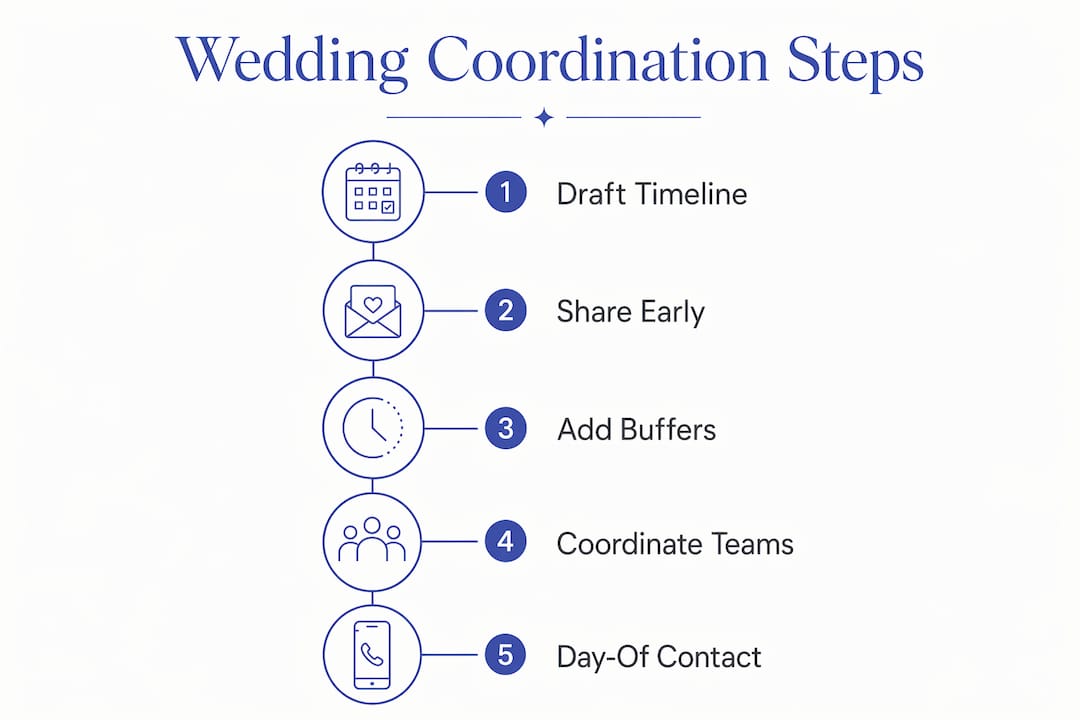
- Draft your event order from getting ready through the last dance, noting every transition point.
- Add 10 to 15 minute buffers after getting ready, after the ceremony, and before the reception entrance.
- Send the draft to your videographer and photographer at least 2 to 4 weeks before the wedding so they can flag conflicts and prepare gear.
- Incorporate their feedback before finalizing. Videographers often need more time at ceremony setups than photographers do.
- Lock the final version one week out and redistribute to all vendors, including your DJ, officiant, and venue coordinator.
The table below shows how buffer time affects coverage quality across key wedding segments:
| Wedding segment | No buffer | With 10-15 min buffer |
|---|---|---|
| Getting ready | Rushed detail shots | Full coverage of prep and candid moments |
| Ceremony setup | Videographer still positioning | Audio tested, cameras locked before guests arrive |
| Portrait session | Cut short by reception start | Full family and couple portraits completed |
| Reception entrance | Couple enters before DJ is ready | Smooth, coordinated entrance with clean audio |
Experienced videographers need an arrival window of at least 30 minutes before guests arrive to test audio and position cameras. Build that window into the timeline explicitly. Do not assume your videographer will figure it out on arrival.
Pro Tip: Ask your videographer what their single biggest timeline frustration is. The answer almost always reveals a gap in how couples share scheduling information.
What does day-of coordination actually look like?
Day-of coordination is where planning either pays off or falls apart. The most effective structure assigns one point person, typically your planner or a trusted family member, to handle all vendor questions so you are never pulled away from your own wedding.
Designating a single point person on the wedding day reduces vendor confusion and keeps the couple focused on the event. That person knows the timeline, has every vendor's contact information, and makes real-time decisions when things shift. Without this role filled, vendors ask the couple directly, which breaks the natural flow of the day.
Beyond the point person, these practices make day-of collaboration between photographers and videographers work:
- Divide leadership by segment. Photographers typically lead portrait portions of the day, while videographers lead during ceremonies and speeches where audio capture is the priority. Defining this in advance prevents conflicting directions.
- Confirm microphone plans before the day. Confirming microphone and audio arrangements beforehand avoids missing critical spoken moments. Decide who holds mics during toasts, whether a lapel mic goes on the officiant, and whether the DJ's board feeds directly into the video camera.
- Agree on positioning at key moments. At the altar, during the first dance, and at the cake cutting, both teams need clear lanes. A quick conversation before the ceremony about who stands where prevents the photographer from blocking the videographer's shot and vice versa.
- Keep communication respectful and brief. On a wedding day, a two-sentence heads-up between vendors beats a five-minute discussion. Professionals who work together regularly develop shorthand. If your teams have not worked together before, a brief introduction at the start of the day goes a long way.
"Strong coordination between vendors creates a calmer event atmosphere and a more complete, emotionally rich video." Vendor Coordination for Wedding Video
A planner acting as the central communication hub dramatically improves videographer performance by managing transitions and solving issues before they reach the couple. If you are planning your wedding without a coordinator, assign this role explicitly to someone you trust completely.
Why pre-wedding meetings with your visual team matter
A pre-wedding meeting between your photographer and videographer is the highest-return hour you will spend in your entire planning process. Holding a joint meeting between photo and video teams before the wedding clarifies lighting preferences, movement plans, and venue restrictions that would otherwise create friction on the day itself.
These meetings work best when they cover:
- Lighting conditions at the venue at the specific times each segment occurs. A church ceremony at noon looks completely different from a 6 p.m. garden reception.
- How teams will move through the space. At smaller venues, two teams with equipment can crowd each other quickly. Agreeing on zones and movement patterns prevents interference.
- Key moments that need special coverage. If your grandmother is flying in from abroad and the first look with her matters deeply to you, both teams need to know that before the day.
- Each team's working style. Photographers and videographers have different pacing and framing needs, so mutual respect and clear role delineation produce better results than assuming both teams work the same way.
The comparison below shows the difference between coordinated and uncoordinated visual teams:
| Area | Without pre-meeting | With pre-meeting |
|---|---|---|
| Lighting | Conflicting flash and video light use | Agreed approach for each segment |
| Positioning | Teams block each other at key moments | Clear zones established in advance |
| Key moments | Coverage gaps for personal priorities | Both teams briefed on emotional priorities |
| Vendor relationship | Tension and competition | Collaboration and mutual support |
You do not need a formal sit-down for this meeting. A 45-minute video call with your photographer, videographer, and planner three to four weeks before the wedding covers everything. Check out this wedding photography checklist to prepare your questions in advance.
Key takeaways
Effective coordination with videographers requires shared documents, buffered timelines, a single point person, and at least one pre-wedding meeting between all visual team members.
| Point | Details |
|---|---|
| Share one master document | Distribute identical timelines, shot lists, and venue details to every visual vendor. |
| Build in buffer time | Add 10 to 15 minutes after major transitions to prevent delays from cascading. |
| Assign a point person | One planner or trusted contact handles all vendor questions on the wedding day. |
| Hold a pre-wedding meeting | A joint call between photo and video teams prevents positioning and lighting conflicts. |
| Confirm audio separately | Treat microphone plans as a distinct checkpoint, not an afterthought on the timeline. |
What I have learned about coordination after years of wedding coverage
The couples who have the smoothest wedding days are almost never the ones with the most elaborate plans. They are the ones who communicated clearly, trusted their vendors, and then let go.
What I see most often is couples who spend months planning every detail and then try to manage vendors in real time on the wedding day itself. That approach backfires. By the time your ceremony starts, your job is to be present. Your vendors' job is to execute. The coordination work happens in the weeks before, not the hours during.
The one thing I wish more couples understood is that photographers and videographers genuinely want to work well together. There is no competition when both teams are briefed, respected, and given the information they need. The tension that sometimes appears between visual vendors almost always traces back to a planning gap, not a personality conflict.
If you are working with a planner, use them as your communication hub. A good planner who knows your photographer and videographer roles can anticipate problems before they happen and keep both teams moving without interrupting your day. That is the real value of professional coordination.
The couples who enjoy their wedding day the most are the ones who did the work early, trusted the professionals they hired, and focused on each other when the day arrived.
— Todd
How Larsonprophotography supports your photo and video coordination
Larsonprophotography has spent years coordinating photography and videography coverage for weddings across San Antonio, and that experience shows in how smoothly our teams work together on the day. We share unified timelines with every vendor, hold pre-event briefings, and assign clear roles so nothing falls through the cracks. Couples who book through Larsonprophotography get a team that communicates proactively, not reactively. Explore our wedding photography services to see how we approach full-day coverage, or browse our client portfolio to see the results that coordinated teams produce.
FAQ
What should I send my videographer before the wedding?
Send your full event timeline, venue details, shot priority list, family photo groupings, and any special traditions requiring specific coverage. Sharing identical documents with both your photographer and videographer prevents conflicts and ensures aligned decisions when time is tight.
How early should I share the timeline with my videographer?
Send your timeline draft 2 to 4 weeks before the wedding so your videographer has time to ask questions, prepare gear, and flag any scheduling conflicts before the day.
Do photographers and videographers need to meet before the wedding?
A pre-wedding meeting between your photo and video teams is strongly recommended. A joint meeting clarifies lighting preferences, movement plans, and venue restrictions that would otherwise create friction during the event.
Who handles vendor questions on the wedding day?
A designated point person, your planner or a trusted family member, should handle all vendor communication on the day. This keeps you focused on the event and reduces vendor confusion that can disrupt pacing and coverage.
How do I prevent my photographer and videographer from getting in each other's way?
Agree on positioning zones and leadership roles before the day. Photographers typically lead portrait sessions while videographers lead during ceremonies and speeches. A quick pre-ceremony conversation about who stands where at key moments prevents the most common interference issues.