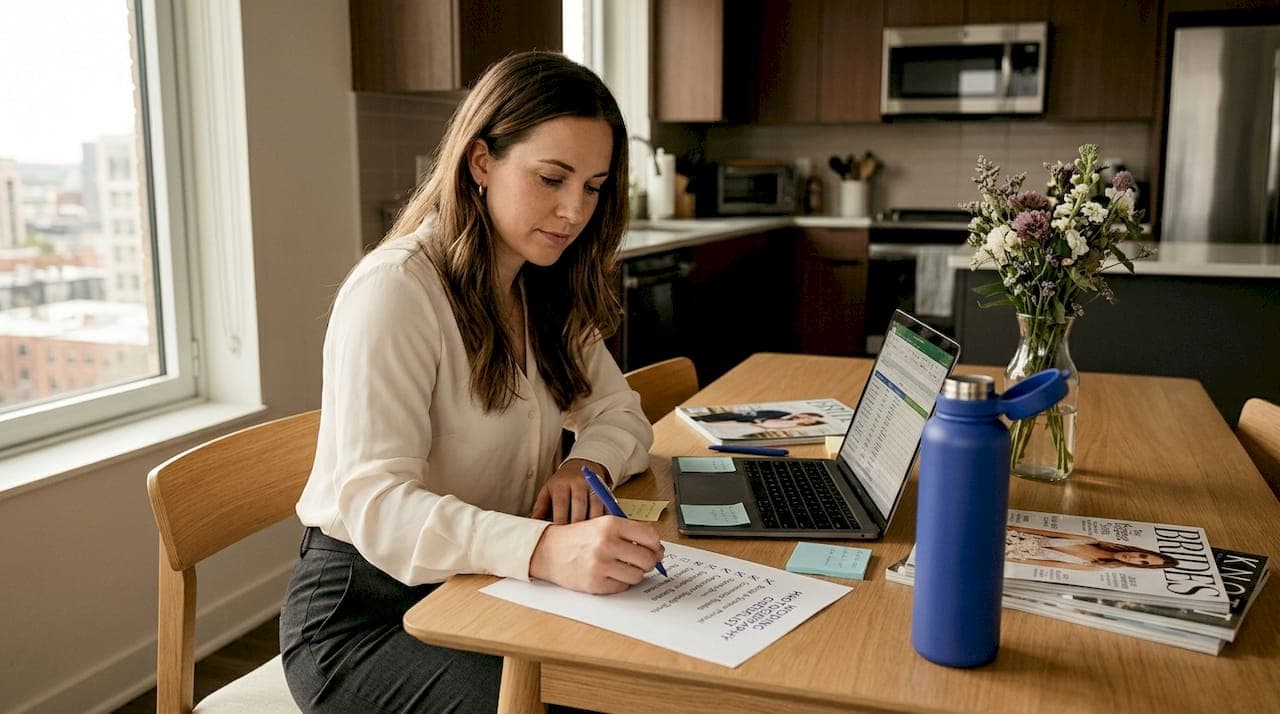
Planning your wedding in San Antonio is exciting, but the fear of missing a single irreplaceable moment can quietly overshadow all of it. You have one shot at capturing your first kiss, your parent's tearful smile during the processional, or the chaotic joy of the bouquet toss. A well-structured wedding photography checklist takes that anxiety off your plate by giving both you and your photographer a shared map of priorities. This guide walks you through every key moment, from getting ready in the morning to the final dance, with practical tips to help you capture everything that matters most.
Table of Contents
- How to use your wedding photography checklist effectively
- Must-have shots: Getting ready and detail moments
- Ceremony essentials: Prioritizing your core moments
- Family and group portraits: Efficient and meaningful combinations
- Collaborating with your photographer: Sharing priorities and staying flexible
- Why wedding photo checklists are a tool, not a rulebook
- Work with a professional for stress-free memories
- Frequently asked questions
Key Takeaways
| Point | Details |
|---|---|
| Structure matters | Organize your checklist by the wedding day’s natural flow for clarity and coverage. |
| Prioritize over quantity | Focus on must-have moments instead of a long, overwhelming list. |
| Stay flexible | Be prepared to adjust your photo list as plans or inspiration change. |
| Work collaboratively | Communicate your vision early and check priorities with your photographer pre-wedding. |
How to use your wedding photography checklist effectively
With the importance of a thoughtful checklist established, understanding how to use it most effectively becomes the next step. The purpose of a checklist is not to hand your photographer a rigid script they must follow shot by shot. Its purpose is to align your priorities so no truly meaningful moment slips through the cracks.
A practical checklist prioritizes must-haves over a rigid script, organized by day segments like getting ready, ceremony, group portraits, and reception. This structure mirrors the natural flow of your wedding day, which makes it easier for your photographer to anticipate what comes next and position themselves accordingly. Think of it less like a to-do list and more like a priority guide.
When you treat your checklist as a micromanagement tool, you risk creating a robotic, overly staged gallery. Your photographer is a professional who reads the room, notices emotional moments unfolding in real time, and responds creatively to light and location. Give them the space to do that while still knowing which moments you absolutely cannot live without.
Here is a structure that works well for most San Antonio weddings:
- Getting ready: Dress, details, candid prep moments
- Pre-ceremony: First look (if applicable), portraits, venue details
- Ceremony: Processional through recessional
- Group portraits: Family formals, wedding party, VIP guests
- Reception: Grand entrance, first dance, toasts, cake cutting, open dancing
Finalizing priorities close to the wedding date is strongly recommended, with most photographers suggesting a check-in roughly two weeks before the big day. This timing ensures all final vendor details, venue layouts, and schedule changes are accounted for before you lock in your shot priorities.
Pro Tip: Keep your must-have list to 20 to 30 items maximum. A shorter, focused list is far more useful than a 75-item document that overwhelms both you and your photographer. Browse the latest wedding trends for 2026 for inspiration on creative shots worth adding to your priority list.
Revisit the list collaboratively. Bring your photographer into the conversation early, share your vision, and invite their input. They have photographed dozens of weddings and know which moments tend to produce the most emotional, frame-worthy images.
Must-have shots: Getting ready and detail moments
Now that you understand checklist strategy, it's time to break down the crucial getting-ready and detail moments you absolutely do not want to miss. This part of the day often feels casual, but it produces some of the most intimate and emotionally rich photographs in your entire gallery.
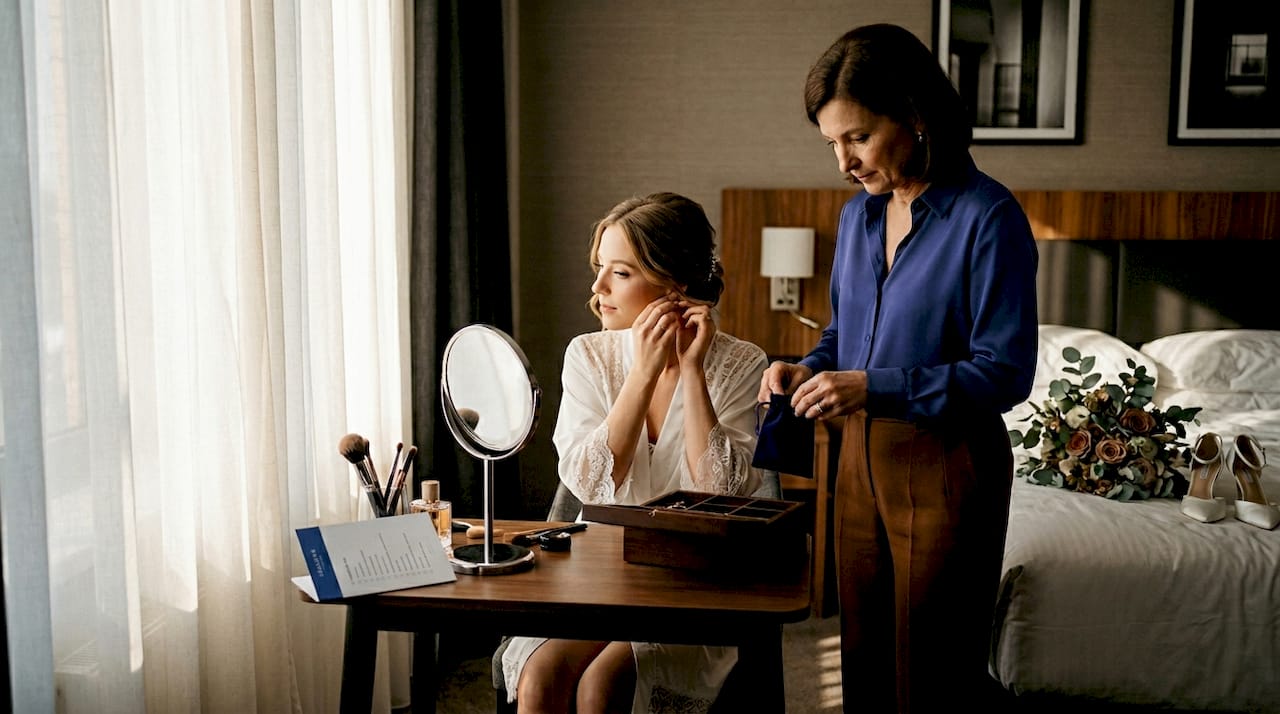
Include detail and getting-ready coverage such as your wedding dress, jewelry, shoes, ring close-ups, and both partners' prep moments. These details tell the full story of your wedding day before the ceremony even begins.
Essential detail shots to include on your checklist:
- Wedding dress hanging or laid flat
- Shoes, jewelry, and hair accessories
- Wedding rings together (and separate close-ups)
- Invitation suite, florals, and any heirloom items
- Perfume, cufflinks, tie, or boutonnieres
- Handwritten vows if you are writing your own
Beyond the still-life detail shots, the getting-ready portion is where genuine emotion surfaces naturally. When your mom buttons the back of your dress, when your best friend helps you calm your nerves, when your partner does a final check in the mirror before heading to the altar, those are the images you will return to decades from now.
Candid getting-ready moments are equally important to capture alongside the posed ones. A mix of both creates a complete narrative. Your photographer should be present during key emotional beats, not just when everyone is ready and polished.
Do not overlook the guys. The partner who is getting ready separately often gets fewer photos simply because the focus tends to skew toward the dress and bridal suite. Make sure your checklist includes candid prep shots for both sides of the couple.
Check out current wedding photography trends for creative ways to document detail shots with lifestyle-inspired framing rather than flat-lay photos alone.
Pro Tip: Gather all your detail items in one small area before your photographer arrives. A cluttered room scattered with accessories wastes valuable shooting time. A simple woven tray, a clean windowsill, or a bedside table with good natural light works perfectly. Your photographer will appreciate the setup and your photos will look cleaner and more intentional.
Ceremony essentials: Prioritizing your core moments
With preparations covered, it is time to move into ceremony moments that form the emotional core of your wedding story. This is the section where couples most often feel the urge to photograph every single guest, and it is actually the section where restraint produces better results.
Your ceremony checklist should prioritize the core sequence rather than attempting to photograph everyone in attendance. When your photographer is chasing wide crowd shots, they may miss the tear rolling down your partner's cheek as you walk down the aisle.
Here is the essential ceremony sequence to protect on your checklist:
- Processional arrivals (both wedding parties)
- Your entrance and your partner's reaction
- Your reaction to your partner's entrance
- Officiant and ceremony framing
- Exchange of vows (close-ups of faces and hands)
- Ring exchange
- First kiss
- Recessional and immediate joy
"Essential moments only happen once. Your checklist exists to protect them, not to catalogue every detail of the room." StudioBinder
Below is a quick comparison to help you think through what to prioritize versus what to treat as optional:
| Core ceremony moments | Optional ceremony shots |
|---|---|
| Partner's reaction at processional | Wide crowd overview |
| Vow exchange close-ups | Every guest's expression |
| Ring exchange hands detail | Venue exterior mid-ceremony |
| First kiss | Officiant portrait |
| Recessional celebration | Floral arrangement close-ups |
Your photographer's instincts matter most during the ceremony. You cannot stop the flow to request a reshoot, so the most powerful images come when your photographer is empowered to respond to the room's energy rather than locked into a positional script. Ceremony photography tips from experienced photographers consistently emphasize this point.
Read through experiences from real weddings to see how prioritizing emotional sequence over crowd coverage produces galleries couples love for a lifetime.
Family and group portraits: Efficient and meaningful combinations
After capturing the ceremony's emotion, efficient group portraits ensure you get the key photos you need while still leaving time to enjoy your celebration. This section of the day has the highest potential to run long if not managed intentionally.
Keep the family photo list prioritized and concise to save time for the reception and candid moments. A well-organized portrait session can be completed in 30 to 45 minutes if you limit combinations and keep guests informed of the plan in advance.
Recommended group portrait checklist:
- Couple with both sets of parents
- Couple with each set of parents separately
- Couple with all siblings
- Couple with full immediate family
- Couple with wedding party
- Couple with bridal party only
- Couple with groomsmen only
- Couple with grandparents or elderly VIPs
- Couple with close friend groups
Keep your total group combinations under ten whenever possible. Every additional grouping adds two to four minutes when you factor in gathering people, adjusting positions, and capturing multiple frames.
Here is a sample efficient grouping order for your portrait session:
| Order | Group |
|---|---|
| 1 | Largest family group first |
| 2 | Each side of the family separately |
| 3 | Siblings only |
| 4 | Wedding party full group |
| 5 | Bridal party only |
| 6 | Groomsmen only |
| 7 | VIP friends or grandparents |
Starting with the largest group and working down to smaller combinations means people are released as you progress rather than waiting to be added. This keeps guests comfortable and prevents energy from dropping before the reception even starts.
Explore the full range of wedding photo planning options to understand how building portrait timing into your overall timeline protects your day's flow.
Be flexible during this block. Sometimes a grandparent arrives late or a sibling needs a moment. Your photographer may also spot a beautiful light situation and suggest a creative couple portrait. These small adjustments almost always produce standout images, so stay open to them.
Collaborating with your photographer: Sharing priorities and staying flexible
Once you know what you want, it is time to make sure your photographer is fully aligned without sacrificing the spontaneity that makes wedding photography extraordinary. Collaboration is the bridge between a list on paper and a gallery you will love for the rest of your life.
Share your prioritized list, review example images together, and plan a final call two weeks before the wedding to sync priorities. This approach keeps communication clear without overwhelming your photographer with conflicting instructions.
Here is a simple four-step process for effective collaboration:
- Create two tiers: Label shots as must-haves (non-negotiable) and nice-to-haves (captured if time allows). This gives your photographer a clear hierarchy when decisions need to be made quickly.
- Keep the list concise: A one-page document with 20 to 30 prioritized items is far more actionable than a multi-page script. Bullet points over paragraphs.
- Use visual references: Build a small Pinterest board or save screenshot examples of must-have poses or creative shots you have fallen in love with. Visuals communicate faster and more accurately than written descriptions for photography.
- Schedule a final check-in: Block 30 minutes about two weeks before your wedding to review the checklist, confirm the day's timeline, and address any last-minute venue or schedule changes.
Find additional guidance on how to communicate with your photographer so you arrive on your wedding day confident rather than anxious.
Pro Tip: Trust your photographer's creative instincts, especially during unscripted moments. If they ask you to step aside for five minutes during cocktail hour for a golden light portrait, say yes. Those are often the images that end up printed on canvas above your fireplace. The best photographers do not just execute your list; they add to it with moments you did not know to ask for.
Why wedding photo checklists are a tool, not a rulebook
After covering every list item and planning strategy, it is worth stepping back to consider what really matters in your wedding images. Having photographed weddings across San Antonio, we have seen one consistent pattern: the couples who produce the most breathtaking galleries are the ones who handed us a thoughtful short list and then let themselves be present on their wedding day.
A checklist protects your priorities. It does not guarantee authenticity. Rigid shot lists can backfire when they prompt staged or contrived results at the expense of genuinely candid moments. We have seen couples so focused on running through their list that they stopped experiencing the day itself, and the photographs reflected exactly that tension.
The truth is that the images people cry over in their galleries, the ones they frame and show their children, are rarely the ones that were planned to the inch. They are the glance your partner gives you during a toast, the moment your flower girl trips and laughs, the quiet second alone before you walk into the reception.
Use your checklist to protect the importance of candid moments rather than replace them. Build in breathing room on your timeline. Let your photographer roam during cocktail hour. Resist the urge to fill every minute with posed shots. The best version of your wedding gallery exists somewhere between a solid must-have list and the freedom to let the day unfold naturally.
Work with a professional for stress-free memories
Ready to put these checklist insights into action with a photographer who already knows how to balance structure with spontaneity?
At Larson Pro Photography, we specialize in helping San Antonio couples plan their wedding coverage from the very first detail shot through the last dance. Our wedding photography services are built around your priorities, not a generic template. We also offer engagement sessions that are the perfect opportunity to get comfortable in front of the camera and refine your photo priorities together before the wedding day arrives. Want to know what working with us looks like in practice? See real client experiences from couples just like you. Reach out today to start planning.
Frequently asked questions
Should we send a complete shot list to our wedding photographer?
A prioritized checklist beats a detailed script every time. Share your non-negotiable must-haves in a concise format and trust your photographer to handle the rest creatively.
How many family group photos should we include?
It is best to limit group combinations to under ten so you preserve time for candid moments and do not exhaust your guests before the reception begins.
When should we finalize our wedding photo checklist?
Schedule a check-in call with your photographer about two weeks before the wedding to review priorities, confirm the timeline, and address any last-minute changes.
Is it important to photograph every guest during the ceremony?
No. Focus on ceremony sequence and immediate family reactions rather than wide crowd coverage. The story of your ceremony is told through key moments, not head counts.