
Wedding vendor coordination is the process of organizing, communicating, and synchronizing all vendor activities so every moving part of your wedding day runs on schedule. Most couples work with six to twelve vendors at once, including photographers, caterers, florists, lighting crews, officiants, and transportation services. Getting all of them aligned requires more than a group chat. The best practices for wedding planning in 2026 center on three core systems: a centralized vendor registry, a reverse-engineered timeline, and a multi-wave confirmation protocol. This guide walks you through each one so you can manage your vendors with confidence.
How to coordinate with wedding vendors using a central registry
Centralizing all vendor information into one document is the single most effective way to prevent miscommunication. When contact details, contract status, service scope, and payment schedules live in one place, no one has to dig through old emails to find a florist's phone number at 7:00 AM on the wedding day.
A well-built vendor registry includes these fields for every vendor:
- Vendor name and company
- Primary contact name and direct phone number
- Email address
- Service scope (exactly what is included)
- Contract status (signed, pending, or outstanding)
- Payment schedule (deposit paid, balance due date)
- Arrival time and setup location
- Backup contact name and number
The format matters less than the consistency. A shared Google Sheet works well for most couples. Dedicated vendor management software adds features like automated reminders and document storage, which benefit planners managing multiple events. The key rule: every vendor detail lives in one place, and only one person updates it.
| Format | Best for | Main limitation |
|---|---|---|
| Google Sheets | Couples managing 6–10 vendors | Manual updates required |
| Shared Google Drive folder | Teams with multiple contributors | File version confusion |
| Dedicated vendor management apps | Professional planners | Learning curve and cost |

Pro Tip: Designate one person as the information gatekeeper. Every vendor update, contract change, or new contact detail goes through that person first. This prevents duplicate or conflicting entries from derailing your planning.
What is a reverse timeline and why does it matter?
A reverse-engineered timeline starts at your ceremony time and works backward to identify every vendor arrival and setup window. This method reveals dependencies that a forward-facing schedule misses entirely.
Here is how a reverse timeline works for a 4:00 PM ceremony:
- 4:00 PM — Ceremony begins. All setup complete.
- 3:00 PM — Floral and decor installation finished. Venue doors open for guests.
- 2:00 PM — Photography team completes venue detail shots before guests arrive.
- 11:30 AM — Lighting crew finishes rig and test. Decor team begins setup.
- 9:00 AM — Venue opens. Catering team begins kitchen prep and table setup.
- 8:30 AM — Coordinator arrives to receive vendors and confirm access.
Working backward makes one thing clear: lighting must finish before decor begins, and decor must finish before photography documents the space. If lighting runs late, every vendor behind it gets compressed. That chain reaction is invisible on a forward timeline but obvious on a reverse one.
Assign each vendor a hard arrival window, not just a start time. A 30-minute buffer between setup completion and the next vendor's dependency prevents one delay from cascading. Coordinating with videographers follows the same logic: their equipment setup must precede any ceremony rehearsal or first-look session.
Pro Tip: Build a written contingency note for each vendor. "If florist arrives after 11:00 AM, notify coordinator immediately." Vendors who know the stakes of their slot take their arrival times more seriously.
What is the 3-wave confirmation protocol?
The 3-wave confirmation protocol is an industry-standard check-in system that contacts every vendor at three specific intervals before the wedding. Each wave serves a different purpose and catches different categories of problems.
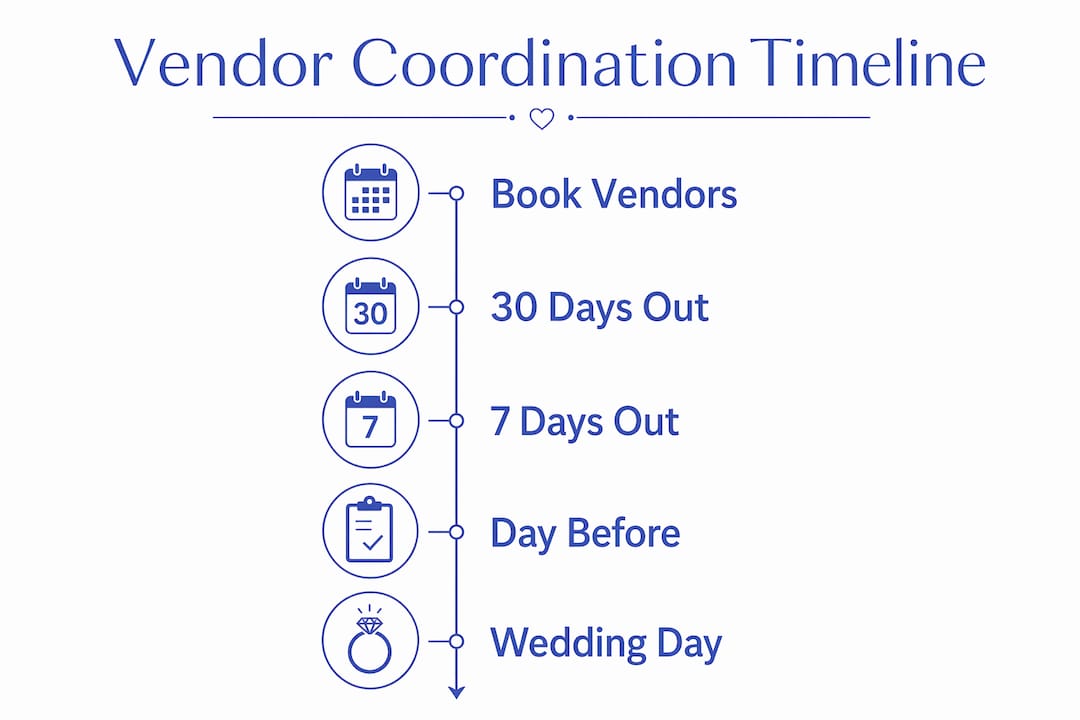
Wave 1 — 30 days out
Confirm the basics: date, service scope, arrival time, and primary point of contact. This wave catches vendors who have the wrong date in their calendar or who have changed their team since you signed the contract. Send the final timeline version at this stage so vendors can flag conflicts early.
Wave 2 — 7 days out
Confirm logistics: exact arrival address, parking instructions, load-in access, and any venue-specific rules. This is also when you confirm payment balances and verify that all equipment or supplies are secured. Regular vendor reminders at this stage prevent last-minute surprises that could have been resolved with a week to spare.
Wave 3 — 48 hours out
This is your final sync. Confirm arrival time one more time, share the day-of coordinator's direct phone number, and ask each vendor to confirm receipt. If a vendor does not respond within 24 hours of this final check-in, call them directly. Do not wait.
"Reframe your confirmations as syncing up rather than checking up. Vendors respond better when the tone is collaborative, not supervisory. A warm, appreciative message at each wave builds goodwill that pays off when something goes sideways on the day."
The three-wave system works because it spaces out the information load. Vendors are not overwhelmed by a single massive brief. Each wave adds a layer of detail as the event gets closer, which is how professionals process complex logistics.
Who should be the day-of point person?
Having one primary point person is the single best practice to avoid communication breakdowns between multiple vendors. When vendors receive conflicting directions from different people, mistakes happen. A single contact eliminates that risk.
The day-of point person handles:
- Receiving vendors at the venue and directing them to their setup areas
- Enforcing the timeline and alerting the team when a vendor runs behind
- Resolving conflicts between vendor setups or access needs
- Fielding all vendor questions so the couple stays free from logistics
- Holding the master vendor contact sheet with backup numbers and photos
For events with seven or more vendors, two dedicated coordinators are the recommended minimum. One manages the venue floor while the other handles vendor arrivals and external logistics. Splitting the role prevents a single bottleneck when multiple vendors arrive simultaneously.
Pro Tip: The point person should not be a member of the bridal party. A bridesmaid or groomsman cannot manage vendor logistics and participate in getting-ready moments at the same time. Assign this role to a trusted friend with no other duties, or hire a professional day-of coordinator.
Provide your point person with a printed vendor contact sheet that includes each vendor's name, company, direct phone, arrival time, setup location, and a photo if possible. Photos matter more than most couples realize. When five vendors arrive at once, a coordinator who can visually identify the lighting crew from the catering team saves real time.
How should you document vendor agreements?
All financial agreements, scope changes, and critical logistics must be confirmed in writing. Verbal agreements and group chat messages are easy to misread, screenshot out of context, or simply forget. Email is the right channel for anything that matters.
Follow these documentation practices throughout your planning:
- Confirm every scope change by email within 24 hours of a verbal discussion
- Request written confirmation from the vendor acknowledging the change
- Keep a change log in your vendor registry noting what changed and when
- Never rely on a group chat for binding agreements or payment confirmations
- Set response time expectations early — tell vendors you expect replies within 48 hours on business days
Effective communication starts early by establishing roles, boundaries, and a primary communication method. Couples who set these expectations at the contract stage rarely face disputes later. Those who assume vendors will "figure it out" often spend the final weeks before the wedding chasing confirmations.
The tone of your written communication shapes the vendor relationship. Warm, appreciative language during confirmations builds a collaborative dynamic. Vendors who feel respected are more likely to go the extra mile when a problem needs solving. A simple "thank you for confirming" at the end of a check-in email costs nothing and builds real goodwill.
Pro Tip: Create an email folder for each vendor from day one. Every message, contract, invoice, and confirmation goes in that folder. If a dispute arises, your documentation is already organized and searchable.
Key Takeaways
Effective wedding vendor coordination requires a centralized registry, a reverse timeline, three-wave confirmations, and a single dedicated point person to keep all vendors aligned.
| Point | Details |
|---|---|
| Build a central vendor registry | Store every contact, contract, and payment detail in one shared document from the start. |
| Use a reverse timeline | Work backward from ceremony time to reveal vendor dependencies and set hard arrival windows. |
| Apply the 3-wave protocol | Confirm vendors at 30 days, 7 days, and 48 hours out to catch problems before they become crises. |
| Appoint one point person | A single coordinator who is not in the bridal party manages all vendor communication on the day. |
| Document everything in writing | Confirm all scope changes and agreements by email within 24 hours of any verbal discussion. |
What I've learned from watching coordination go wrong
The couples who have the smoothest wedding days are not the ones who hired the most expensive vendors. They are the ones who treated coordination as a system, not a to-do list. I have seen beautifully designed weddings fall apart because no one owned the timeline, and I have seen modest budgets produce flawless days because one organized person held everything together.
The mistake I see most often is couples assuming vendors will coordinate with each other. They will not. A caterer does not know when the florist finishes. A lighting crew does not know when the photographer needs the room cleared. Each vendor shows up to do their job. The couple, or their coordinator, is responsible for connecting those dots.
The other underrated practice is communicating your vision clearly to each vendor before the day arrives. Vendors who understand the full picture of what you want make better decisions independently. That reduces the number of questions your point person has to field in real time.
Trust your vendors. They are professionals. But trust works best when it is backed by a clear timeline, written agreements, and a single person they can call with questions. That combination is what separates a stressful wedding day from a great one.
— Todd
Larsonprophotography: a vendor partner who shows up prepared
Vendor coordination only works when every professional on your team takes it seriously. At Larsonprophotography, we arrive with a clear timeline, a confirmed shot list, and direct communication with your coordinator before the day begins.

Our wedding photography clients consistently note that our team integrates with other vendors without friction. We know when lighting needs to finish, when the florals should be documented, and how to stay out of the caterer's way during service. If you are planning a wedding in San Antonio and want a photography team that treats coordination as part of the job, explore our wedding photography services to see how we work and what we deliver.
FAQ
What does wedding vendor coordination mean?
Wedding vendor coordination is the process of organizing communication, schedules, and logistics among all vendors involved in a wedding event. It covers everything from arrival times and setup sequences to written confirmations and day-of contact management.
How early should you start coordinating with vendors?
Start coordinating the moment each vendor is booked. Establish your primary communication method, confirm key dates in writing, and build your vendor registry from day one to avoid gaps later.
What is the 3-wave confirmation protocol?
The 3-wave protocol schedules vendor check-ins at 30 days, 7 days, and 48 hours before the wedding. Each wave confirms a deeper layer of logistics, and any vendor who misses the 48-hour check-in should receive a direct phone call within 24 hours.
Should the couple manage vendor coordination themselves?
Couples can manage coordination with the right systems, but events with seven or more vendors benefit from at least one dedicated professional coordinator. The point person should have no other duties on the wedding day.
What is the best way to document vendor agreements?
Email is the most reliable channel for confirming agreements in writing. Follow every verbal discussion with a written summary sent within 24 hours, and keep a change log in your vendor registry to track every update.