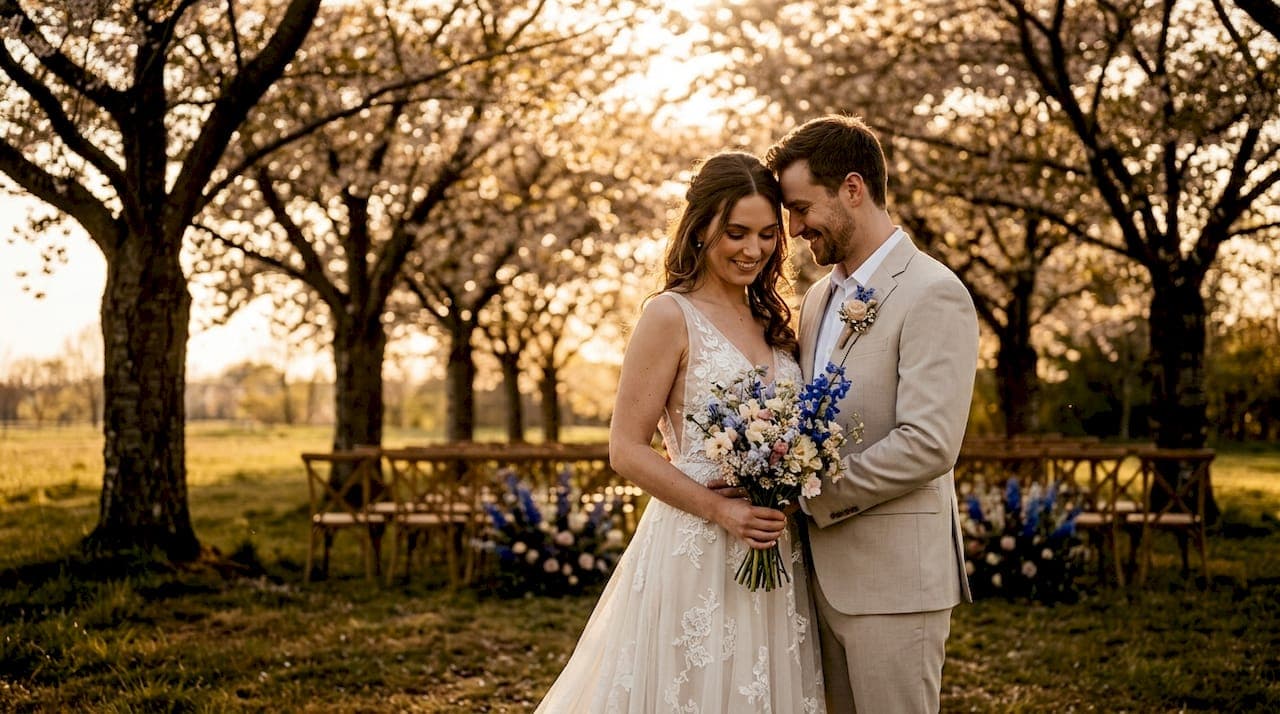
Outdoor wedding photography ideas are creative techniques and timing strategies that transform natural settings into extraordinary backdrops for your most important day. The difference between forgettable snapshots and images you'll display for decades comes down to three things: light quality, venue composition, and a photographer who plans ahead. Whether you're exchanging vows in a San Antonio garden, on a Texas Hill Country cliff, or beside a still lake, the ideas below give you a concrete framework to make every frame count.
1. Master natural light with golden hour portraits
Golden hour is the single most powerful tool in outdoor wedding photography, and most couples waste it on the wrong part of the day. Plan portraits in the 45 to 60 minutes before sunset for warm, directional light that flatters every skin tone and adds a cinematic quality no studio strobe can replicate. Scheduling your ceremony during golden hour sounds romantic but burns through the best light before you ever get your couple portraits.
Directional light shapes the mood of every image. Side lighting adds depth and dimension to faces, while backlighting wraps subjects in a soft, atmospheric glow. Avoid placing subjects with the sun directly behind them at full intensity. That setup creates blown-out backgrounds and underexposed faces unless your photographer is actively compensating with fill flash.
- Schedule your portrait session to begin 60 minutes before sunset
- Use apps like PhotoPills or The Photographer's Ephemeris to track exact sun position at your venue
- Ask your photographer to identify two or three specific spots at your venue that catch side light beautifully
- Avoid scheduling family formals during golden hour. Move them to earlier in the day
Overcast days produce soft, even lighting that eliminates harsh shadows entirely, making them surprisingly flattering for portraits. A cloudy afternoon in June can yield cleaner, more consistent results than a bright sunny day with no cloud cover.
Pro Tip: Tell your photographer your sunset time at least two weeks before the wedding so they can build your portrait sequence around it. A well-structured portrait timeline prevents the most common cause of lost golden hour shots: running behind schedule.
2. Use venue features as natural compositional tools
Creative outdoor photos depend far more on how a photographer uses the environment than on complex posing. Position the couple near still water edges to create mirror-image reflections that double the visual impact of any frame. This works at ponds, fountains, pools, and even puddles after rain.
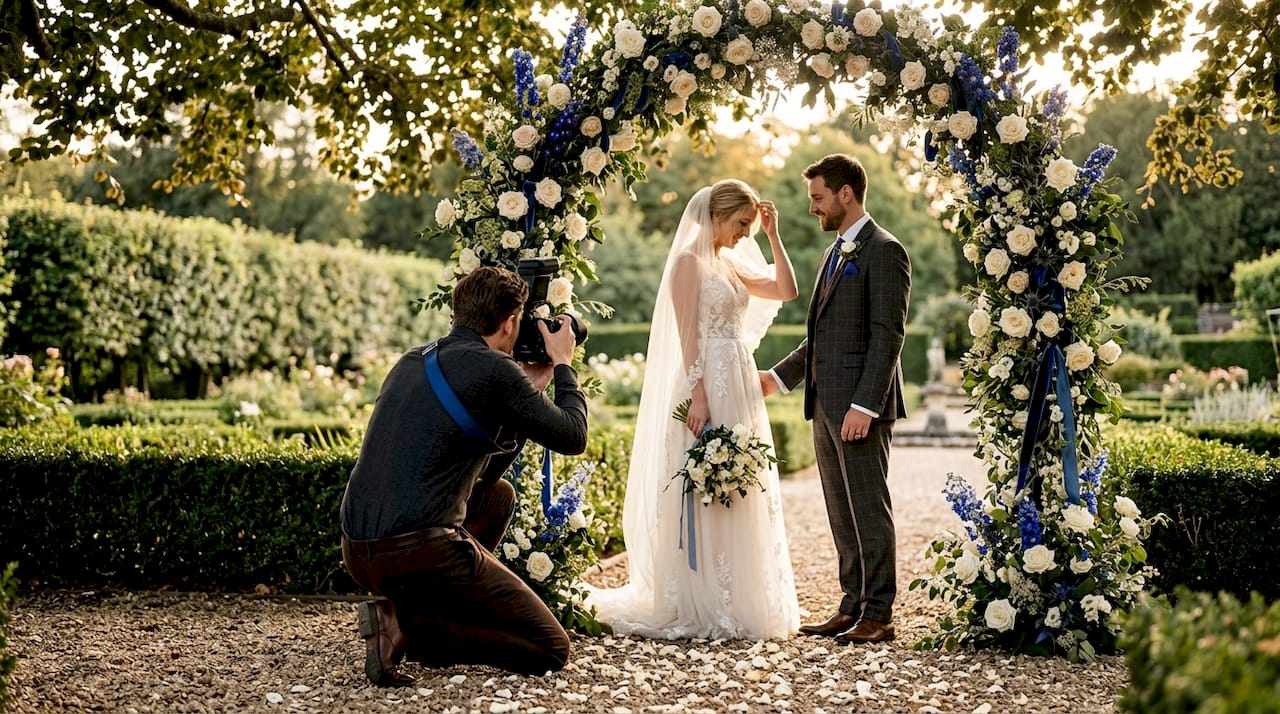
Shooting through natural or architectural elements adds layers of depth that flat, open-field shots simply cannot achieve. Foliage frames, stone archways, barn doorways, and hanging florals all function as natural foreground elements that draw the eye directly to the couple. Matching bridal dress style to setting amplifies this effect. A flowing bohemian gown reads beautifully against a wildflower meadow. A structured corset silhouette pops against clean architectural lines.
| Venue type | Best compositional technique |
|---|---|
| Garden or estate | Shoot through floral arches or hedgerow openings |
| Lakeside or riverside | Use water surface for mirror reflections |
| Rustic barn | Frame couple in doorway with backlight |
| Cliff or hilltop | Use sky as negative space behind subjects |
| Urban courtyard | Leverage geometric lines and shadow patterns |
Pro Tip: Ask your photographer to arrive 30 to 45 minutes before guests for empty venue shots. Decor, florals, and lighting details photographed without people in frame add significant depth to your final wedding photo album.
Explore unique photo backdrops that go beyond the standard ceremony aisle shot. The most memorable images from any outdoor wedding usually come from unexpected corners of the property that most guests never notice.
3. Mix photography styles for a dynamic wedding album
No single photography style captures everything an outdoor wedding offers. Combining two or three styles such as editorial, documentary, and fine art gives your album visual variety and genuine storytelling depth. Editorial shots deliver the polished, magazine-ready portraits. Documentary captures the unscripted laugh between your grandmother and your maid of honor. Fine art frames the whole scene as a painting.
The key is communicating your priorities clearly before the wedding day. If you love candid, natural wedding photos, tell your photographer to spend more time in documentary mode during the reception. If you want striking couple portraits, allocate more time to editorial setups during golden hour.
- Editorial style: Directed, polished, high-fashion. Works best during portrait sessions with controlled light.
- Documentary style: Unposed, observational. Captures ceremony emotion and reception energy authentically.
- Fine art style: Painterly, atmospheric. Thrives in soft light, open landscapes, and moody weather.
- Cinematic style: Wide establishing shots, dramatic framing. Pairs well with dramatic outdoor venues.
Understanding wedding photography styles before your consultation means you walk in with a vocabulary that saves time and gets better results. Photographers respond to specific style references far more effectively than vague requests for "beautiful photos."
4. Plan your timeline backward from sunset
The most common outdoor wedding photography mistake is building the schedule forward from the ceremony and hoping golden hour works out. Build your timeline backward from your intended portrait window instead. Decide when you want to be shooting portraits, then schedule cocktail hour, ceremony, and getting-ready shots to protect that window.
Add a 15 to 20 minute buffer between the ceremony end and portrait start. Ceremonies run long. Guests want to congratulate you. Family members wander. Without a buffer, you arrive at your portrait location 20 minutes late and watch the best light disappear while you're still walking to the spot.
- Identify your sunset time for the wedding date and location
- Block the 45 minutes before sunset as a protected portrait window
- Schedule cocktail hour to begin immediately after the ceremony so guests are occupied
- Place family formals in the 30 minutes right after the ceremony while light is still good
- Add a 15 to 20 minute buffer after the ceremony before portraits begin
- Confirm this timeline with your photographer, caterer, and officiant at least four weeks out
Pro Tip: Weather delays are real. Designing a parallel Plan B with the same level of detail as your outdoor plan means a sudden storm doesn't derail your entire photography schedule. Coordinate the backup location with your photographer in advance so they know the light conditions there too.
5. Embrace rain and overcast conditions
Rain is not the enemy of great outdoor wedding photography. It is an opportunity most couples never prepare for. Wet stone surfaces, rain-soaked petals, and overcast skies all create textures and moods that sunny days cannot produce. Building a detailed Plan B alongside your outdoor plan reduces stress and keeps your celebration on track regardless of forecast.
Photographers who shoot in rain carry weather-sealed camera bodies, fast prime lenses for low light, and portable off-camera flash units. A covered porch, a barn overhang, or a stone colonnade can function as a stunning portrait location that only exists because of the rain. Some of the most requested images in wedding portfolios were shot on overcast or rainy days.
Communicate your rain plan to every vendor at least two weeks before the wedding. Your florist, caterer, and officiant all need to know the backup location and timeline. When everyone is aligned, a weather pivot takes 10 minutes instead of two hours of frantic phone calls.
6. Capture group shots with intention
Group wedding photos are the most logistically demanding part of any outdoor shoot, and the most often poorly planned. The standard approach of lining everyone up in a field produces flat, forgettable images. Instead, use the venue's natural terrain to create visual interest. A hillside creates natural height variation. A wide staircase gives you three rows without anyone standing on a box. A dock or bridge forces a long, linear composition that reads beautifully.
For group wedding photo ideas that actually work, prepare a shot list with specific groupings ranked by priority. Start with the largest groups and work down to smaller ones. This prevents the most common group photo failure: key family members drifting away before their shot is taken.
Candid group moments often outperform posed ones in the final album. A candid versus posed approach to group shots captures genuine laughter and connection that stiff lineup photos never achieve. Ask your photographer to shoot both versions for every group.
7. Add creative details with sparkler exits and night shots
A sparkler exit is one of the most visually dramatic outdoor wedding photography ideas available, and it requires specific technical preparation to execute well. Using a shutter speed of roughly 1/8 to 1/30 seconds creates light trail motion blur, while 1/200 to 1/500 seconds with flash freezes individual sparks mid-air. Both effects are striking. The choice depends on the mood you want.
Your photographer needs a tripod and rear-curtain flash sync set before the exit begins. There is no time to adjust settings once 80 guests are holding lit sparklers. Brief your photographer on which effect you prefer during your planning consultation, not on the wedding night.
Night portraits using off-camera flash against a dark sky or illuminated venue exterior add a completely different visual register to your album. These shots work especially well at venues with string lights, fire pits, or architectural uplighting. They give your photo album a range that purely daytime shooting cannot match.
Key takeaways
The best outdoor wedding photography combines golden hour timing, venue-specific composition, and a detailed timeline built backward from sunset to protect the most valuable light.
| Point | Details |
|---|---|
| Protect golden hour | Schedule portraits in the 45 to 60 minutes before sunset, not during the ceremony. |
| Use venue features | Water reflections, foliage frames, and architectural elements create depth without complex posing. |
| Mix photography styles | Combining editorial, documentary, and fine art styles produces a richer, more complete album. |
| Build a rain plan | A detailed Plan B with vendor coordination prevents weather from derailing your photography schedule. |
| Prepare for night shots | Sparkler exits and off-camera flash portraits require pre-set technical settings to execute correctly. |
What I've learned after years of outdoor wedding shoots
The couples who get the best outdoor wedding photos are almost never the ones with the most elaborate setups. They are the ones who trusted the plan and relaxed into the moment. I have photographed golden hour portraits that were transcendent because the couple stopped worrying about their hair and just looked at each other. I have also photographed technically perfect setups that produced stiff, forgettable images because the couple was too stressed to be present.
The single biggest factor in outdoor wedding photography is not the venue, the light, or the gear. It is whether the couple feels safe enough to be themselves in front of the camera. That comes from trust built before the wedding day, usually during an engagement session where you get comfortable with how your photographer works.
Venue selection matters more than most couples realize when they book it. A venue that photographs beautifully in the brochure can be a nightmare at 5:30 p.m. if there are no natural shade structures, no water features, and no architectural framing elements. I always recommend couples visit their venue at the same time of day as their planned portrait session before signing the contract. The light you see in that visit is the light you will be working with.
The other thing I tell every couple: your photographer cannot manufacture golden hour if you give them 15 minutes. Protect that time window like it is a vendor contract. Because in a real sense, it is.
— Todd
Capture your outdoor wedding with Larsonprophotography
Planning an outdoor wedding in San Antonio or the surrounding Texas Hill Country means working with some of the most photogenic light and terrain in the country. Larsonprophotography specializes in exactly this environment, with deep experience in golden hour timing, weather-adaptive shooting, and venue-specific composition across gardens, ranches, lakesides, and historic estates.
Whether you want editorial portraits at sunset, documentary coverage of every unscripted moment, or a sparkler exit that stops guests mid-scroll, the wedding photography services at Larsonprophotography are built around your specific venue and vision. Book your consultation early to lock in your golden hour portrait window before the date fills. View the full portfolio and client experiences to see what outdoor wedding photography looks like when timing and creativity align.
FAQ
What is the best time of day for outdoor wedding portraits?
The 45 to 60 minutes before sunset, known as golden hour, produces the warmest and most flattering natural light for outdoor portraits. Plan portraits around sunset rather than scheduling the ceremony during this window.
How do photographers handle rain at outdoor weddings?
Experienced photographers use weather-sealed gear and identify covered locations at the venue in advance. Building a parallel rain plan with equal detail to the outdoor plan keeps the photography schedule intact regardless of weather.
What photography styles work best for outdoor weddings?
Editorial, documentary, and fine art styles each serve different outdoor settings and moments. Mixing two or three styles gives your album visual variety and captures both posed portraits and authentic candid moments.
How do I get great group photos at an outdoor wedding?
Use the venue's natural terrain to create height variation and depth instead of lining everyone up on flat ground. Prepare a prioritized shot list and start with the largest groups first to prevent key family members from drifting away.
Do I need a special plan for sparkler exit photos?
Yes. Your photographer needs a tripod and pre-set camera settings before the exit begins. Camera settings for sparkler exits vary depending on whether you want motion blur trails or frozen sparks, and there is no time to adjust once guests are holding lit sparklers.