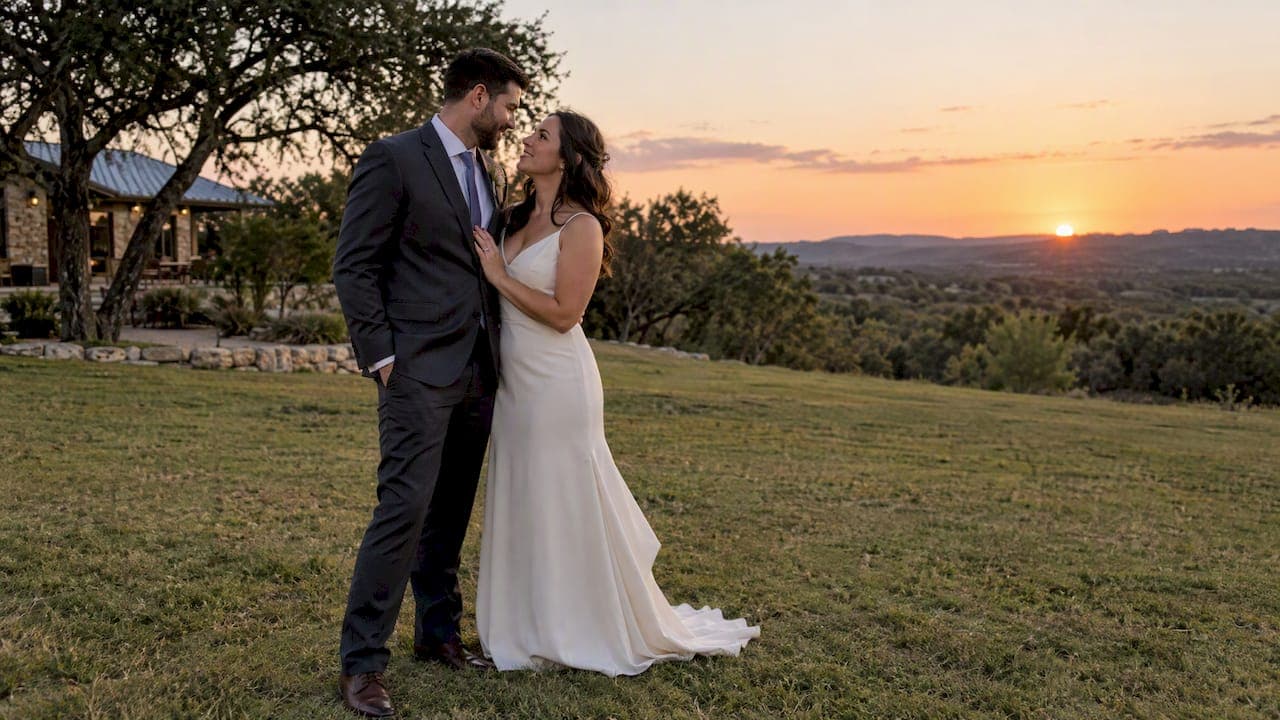
Yes, sunset photos are worth planning for if you want warm, romantic portraits that look flattering on every skin tone. The single most important move is reserving 10 to 20 minutes in your timeline and confirming the plan with your photographer well before the day. Weather and your venue's geography can shift that window, so build in a buffer rather than counting on an exact minute.
TL;DR:
- Sunset photos should be scheduled 30 to 60 minutes before sunset, with additional buffer time for delays or overcast conditions.
- The best shooting window lasts about 20 to 30 minutes once the light turns golden, requiring precise timing and pre-planned shot sequences.
- Optimal locations feature an open west-facing view, reflective surfaces, and foreground elements, checked in advance at the same time of day.
- Use sun-tracking tools to confirm sunset times and have backup plans for cloudy conditions, which often still produce flattering, diffused light.
- Short, intentional poses like silhouettes, rim-lit portraits, and motion shots maximize the limited golden hour, with camera settings adjusted for quick exposure control.
Table of Contents
- Why golden hour matters for wedding portraits
- When to schedule sunset photos in your timeline
- Scouting locations and composition for sunset light
- Poses and shot ideas that work at sunset
- Camera and lighting basics for sunset photos
- A sample shot list and timeline you can copy
- Working with your photographer: planning and backup options
- Why trust this advice: experience behind the lens
- Photographer perspective: the last 20 minutes of light
- How we can capture your sunset portraits
- FAQ
- Sources
Why golden hour matters for wedding portraits
Golden hour refers to the stretch of low, warm sunlight that typically falls within roughly 60 to 45 minutes before sunset, when the sun sits close to the horizon. At that angle, light travels through more atmosphere, scattering out harsh blue tones and leaving behind a soft amber glow that wraps around faces instead of carving hard shadows under eyes and noses.
Midday sun does the opposite: it falls straight down, creating squinting, raccoon-eye shadows, and blown-out highlights on fair skin. Blue hour, the cooler period just after sunset, offers a moody, cinematic look but lacks the warmth most couples associate with romance. Golden hour sits between the two, giving you soft shadows, a gentle rim of light around hair and shoulders, and skin tones that read warm rather than washed out.

Couples who want dreamy, editorial-style portraits, the kind with a glowing backdrop and a soft halo effect, are chasing this specific light. It is also the most forgiving window for group shots, since the diffused glow flatters more people at once than direct sun ever will.
When to schedule sunset photos in your timeline

Start positioning yourselves 30 to 60 minutes before sunset, then expect a short period of ideal glow once the light turns gold. That narrow margin is why timing rules exist. The commonly cited 30-5 guideline suggests giving photographers roughly 30 minutes of dedicated time with the couple and holding the final 5 minutes for the most dramatic, sun-touching-the-horizon frames.
Delays are common on wedding days, so build slack around this window rather than scheduling it tight against dinner service or toasts.
- Confirm the exact sunset time for your date and venue a few weeks out, not months in advance, since it shifts seasonally.
- Add a 15-minute buffer before your planned start in case the ceremony or cocktail hour runs long.
- Ask your planner to flag the "go" time quietly so you are not pulled away from guests at an awkward moment.
Season and latitude change how fast the light fades. Summer evenings in northern latitudes give you a slower, more forgiving fade, while winter sunsets can drop from gold to gray in minutes. Venues framed by hills or dense trees, as The Knot's golden hour guide notes for mountainous settings, can shorten or extend your usable window depending on when the horizon actually blocks the sun.
Scouting locations and composition for sunset light
The best sunset spots share a few traits: an open view toward the west, something reflective nearby like water or glass to bounce extra light onto faces, and a foreground element such as tall grass, a fence line, or an archway to add depth. A flat parking lot with a pretty sky behind it rarely produces a memorable frame on its own.
- Visit the location at the same time of day you plan to shoot, since shadows and sun position shift completely between noon and 7 p.m.
- Walk the space and mark two or three backup angles in case guests, cars, or construction block your first choice.
- Check for obstructions like power lines, buildings, or trees that could cut across the horizon in your frame.
Once you have a spot, simple composition habits do the heavy lifting: place the couple off-center using the rule of thirds, use a pathway or fence line to lead the eye toward them, and let foreground elements frame the shot without covering faces.
Pro Tip: Take a phone photo at your scouted spot during a weekday visit at the same hour; it reveals lens flare and shadow problems faster than standing there and guessing.
For more outdoor-specific setups, our outdoor wedding photography ideas post covers venue types that photograph especially well at this hour.
Poses and shot ideas that work at sunset
A short window means you need poses that photograph fast and still look intentional. Classic options like a slow walk toward the camera, a kiss with the sun just behind your shoulders, or a veil twirl all work because they create motion and shape against the glow rather than flat, static posing.
Positioning the sun behind the couple produces a soft rim of light around hair and shoulders, sometimes called a hair halo, while positioning it to the side keeps faces lit without squinting. Silhouettes, where the couple stands directly between the camera and the sinking sun, trade facial detail for a bold, graphic shape that reads well printed large or framed.
- Request one silhouette frame with the horizon low and the couple's outline sharp against the sky.
- Ask for a close, rim-lit portrait where the sun grazes the edge of your hair and shoulders.
- Include one wide environmental shot that shows the venue, the sky, and the couple small within the frame.
- Add a candid movement shot, walking, laughing, or spinning, to break up posed portraits.
Because the light changes fast, agree on this list with your photographer beforehand rather than deciding on the spot. Moving through four or five pre-planned setups in order is far quicker than improvising, and it means nobody wastes the last usable minutes of color deciding what to do next. Our bridal portrait pose guide has additional ideas that adapt well to backlit settings.
Camera and lighting basics for sunset photos
Exposure choices matter more at sunset than almost any other time of day. Exposing for the sky keeps the color saturated but can leave faces dark, while exposing for the subject brightens faces but often washes out the sky to white. Many photographers split the difference by slightly underexposing the overall frame, which deepens the orange and pink tones in the sky while still holding enough detail in skin.
Backlighting, with the sun behind the subjects, creates that glowing rim effect but often needs help to keep faces from going dark. A reflector bounces light back onto faces, and a touch of fill flash does the same job with more control in low light.
Golden hour lasts only about 20 to 30 minutes of truly usable light once the sun nears the horizon, which is why photographers treat the first 30 minutes of arrival as testing time rather than shooting time.
- Phone shooters should lock exposure manually by tapping and holding on the subject's face, since auto mode tends to favor the bright sky.
- Avoid phone portrait mode in backlit scenes since the edge detection often blurs hair and veils incorrectly.
- DSLR shooters generally want a wider aperture (around f/2.0 to f/2.8) to let in more light as the sun drops, paired with a faster shutter speed to avoid motion blur during movement shots.
- A mid-range telephoto lens, roughly 85mm to 135mm, compresses the background and makes the sun appear larger behind the couple.
More detail on exposure strategy for different light conditions is in our guide to the best light for wedding portraits.
A sample shot list and timeline you can copy
Handing your photographer a short, specific list beats a vague request for "pretty sunset photos." Share this structure with your planner and photographer so everyone knows when to pause the schedule.
- 45 minutes before sunset: couple steps away from the reception for a quiet 5-minute walk to the scouted location.
- 30 minutes before sunset: test shots and pose rehearsal, confirming angles and backup spots.
- 20 minutes before sunset: main portrait sequence, moving through walking, close-up, and wide shots in order.
- 10 minutes before sunset: rim-lit and backlit close-ups as the color peaks.
- 5 minutes before sunset: silhouette frames with the sun low on the horizon.
- Immediately after sunset: one or two blue-hour frames if the sky still holds color.
A tight, prioritized checklist, covering a walk, a kiss, a silhouette, a wide shot, a close rim-lit portrait, and a candid moment, keeps the shoot efficient even if only 10 minutes end up usable. If a second shooter or videographer is joining, give them a copy of this same list in advance so they can cover reaction shots and behind-the-scenes angles while the lead photographer manages the primary frames. Our 2026 wedding photography checklist is a useful companion for building out the rest of the day around this window.
Working with your photographer: planning and backup options
Before booking, ask directly whether your photographer has shot golden-hour portraits before, what their backup plan looks like for overcast skies, and whether sunset coverage requires extra time added to your package.
Apps built for sun tracking take the guesswork out of planning. Tools like PhotoPills or the timeanddate Sun Calculator show the exact sunset time and sun angle for your venue's coordinates on your actual wedding date, which matters since sunset time shifts by several minutes a week depending on the season.
- Ask whether your photographer scouts the ceremony or reception site in advance using sun-tracking tools.
- Confirm what happens if clouds roll in, since overcast light can still produce soft, flattering portraits even without visible color.
- Build a 10 to 15 minute cushion into the timeline in case the ceremony or toasts run late.
If the sky stays gray, diffused cloud cover often produces softer, more even light than a clear sky, so the shoot rarely needs to be scrapped entirely.
Why trust this advice: experience behind the lens
This guidance draws on years spent photographing weddings across San Antonio, where Texas summers and shifting cloud cover make golden hour anything but predictable. We have built our approach around testing locations ahead of time and rehearsing poses so couples get consistent results even when the light window closes fast. Browse our golden hour workflow breakdown and portfolio for real examples of how this plays out on an actual wedding day.
Photographer perspective: the last 20 minutes of light
Once the light starts turning gold, priorities narrow fast: get the couple positioned, lock exposure, and watch for movement, a breeze catching the veil or hair is often the shot. Communication has to be quick and calm, not rushed, because couples pick up on stress and it shows in their expressions. Clouds can help or ruin a sequence in seconds, so I am always glancing at the horizon while directing. The best sunset sessions I have shot felt less like a photoshoot and more like a few stolen, unhurried minutes together, which is exactly what ends up on film.
— Todd
How we can capture your sunset portraits
We build golden-hour timing into wedding photography coverage as a standard part of planning, not an afterthought squeezed in at the end of the night. For couples who want to test the look before the big day, a golden-hour engagement session gives you a preview of how the light works for your specific venue and attire.
If cinematic movement matters as much as stills, our videography services pair with sunset portrait sessions for a fuller record of that light. Reach out through the wedding page to check availability for your date and talk through a timeline that protects your golden-hour window.
FAQ
Are sunset wedding photos worth it?
Yes, for most couples the soft, warm light at sunset produces more flattering and romantic portraits than midday sun, with fewer harsh shadows on faces. The tradeoff is a short window, so the value depends on scheduling it properly rather than hoping it happens naturally.
Is $5,000 too much for a wedding photographer?
Not necessarily. The Knot's Real Weddings data puts the average U.S. wedding photographer cost around $3,000, with wide regional variation, so costs can be higher in some markets or for photographers offering extended coverage. Larson Pro Photography packages are quoted individually, so the best way to compare is requesting a consultation for your date and venue.
When should you schedule wedding sunset photos?
Plan to start 30 to 60 minutes before the official sunset time for your date and location, since the richest golden light usually appears in the final 45 to 60 minutes before the sun sets. Confirm the exact time using a sun calculator a few weeks before the wedding, since it shifts throughout the year.
What is the 30-5 minute rule for weddings?
The 30-5 rule is a common planning guideline suggesting about half an hour of dedicated couple portrait time before sunset, with a short final period reserved for the most dramatic, sun-at-the-horizon shots like silhouettes. It helps photographers pace a shoot so the best light is not wasted on setup or indecision.