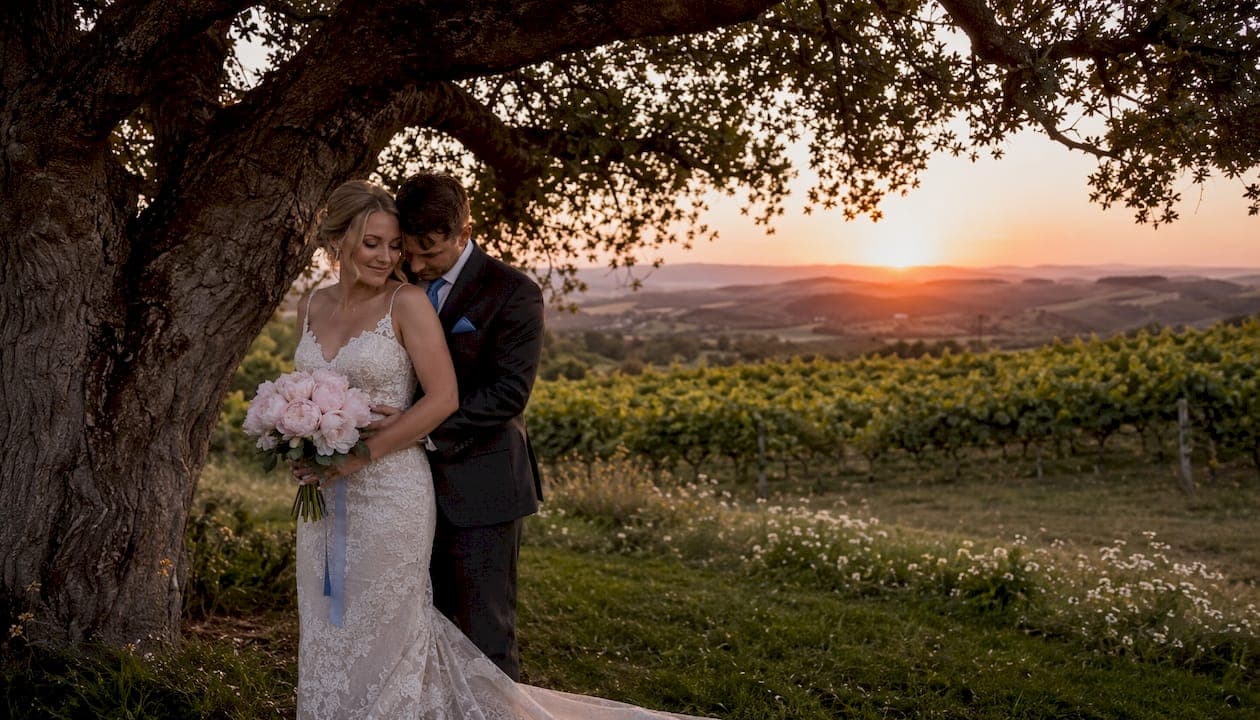
The strongest backdrop ideas for wedding portraits fall into five categories: natural scenery, floral arches, geometric frames, draped fabric panels, and greenery walls. Each one serves two jobs simultaneously: framing the couple during key moments and creating a dedicated portrait destination your photographer can return to all day. Before you commit to any of them, run the choice past your photographer first. Lighting, scale, and color all affect how a backdrop reads on camera, and what looks stunning in person can fall flat in photos without the right setup.
Table of Contents
- 10 backdrop ideas for wedding portraits, ranked by versatility
- How to choose the right backdrop for your portraits
- Photography tips that make your backdrop work harder
- DIY vs. rental vs. hire: what each option actually costs you
- Wedding-day setup checklist for portrait backdrops
- What to tell your photographer and backdrop designer
- How to incorporate cultural and personal themes into backdrop designs
- Eco-friendly backdrop options worth considering
- Key takeaways
- What I've learned shooting backdrops in San Antonio
- Larsonprophotography: portrait and backdrop planning for San Antonio couples
- Useful sources and further reading
10 backdrop ideas for wedding portraits, ranked by versatility
1. Natural scenery
Mountain ranges, grand oak trees, ocean horizons, and open fields cost nothing and photograph beautifully. Natural backdrops are the most cost-effective option on this list, and a few small accents like candles or a loose floral arrangement are all you need. The risk: you cannot control the background, so your photographer needs to scout the exact angle in advance.
Venue fit: Outdoor ceremonies, vineyard receptions, garden estates. Pro: Zero installation cost. Con: Weather and lighting are unpredictable.
Pro Tip: Ask your photographer to identify the best natural backdrop angle during the venue walkthrough, not on the wedding day.
2. Full floral arch
A freestanding arch covered in flowers and greenery is the most recognized backdrop in modern wedding photography. Roses, peonies, ranunculus, and hydrangeas photograph reliably; eucalyptus adds texture and lowers cost. After the ceremony, move the arch behind the sweetheart table to reuse the installation and cut total decor spend.
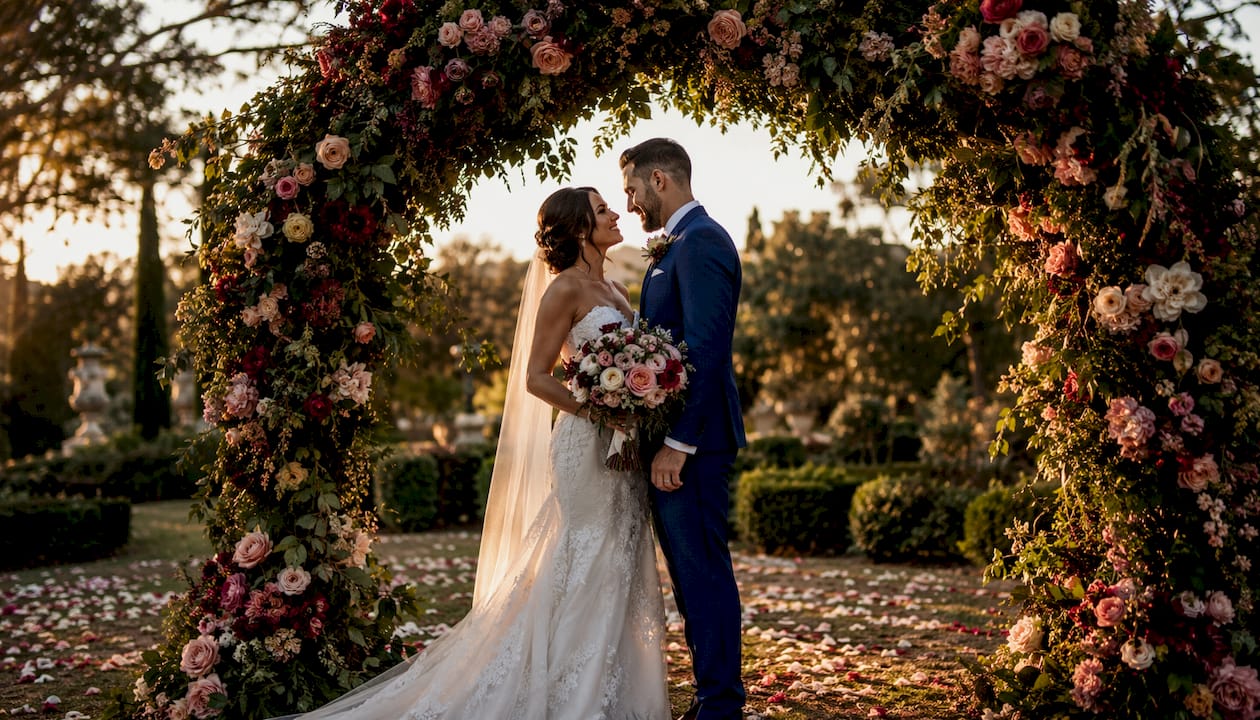
Venue fit: Ceremony altar, sweetheart table, indoor ballroom. Pro: Timeless, works in almost any light. Con: Fresh flowers require staging close to the event.
3. Geometric or hexagon arch
Geometric arches frame subjects cleanly from multiple angles without appearing flat, which is why they photograph well even in challenging light. The hexagon shape reads as modern and minimal; a round arch leans classic and romantic. Both dress up quickly with fabric or florals.
Venue fit: Modern venues, industrial spaces, outdoor ceremonies. Pro: Photography-friendly from any angle. Con: Bare metal can look sparse without styling.
4. Asymmetrical floral clusters
Instead of a symmetrical arch, asymmetrical floral arrangements on one or both sides of a frame create an artistic, editorial look. This style suits couples who want something that feels less expected. The open negative space in the center keeps the couple as the clear subject.
Venue fit: Boho outdoor ceremonies, barn receptions, greenhouse venues. Pro: Distinctive and personal. Con: Harder to execute without an experienced florist.
5. Draped fabric panels
Lengths of chiffon, silk, or linen draped over a frame or between poles move in any air current and catch light with a softness no solid structure matches. Lighter fabrics reflect light well and give portraits an airy feel; heavier velvet or linen panels add drama and work best indoors with directional lighting.
Venue fit: Ballrooms, tented receptions, outdoor evening ceremonies. Pro: Affordable and fast to install. Con: Wind is a serious problem outdoors.
6. Greenery wall
A flat vertical installation of eucalyptus, ferns, ivy, and mixed botanicals creates a lush, cohesive backdrop that reads well from any focal distance. Greenhouses and conservatories take this further by combining natural light with built-in plants, minimizing the need for any added structure.
Venue fit: Garden receptions, greenhouse venues, outdoor portrait stations. Pro: Versatile color palette that complements most attire. Con: Fresh greenery wilts in heat.
7. Hanging floral installation
Flowers suspended from above on wire or fishing line at varying heights create a cloud of blooms above the couple rather than behind them. This adds depth in the vertical plane and photographs beautifully from a slightly wider angle. It works especially well in venues with high ceilings.
Venue fit: Ballrooms, barns with exposed rafters, tented receptions. Pro: Dramatic and unexpected. Con: Requires structural anchor points and professional installation.
8. Neon sign
A custom neon sign mounted against a plain wall or suspended from a frame works as both a portrait backdrop and a reception focal point. Neon signs are particularly effective as evening or indoor backdrops when natural light fades. They also double as a keepsake after the wedding.
Venue fit: Indoor receptions, photo booth areas, sweetheart table corners. Pro: Reusable and personal. Con: Requires electrical access; looks flat in daylight.
9. Macramé panel
A large hand-knotted macramé panel creates intricate texture that photographs with warmth and depth no flat surface produces. The natural cotton rope suits boho and rustic aesthetics and pairs well with dried florals woven through the knots.
Venue fit: Outdoor and tented receptions, barn venues, desert ceremonies. Pro: Lightweight, DIY-achievable, and reusable. Con: Style-specific; does not suit formal or modern venues.
10. Mirrors and reflective elements
Large mirrors or metallic panels placed behind the couple create depth by reflecting the surrounding space. A full-length mirror framed with florals works as a portrait destination and a practical styling station. Sequin curtains serve a similar function at evening receptions.
Venue fit: Indoor receptions, photo booth areas, glamorous ballrooms. Pro: Adds depth without bulk. Con: Reflections require careful lighting to avoid glare.
Arch shape comparison
| Arch shape | Best aesthetic fit | Quick photo note |
|---|---|---|
| Hexagon | Modern, minimal | Clean lines frame subjects without distraction |
| Round/circle | Classic, romantic | Soft frame; works at any focal length |
| Rectangular | Editorial, structured | Suits wide shots and full-length portraits |
| Asymmetrical | Artistic, boho | Open negative space keeps couple as the focal point |
| Triangle | Rustic, boho | Dramatic peak; best with compressed telephoto framing |
How to choose the right backdrop for your portraits
Start with where the most-photographed moments will happen. That spot deserves your best backdrop investment. A single well-placed installation improves the entire wedding gallery more than several small ones scattered around the venue.
Then consider lighting. Natural light suits outdoor arches and greenery walls; artificial directional light is necessary for dark fabric panels and neon signs. Check the ceiling height and available anchor points during your venue walkthrough. Bring this short checklist:
- Ceiling height and structural anchor points
- Natural light sources and their direction at portrait time
- Power access for neon signs or string lights
- Surfaces that could anchor a freestanding frame
- Existing architectural features worth framing
Ask your photographer two questions before finalizing anything: where will you position us relative to the backdrop, and will the backdrop color compete with our attire? Lighter backdrops reflect light and produce soft, airy portraits. Darker ones add drama but need good directional lighting to read correctly on camera.
For outdoor backdrops, factor in season and weather. Fresh floral arches wilt in summer heat; dried botanicals or fabric panels handle warm days better. Wind is the biggest threat to fabric and paper installations outdoors.
Photography tips that make your backdrop work harder
Separate the subjects from the backdrop. Use a fill light or reflector to add light to the couple's faces when the backdrop is dark. Without separation, subjects merge visually into the background.
Lens choice matters more than most couples realize. An 85mm–135mm focal length compresses the background beautifully and keeps the backdrop soft while the couple stays sharp. Wider lenses capture the full arch but flatten depth. For a full-arch shot, step back and shoot at 50mm–85mm; for intimate portraits, compress with 135mm.
Posing should match the backdrop scale. Narrow arches favor close poses where the couple fills the frame. Large floral walls allow full-length editorial poses with room to breathe. Macramé and fabric panels suit mid-length shots where texture reads without overwhelming.
Numbered camera checks before a portrait set:
- Set exposure for the couple's faces, not the backdrop.
- Confirm white balance matches the light source (warm tungsten vs. daylight).
- Shoot a backlight test frame to check for unwanted halo or flare.
- Check depth of field: backdrop should be soft, not competing.
- Confirm the backdrop edges are out of frame or intentionally included.
Pro Tip: Photograph a test frame of the backdrop alone during the venue walkthrough. It takes two minutes and reveals shadow lines, reflections, or color casts that are nearly impossible to fix on the wedding day.
For outdoor wedding photography, golden hour placement is the single biggest upgrade available. Position the couple so the backdrop catches the warm side light rather than sitting in flat shade.
DIY vs. rental vs. hire: what each option actually costs you
DIY works for draped fabric panels, macramé, dried botanical arches, and simple greenery garlands. The savings are real, but the time cost is significant. A dried botanical arch is the most achievable complex DIY option: materials travel well, require no water, and can be assembled days in advance. Fresh floral walls are not realistic for most people in the week before a wedding.
Rental covers freestanding frames, geometric arches, and fabric drape systems. Cost is moderate, customization is limited to what the rental company stocks, and you are responsible for setup and teardown within the venue's window.
Hiring a builder or designer delivers a turnkey result. Fresh flower walls dominate the cost because materials and labor are both high. Paper or dried flower alternatives lower both. Always confirm venue permission for anchor points, electrical access for neon or string lights, and teardown timing before signing any contract.
Repurposing the ceremony arch behind the sweetheart table is the single best cost-reduction move available. It maximizes value and creates visual continuity across the entire wedding gallery.
Wedding-day setup checklist for portrait backdrops
Timed checklist:
- T–4 hours: Installation begins; florist or builder on-site with all materials.
- T–2 hours: Frame and structure complete; florals being placed.
- T–1 hour: Lighting check; photographer or coordinator confirms placement.
- T–30 minutes: Photographer shoots test frames; final adjustments made.
- T+0: Portraits begin.
- T+30 minutes (post-ceremony): Arch relocation to sweetheart table if planned.
Essential supplies to have on-site:
- Zip ties and gaffer tape
- Floral wire and extra blooms
- Extension cords and power strip
- Stepladder and sandbags for outdoor frames
- Backup lighting source
Responsibility assignments:
- Venue contact: anchor point access and teardown window confirmation
- Florist or builder: installation, touch-ups, and teardown
- Photographer: placement approval and test shots
- Coordinator or designated friend: timeline enforcement
Emergency checklist for common problems:
- Wind: add sandbags and guy-wires; move fabric panels indoors if possible.
- Wilted florals: keep backup blooms in water nearby; replace as needed.
- Power loss for neon or string lights: switch to candle alternatives if venue permits.
- Sizing issue: adjust camera distance rather than rebuilding the structure.
What to tell your photographer and backdrop designer
Copyable brief snippets:
- "We want full-length romantic portraits in front of the floral arch, soft and warm, with the arch centered and slightly soft in the background."
- "Editorial close-ups at the greenery wall, faces sharp, background compressed. Mood: intimate and modern."
- "Joyful guest portraits by the flower wall during cocktail hour, candid and natural, no posing."
- "Wide family portrait with the sweetheart table backdrop fully in frame, everyone relaxed."
Shot prompts to give your photographer:
- Golden-hour three-quarter portrait with the arch centered
- Close-up of hands and rings against the floral wall texture
- Wide shot showing the full arch with venue architecture visible
- Candid laugh during the portrait session, backdrop soft
- Silhouette against the draped fabric with backlight
- Full-length editorial pose at the greenery wall
- Over-the-shoulder portrait looking back at the camera
- Wide family portrait with backdrop in frame
- Couple walking away from the arch, shot from behind
- Detail shot of the backdrop texture alone, no subjects
Image reference advice: When sending references to your photographer, note the focal distance (close-up vs. full-length), the mood (soft and romantic vs. bold and editorial), and one must-have detail (the arch must be fully in frame, or the background must be soft). Three well-labeled references communicate more than twenty unlabeled Pinterest pins.
For bridal portrait poses that pair well with specific backdrop types, your photographer can walk you through options during the consultation.
How to incorporate cultural and personal themes into backdrop designs
A backdrop is one of the most direct ways to tell your story visually. Couples have used hand-painted canvas panels depicting meaningful landscapes, custom neon signs displaying phrases in a heritage language, and floral arrangements built around blooms that carry cultural significance. A banner of meaningful words, your vows, or a lyric from your first dance song placed behind the sweetheart table turns a decorative element into something genuinely personal.
Textiles work particularly well for cultural themes. Printed fabrics, embroidered panels, or woven textiles layered with plants create a curated, interior-like backdrop that photographs as a cohesive environment. Vintage room dividers or antique doors sourced from a family's cultural tradition add depth and meaning without requiring a custom build.
The practical rule: keep the color palette cohesive with your florals and attire. A culturally significant element reads strongest when it is not competing with a dozen other design choices around it.
Eco-friendly backdrop options worth considering
Dried and preserved florals are the most practical sustainable choice. They are wilt-resistant, reusable, and can be assembled days in advance. Pampas grass, dried palm leaves, protea, and preserved botanicals create warm, textured arches that photograph beautifully and generate no floral waste after the event.
Paper flowers are another strong option. They will not wilt, are more DIY-friendly than fresh arrangements, and can be composted or repurposed after the wedding. Greenery-only arches built from eucalyptus, olive branches, and ferns use fewer resources than full floral installations and compost cleanly.
Repurposing venue architecture is the most sustainable approach of all. A stone wall, greenhouse windows, or a fireplace surround requires no materials and no waste. When you do need a constructed backdrop, prioritize rental frames over purchased ones, and choose dried or paper florals over fresh when the design allows.
Key takeaways
The most effective wedding portrait backdrops match venue lighting, keep the couple as the clear subject, and serve double duty across ceremony and reception.
| Point | Details |
|---|---|
| Match backdrop to venue light | Natural scenery and greenery walls suit outdoor light; fabric and neon work best indoors with directional lighting. |
| Prioritize subject separation | Use fill light or a reflector so the couple stands out from dark or busy backdrops. |
| Plan for reuse | Moving the ceremony arch to the sweetheart table cuts cost and creates visual continuity across the gallery. |
| Consult your photographer early | A walkthrough test shot catches shadow lines, reflections, and color clashes before the wedding day. |
| Larsonprophotography | Offers venue walkthroughs, backdrop placement guidance, and full portrait coverage for San Antonio couples. |
What I've learned shooting backdrops in San Antonio
Most couples spend the most time choosing the backdrop and the least time thinking about where the light will actually be when portraits happen. That order should be reversed. A simple greenery wall in good light will outperform an elaborate floral arch in harsh midday shadow every single time.
My preference is always to test the backdrop during the venue walkthrough, shoot a quick frame, and flag any issues before the wedding day. When possible, I encourage couples to reuse their ceremony installation at the sweetheart table. It saves money, and the visual continuity it creates across the gallery is something you cannot replicate with two separate installations.
Larsonprophotography: portrait and backdrop planning for San Antonio couples
Choosing a backdrop is one decision. Getting it to photograph the way you imagined is another. Larsonprophotography works with couples through the full process: venue walkthrough consultations, backdrop placement and lighting review, and complete portrait coverage on the wedding day. The studio also coordinates with florists and designers to flag potential issues before installation day.
Larsonprophotography serves San Antonio and surrounding areas, with limited availability each season. To see finished wedding galleries and portrait work, visit the client portfolio. If you are planning an engagement session to preview your portrait style before the wedding, the engagement session page has details on booking and availability. Dates fill early, so reaching out sooner rather than later is worth it.
Useful sources and further reading
- Love & Lavender: Sweetheart table backdrop ideas — Detailed visual guide to reception-specific backdrops, from simple drapery to full floral installations.
- Love & Lavender: Flower backdrop ideas — Covers floral material choices (fresh, dried, paper, silk) with durability and cost notes.
- Brides: Stunning wedding backdrops — Photographer-sourced advice on placement, lighting, and walkthrough testing.
- Rise Wedding: Wedding backdrop guide — Arch shape comparisons and reception backdrop trends including neon and metallic options.
- Larsonprophotography: Creative photo backdrop ideas — Studio-specific examples of backdrops executed in real wedding and portrait sessions.
- Larsonprophotography: Unique wedding photo backdrops — Trend-focused post on distinctive backdrop designs for contemporary couples.
- Larsonprophotography: Step-by-step wedding portraits — Practical guide to portrait session timing and backdrop coordination for San Antonio couples.