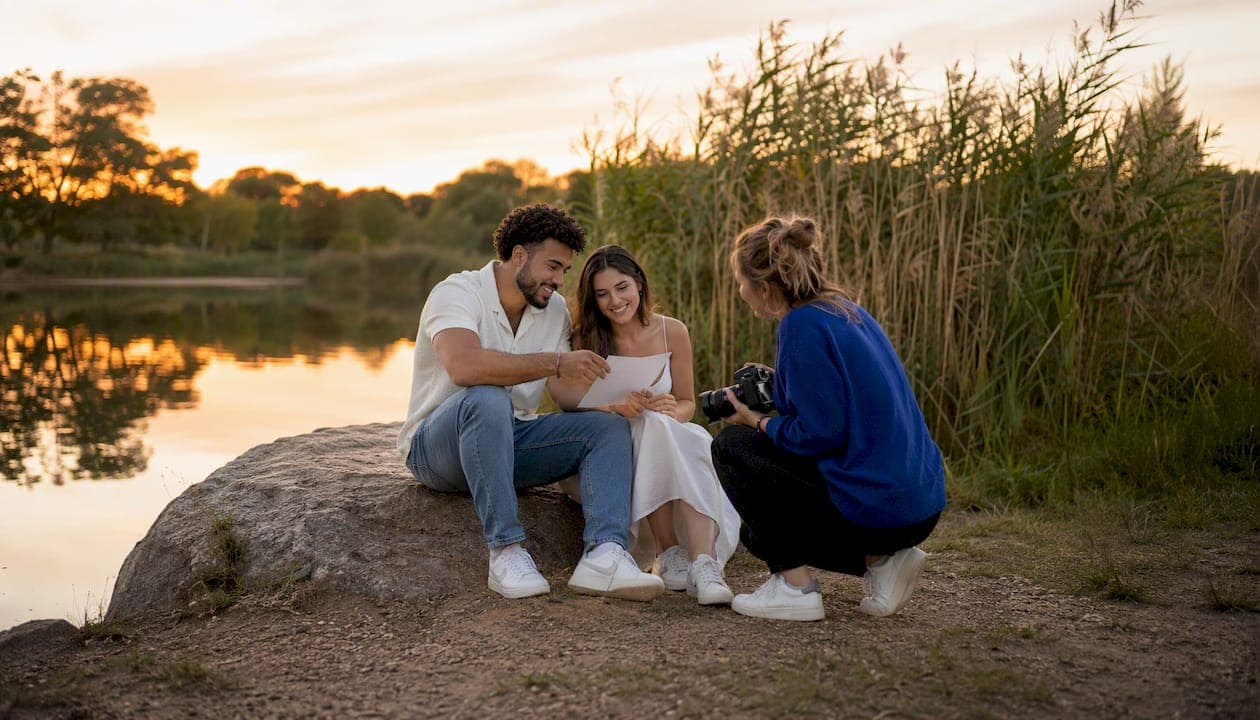
Your story is the single organizing idea that separates a wedding gallery worth revisiting for decades from one that collects dust after the first year. The role of couples' stories in photography is not decorative — it is structural. Every shot selection, every sequence, every detail frame your photographer chooses flows from the narrative you bring to the session. Larsonprophotography builds each shoot around that narrative, using layered capture strategies — wide establishing frames, intimate detail shots, and candid reaction frames, often with a two-camera setup — so the images reflect how your relationship actually feels, not just how it looked on one afternoon.
Table of Contents
- Why storytelling changes the outcome of your photos
- What personal stories should you bring to a session?
- Visual storytelling principles and the shot types that build an emotional arc
- How to plan a storytelling session and brief your photographer
- Concrete shot prompts you can use across every key moment
- How to sequence and preserve your photos so the story lasts
- Wardrobe, locations, props, and timing: the logistics that affect your story
- How Larsonprophotography approaches couples' storytelling
- Key Takeaways
- What couples get wrong about storytelling in photos
- Larsonprophotography turns your story into a gallery worth keeping
- Useful sources and further reading
Why storytelling changes the outcome of your photos
Documentation records what happened. Narrative photography preserves how it felt. That distinction drives every creative decision a skilled photographer makes, from focal length to the order images appear in an album.
Storytelling in wedding photography transforms documentation into a narrative that preserves emotional essence and family context for future generations — the shared glances, the heirloom details, the quiet moments between ceremony beats. Those are the frames couples return to most. Research on prewedding photography confirms that couples actively negotiate their visual identity during sessions, with the photographer acting as a mediator between two people's sense of self and the image they want to project. That negotiation only works when the photographer understands your story going in.
Photographers who prioritize narrative over posed perfection translate that story into three visual layers: wide shots that establish mood and place, detail shots that anchor personal meaning, and candid frames that catch unguarded connection. The most cherished frames are almost always the unscripted ones — a laugh mid-sentence, a hand squeeze before the vows.
Pro Tip: When interviewing photographers, ask to see a full gallery from a single wedding, not just a highlight reel. A photographer who tells stories will show you a beginning, a middle, and an end — not forty versions of the same pose.
What personal stories should you bring to a session?
Bring the relationship beats that matter most: how you met, the proposal, recurring rituals, family traditions, and shared hobbies. Aim for three to five story anchors per session — enough to give the shoot direction without overloading it.
Here is what each story type looks like in practice:
- How you met: Return to the location if possible, or bring a prop tied to it (a book, a coffee cup from that café). The setting does the storytelling.
- The proposal: Recreate the gesture, not the exact moment. A quiet re-enactment of the hand-hold or the look produces more usable frames than a staged redo.
- Recurring rituals: Sunday morning cooking, a favorite hiking trail, a board game you always argue over. Activity-based prompts produce natural movement and genuine expression.
- Family traditions: Heirloom jewelry, a grandmother's recipe card, a handwritten note. Detail objects like these act as storytelling anchors that add depth and context to any gallery.
- Shared hobbies: Bring the gear, the instrument, the dog. Anything that reflects your actual life together gives the photographer something real to work with.
Pro Tip: Write your three to five story anchors on a notes app and share them with your photographer at least a week before the shoot. That single step cuts the time spent on direction during the session itself.
Visual storytelling principles and the shot types that build an emotional arc
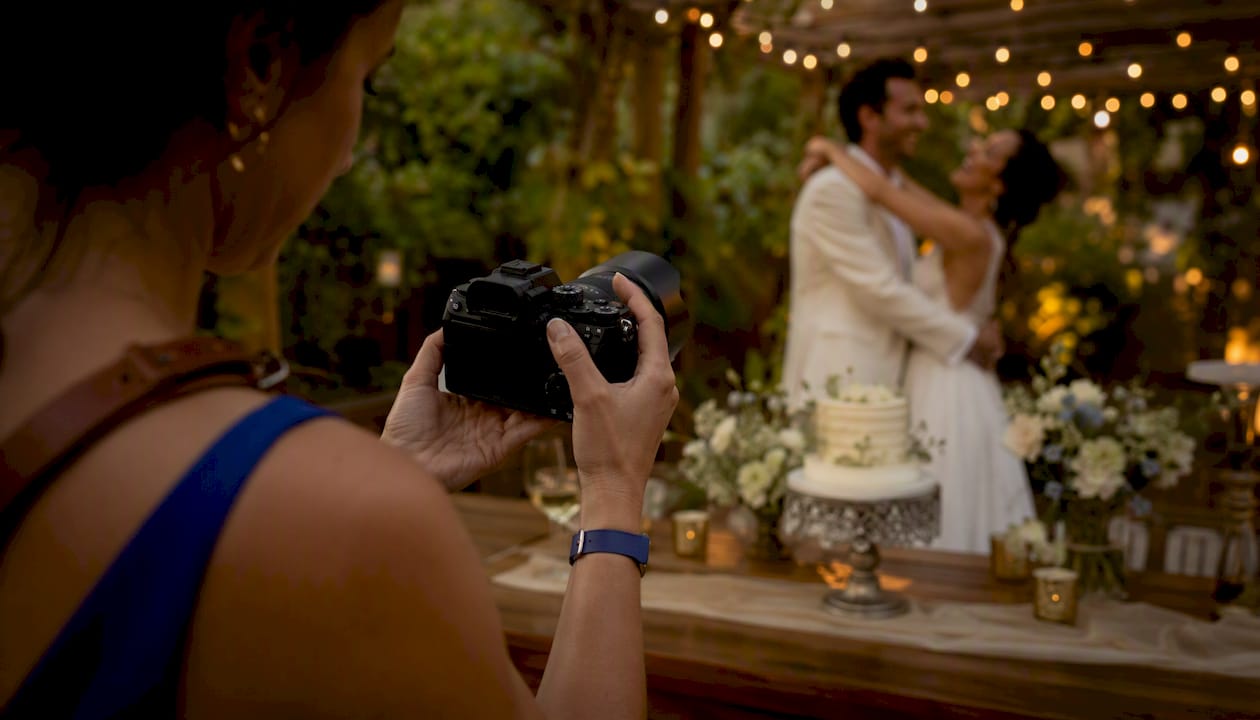
Use layered shots — wide establishing frames, intimate detail shots, and candid reaction frames — to build an emotional arc that holds together across an entire album. Each shot type carries a specific storytelling function.
| Shot type | Storytelling role | Emotional effect | Typical approach |
|---|---|---|---|
| Wide/establishing | Sets scene and context | Grounding, cinematic | wide-angle equivalent, natural light |
| Detail/intimate | Anchors personal meaning | Tender, specific | telephoto macro or portrait lens |
| Candid/reaction | Captures unguarded connection | Raw, authentic | Longer telephoto from a distance |
| Transitional | Links moments in sequence | Narrative flow | Any focal length, motion blur acceptable |
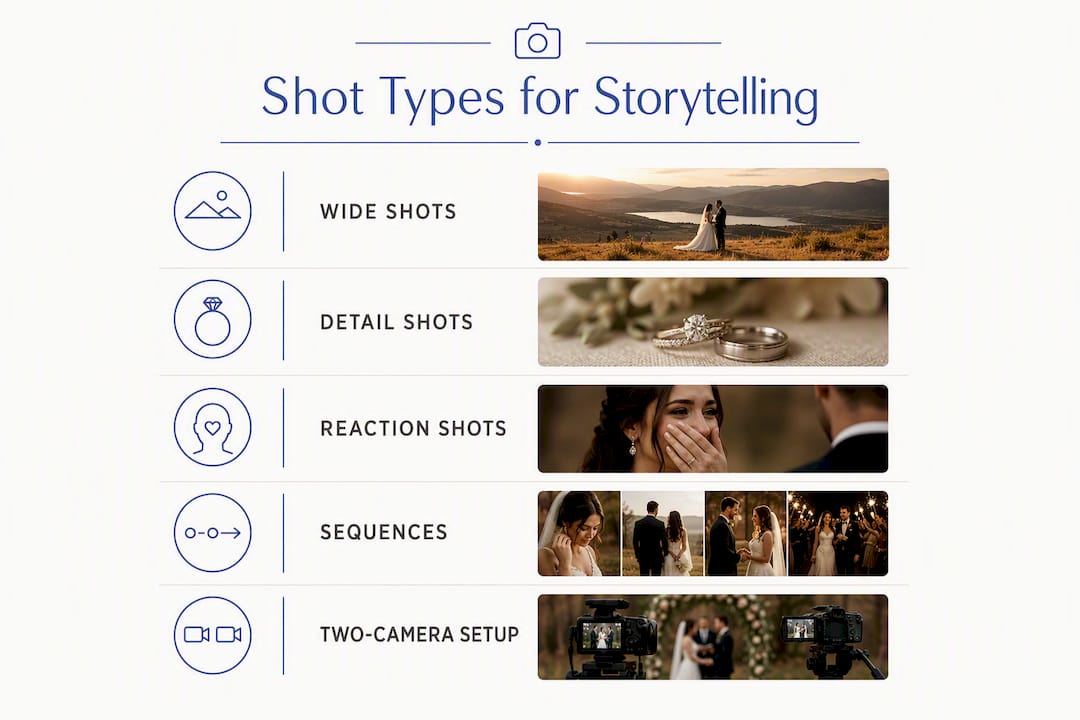
Two-camera setups solve a real problem: one camera on a wide lens catches the full scene while the other on a telephoto captures the intimate reaction happening simultaneously. You cannot recreate a first look, so having both angles covered at once matters. Mixed focal-length strategies also mean the album does not feel visually monotonous — variety in framing keeps the eye moving through the story.
Sequences of three to five images work as mini stories inside a gallery and are the most effective album-building units. A transitional frame — someone walking, a door closing, a glass being set down — gives the eye a breath between emotional peaks. For more on how these techniques translate to actual wedding coverage, the visual narrative guide for couples breaks down each shot type with examples.
Pro Tip: Ask your photographer to shoot at least one three-frame sequence at each major moment — arrival, ceremony, and reception. Those sequences become the spine of your album.
How to plan a storytelling session and brief your photographer
A short collaborative brief is the fastest route to narrative photos. It does not need to be long — one page covering story anchors, location notes, preferred shot types, must-have detail shots, and the people who need to be in specific frames.
A practical brief structure:
- Story anchors (three to five): the relationship moments you want reflected visually.
- Location notes: why you chose this place and what it means to your story.
- Preferred shot types: more candid, more detail, more wide — give your photographer a lean.
- Must-have detail shots: list specific objects (ring, heirloom, handwritten note).
- Key people: family members or friends whose presence matters to the narrative.
Questions worth asking at your first meeting:
- "Can I see a full gallery from a recent wedding, start to finish?"
- "How do you handle moments you didn't plan for?"
- "What do you do when a couple feels stiff in front of the camera?"
Preparation before the shoot — location scouting, mood discussion, and values conversation — allows photographers to anticipate where intimate moments will occur. That anticipation is what separates a photographer who reacts from one who is already in position. For a full collaboration template, the client-photographer collaboration guide walks through each step. You can also find practical guidance on communicating your vision to your photographer before the session.
Pro Tip: Prioritize a photographer whose personality makes you comfortable over one whose portfolio is slightly more polished. Identity is actively negotiated during sessions — that dynamic only works when you trust the person holding the camera.
Concrete shot prompts you can use across every key moment
Use situation-specific prompts to trigger authentic reactions rather than fixed poses. The goal is to give your photographer something real to capture, not to perform for the lens.
Engagement session: Frame it like a short story — opening scene, midpoint activity, closing moment. Start somewhere meaningful, do something you actually do together, and end with a quiet frame.
- "Walk me through how you'd show someone your favorite thing about this place."
- "Tell them something you haven't said out loud in a while." (whisper it — the photographer captures the reaction.)
- "Do the thing you always do when you're just hanging out."
Getting ready: Quiet rituals produce the strongest frames here. A parent fastening a button, a partner reading a note, a moment of stillness before the day accelerates.
Portraits: Movement beats stillness. "Walk toward me slowly and talk about your first date" produces a more natural frame than "stand here and smile."
Ceremony: Cue your photographer to stay on the non-speaking partner during vows. That reaction frame is almost always the most emotional image of the day.
Reception: Transitional moments — the walk to the dance floor, a quiet conversation at the edge of the room — carry as much story as the first dance itself.
Pro Tip: For natural, authentic images, rehearse one or two prompts with your partner before the shoot. Familiarity with the prompt means the reaction reads genuine, not rehearsed.
How to sequence and preserve your photos so the story lasts
Sequencing and contextual captions turn a gallery into a readable story that future family members will actually understand. A folder of 800 unnamed files does not survive a hard drive migration — a sequenced album with short captions does.
Practical steps:
- Choose a narrative order: chronological works for weddings; thematic (by emotion or location) works well for engagement sessions.
- Add short captions to key images — not descriptions of what is shown, but context ("her grandmother's ring," "the café where we met").
- Select prints or a bound album for durability. Digital files alone are fragile over decades.
- Back up raw and edited files in at least two locations: one cloud service and one physical drive.
- Add basic metadata — date, names, location — to file properties so images stay searchable.
Within one to two months of your wedding, complete this checklist:
- Download and back up all delivered files
- Confirm your photographer's file retention policy
- Order your album or print selections
- Write captions for your twenty most important images
- Share a curated set with immediate family
Pro Tip: Sequences of three to five images make the strongest album spreads. When selecting images for your album, group them by moment rather than picking individual favorites.
Wardrobe, locations, props, and timing: the logistics that affect your story
Wardrobe, location timing, and a few meaningful props are the simplest levers for making story-driven photos look cohesive. None of them require a big budget — they require intention.
Wardrobe:
- Coordinate colors without matching exactly — complementary tones photograph better than identical outfits.
- Choose comfort over fashion. Stiff or uncomfortable clothing reads in body language.
- Texture and layering add visual depth; avoid large logos or busy patterns that distract from faces.
- Bring a second outfit option for engagement sessions in case the light or location changes.
Location:
- Choose places tied to your story first. A generic scenic overlook with no personal meaning produces generic photos.
- Scouting locations and discussing mood with your photographer helps them prepare for lighting and composition that support the narrative.
- If you must use a popular location, arrive early and plan a specific activity there to make it yours.
Timing and light:
- Golden hour (the hour after sunrise or before sunset) produces warm, directional light that flatters skin tones and adds cinematic depth.
- Overcast days give soft, even light — excellent for detail shots and portraits without harsh shadows.
- Build buffer time into your schedule. Rushed sessions produce stiff images; skilled photographers guide natural interactions best when there is no clock pressure.
Pro Tip: Bring one or two props that belong to your story — not props you bought for the shoot. The difference shows.
How Larsonprophotography approaches couples' storytelling
Larsonprophotography centers the couple's story in the brief and captures it through layered shot strategies and guided prompts throughout every session.
The workflow starts before the shoot day. A pre-session conversation surfaces the story anchors — how you met, what matters most, which family members need to be in specific frames. Location scouting follows, with attention to light timing and compositional opportunities that support the narrative. On shoot day, a two-camera setup covers wide and intimate frames simultaneously, and verbal prompts replace rigid posing direction. The final gallery is sequenced to tell the story from beginning to end, with album design available to translate that sequence into a physical object.
Larsonprophotography's approach is grounded in the belief that the most meaningful images come from genuine connection — not from perfect positioning. Every session is built around the couple's specific story, so the photos reflect who they actually are.
The San Antonio wedding portfolio shows this process across a range of couples, locations, and lighting conditions. Todd's guides on storytelling in photography and capturing authentic emotions expand on the craft decisions behind each session.
Pro Tip: Browse a photographer's blog posts, not just their portfolio. The way they write about their work tells you as much about their approach as the images themselves.
Key Takeaways
Couples who share specific story anchors with their photographer before the session consistently get images that feel personal, not generic.
| Point | Details |
|---|---|
| Story anchors drive shot selection | Bring three to five relationship moments to brief your photographer — how you met, rituals, meaningful objects. |
| Layered shot types build the arc | Wide, detail, and candid frames each carry a distinct emotional role; sequences of three to five images form the album's spine. |
| Brief your photographer in writing | A one-page brief covering anchors, locations, and must-have details cuts guesswork and saves time on shoot day. |
| Sequence and caption for legacy | Chronological or thematic ordering plus short contextual captions make your gallery readable for future generations. |
| Larsonprophotography | Builds each session around the couple's story using pre-session interviews, two-camera coverage, and guided prompts in San Antonio. |
What couples get wrong about storytelling in photos
Most couples assume the photographer will figure out the story on the day. A few do. Most are managing logistics, light, and timing simultaneously — and without a brief, they default to what they know works technically, which is usually a posed portrait sequence.
The deeper issue is that couples underestimate how much their comfort with each other is the actual subject. The camera does not lie about tension, and it does not lie about ease. A couple who has talked through their story with their photographer, who has rehearsed one or two prompts, and who trusts the person behind the lens will produce images that look nothing like the couple who showed up cold and waited to be told where to stand.
The "in-between" seconds — the pause after a laugh, the glance before the kiss, the hand that reaches out without thinking — are where the real story lives. Those frames cannot be directed. They can only be anticipated by a photographer who already knows what they are looking for. That is why the brief matters. That is why rapport matters. And that is why the best investment a couple can make before a shoot is a twenty-minute conversation about what their relationship actually looks like when no one is watching.
Larsonprophotography turns your story into a gallery worth keeping
Larsonprophotography offers engagement sessions and full wedding storytelling packages built around the techniques in this guide — pre-session story interviews, two-camera coverage, guided prompts, and album sequencing that preserves your narrative for the long term.
For couples in San Antonio and nearby cities, the engagement session page is the natural starting point: it is where story-driven photography begins, before the wedding day pressure arrives. If you want to see completed storytelling projects first, the client galleries show the full range of what a narrative-focused session produces. Browse the work, then reach out to check availability for your date.
Useful sources and further reading
These resources support the techniques and examples covered in this guide.
- Negotiating Relational Identity: How Couples Construct Visual Representation in Prewedding Photography — peer-reviewed research on identity negotiation and photographer fit
- 6 Tips for Romantic Couples Photography — guidance on natural interactions and shoot preparation
- Examples of Storytelling Wedding Photos That Inspire — curated visual examples of strong narrative frames
- Visual Narrative in Wedding Shoots: A Couple's Guide — Larsonprophotography's breakdown of wide, detail, and candid techniques
- What Is Detail Photography in Weddings: A Full Guide — how to select and use detail shots as storytelling anchors
- Cinematic Techniques in Weddings: 2026 Guide — sequencing and cinematic framing for narrative flow