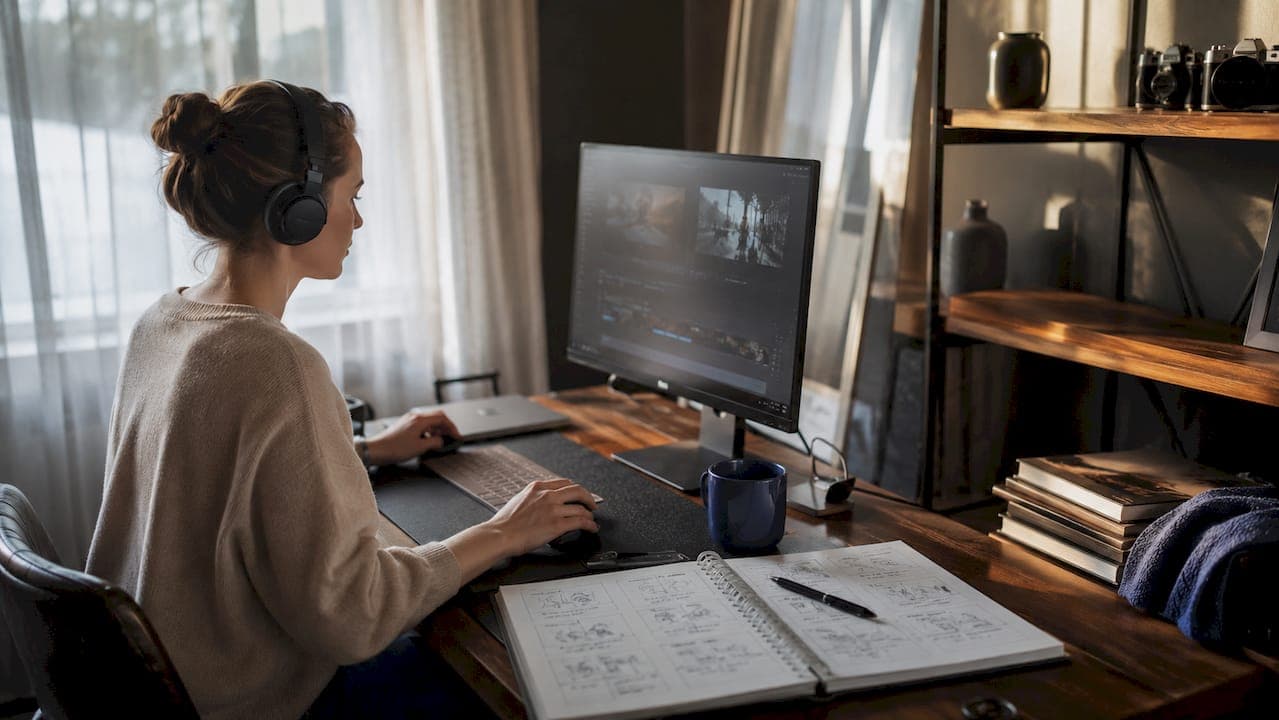
Cinematic techniques in weddings are defined as filmmaking methods applied to photography and videography to transform wedding coverage into emotionally driven, story-focused media. The role of cinematic techniques in weddings goes far beyond capturing what happened. It shapes how you feel when you watch it back years later. Tools like fast prime lenses, motorized gimbals, professional color grading, and music-driven editing are now standard in high-end wedding coverage. In 2026, couples and planners who understand these methods make smarter vendor choices and get media that genuinely moves people.
What are the key cinematic techniques in wedding films?
Cinematic wedding video is a stylistic choice, not a quality tier. It focuses on selective storytelling arranged to build emotional resonance rather than strict chronological documentation. That distinction matters when you are comparing vendors or setting expectations with your team.
The core techniques break down into five areas:
- Shallow depth of field. Fast prime lenses at f/1.4, including 24mm, 35mm, and 85mm focal lengths, separate subjects from backgrounds with a soft, film-like blur. This draws the viewer's eye directly to the emotion on a face rather than the crowd behind it.
- Deliberate camera movement. Motorized gimbals like the DJI RS series eliminate shaky footage and allow smooth, intentional motion. A slow push-in during vows feels entirely different from a static locked-off shot.
- Color grading with warm tones. Professional LUT-based grading applies consistent color science across every frame. Warm golden and amber tones rank highest in perceived romance and rewatchability among couples. Cool or flat grades can make the same footage feel clinical.
- Music-driven editing. Cuts timed to musical beats create rhythm and emotional momentum. The song choice shapes the entire emotional register of a film before a single word is spoken.
- Directed candid posing. Rather than stiff formal poses, small specific prompts encourage natural movement and interaction. The result looks spontaneous because it largely is.
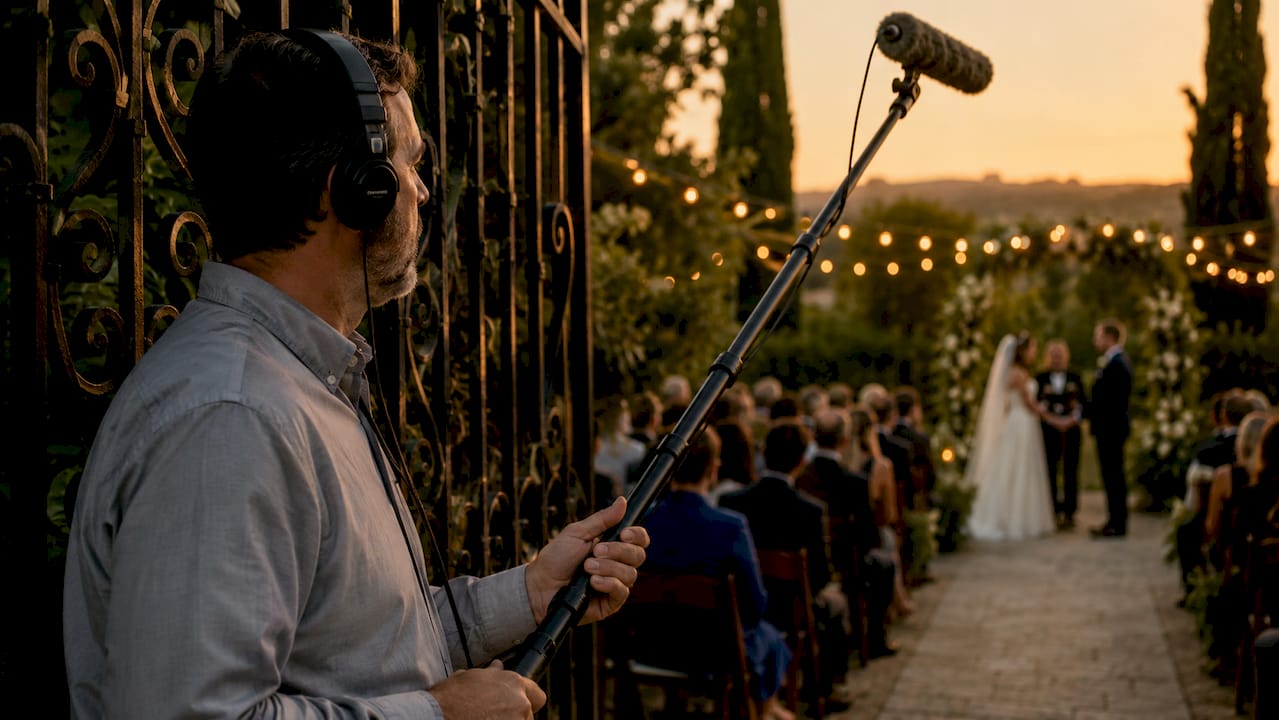
Audio is the most underrated element in this list. High-quality audio from vows and speeches is more predictive of client satisfaction than visual quality alone. A beautifully graded film with muffled vows still disappoints. Ask every videographer how they capture and mix audio before you book.
Pro Tip: Ask your videographer to share a reference film that represents their pacing style. If the cuts feel too fast or too slow for your taste, that is a real compatibility issue worth discussing before signing a contract.
How do cinematic techniques shape emotional storytelling?
The emotional power of a wedding film is not accidental. Emotional pacing techniques involving anticipation, release, and silence are the primary tools editors use to evoke strong viewer empathy. A film that rushes through every moment leaves nothing to feel. One that breathes creates memory.
Here is how the best cinematic wedding storytelling works in practice:
- Build anticipation. The film opens on texture and atmosphere, not the couple's faces. A close-up of a ring box, the sound of a string quartet tuning, morning light through a window. Viewers lean in before the story even starts.
- Anchor to key moments. Vows, speeches, and the first dance are the emotional spine of any wedding film. Narrative-driven editing prioritizes these over filler footage of centerpieces or venue exteriors.
- Use silence deliberately. Dropping the music entirely during a raw speech moment forces the viewer to sit with the emotion. This technique is borrowed directly from feature film editing.
- Release with music. After a quiet emotional peak, a musical swell gives viewers permission to feel the full weight of what they just witnessed. The buildup-release structure is the same one used in cinema to make audiences cry.
- Capture micro-expressions. Slow motion at 120 frames per second reveals expressions that happen too fast to register in real time. A half-second laugh between a couple becomes a five-second memory.
"The cinematic feel in wedding films is rooted in psychological editing techniques like emotional pacing, allowing moments to breathe and resonate with viewers." — Cut Pro Media
Warm cinematic storytelling has become the dominant style in 2026 precisely because it aligns with how couples want to remember their day: warm, intimate, and alive with feeling. Cold or overly stylized grades may look striking in a reel but feel disconnected when you watch them a decade later.
Pro Tip: Share a Spotify playlist or a film you love with your videographer before the wedding. Music tempo and genre directly influence how your editor will pace the final cut. This single step aligns expectations better than any written brief.
How does cinematic photography differ from traditional wedding photography?
The difference between cinematic and traditional wedding photography is not about equipment. It is about intent.
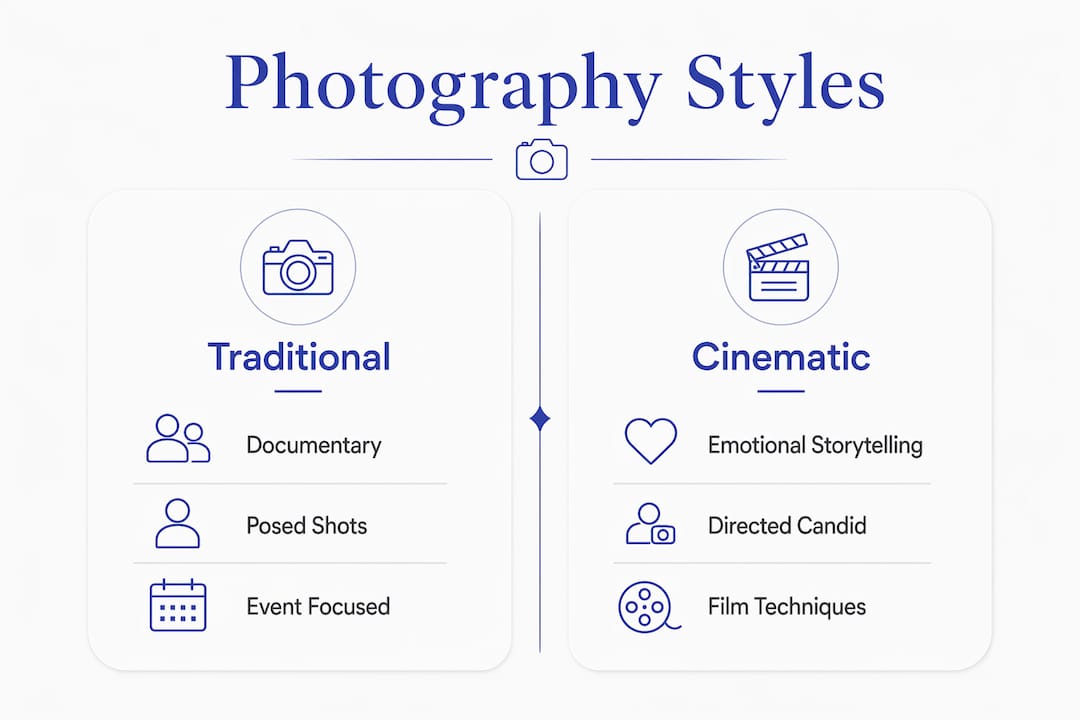
| Element | Traditional Photography | Cinematic Photography |
|---|---|---|
| Primary goal | Document the event accurately | Tell an emotional story |
| Posing style | Formal, directed poses | Directed candid, natural movement |
| Composition | Subject-centered, clear framing | Symmetry, leading lines, depth layers |
| Color treatment | True-to-life or lightly edited | Consistent LUT-based color grading |
| Aesthetic reference | Family album, photojournalism | Editorial fashion, film stills |
| Emotional register | Record of what happened | Experience of how it felt |
Traditional photography has real value. It documents. It preserves faces and moments with clarity. Cinematic photography does something different. It uses fashion-magazine aesthetics blended with natural emotional moments to create images that feel like stills from a film you want to watch. The composition uses leading lines, symmetry, and deliberate negative space. The color grade ties every image into a cohesive visual world.
The biggest practical difference is posing. Traditional photographers often direct couples into static positions. Cinematic photographers use directed candid techniques that prompt movement and interaction, which yields more authentic and emotionally engaging images. "Walk toward me slowly" produces something entirely different from "stand here and smile." You can see the difference immediately in the final gallery.
For couples exploring wedding photography trends, the shift toward cinematic aesthetics reflects a broader desire for media that feels personal rather than generic.
What steps help you get cinematic results on your wedding day?
Planning for cinematic quality requires more than hiring the right vendor. It requires building the day around the conditions that make cinematic work possible.
- Schedule a golden hour portrait session of at least 30 minutes. Without dedicated golden hour time, the dramatic soft light that defines cinematic portraits cannot be captured. This is the single most common gap in poorly planned weddings. Build it into your timeline as a non-negotiable block.
- Coordinate your photo and video teams before the day. Misaligned teams create coverage gaps and tonal inconsistencies. A photographer shooting cool and desaturated while a videographer grades warm creates a jarring final package. Brief both teams together on your preferred aesthetic.
- Share reference films and music with your videographer. Communicating pacing style is the hardest part for most couples. Sharing examples removes ambiguity. Send three films you love and three you do not. That contrast tells your editor more than a paragraph of description.
- Ask about audio capture specifically. Confirm that your videographer uses a dedicated lapel microphone on the officiant or groom, not just on-camera audio. Ask how they handle backup recording if a mic fails.
- Choose vendors with a cinematic portfolio, not just a cinematic website. Watch full films, not just highlight reels. A two-minute reel can hide weak storytelling. A full 10-minute film reveals whether a videographer can sustain emotional pacing across a complete narrative.
- Learn what questions to ask. A resource like this wedding videographer question guide helps you evaluate vendors on technique, not just price.
For couples who want to understand the full scope of what cinematic coverage involves, this overview of cinematic videography for weddings breaks down the approach in detail.
Key takeaways
Cinematic wedding techniques work because they apply proven filmmaking methods, including shallow depth of field, emotional pacing, and warm color grading, to create media that tells your story rather than simply recording it.
| Point | Details |
|---|---|
| Cinematic is a style, not a tier | It prioritizes emotional storytelling over chronological documentation of events. |
| Audio quality drives satisfaction | Clear vow and speech recordings matter more to long-term satisfaction than visuals alone. |
| Golden hour is non-negotiable | Schedule at least 30 minutes for portraits to capture the soft light cinematic work requires. |
| Directed candid beats stiff posing | Small movement prompts produce authentic expressions that formal poses rarely achieve. |
| Align teams before the wedding day | Coordinating photo and video vendors on tone and color prevents jarring inconsistencies in the final package. |
What i have learned watching couples relive their wedding day
Most couples come to me thinking cinematic means dramatic. They picture slow-motion confetti and sweeping drone shots. Those elements can be part of it, but they are not the point.
The films that make people cry are almost never the ones with the most production value. They are the ones where the editor trusted a quiet moment. A father exhaling before he walks his daughter down the aisle. A groom mouthing "wow" when he sees his partner for the first time. These moments exist at every wedding. Cinematic technique is simply the discipline of capturing and preserving them with the weight they deserve.
The misconception I push back on most often is that cinematic means staged. Directed candid work is the opposite of staged. It creates the conditions for real emotion to surface. You are not manufacturing a feeling. You are removing the obstacles that prevent it from showing up on camera.
My honest advice: stop evaluating vendors by their gear list and start evaluating them by whether their films make you feel something. That is the only metric that matters when you are watching your wedding film ten years from now.
— Todd
How Larsonprophotography captures your cinematic wedding story
Larsonprophotography specializes in cinematic wedding photography and videography in San Antonio, combining fast prime lenses, gimbal-stabilized movement, and warm color grading to deliver media that holds up for decades.
Every package is built around emotional storytelling, from your engagement session through the final edit of your wedding film. Larsonprophotography coordinates photo and video coverage so your entire visual package shares a cohesive tone and color world. Browse the full portfolio and explore what cinematic coverage looks like in practice by visiting the client gallery. If you are planning a San Antonio wedding and want media that genuinely moves people, reach out to start the conversation.
FAQ
What does "cinematic" mean in wedding videography?
Cinematic wedding videography is a stylistic approach that uses shallow depth of field, deliberate camera movement, color grading, and music-driven editing to tell an emotional story rather than document events chronologically. It is a creative choice, not a quality level.
Why is audio so important in cinematic wedding films?
High-quality audio from vows and speeches is more predictive of client satisfaction than visual quality alone. Clear sound makes the emotional moments in a film feel real and immersive rather than distant.
How do i know if a videographer uses cinematic techniques?
Watch full-length films in their portfolio, not just highlight reels. Look for consistent color grading, smooth camera movement, and editing that builds emotional momentum. Ask specifically about their audio capture process and color grading workflow.
What is directed candid photography?
Directed candid photography uses small specific prompts to encourage natural movement and interaction rather than static poses. The result looks spontaneous and emotionally authentic while still being intentionally composed.
How much time should i schedule for cinematic portraits?
Schedule a minimum of 30 minutes during golden hour for portraits. Without this dedicated window, the soft dramatic light that defines the cinematic look cannot be captured effectively, regardless of how skilled your photographer is.