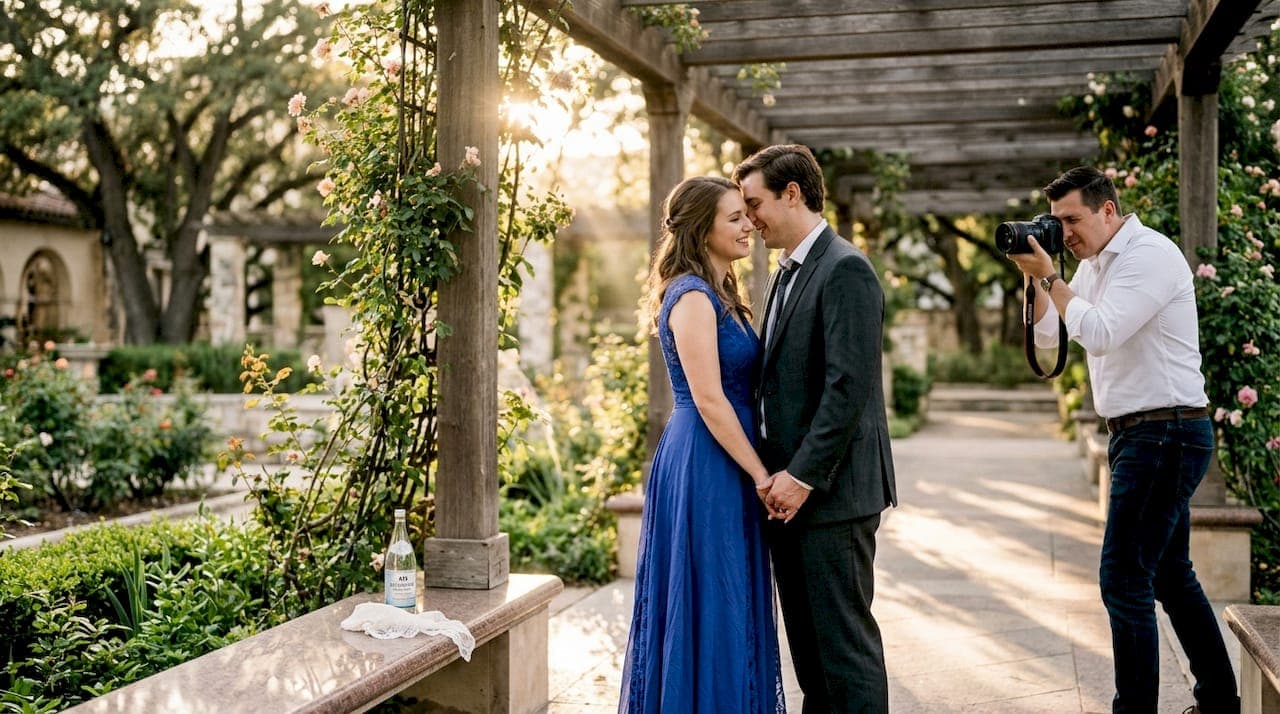
Most couples spend months planning every detail of their wedding day, but when the photos come back, something feels off. The portraits are beautiful, technically flawless even, yet they look like they could belong to anyone. That disconnect happens because most wedding photography skips the story. Your nervous laugh when you saw each other for the first time, the whispered joke during the ceremony, your grandmother wiping a tear in the back row — those are the moments that define your day. This article will show you exactly how storytelling photography captures the real emotional core of your wedding, and how to make it happen for yours.
Table of Contents
- What does 'storytelling' mean in wedding photography?
- Storytelling vs. traditional wedding photography: a side-by-side look
- How professional photographers tell your wedding story
- Why storytelling boosts emotional connection and memories
- Practical tips: Making storytelling your wedding photo reality
- Why storytelling will define San Antonio weddings for years to come
- Bring your wedding story to life with local expertise
- Frequently asked questions
Key Takeaways
| Point | Details |
|---|---|
| Storytelling captures real moments | Narrative-driven photos reflect genuine emotions and tell the couple’s true story. |
| Blend styles for best results | Mixing traditional and storytelling approaches can give you both timeless portraits and candid memories. |
| Discuss your vision | Open communication with your photographer ensures your personal story is authentically captured. |
| Lasting emotional impact | Storytelling albums help couples and families relive the feelings of their wedding day for years. |
What does 'storytelling' mean in wedding photography?
Storytelling in photography is not a style trend or an Instagram filter. It is a philosophy. Instead of directing couples into perfect poses every few minutes, a storytelling photographer works more like a documentary filmmaker. They observe, anticipate, and capture life as it unfolds around you.
Think about the difference between a scrapbook and a film. Both preserve memories. But the film takes you back inside the feeling, not just the look.
"A great wedding album should make you feel like you are watching your day happen again, not just flipping through a photo catalog."
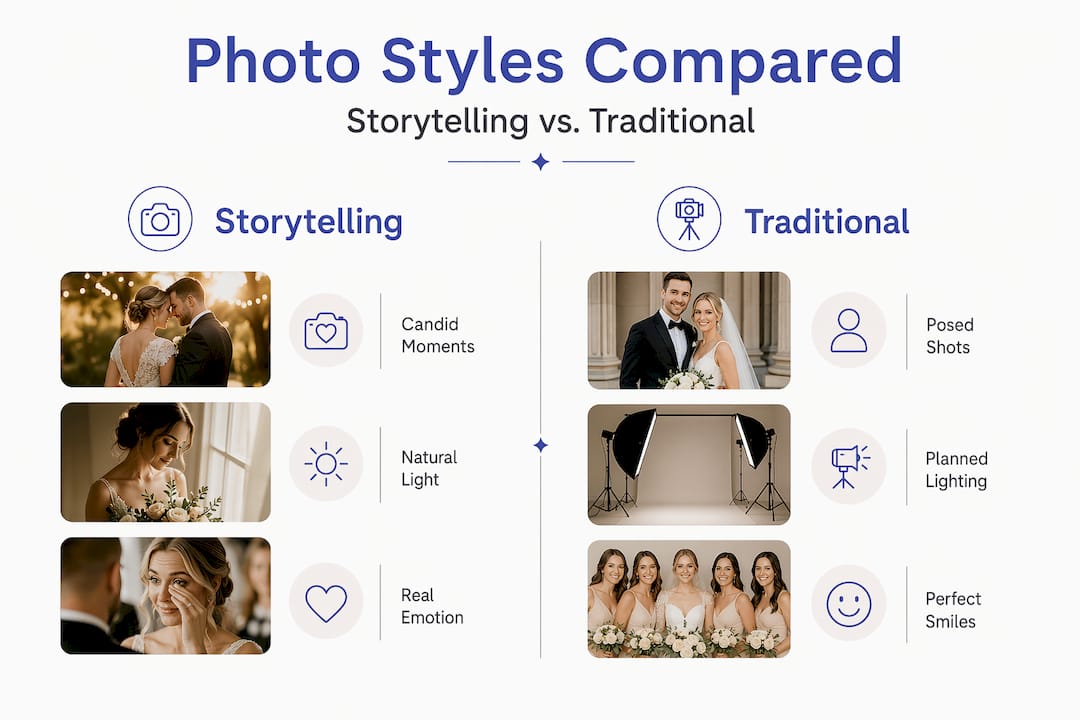
Traditional wedding photography has real merit. Structured, posed portraits give you polished images that look sharp on walls and holiday cards. But traditional and modern wedding photographers take contrasting approaches: storytelling prioritizes authentic, unscripted emotions with minimal direction, while traditional photography offers structured portraits that can sometimes interrupt the natural flow of your day. Neither is wrong, but the emotional payoff is very different.
Here is what storytelling wedding photography focuses on:
- Candid reactions: The gasp when you walk down the aisle, not the planned smile
- Context-rich scenes: Wide shots that show the venue, the crowd, the atmosphere
- Quiet details: Your mother adjusting your veil, a child asleep on a pew, the bouquet resting on a windowsill
- Emotional progression: Images that follow the arc of the day from anticipation to joy to relief
Getting natural wedding photos requires trust and intentionality. That starts with understanding what you are actually asking a photographer to do when you say "we want it to feel real."
Learning the right technique for impactful storytelling matters enormously. Light, framing, timing, and proximity all determine whether a candid shot feels intimate or intrusive.
Storytelling vs. traditional wedding photography: a side-by-side look
The fastest way to understand the difference is to see it laid out clearly. Both approaches serve different couples and different goals.
| Feature | Storytelling (documentary) | Traditional (posed) |
|---|---|---|
| Direction level | Minimal, observational | High, structured |
| Emotional authenticity | Captures real-time reactions | Relies on recreated moments |
| Workflow on the day | Low interruption, natural pace | Scheduled portrait sessions |
| Album design | Narrative arc, chapter-like flow | Highlight reel, portrait-focused |
| Personalization | Deeply unique to your couple | Consistent, polished formula |
| Future appeal | Evolves with family meaning | Timeless but less personal |
When you look back at a storytelling album in twenty years, you are not seeing a generic wedding. You are seeing your wedding. That level of personalization resonates deeply with family members and future generations who never got to attend. They can feel what the room was like. They can sense the relationships.
Pro Tip: You do not have to choose one style exclusively. Many San Antonio couples benefit from blending both approaches. Ask your photographer to incorporate a short, dedicated portrait session (great for stunning couple portraits) alongside a documentary approach for the rest of the day.
Staying current with wedding photography trends can help you understand how expectations are shifting, but your personal comfort and connection should always lead the decision. The best way to land on what works for you is to find the perfect style before you ever sign a contract.
How professional photographers tell your wedding story
Storytelling does not happen by accident. Skilled wedding photographers follow a structured creative process, even when everything around them is beautifully chaotic.
Here is how experienced photographers approach the day as a narrative:
- Pre-wedding consultation: They learn your love story, family dynamics, special traditions, and the moments you care most about. This shapes every creative decision.
- Getting-ready coverage: The pre-ceremony time is full of raw, quiet emotion. Photographers capture nervous energy, laughter, and tender family moments before the day gets loud.
- Ceremony documentation: This is the emotional peak. Wide-angle context shots show the scale of the moment, while close-ups capture tear-streaked faces and clasped hands.
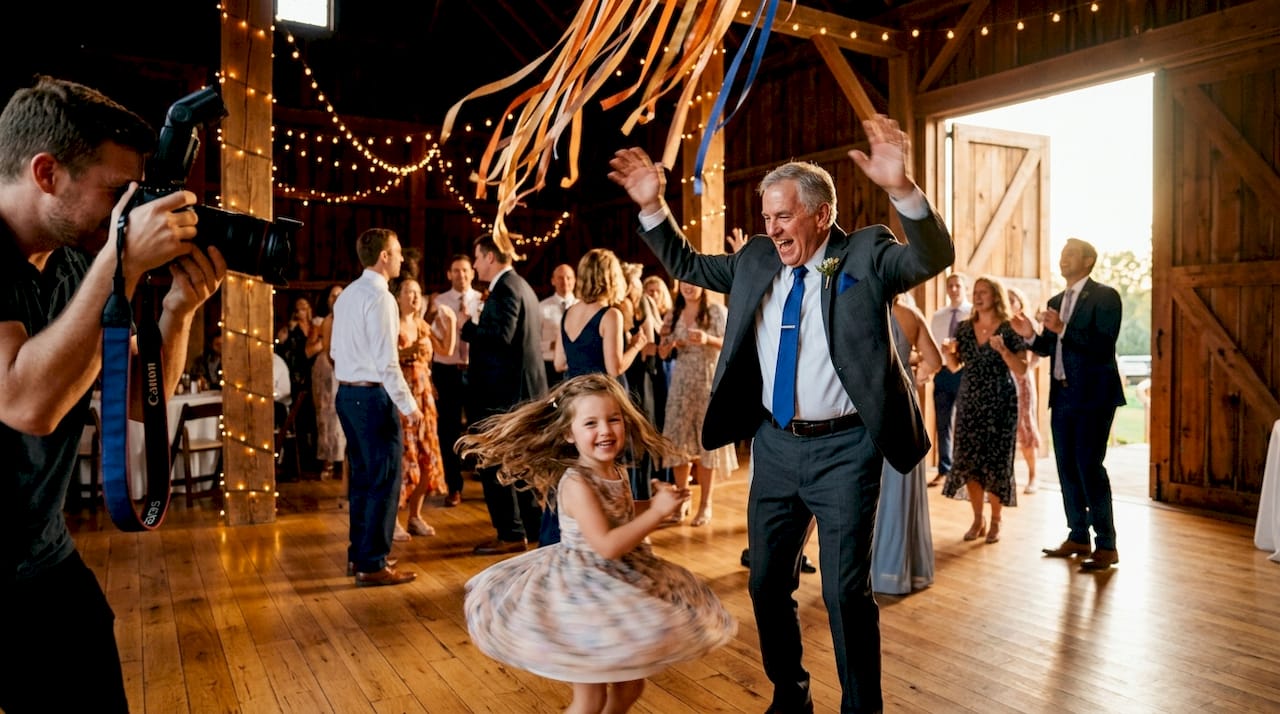
- Reception and candid moments: Dance floors, toasts, children chasing each other between tables — these scenes fill out the story with joy and personality.
- Detail work: Programs, flowers, the signed ketubah, your grandmother's ring. Small objects carry enormous emotional weight when placed in context.
- Sequencing and editing: The final album is arranged like a film, with a beginning, middle, and end that follows emotional logic, not just chronological order.
Composition techniques like the rule of thirds, leading lines, and layered foreground and background help photographers create depth and visual interest in every frame. These are not tricks. They are tools for directing a viewer's eye toward what matters most.
San Antonio weddings often include rich cultural and religious traditions that require extra sensitivity. Catholic wedding photographers need liturgical understanding to capture sacred moments without disrupting them. Similarly, cultural celebrations like flamenco performances or quinceañera-influenced elements require a photographer who respects and understands the tradition they are documenting.
Pro Tip: Before your wedding day, give your photographer a written list of specific people, traditions, and moments that are non-negotiable for your story. This prevents important scenes from slipping through during the busy pace of the day.
Great storytelling also uses intentional creative choices like motion blur on a dancing crowd or silhouette shots during golden hour. These techniques do not distort reality. They translate feeling into a visual language that photographs emotions as much as events. Explore more ways of capturing special moments to understand how professionals approach their role as visual storytellers.
Why storytelling boosts emotional connection and memories
There is real science underneath this, even if wedding-specific data is still emerging. Related research on storytelling albums suggests that positive joint memory-making correlates with higher marital contentment, and awards like FdB Wedding Story actually rank wedding photography based on cohesive narratives of 20 images, not just individual shots. That tells you something important: the photography community itself recognizes that the story is more valuable than any single image.
Here is a quick look at what different album approaches tend to deliver emotionally:
| Album type | Emotional depth | Personalization | Long-term meaning |
|---|---|---|---|
| Traditional portrait album | Moderate | Low to moderate | Fades with trends |
| Candid highlight album | High | Moderate | Grows over time |
| Full narrative story album | Very high | Very high | Deepens with family |
"The images you return to most are never the perfectly lit portraits. They are the ones where something real was happening."
This is why artistic wedding albums built around storytelling principles continue to win awards and generate the most emotional responses from couples years after the wedding. The feelings they capture do not age. Your hair and dress will look dated in a decade. The look on your partner's face when they first saw you will never stop being breathtaking.
Family members who were not there or who missed key moments benefit enormously from narrative albums. When the album reads like a story, they feel included rather than excluded. That shared emotional experience strengthens bonds across generations, and it turns your wedding photos into something more than a record of an event. They become a family artifact.
Practical tips: Making storytelling your wedding photo reality
Knowing what you want is one thing. Getting it from a photographer is another. Here is how to make storytelling central to your entire wedding photography experience.
Questions to ask your photographer before you book:
- Can I see a full wedding gallery from start to finish, not just highlight images?
- How do you balance candid coverage with family formals?
- What is your process for learning about our specific traditions and story?
- How do you handle moments you cannot predict or control?
- Do you deliver a sequenced narrative album or individual image files?
Steps you can take to build a better story:
- Create a written brief about your relationship. Where you met, inside jokes, family members with key roles, and moments that carry personal meaning.
- Share cultural and religious traditions in advance so your photographer can research and prepare.
- Plan your timeline to include unstructured moments. Do not overschedule. Rushed timelines kill candid opportunities.
- Prioritize a first look if you want intimate, quiet photos before the ceremony begins.
- Trust your photographer during the day. Checking in constantly can disrupt their observational flow.
Your storytelling checklist:
- Share family tree details and key relationships
- Note any traditions unique to your culture or region
- Discuss emotional moments you most want preserved
- Agree on a balance between documentary and posed coverage
- Review your wedding photography checklist before finalizing your plan
- Consider an engagement session to build comfort and chemistry
Wedding photographers in 2025 and 2026 consistently note that documentary styles are rising in demand because they preserve how the day felt versus how it looked. That distinction is everything. Cookie-cutter albums are losing ground to deeply personal ones. Understanding the differences between engagement and wedding shoots can also help you build the kind of comfort with your photographer that makes authentic, relaxed storytelling possible on the wedding day itself.
Why storytelling will define San Antonio weddings for years to come
Here is an uncomfortable truth most photographers will not tell you: the couples who end up disappointed with their wedding photos almost never complain about a missed portrait. They grieve a missed moment. The grandmother who passed away the following year. The spontaneous dance circle that broke out between songs. The flower girl who fell asleep mid-reception with her head on a table.
Those things cannot be recreated. And if your photographer was busy setting up the next pose when they happened, they are gone forever.
San Antonio's cultural diversity is genuinely extraordinary. You have families with deep Tejano roots, military traditions from Joint Base San Antonio, Catholic and evangelical ceremonies, and couples blending traditions from Mexico, the Philippines, India, and beyond. That richness means your wedding story is not generic. It is layered, specific, and irreplaceable. Narrative photography honors that complexity in a way a standard portrait session simply cannot.
The most cherished wedding albums we have seen evolve in meaning as families grow. What starts as a record of your day becomes a treasure when your kids want to know how you met. It becomes extraordinary when grandchildren sit down to feel who their family was at the beginning.
Invest in a photographer who listens before they shoot, who observes before they direct, and who adapts when your day takes unexpected turns. That quality matters far more than a portfolio full of technically perfect but emotionally hollow images. Cinematic storytelling for weddings extends this same principle into video, giving you a moving, sensory record of the day alongside your still images.
The couples who look back with the most gratitude are the ones who gave their photographer the freedom and the information to tell their real story.
Bring your wedding story to life with local expertise
Choosing a photographer who genuinely understands San Antonio, its traditions, its venues, and its people makes a measurable difference in the quality of your narrative coverage.
At Larson Pro Photography, we approach every wedding as a story worth telling with intention. Our San Antonio wedding photography services are built around your unique relationship, culture, and vision. You can explore our engagement photography sessions to start building that comfort and trust well before the big day. And when you want to see what real, completed wedding stories look like, our client stories and portfolios give you an honest picture of what we create together. Reach out to start the conversation. Your story deserves to be told right.
Frequently asked questions
What are the main benefits of storytelling in wedding photos?
Storytelling wedding photos capture authentic, unscripted emotions, create a cohesive narrative arc, and help couples genuinely relive the feelings of their day rather than just the visual surface of it.
How is a documentary or photojournalistic style different from traditional wedding photography?
Documentary photographers use minimal direction to capture candid moments as they happen, while traditional photographers focus on structured, posed portraits that prioritize visual consistency over emotional spontaneity.
Do storytelling albums actually improve marital satisfaction?
Research indicates that positive joint memory-making correlates with greater marital contentment, and storytelling albums are one of the most powerful tools for building shared narrative between partners.
Can storytelling techniques work for religious or culturally unique weddings?
Absolutely. Skilled photographers can adapt their approach for traditions ranging from Catholic liturgical ceremonies to flamenco performances and multicultural celebrations, always prioritizing respect and sensitivity.
How should couples communicate their vision for storytelling photos?
Share personal traditions, key relationships, and the emotional moments you most want documented with your photographer well before the wedding, ideally during a dedicated planning consultation.