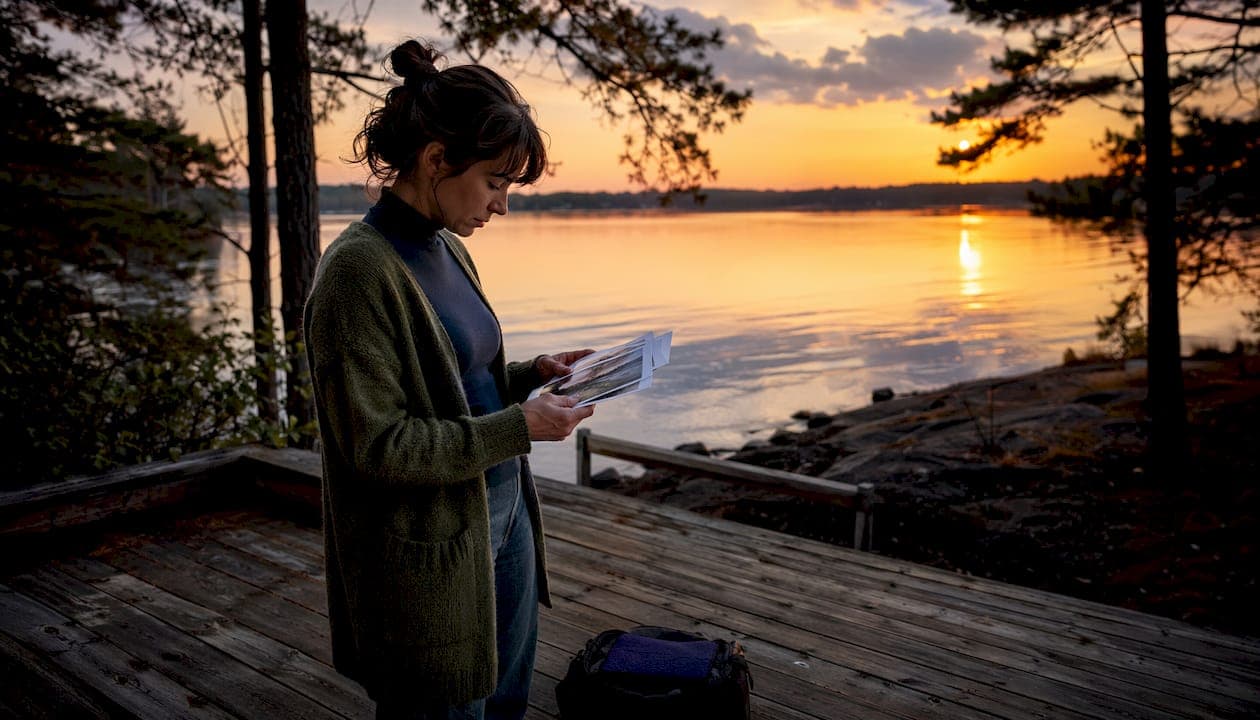
Storytelling in photography is defined as the deliberate use of images to convey emotion, context, and meaning beyond what the camera simply records. The role of storytelling in photography separates photographers who document from photographers who communicate. Technical skill produces sharp, well-exposed images. Narrative intent produces images that stop people mid-scroll and make them feel something. In a market saturated with technically perfect images, the photographers who build lasting careers are the ones who treat every shoot as a story worth telling. Larsonprophotography operates from exactly this philosophy, treating each wedding and engagement session as a narrative arc rather than a checklist of shots.
What is the role of storytelling in photography?
Storytelling in photography is a deliberate narrative technique, not a byproduct of pointing a camera at interesting subjects. The industry term for this practice is visual storytelling, and it describes the process of using composition, gesture, light, sequence, and context to guide a viewer through an emotional experience. Simple image capture records what was present. Visual storytelling communicates what it meant.
The clearest way to understand the difference is through the contrast between coverage and storytelling. Event coverage focuses on complete documentation through a checklist approach, capturing every speaker, every table, every branded backdrop. Storytelling captures the atmosphere and emotional flow through observation. Both serve real purposes, but only one produces images people return to years later.
Strong storytelling images share four qualities:
- Context: The viewer understands where and why this moment is happening.
- Gesture: Body language and micro-expressions carry emotional weight that words cannot.
- Tension: Something is at stake, even if it is as quiet as a bride steadying her breath before the ceremony.
- Contrast: Juxtapositions within the frame invite the viewer to draw their own conclusions.
Visual content transforms from descriptive to narrative when these elements work together inside a single frame. A photo of a couple at an altar is descriptive. A photo of the groom watching the doors open, his hands clasped and his jaw tight, is a story.
Single images can carry a complete narrative, but series and sequences give photographers more room to build. Documentary and event photography rely heavily on sequencing to create emotional rhythm across a set of images.

How do psychological principles enhance storytelling in photography?
The brain responds to incomplete information with curiosity, not frustration. This is the foundation of the Information Gap theory, which explains that hinting at a narrative rather than fully explaining it activates the viewer's reward systems and deepens emotional investment. A photo that answers every question the moment you look at it is forgotten quickly. A photo that raises a question keeps the viewer engaged.
This concept connects directly to productive ambiguity. When a photographer withholds just enough information, the viewer fills the gap with their own experience and emotion. That cognitive labor creates ownership. The viewer does not just observe the story. They participate in it. Ambiguous images create viewer ownership of meaning, making storytelling photography more impactful than images that explain themselves completely.
"Photographers should act as curators who hint at narratives rather than authors who dictate stories, triggering viewer curiosity and engagement."
Pro Tip: Resist the urge to capture the full moment. A photo of a mother's reaction to seeing her daughter in a wedding dress tells a richer story than a photo of both of them smiling at the camera.
The thematic apperception test, a psychological tool that shows people ambiguous images and asks them to narrate what they see, demonstrates how widely interpretation varies. Two people looking at the same photograph construct entirely different stories based on their own memories and emotions. This is not a flaw in storytelling photography. It is the mechanism that makes it powerful. The photographer sets the stage. The viewer writes the script.
What practical techniques do photographers use to tell stories?
Candid moments are the foundation of narrative photography. Modern storytelling photography prioritizes candid interactions over posed portraits because spontaneous reactions carry authentic emotional weight. A nervous glance, a whispered joke between siblings, a father blinking back tears: these moments cannot be staged without losing their truth. Photographers who capture genuine emotions build the kind of image libraries that clients return to for decades.
Practical storytelling technique follows a clear sequence:
- Observe before shooting. Spend the first few minutes of any event reading the room. Identify the relationships, the emotional centers, and the moments most likely to produce genuine reactions.
- Prioritize gesture over expression. Faces are easy to perform. Hands, posture, and body language are harder to fake and more revealing.
- Shoot in sequences. A single image captures a moment. Three to five images in sequence capture a scene. Sequences give you editing options and narrative rhythm.
- Use setting as a character. The venue, the light, and the environment provide context that grounds the emotional content of the image.
- Edit for narrative, not just aesthetics. Selection and sequencing after the shoot shape the story as much as the shooting itself.
Post-capture editing, including selection, pacing, and sequencing, is where narrative coherence is built. Many photographers underestimate this stage. The best single image from a shoot is not always the right opening image for a story. Narrative rhythm requires a beginning that establishes context, a middle that builds tension, and an end that provides resolution or emotional release.
Effective personal photo stories use 10–12 images to establish a clear beginning, middle, and end without overwhelming viewers. This length allows the story to breathe without requiring captions or explanatory text. For wedding and event photographers, this principle applies to the curated gallery delivered to clients as much as to editorial work.
Pro Tip: When editing a wedding gallery, pull your 10–12 strongest narrative images first. If those images tell the full emotional arc of the day without captions, your storytelling is working.
The approach shifts depending on context. Wedding photography demands attention to intimate, personal moments between individuals. Corporate event photography focuses on energy, interaction, and the human side of professional environments. Candid wedding photography requires patience and positioning, staying close enough to capture detail without disrupting the natural flow of events.
How does storytelling photography increase the value of professional images?
Professional event photography serves as a long-term marketing asset, improving lead conversion by providing authentic visual proof that generic stock images cannot replicate. Authentic narrative imagery builds audience trust in a way that polished but impersonal content does not. This is the business case for investing in storytelling photography rather than basic coverage.
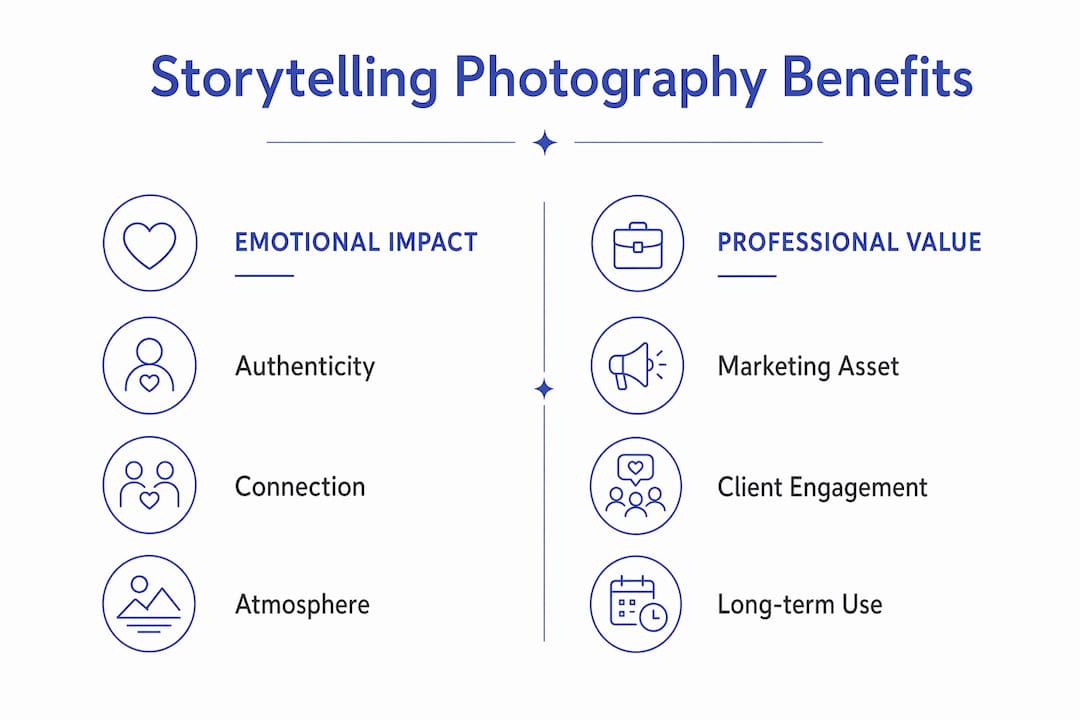
The table below shows how storytelling photography delivers value across different professional contexts.
| Context | Storytelling benefit | Long-term value |
|---|---|---|
| Wedding photography | Captures emotional arc of the day | Images clients display and share for life |
| Corporate events | Shows human connection behind the brand | Reduces dependence on stock photography |
| Engagement sessions | Builds narrative before the wedding story | Strengthens client relationship and trust |
| Branded campaigns | Authentic imagery increases audience trust | Higher engagement on social and digital channels |
Social media performance reflects this directly. Authentic narrative images generate stronger engagement than polished but generic content because viewers recognize real emotion. For brands and couples alike, storytelling photography reduces the need for stock images by creating a library of genuine moments that communicate identity and values.
Narrative intent elevates photography in a market flooded with technically proficient but emotionally empty images. For photographers building a professional practice, developing a storytelling approach is not a creative luxury. It is a competitive necessity. Clients who experience the difference between coverage and narrative photography rarely go back.
The visual narrative in wedding shoots also functions as a record of relationships, not just events. Couples who receive a gallery that tells their story, rather than documents their day, describe the experience as receiving something irreplaceable. That emotional response is the clearest measure of storytelling photography's value.
Key Takeaways
Storytelling in photography requires narrative intent, psychological awareness, and disciplined editing to transform images from records into experiences that viewers carry with them.
| Point | Details |
|---|---|
| Storytelling vs. coverage | Coverage documents; storytelling captures emotional atmosphere and invites viewer interpretation. |
| Psychological engagement | The Information Gap theory shows that incomplete narratives increase viewer curiosity and emotional investment. |
| Candid moments over poses | Spontaneous reactions carry authentic emotional weight that staged portraits cannot replicate. |
| Editing shapes the story | Selection, pacing, and sequencing after the shoot determine narrative coherence as much as the shooting itself. |
| Professional value | Authentic storytelling imagery builds brand trust and reduces dependence on generic stock photography. |
Why I think most photographers underestimate the editing room
After years of shooting weddings and events, the most consistent mistake I see is photographers who treat editing as a finishing step rather than a storytelling decision. They shoot well, capture genuine moments, and then deliver every technically acceptable image from the day. The result is a gallery of 800 images that tells no story at all.
The real narrative work happens when you sit down with 1,200 raw files and ask yourself: what is the emotional arc of this day? Which 10 images, in sequence, would make someone who was not there feel like they were? That question forces you to think like a storyteller, not a technician.
Storytelling is a developmental art requiring vision and emotional investment beyond technical skill. I believe that is true, and I would add that the vision develops faster when you practice editing for narrative rather than editing for volume. Deliver fewer images. Make each one earn its place in the story.
Audience expectations have shifted too. Couples and clients today have seen enough technically perfect photography to recognize when something is missing. They may not use the word "narrative," but they feel the absence of it. The photographers who build strong reputations are the ones who give clients images that feel like theirs, not images that look like everyone else's wedding.
— Todd
Larsonprophotography: where every shoot becomes a story
Larsonprophotography brings a narrative-first approach to every wedding, engagement session, and event it photographs in San Antonio. The focus is on authentic moments, emotional context, and the kind of candid interactions that stock photography can never replicate.
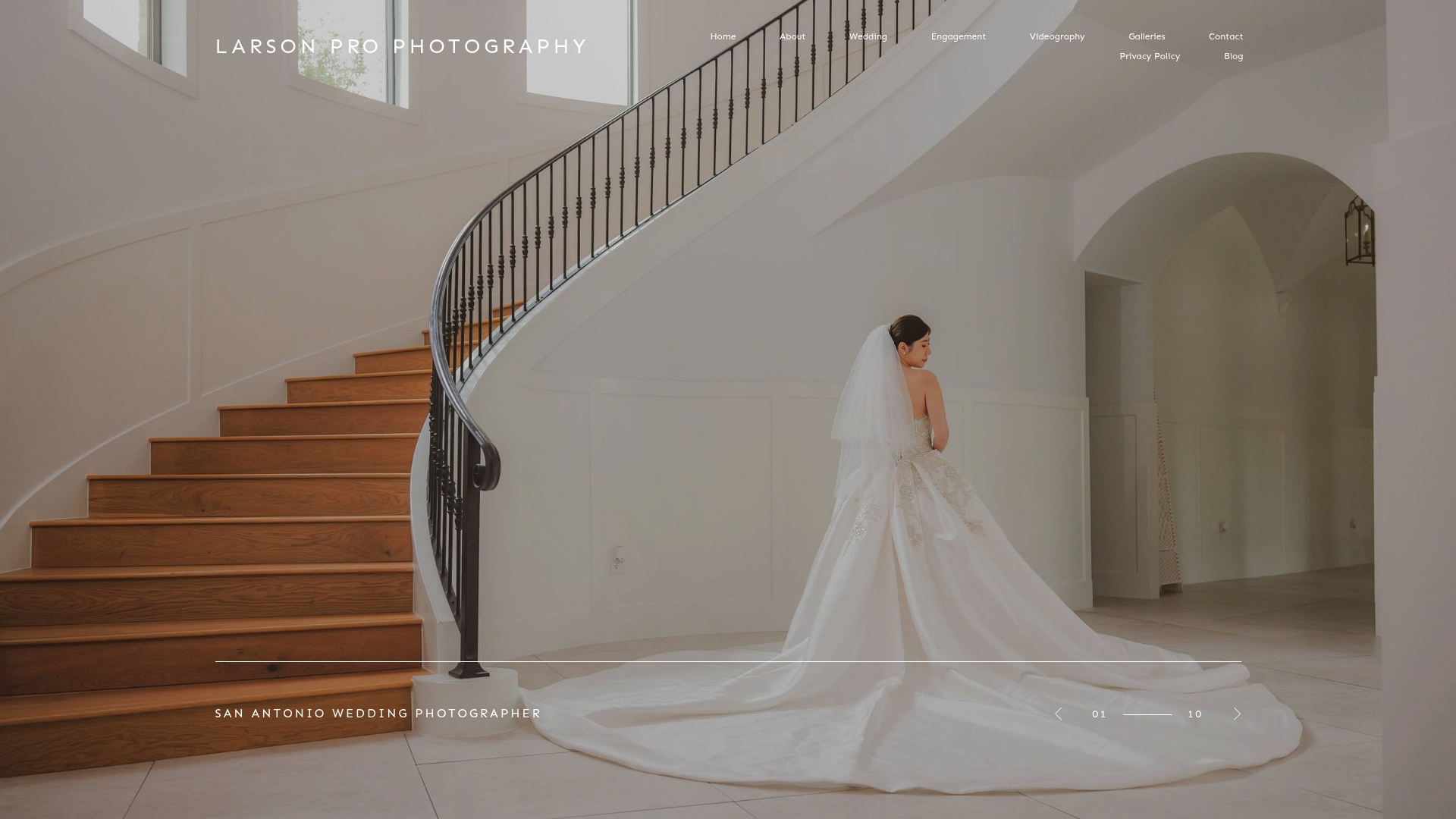
Every gallery Larsonprophotography delivers is built around a story arc, not a shot list. If you want images that communicate who you are and what your day actually felt like, view the client portfolio to see what narrative photography looks like in practice. For couples planning an engagement session, the engagement photography service is designed to capture the real dynamic between two people before the wedding day arrives.
FAQ
What is storytelling in photography?
Storytelling in photography is the deliberate use of composition, gesture, context, and sequence to convey emotion and meaning beyond simple documentation. It transforms images from records into narratives that engage viewers emotionally and invite personal interpretation.
How does storytelling photography differ from standard event coverage?
Event coverage focuses on complete documentation through a checklist approach. Storytelling photography captures atmosphere and emotional flow through observation, producing images that communicate the feeling of an event rather than just its contents.
Why do candid photos tell better stories than posed shots?
Candid moments capture spontaneous reactions that carry authentic emotional weight. Posed portraits record what subjects want to project; candid images record what they actually feel, which is the raw material of genuine narrative.
How many images make an effective photo story?
Effective personal photo stories use 10–12 images to establish a clear beginning, middle, and end. This length gives the narrative room to develop without requiring captions or explanatory text to hold it together.
What is the Information Gap theory in photography?
The Information Gap theory explains that hinting at a narrative rather than fully explaining it activates the viewer's curiosity and reward systems. Photos that leave narrative gaps invite viewers to complete the story themselves, which increases emotional investment and memorability.