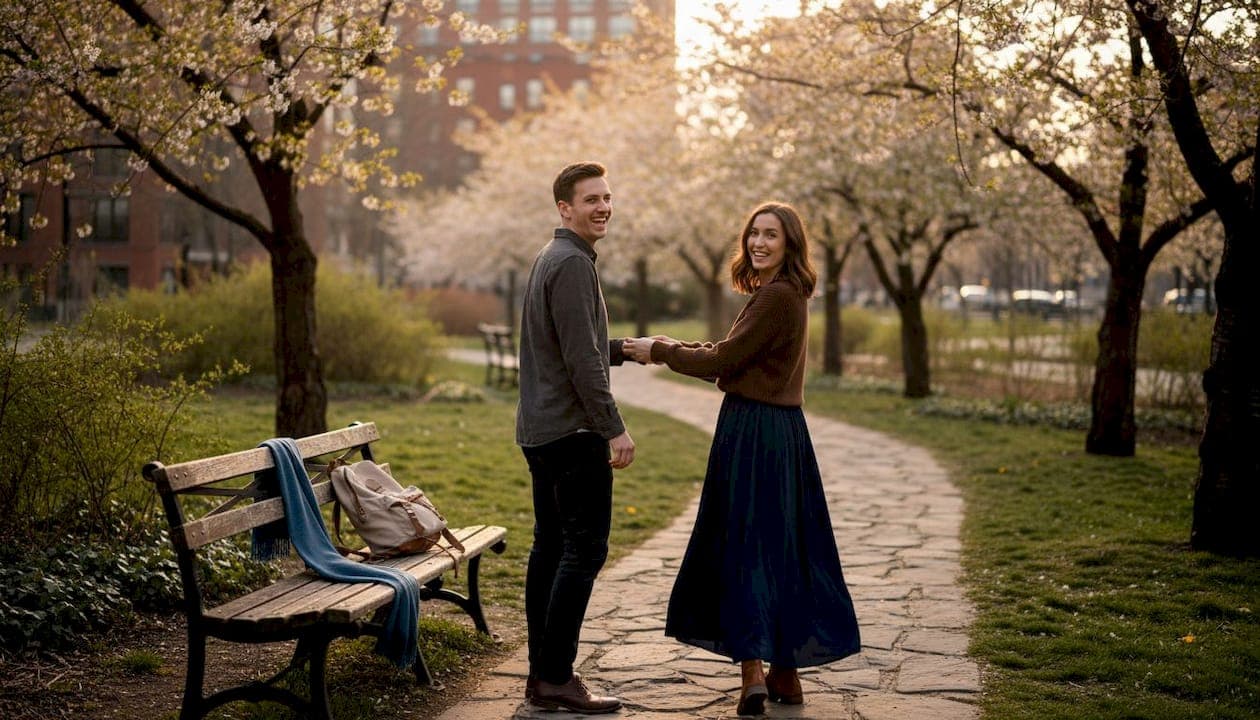
When you get engaged, the first thing most people tell you is to "book your photographer fast." What they often forget to mention is that engagement and wedding shoots are two entirely different experiences, with separate goals, moods, logistics, and outputs. Treating them as the same thing, or skipping one entirely, can leave you with an incomplete visual story of one of the most significant chapters of your life. This guide breaks down exactly what sets these two sessions apart and gives you the practical knowledge to make the best decisions for your San Antonio celebration.
Table of Contents
- What is an engagement shoot?
- What makes a wedding shoot unique?
- Key differences between engagement and wedding shoots
- Tips for choosing the right photographer for each shoot
- The overlooked value of doing both shoots
- Ready to capture your love story? Start here
- Frequently asked questions
Key Takeaways
| Point | Details |
|---|---|
| Engagement shoots are flexible | They offer relaxed settings to showcase your personalities before the wedding. |
| Wedding shoots capture the event | Photographers document key moments and emotional highlights with greater logistical complexity. |
| Different purposes and outcomes | Engagement photos are ideal for announcements, while wedding images preserve your big day memories. |
| Choosing the right photographer matters | Careful selection ensures both sessions reflect your unique vision and experience. |
What is an engagement shoot?
Now that we've set the stage, let's define exactly what an engagement shoot involves. At its core, an engagement session is a dedicated photography session for just the two of you, typically scheduled several months before your wedding date. It's not a mini-wedding preview. It's a standalone moment to document who you are as a couple right now, before the big day changes everything.
Engagement shoots give you and your photographer time to work together in a relaxed setting without the pressure of a ceremony schedule. You're not worrying about guests, flowers, or caterers. It's just the two of you, your connection, and a photographer helping you look natural in front of the camera. And that last part matters more than most couples realize.
The engagement photography ideas you can explore are wide open. Want to recreate your first date spot along the San Antonio River Walk? Go for it. Prefer a golden-hour session at a local ranch or botanical garden? Absolutely possible. The flexibility in location, theme, and outfit choices makes this one of the most personalized photo experiences you'll ever have.
Here are the most common reasons couples schedule engagement shoots:
- Save-the-dates and wedding website photos. These are some of the most widely shared images in your wedding journey, and a great engagement shoot gives you polished, personal photos for both.
- Social announcements. Sharing your engagement on social media with beautiful photos is far more memorable than a quick selfie.
- Getting camera-comfortable. Many people freeze up in front of a lens. An engagement session fixes that before it matters most.
- Testing out locations and lighting. If you're considering a venue for your ceremony, an engagement session nearby can show you exactly how your photographer works in that setting.
- Building rapport with your photographer. This is easily the most underrated benefit and we'll revisit it later.
As engagement sessions show, these shoots are often more casual, creative, and focused on capturing the couple's unique dynamic, rather than documenting a structured event. That freedom is what makes them so powerful.
Pro Tip: Schedule your engagement shoot at least four to six months before your wedding. This gives you plenty of time to use the photos for save-the-dates, and it gives you a full session to build comfort with your photographer before the wedding day.
What makes a wedding shoot unique?
With engagement sessions defined, it's crucial to see how wedding shoots raise the stakes and shift the focus. A wedding shoot is not just a longer engagement session. It's an entirely different beast, and understanding that distinction will help you prepare for it mentally and logistically.
Wedding photography documents the key moments of your ceremony and reception in a more formal, event-driven setting. Your photographer is no longer working with just two people in an open field. They're managing a full day of moving parts: bridal party portraits, family group shots, ceremony coverage, cocktail hour, first dances, toasts, cake cutting, and candid reception moments. Every hour has a purpose, and missing a shot isn't an option.
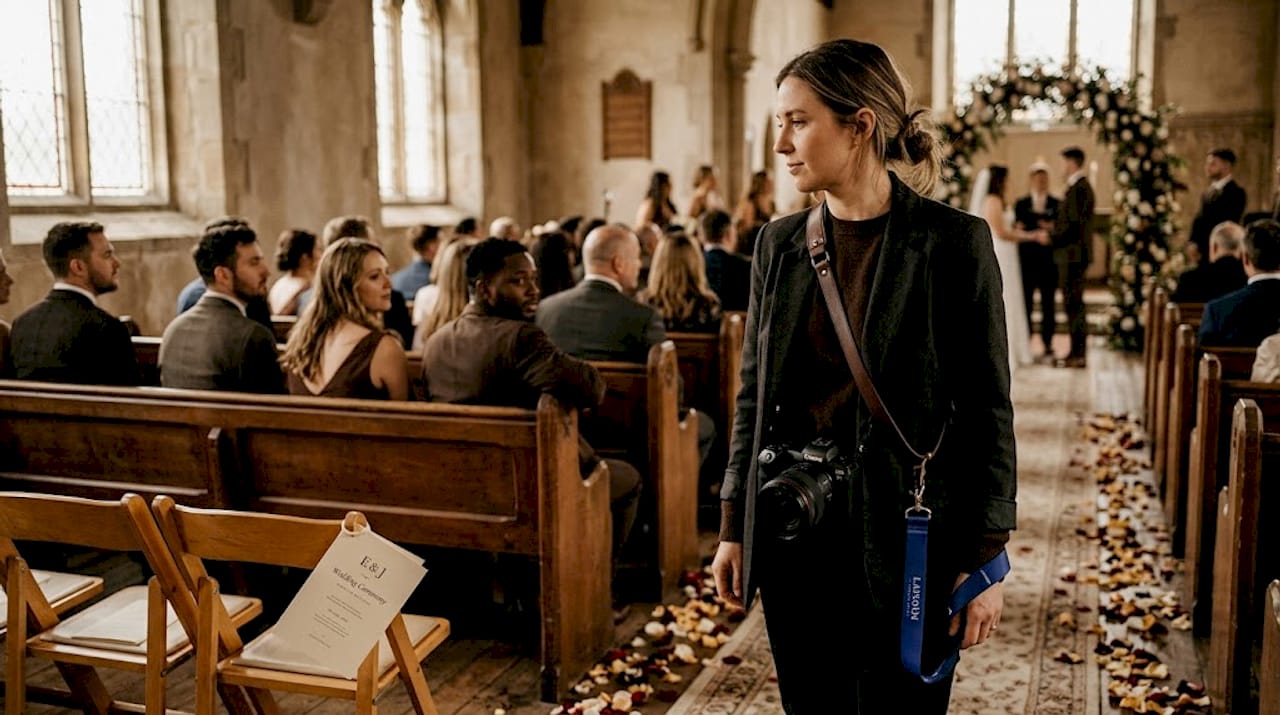
The structure of a wedding shoot typically follows your event timeline, and your photographer works with your planner or coordinator to stay on schedule. That coordination requires a completely different set of skills than a breezy engagement session in a park.
Here's what your wedding photographer handles during a single event:
- Ceremony coverage: vows, ring exchange, first kiss, processional, and recessional, all while staying unobtrusive and capturing genuine emotion
- Formal portraits: family groups, wedding party lineups, and couple portraits, often in multiple locations within the venue
- Candid and documentary moments: laughter during speeches, tears during the first dance, guests celebrating on the dance floor
- Detail shots: the dress, rings, floral arrangements, table settings, and venue architecture
- Reception milestones: cake cutting, bouquet toss, and any special performances or surprises
The latest wedding photography trends show a strong shift toward documentary-style coverage, where photographers blend into the background and capture real moments as they unfold rather than staging everything. Still, even documentary photographers need to coordinate family portraits and key ceremonial shots with precision.
Browse any wedding photography portfolio and you'll notice the sheer volume and variety of images from a single event. A typical full-day wedding shoot might span eight to ten hours and produce hundreds of edited photos across dozens of different settings within one venue.
Pro Tip: Give your photographer a detailed shot list for family portraits before the wedding day. Use first names and family relationships to keep groupings moving quickly. Every minute saved during formals gives you more time for creative couple portraits.
Key differences between engagement and wedding shoots
To clarify it all, let's put engagement and wedding shoots side by side. The contrast between these two types of sessions is sharper than most couples expect, and understanding each dimension makes it much easier to plan, budget, and set expectations.
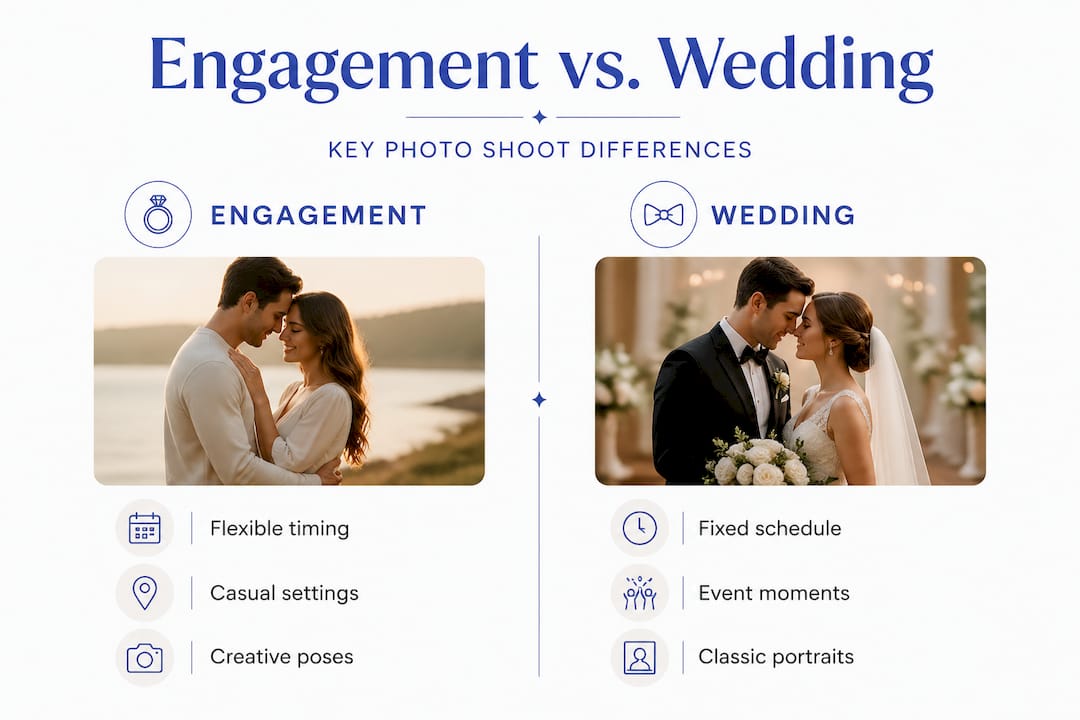
| Feature | Engagement shoot | Wedding shoot |
|---|---|---|
| Timing | Flexible, months before the event | Fixed to your wedding day timeline |
| Duration | Typically 1 to 2 hours | Usually 6 to 10+ hours |
| Primary purpose | Capture your story and personalities | Document the wedding event as it happens |
| Mood and tone | Relaxed, creative, playful | Formal, emotional, high-stakes |
| Participants | Just the couple | Couple, families, wedding party, guests |
| Location flexibility | Very high | Limited to the venue and surrounding areas |
| Photo usage | Save-the-dates, social media, websites | Albums, wall prints, gifts, keepsakes |
| Logistics involved | Minimal | Complex, with multiple moving pieces |
According to wedding trends and insights for 2026, engagement shoots allow for more flexibility in style, location, and timing, while wedding shoots are time-bound and event-driven. That's the clearest way to frame it.
Here's a numbered breakdown of the five most important practical distinctions to keep in mind as you plan:
- Timeline pressure. In an engagement session, if the lighting isn't great, you move to a different spot or wait ten minutes. At a wedding, waiting isn't possible. Your photographer must work with whatever conditions exist in real time.
- Emotional complexity. A wedding day carries enormous emotional weight for everyone involved. Your photographer needs to read the room, anticipate moments, and remain invisible when needed while being present for everything important.
- Equipment and backup needs. Most professional wedding photographers bring backup camera bodies, multiple lenses, external flashes, and sometimes a second shooter. Engagement sessions often require less gear.
- Turnaround time. Because wedding photo trends for 2026 show an increasing demand for digital delivery, many photographers now offer a faster sneak peek after weddings. Full gallery delivery typically takes four to eight weeks due to the volume of editing involved.
- Output and albums. Engagement photos are often used in smaller print formats or digital applications. Wedding photos become heirlooms, large wall prints, and custom albums that may be passed down for generations.
Tips for choosing the right photographer for each shoot
Understanding the distinctions is one thing; choosing the right professional to capture each is another. Many couples treat photographer selection as a single decision, but it's worth thinking through each type of session independently, even if you ultimately choose the same person for both.
When reviewing options, pay close attention to whether a photographer's portfolio covers both types of work with equal strength. Some photographers are exceptional at casual lifestyle sessions but struggle with the controlled chaos of a wedding day. Others thrive in event coverage but produce stiff, over-posed engagement photos. You want someone who does both well.
Here's how to approach the selection process with confidence:
- Ask for full galleries, not just highlights. Any photographer can assemble a highlight reel of their best twenty shots. Seeing a complete engagement gallery and a full wedding gallery reveals their consistency, how they handle boring moments, and whether quality holds up across an entire shoot.
- Ask directly about their approach to candid versus posed work. A great answer includes specific techniques for helping couples relax, not just a vague promise to "keep it natural."
- Review client experiences and testimonials. Real couple feedback tells you things a portfolio can't: were they on time, easy to communicate with, and calm under pressure?
- Discuss your vision for both sessions during your first consultation. A photographer who listens carefully and asks thoughtful questions about your personalities and style is one who will translate your story into images effectively.
- Read contracts carefully before signing. Watch for limited hours, restrictions on the number of edited images delivered, or vague language around cancellation policies and retouching.
Pro Tip: When you browse engagement sessions in a photographer's portfolio, look specifically at how the couple appears to feel in the photos. If they look genuinely at ease and joyful rather than posed and stiff, the photographer clearly has strong skills at helping people relax, which is exactly what you need on your wedding day.
Booking the same photographer for both sessions is almost always worth considering. The consistency in editing style means your engagement and wedding photos will complement each other beautifully in albums and on walls. More importantly, by the time your wedding day arrives, your photographer already knows your best angles, how you interact, what makes you laugh, and how to draw out genuine expressions without lengthy direction.
The overlooked value of doing both shoots
Here's a perspective most planning guides skip entirely: the two-shoot journey isn't just about having more photos. It's about having a fundamentally different wedding day experience.
Many couples skip engagement sessions because they seem like an added expense or an unnecessary step. That logic misses something important. The engagement session is where you learn how to be photographed. You discover which side you prefer, how close to stand, what to do with your hands, and how to stop overthinking and just be present together. By the time your wedding day arrives, none of that feels foreign.
The wedding photo trend insights consistently point to couples who work with their photographers ahead of time as producing stronger, more emotionally resonant wedding images. That's not coincidence. It's the direct result of an established relationship and real comfort in front of the camera.
There's also an emotional argument that rarely gets discussed. Your engagement period is its own distinct and beautiful chapter of your relationship. The anticipation, the planning, the joy of telling everyone your news, all of that has its own emotional texture that is completely different from your wedding day. Documenting both means you have a full record of this season of life, not just its conclusion.
Couples who invest in both shoots also tend to report that they're able to actually enjoy their wedding day more. When you're not anxious about how photos will turn out or stiff when the camera appears, you stay present. You laugh more. You look at each other instead of at the lens. And that presence shows in every single image.
Skipping the engagement session to cut costs often produces the opposite result: higher stress on the wedding day, awkward formal photos, and a missed opportunity to document a meaningful chapter. The investment in both pays off in ways that go well beyond having extra pictures.
Ready to capture your love story? Start here
If you're inspired to invest in both types of photo shoots, finding the right team makes all the difference. At Larson Pro Photography, we work with San Antonio couples through every stage of this journey, from the excitement of those early engagement sessions to the full emotional scope of a wedding day.
Explore our engagement session options to see the variety of styles and locations we bring to life for couples throughout the San Antonio area. When you're ready to see how we handle a full event, our wedding session packages showcase the depth and range of our wedding coverage. And to hear directly from couples who've been through both experiences with us, browse client feedback to get a real sense of what working together looks like. We'd love to hear your vision and help you plan sessions that tell your complete story.
Frequently asked questions
Do I need both engagement and wedding shoots?
Having both gives you a full story and builds real comfort with your photographer, which often shows in the quality of your wedding images. These engagement shoots help couples get comfortable with their photographer and are often used for save-the-dates, making the investment practical as well as meaningful.
How long does each type of shoot usually take?
Engagement shoots typically run one to two hours, while wedding photography covers several hours or the full event. Engagement shoots are typically shorter and more flexible than full-day wedding coverage, which often spans six to ten hours depending on your package.
Can I use the same photographer for both sessions?
Yes, and it's usually the smartest choice for style consistency and a trusted working relationship. Many clients choose the same photographer for both shoots because the continuity shows clearly in the final images.
Are engagement shoots less expensive than wedding shoots?
Yes, engagement sessions are generally more affordable because they're shorter, involve fewer people, and require less logistical coordination. Engagement sessions are typically less expensive due to their shorter duration and the flexibility they offer compared to full event coverage.