
Client-photographer collaboration is the intentional creative partnership between a couple and their photographer to co-design and capture meaningful wedding or engagement images. This goes far beyond hiring someone to show up and shoot. The best wedding galleries come from couples and photographers who build trust, share creative input, and communicate openly before, during, and after the event. Tools like Pinterest boards, shared Google Docs, and platforms like Honeybook make that process concrete and organized. When you treat your photographer as a creative partner rather than a vendor, the results speak for themselves.
What is client-photographer collaboration in wedding photography?
Client-photographer collaboration is the industry's term for a co-creation model where both the couple and the photographer actively shape the visual story of the wedding. This is the opposite of transactional coverage, where a photographer simply arrives, documents, and delivers files. In a true creative partnership, both parties bring ideas, preferences, and expertise to the table.
The numbers behind this approach are striking. Intentional collaboration produces 30% more candid moments and 40% more detailed shots in wedding galleries. That means more of the glance across the room, the grandmother wiping a tear, the ring resting on the bouquet. Those are the images couples frame and keep for decades.
The client-photographer relationship in this model rests on three pillars: communication, trust, and mutual creative input. Communication sets expectations before the wedding day. Trust gives the photographer room to work instinctively. Mutual creative input means your vision and the photographer's artistry combine into something neither of you could produce alone. Treating photographers as creative partners involved early in planning consistently yields more memorable imagery.
Why does collaboration produce better wedding photos?
The difference between a good wedding gallery and a great one almost always traces back to how early and how deeply the couple engaged with their photographer. Early vendor coordination among photographers, florists, DJs, and planners creates visual synergy across the entire event. When your photographer knows the florist's color palette and the DJ's lighting setup in advance, they can plan shots that tie the whole day together. For more on coordinating your visual team, see how to coordinate with videographers for a unified result.
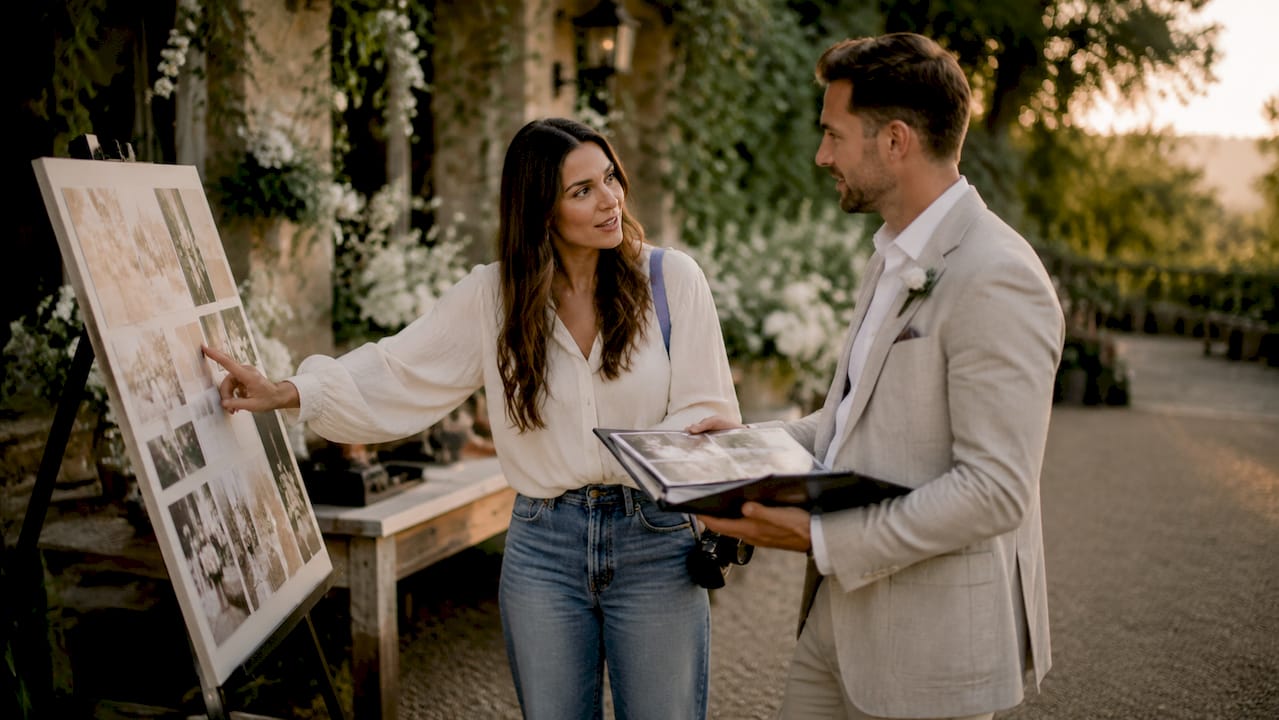
The importance of collaboration also shows up in business research. High collaboration levels correlate with 25% increased productivity and 21% higher profitability in service businesses. Applied to wedding photography, that translates to a photographer who is more focused, more creative, and more invested in your outcome.
Here is what shifts when you move from a coverage mindset to a partnership model:
- More candid moments: Your photographer knows your priorities and watches for them instead of working through a generic checklist.
- Richer detail shots: Collaboration surfaces the details that matter to you, from a grandmother's heirloom brooch to the custom cake topper. Learn more about capturing wedding details and why they matter.
- Less day-of stress: When expectations are set in advance, there are no surprises on the wedding day.
- Stronger trust: A photographer who knows your story and your people can move through the room with confidence.
Pro Tip: Ask your photographer to join at least one vendor coordination call before the wedding. That single conversation can align lighting, timing, and location choices across your entire vendor team.
Collaborator vs. delegator: which style are you?
Defining your collaboration style early prevents stress and produces better creative outcomes. Most couples fall somewhere on a spectrum between two types: collaborators and delegators.
| Style | What It Looks Like | Best Approach |
|---|---|---|
| Collaborator | Brings mood boards, specific shot ideas, and detailed preferences to every meeting | Share your vision fully; invite the photographer to push back and refine |
| Delegator | Trusts the photographer completely and prefers minimal involvement in creative decisions | Communicate your emotional goals clearly, then step back and let the photographer lead |
Neither style is wrong. The problem arises when a couple's style and the photographer's working method are misaligned. A highly directive couple working with a photographer who needs creative freedom will produce friction. A hands-off couple paired with a photographer who needs constant input will produce uncertainty. Forcing a one-size-fits-all approach creates tension and dissatisfaction on both sides.
Photographers read collaboration style cues during the initial consultation. If you arrive with a 40-item shot list, that signals a collaborator. If you say "just capture the feeling of the day," that signals a delegator. Be honest about which you are. Your photographer will tailor their process to match.
Pro Tip: Before your first meeting, write down three words that describe how you want your wedding photos to feel. Share those words with your photographer. That simple exercise tells them more than a shot list ever could.
How to set clear expectations with your photographer
Effective communication with photographers starts before you sign a contract. The practical steps below protect both your experience and your photographer's creative output.
- Agree on a communication channel. Email is the standard for formal requests and contract details. Text or a platform like Honeybook works for quick questions. Mixing channels creates confusion and missed messages.
- Set response time expectations. Photographers who establish 24–48 hour response times maintain higher creative energy and collaboration quality. Respect that window and expect the same in return.
- Draft a clear contract. Your contract should specify deliverables, the number of edited images, the delivery timeline, payment schedule, and cancellation terms. Vague contracts are the single biggest source of post-wedding disappointment.
- Discuss session volume. Photographers who limit their work to 4–6 weddings per month protect their creative energy and deliver more consistently high-quality results. Ask your photographer about their current booking load.
- Clarify editing style upfront. Show your photographer examples of galleries you love. Discuss whether you prefer bright and airy, dark and moody, or film-inspired tones before the wedding, not after.
Photographers who clearly communicate scope boundaries protect their creative energy and deliver more consistently high-quality work. Boundaries are not barriers. They are the structure that makes great work possible.
How to co-create your wedding photography vision
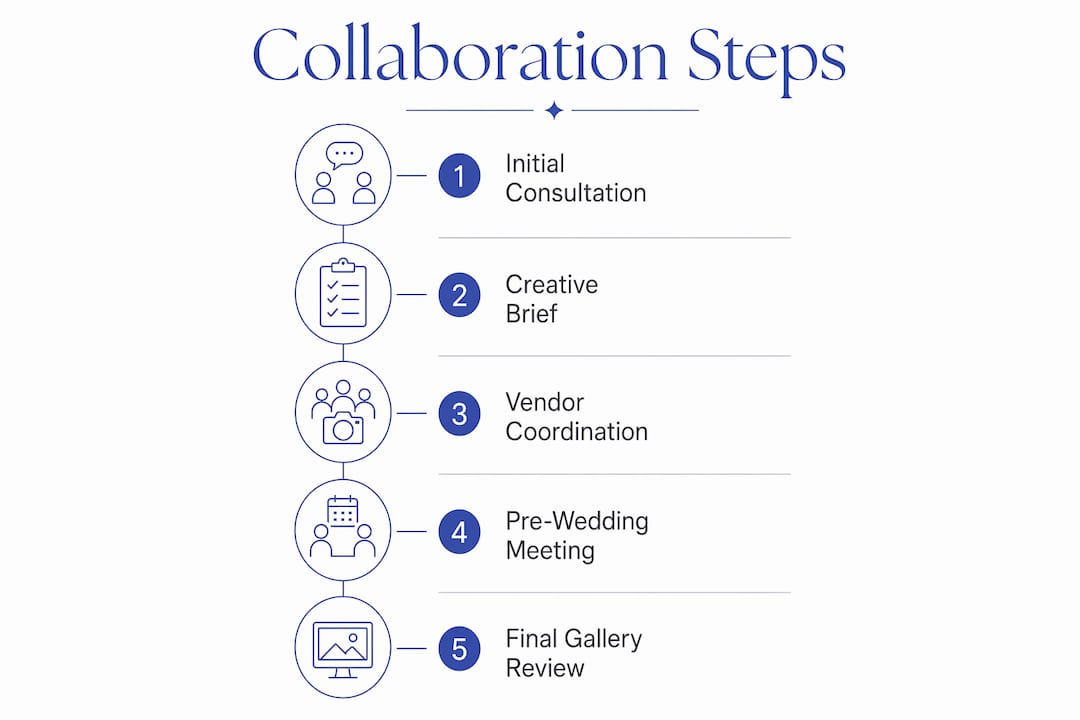
The most effective collaboration happens in layers, from the first consultation through the final gallery delivery. Each phase has a specific purpose.
Before the wedding: Schedule a dedicated pre-shoot meeting or video call to build your creative brief together. Bring a Pinterest board, magazine tears, or screenshots of galleries you admire. Share the emotional tone you want, not just the logistics. A mood board communicates in seconds what paragraphs of description cannot. For guidance on natural, authentic photos, review how intentional collaboration shapes the final result.
During planning: Involve your photographer in conversations with your florist, planner, and venue coordinator. Color palettes, lighting rigs, and ceremony layouts all affect photography. A photographer who knows the plan can anticipate the best angles and moments instead of reacting to them.
On the wedding day: Give your photographer room to work. Rigid, itemized shot lists limit creativity and produce stiff, posed images. Share your emotional goals instead. "I want to capture my dad's reaction when he sees me" is far more useful than a 60-item checklist.
After the wedding: Schedule a post-shoot debrief. Post-shoot debriefs increase client satisfaction by clarifying editing preferences and ensuring key moments are highlighted. This is also the phase where most collaboration failures occur. Proactively scheduling feedback sessions after the event ensures your expectations are met before the final gallery is delivered.
"Constructive tension and open feedback are necessary to co-create authentic imagery aligned with a couple's true vision." — Collaboration Equation
Pro Tip: Send your photographer a one-page "relationship brief" before the wedding. Include your love story, three must-capture moments, and the names of key family members. That document alone can transform how your photographer moves through the day.
Common pitfalls in wedding photography partnerships
Even well-intentioned couples make mistakes that undermine the creative partnership. Recognizing these patterns early saves you from a gallery that disappoints.
- Over-scheduling your photographer. Booking a photographer who is already at capacity increases the risk of burnout and reduced attention to your day. Ask directly how many weddings they have that month.
- Submitting an over-detailed shot list. A list of 80 specific poses tells your photographer you do not trust their judgment. It also pulls their attention away from the spontaneous moments that make wedding photography extraordinary.
- Skipping the pre-wedding consultation. Couples who skip this step often discover misaligned expectations only after the gallery is delivered. That is too late.
- Failing to communicate your collaboration style. If you want to be hands-on, say so. If you want to delegate completely, say that too. Silence forces your photographer to guess.
- Neglecting the post-wedding debrief. The editing phase is where your vision either comes to life or gets lost. A 30-minute call after the wedding to discuss editing direction is one of the highest-return investments you can make.
Best practices for client collaboration center on early involvement, clear communication, and scheduled check-ins. Couples who ask the right questions before booking set the entire partnership up for success from day one.
Key takeaways
Effective client-photographer collaboration requires clear communication, defined expectations, and mutual creative input from the first consultation through final gallery delivery.
| Point | Details |
|---|---|
| Collaboration beats coverage | Intentional partnerships produce 30% more candid moments and 40% more detailed shots. |
| Know your collaboration style | Identify whether you are a collaborator or delegator and communicate that to your photographer early. |
| Set boundaries in writing | Clear contracts covering deliverables, timelines, and communication channels prevent post-wedding disappointment. |
| Use mood boards, not shot lists | Emotional goals and visual references give photographers creative freedom and produce more authentic images. |
| Schedule a post-shoot debrief | A feedback session after the wedding ensures editing preferences are met before the final gallery is delivered. |
What i have learned after years of wedding photography
The couples whose galleries genuinely move me are almost never the ones who handed me a spreadsheet. They are the ones who sat down with me weeks before the wedding and told me about their relationship. They described the way one partner laughs when they are nervous, or how the other always reaches for their hand during stressful moments. That kind of information cannot live on a shot list.
I have worked with every collaboration style imaginable. Some couples want to co-direct every frame. Others say "do your thing" and mean it. Both can produce extraordinary results. The variable that matters most is honesty. When a couple tells me exactly how involved they want to be, I can build my entire approach around that. When they are unclear, I spend the wedding day guessing, and guessing costs moments.
The uncomfortable truth about wedding photography is that the photographer's job is only half technical. Communication skills like patience, empathy, and flexibility are as important as knowing how to expose a frame in low light. I have seen technically flawless galleries that feel cold because the photographer and couple never really connected. I have also seen imperfect images that make people cry because the trust between the two parties was real.
My advice to every couple: trust your photographer's artistry, share your vision without apology, and build in time for a real conversation before the wedding day. That conversation is where the best images actually begin.
— Todd
Work with a photographer who prioritizes your vision
Larsonprophotography builds every wedding and engagement session around the co-creation model described in this guide. From the first consultation to the final gallery, the process is designed to reflect your story, your style, and your priorities.
Whether you are a hands-on collaborator or prefer to delegate completely, Larsonprophotography tailors the approach to fit how you work best. Explore the client experience to see how the process works from booking through delivery. If you are planning an engagement session, the engagement photography page walks through what to expect and how to prepare. Reach out to start the conversation and build something worth keeping.
FAQ
What is client-photographer collaboration in simple terms?
Client-photographer collaboration is a creative partnership where both the couple and the photographer actively shape the visual outcome of the wedding. It replaces a transactional "show up and shoot" model with ongoing communication, shared creative input, and mutual trust.
How early should i start collaborating with my wedding photographer?
Start as early as possible, ideally at the booking stage. Couples who involve their photographer in vendor coordination and planning conversations achieve richer visual synergy across the entire wedding day.
What is the difference between a collaborator and a delegator client?
A collaborator brings detailed preferences, mood boards, and specific ideas to every meeting. A delegator trusts the photographer to lead creatively with minimal direction. Both styles work well when communicated clearly from the start.
How do i communicate my photography vision effectively?
Use a mood board built on Pinterest or a shared folder, describe three words that capture the emotional tone you want, and share a brief relationship story with your photographer before the wedding. Emotional goals produce better results than itemized shot lists.
Why does setting boundaries with your photographer matter?
Clear boundaries protect the photographer's creative energy and set realistic expectations for both parties. Photographers who limit sessions to 4–6 weddings per month and maintain 24–48 hour response times consistently deliver higher quality, more creative work.