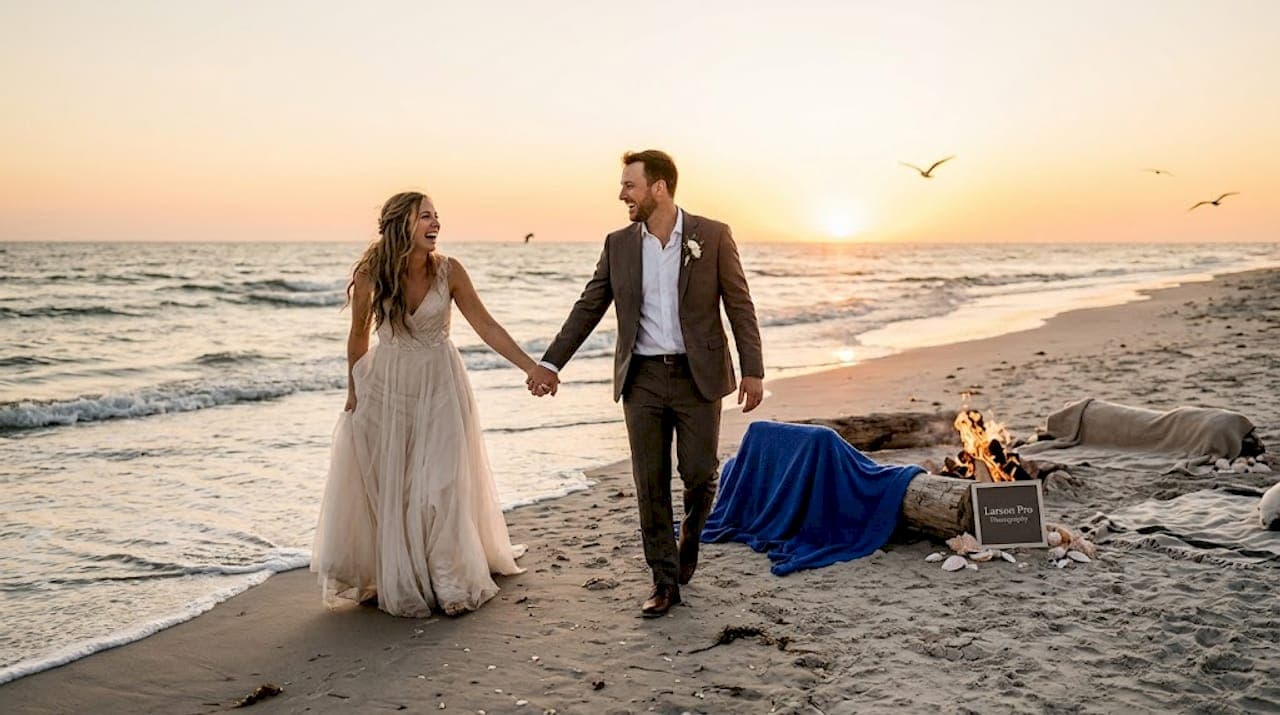
Your wedding photos will outlive the flowers, the cake, and the playlist. They are the one tangible thing you will hold onto for decades, and yet so many couples arrive at their wedding day without a clear plan for making those photos genuinely great. This guide to memorable wedding photos cuts through the noise and gives you a practical roadmap, from your first conversation with your photographer to structuring your timeline around golden hour. Whether you are newly engaged or deep in wedding planning mode, what follows will help you walk away with images that actually tell your story.
Table of Contents
- Key takeaways
- Your guide to memorable wedding photos starts with preparation
- Capturing candid and authentic wedding moments
- Structuring your timeline around golden hour
- Key moments and details that complete your wedding album
- My honest take on planning wedding photography
- See what Larsonprophotography can do for your wedding day
- FAQ
Key takeaways
| Point | Details |
|---|---|
| Plan early and communicate | Share your shot list and timeline priorities with your photographer at least 2 to 3 months out. |
| Protect golden hour | Schedule your ceremony to start 1.5 to 2 hours before sunset to capture the best portrait light. |
| Use emotion-based prompts | Replace stiff poses with prompts that draw out real reactions and natural connection. |
| Keep family formals efficient | Limit groupings to under 10 combinations so formals stay on schedule and energy stays high. |
| Balance lists with spontaneity | A shot list guides coverage, but leaving room for unplanned moments produces the most memorable frames. |
Your guide to memorable wedding photos starts with preparation
The single most common reason couples end up disappointed with their wedding photos is not a bad photographer. It is a lack of preparation. When your photographer does not know your priorities, they are guessing. When your timeline is not built around light, you lose your best shooting windows.
Build your shot list the right way
A shot list is not about micromanaging your photographer. It is about making sure nothing important gets missed. Think of it as a communication tool rather than a script. Include the moments that matter most to you and the family groupings you need, and then hand it over and let your photographer execute.
Keeping the list tight matters just as much as writing one. Limit family groupings to under 10 combinations to avoid overrunning your schedule and draining energy before the reception even starts. You can review what belongs on that list with a resource like this wedding photography checklist to make sure nothing slips through.
What to prepare before your wedding day
Use the table below as a quick reference for the three preparation categories that have the biggest impact on your final photos.
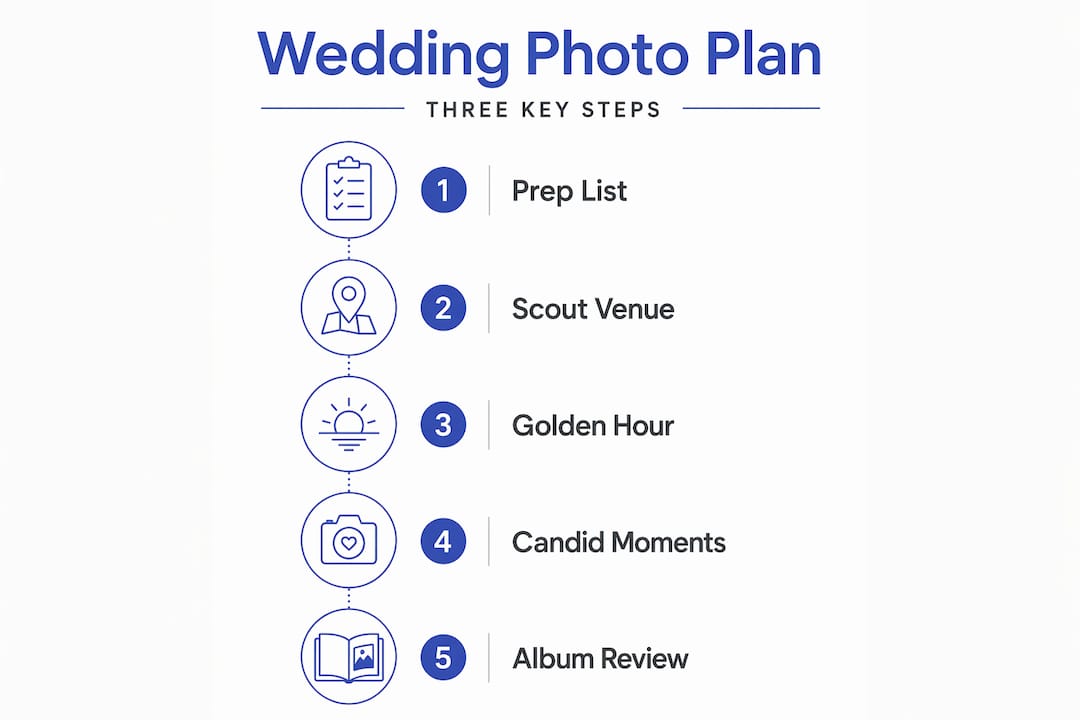
| Category | Key considerations |
|---|---|
| Shot list | Prioritize moments, limit family groupings, note any must-have details or people |
| Lighting | Identify venues with natural light, confirm sunset time, discuss golden hour window |
| Timeline | Build in buffer time, confirm order of events with photographer and planner |
Pro Tip: Scout your venue at the same time of day as your ceremony. Lighting changes dramatically by the hour, and what looks beautiful at noon can look completely different at 5 p.m.
When it comes to outfits and accessories, choose pieces that photograph well in natural light. Deep jewel tones and soft neutrals tend to hold up better than stark white or very pale gray backgrounds. Talk with your photographer about your color palette so they can flag any potential issues before the day arrives.
Capturing candid and authentic wedding moments
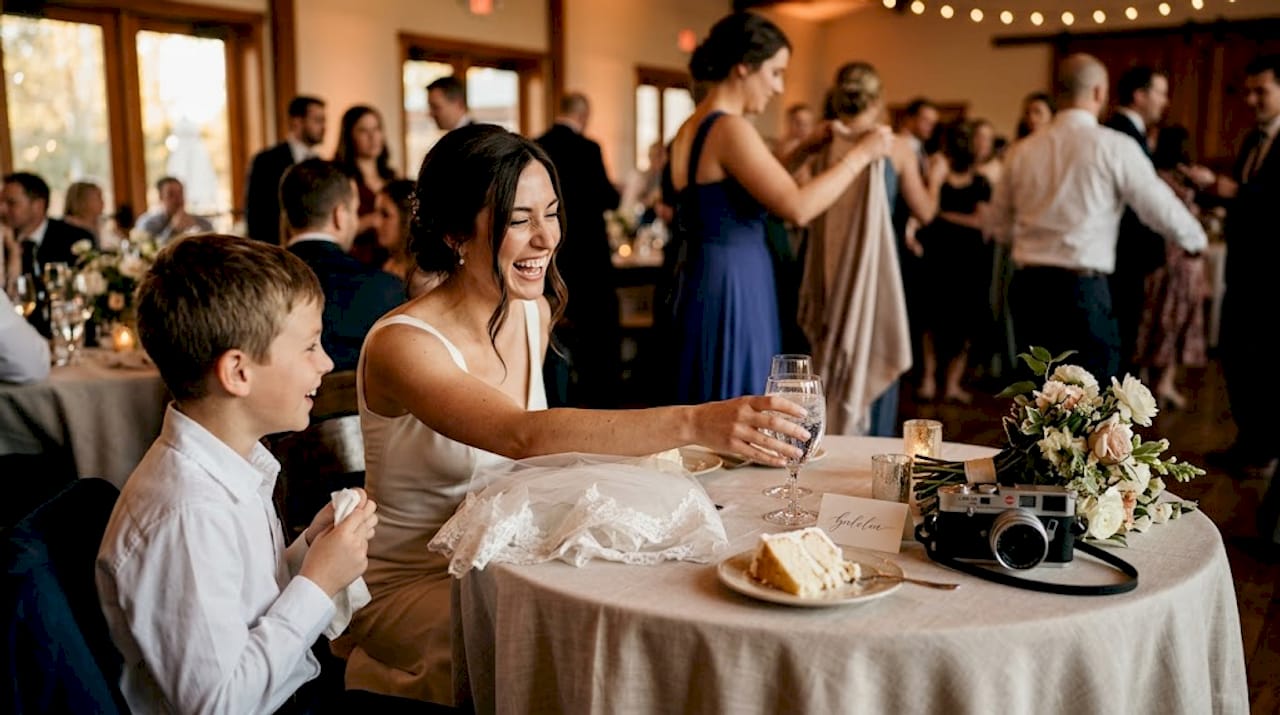
Posed photos have their place, but the images people cry over at anniversaries are almost always candid. They are the ones where no one is looking at the camera. The laugh between the bride and her mother before the processional. The groom wiping his eyes during the vows. Those moments cannot be manufactured. They can, however, be encouraged.
Use prompts, not poses
The most effective tool a photographer has for getting natural expressions is an emotion-based prompt. Instead of saying "stand here and smile," a skilled photographer might say "whisper something in their ear that only they would understand." The result is a genuine reaction, not a performance.
Emotion-based prompts unlock authentic smiles and real connection that posed direction simply cannot replicate. This approach works especially well with couples and family groups, where the goal is to capture relationship rather than arrangement.
Some prompt ideas that work reliably:
- Ask the couple to share a secret, then capture their reaction
- Have them walk toward the camera while talking, ignoring the lens completely
- Ask them to point out their favorite thing about the venue to each other
- During portraits, play a song that means something to both of them
Incorporate movement into your session
Treating couple sessions like a video rather than a series of still shots produces far more natural results. Movement dissolves self-consciousness. When couples are walking, spinning, or reacting to each other, they stop thinking about how they look and start actually being present. That presence is exactly what reads as authentic in a photo.
Candid wedding shots from the ceremony and reception follow the same logic. The best frames often come from photographers who stay mobile and anticipate moments rather than waiting for people to arrange themselves. A good guide to candid couple photography can help you understand what to expect from this approach and how to prepare your wedding party for it.
Pro Tip: Brief your wedding party and immediate family before the day. Let them know the photographer may approach them during cocktail hour for candid moments. When people are not surprised by a camera in their face, they relax faster.
Structuring your timeline around golden hour
Golden hour is the roughly 30-minute window just after sunrise and just before sunset when natural light turns warm, soft, and directionally flattering. It makes skin glow. It turns ordinary outdoor locations into cinematic backdrops. For portraits, there is no better light available at a wedding, and protecting it in your schedule is one of the highest-return decisions you can make.
How to schedule for the best light
The math here is straightforward once you know it. Starting your ceremony 1.5 to 2 hours before sunset gives you enough time to complete the ceremony and transition into couple portraits during that golden window. A 20 to 30 minute portrait session during peak golden hour is all you need to get the iconic shots most couples dream about.
Here is a comparison of a typical wedding schedule versus a golden hour-focused one:
| Time element | Typical schedule | Golden hour-focused schedule |
|---|---|---|
| Ceremony start time | Based on venue availability | 1.5 to 2 hours before sunset |
| Family formals | Immediately after, no time limit | Capped at 20 to 30 minutes |
| Couple portraits | Squeezed in whenever | Protected 20 to 30 minute window at golden hour |
| Buffer time | Rarely planned | 30 to 45 minute buffer built in |
The seasonal factor is one most couples miss entirely. Golden hour shifts significantly by season, so a sunset at 8:15 p.m. in June requires very different scheduling than a sunset at 5:30 p.m. in November. Building a 30 to 45 minute buffer into your timeline protects you from the inevitable delays that happen at every wedding.
Pro Tip: Lock in your golden hour window with your photographer and planner at least 2 to 3 months before the wedding. Do not leave it as a conversation for the week before. By then, your venue and vendor schedule is already set.
Key moments and details that complete your wedding album
Professional photographers deliver 400 to 800 edited images for an eight-hour wedding, working at roughly 50 to 100 quality shots per hour. That is a substantial number, but the moments that fill a great album are specific and deliberate. Knowing which ones to prioritize helps you brief your photographer and manage expectations for the final gallery.
Getting ready and details
The getting ready portion of your day sets the emotional tone for everything that follows. Beyond the obvious dress shot, focus on the small details: jewelry laid out on a flat surface, handwritten notes from partners, the reaction when someone first sees the finished look. These images provide the opening chapter of your wedding story.
Must-have detail shots:
- Wedding dress before it is worn, in good natural light
- Rings, shoes, and accessories arranged intentionally
- Invitations and any custom stationery
- Floral arrangements and bouquets
Ceremony and reception highlights
The ceremony gives you the most emotionally charged moments of the day. Vows, ring exchange, the first kiss, and the walk back down the aisle as a married couple are non-negotiable. But so are the reaction shots. Parents crying, friends grinning, a flower girl losing interest. These peripheral moments are what make a ceremony gallery feel complete rather than just documented.
For reception coverage, do not overlook the details. Table settings, signage, centerpieces, and the cake all contribute to the visual record of the day you planned. A reference like this must-have wedding shots guide walks through what to prioritize so nothing gets missed during the busy flow of a reception.
Pro Tip: For family and group photos, combine posing with movement to keep energy natural. Have the group take a step together on three, or ask them to all look at the person they love most. It sounds simple, but it breaks the stiffness immediately.
My honest take on planning wedding photography
I have photographed enough weddings to say this with confidence: the couples who get the best results are not the ones with the most elaborate plans. They are the ones who communicate clearly, trust their photographer, and then actually let go on the day itself.
What I see trip up couples most often is over-preparing the aesthetic and under-preparing the timeline. They spend months choosing a color palette and the perfect venue, then schedule their ceremony at 3 p.m. in July and wonder why the portrait light looks harsh and flat. Natural light is the foundation of every great wedding portrait, and planning around it is a decision that costs nothing extra.
The other thing I have learned is that authentic emotion beats a perfectly executed pose every single time. I would rather have a slightly imperfect frame of a bride laughing so hard she doubles over than a technically flawless photo where no one is feeling anything. The couples who give their photographers permission to chase those real moments almost always end up with galleries they love.
My advice: write your shot list, protect your golden hour window, brief your wedding party, and then put the plan down and be present. Your photographer's job is to capture your day. Your job is to actually live it.
— Todd
See what Larsonprophotography can do for your wedding day
Planning memorable wedding photos takes the right photographer in your corner from the start.
Larsonprophotography specializes in natural, candid-forward wedding photography for couples in San Antonio and beyond. From the first planning call to the final gallery delivery, the approach is built around protecting the moments that matter most, including your golden hour portraits. You can explore wedding photography packages and see how each one is designed with timeline planning built in. For couples who want to see the work before committing, the client galleries showcase real weddings with real emotion, giving you a clear picture of the style and quality you can expect. If you are also considering an engagement session to get comfortable in front of the camera before your big day, the engagement session options pair perfectly with full wedding coverage.
FAQ
What should I give my wedding photographer before the big day?
Share a prioritized shot list, your final timeline, a list of family groupings capped at under 10 combinations, and the sunset time for your venue date. The earlier you do this, ideally 2 to 3 months out, the better your photographer can plan for golden hour and key moments.
When is the best time for wedding portraits?
The best time for portraits is during golden hour, the 20 to 30 minute window before sunset. Scheduling your ceremony to start 1.5 to 2 hours before sunset gives you enough time to complete the ceremony and transition into portraits at peak light.
How do I get natural-looking photos instead of stiff ones?
Use emotion-based prompts rather than directed poses, and incorporate movement into your couple session. Treating the session more like a video, where the couple is walking and reacting to each other, produces far more authentic results than static posing.
How many photos will I receive from my wedding photographer?
Most professional photographers deliver between 400 and 800 edited images for an eight-hour wedding, averaging roughly 50 to 100 quality photos per hour of coverage.
Do I need a shot list if I trust my photographer?
Yes, but keep it focused. A concise shot list is not about controlling your photographer. It is a communication tool that confirms your priorities and prevents anything important from being overlooked in the natural chaos of a wedding day.