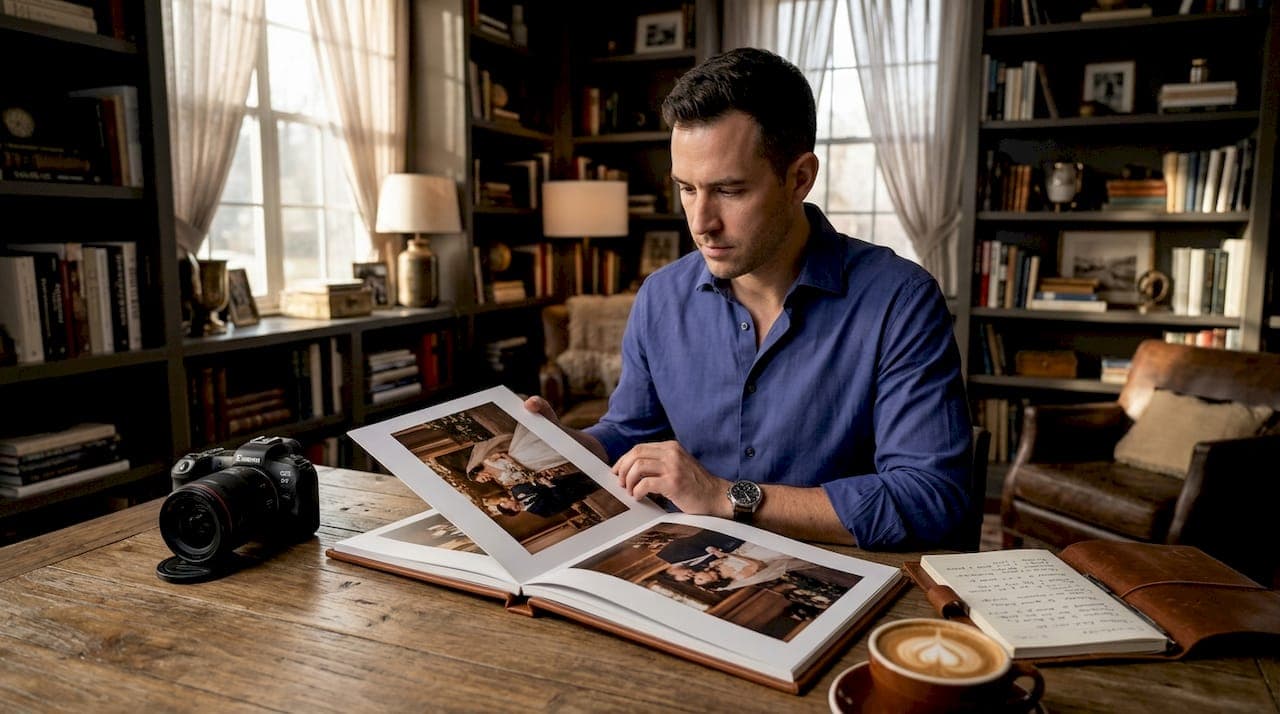
The questions you ask a wedding photographer before signing a contract determine whether your wedding memories are captured exactly as you imagined or lost to miscommunication and unmet expectations. Most couples spend hours scrolling through Instagram portfolios but skip the structured consultation that separates a great fit from a costly mistake. The professional term for this process is a photographer consultation or vendor interview, and it covers five critical areas: availability, style, deliverables, contracts, and backup plans. This guide gives you the exact questions for your wedding photographer that reveal everything a portfolio cannot show.
1. Questions to ask wedding photographers about availability and experience
Confirming availability sounds obvious, but the follow-up questions matter far more than the yes or no answer. Ask directly: "Will you personally be the lead photographer on my wedding day, or could a different shooter from your studio be assigned?" Many studios book under one brand name but rotate photographers across events. You deserve to know exactly who will be standing at the altar.
Ask how many weddings the photographer has shot in total, and specifically how many match your wedding's size, style, or cultural traditions. A photographer with 200 suburban church weddings may not have the experience to navigate a large South Texas Catholic ceremony or an outdoor Hill Country event.
Clarifying who shoots your wedding and the role of any second shooter is one of the most overlooked steps in the hiring process. Meeting your shooters beforehand confirms that their experience and style are consistent with what you saw in the portfolio.
- "Are you available on [date], and will you personally be the lead photographer?"
- "How many weddings have you photographed that are similar to ours in size and style?"
- "Have you shot at our venue before, or are you willing to do a venue walkthrough?"
- "Will there be a second shooter, and can we meet them before the wedding?"
Pro Tip: Ask to see the second shooter's individual portfolio, not just the lead photographer's work. Their editing style and eye for composition should complement the lead's, not clash with it.
2. Top questions about photography style, approach, and portfolio review
Photography style is the most personal factor in your decision, and it is also the area where couples most often discover a mismatch after booking. The three primary styles are traditional (posed, formal), photojournalistic (candid, documentary), and fine-art (editorial, highly stylized). Most photographers blend two of these, so ask them to describe their balance directly.
Request to see a full recent wedding gallery, not a curated highlight reel. A 50-image portfolio shows a photographer's best work. A 600-image gallery from a single wedding shows their consistency, their approach to low-light reception shots, their family grouping efficiency, and how they handle an overcast outdoor ceremony. Those are the images that reveal the real skill level.
"Seeing a full gallery from a wedding similar to yours is the single most reliable way to assess whether a photographer's style holds up across an entire day, not just in golden-hour portraits."
Ask how they direct couples who feel awkward in front of a camera. The best photographers have a specific method, whether that is a series of movement-based prompts, a walking pose sequence, or a guided conversation technique. A vague answer like "I just make it fun" is a red flag. Also ask how they handle memorable wedding photos when lighting conditions change unexpectedly, such as a venue that bans flash or a ceremony that runs two hours late.
- "How would you describe your style, and what percentage of your shots are posed versus candid?"
- "Can we see a full gallery from a recent wedding similar to ours?"
- "How do you direct couples who are not comfortable being photographed?"
- "How do you manage family photo requests and large group shots efficiently?"
3. Critical contract, pricing, and deliverables questions
Wedding photography contracts are where most couples get surprised, and not pleasantly. Contracts should cover cancellation terms, rescheduling policies, deposit amounts, delivery deadlines, and liability insurance. If any of these elements are missing from the document you are handed, ask for them in writing before you sign.
Ask specifically about the number of edited images you will receive. Photographers typically shoot 2,000 to 6,000 frames during a wedding day but deliver between 500 and 1,200 carefully edited images. That gap exists because culling and editing is where the real work happens. Knowing the expected final count prevents the disappointment of expecting 1,500 images and receiving 400.
Delivery timelines vary significantly by season. Wedding photos typically take 4 to 6 weeks to deliver during off-peak months and 8 to 12 weeks during peak season, with sneak peeks commonly arriving within 48 to 72 hours after the wedding. Contracts frequently omit explicit delivery date language, which makes timelines unenforceable. Insist on written delivery windows in the contract itself, not just a verbal promise.
- "What does your contract say about cancellation, rescheduling, and refunds?"
- "How many edited images should we expect, and what is your typical delivery timeline?"
- "Do we receive full print rights, and how long will our online gallery remain accessible?"
- "What are your overtime fees if the wedding runs long?"
- "Does your insurance meet our venue's requirements, and can you provide proof?"
| Contract area | What to confirm in writing |
|---|---|
| Delivery timeline | Specific date range, not "as soon as possible" |
| Image count | Minimum number of edited final images |
| Cancellation terms | Refund policy and deposit forfeiture conditions |
| Print rights | Full personal use rights for all delivered images |
| Insurance | Liability and equipment coverage meeting venue requirements |
Pro Tip: Ask your venue coordinator what insurance documentation they require from vendors before your consultation. Arriving with that specific requirement saves a follow-up conversation and signals to the photographer that you are organized and serious.
4. Backup plans, equipment, and day-of logistics questions
The single most important question you can ask any wedding photographer is: "What happens if you are sick or have an emergency on my wedding day?" The answer must be specific. A named backup photographer who is contractually included in your agreement is the only acceptable answer. A casual "I have photographer friends I can call" is not a plan. It is a risk.
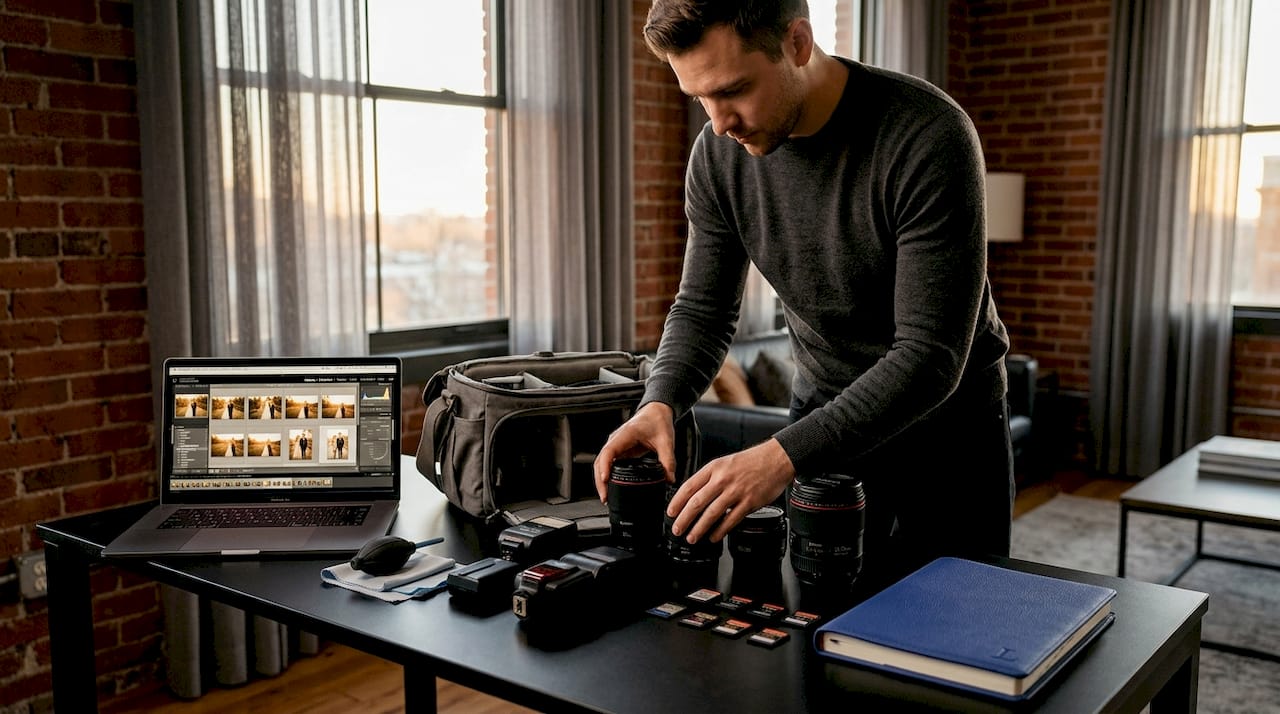
Backup questions must cover three layers: capture, transfer, and archival. Ask whether the photographer uses dual-card recording during the wedding so images are written to two cards simultaneously. Ask whether files are transferred off the cards the same night. Ask how long the original files are archived after delivery. These are not paranoid questions. They are standard professional practices, and any experienced photographer will answer them without hesitation.
Equipment questions matter too. Ask what camera bodies and lenses they use, and whether they carry backup bodies on the wedding day. A photographer who arrives with a single camera body and no backup is one equipment failure away from a catastrophic gap in your coverage. Low-light readiness is especially relevant for evening receptions, so ask directly whether they use off-camera flash, continuous lighting, or rely on high-ISO performance.
- "Who is your named backup photographer, and are they listed in our contract?"
- "Do you use dual-card recording during the wedding?"
- "Do you carry backup camera bodies on the day?"
- "How long do you archive original files after delivering the final gallery?"
- "How do you coordinate with our videographer and wedding planner on the day?"
Second shooters and assistants help cover more moments but require clear role definitions to produce a cohesive final gallery. Ask who leads portrait direction, who covers the ceremony from a second angle, and whether both shooters edit in the same style. A disjointed gallery where half the images look warm and film-like and the other half look cool and sharp is a sign that role clarity was never established.
Key takeaways
The right questions to ask wedding photographers cover five non-negotiable areas: confirmed identity of your lead shooter, style alignment verified through full galleries, contract terms with written delivery dates, named backup plans, and equipment redundancy.
| Point | Details |
|---|---|
| Confirm who shoots your wedding | Ask by name and get the lead photographer's commitment in the contract. |
| Review full galleries, not highlights | A complete wedding gallery reveals consistency across lighting conditions and timing. |
| Demand written delivery timelines | Verbal promises are unenforceable; insist on specific dates in the contract. |
| Require a named backup photographer | A contractually listed backup is the only protection against a day-of emergency. |
| Verify insurance before signing | Confirm coverage meets your venue's specific requirements and request proof in writing. |
What I've learned after years behind the lens
Most couples walk into a photographer consultation focused entirely on price and portfolio. Both matter, but neither reveals the thing that actually determines whether your wedding day goes smoothly: how the photographer handles the unexpected.
In my experience, the questions that get skipped most often are the backup and archival questions. Couples feel awkward asking "what if you get sick?" because it feels accusatory. It is not. It is the same due diligence you would apply to any vendor handling something irreplaceable. I have seen couples receive a gallery from a substitute photographer they never met, shot in a style completely different from what they booked, because no backup clause existed in the contract. That outcome is entirely preventable.
The second thing I would push every couple on is the full gallery request. Photographers curate their highlight portfolios to show their absolute best 50 images. Those images are real, but they do not show you what the 400th photo of the night looks like when the battery-powered lights are dimming and the dance floor is packed. That is the image you will actually live with. Ask to see it before you commit.
Finally, pay attention to how a photographer responds to your questions. A professional who answers backup and contract questions with specificity and confidence is showing you exactly how they will operate on your wedding day. Hesitation or vague answers at the consultation stage tend to become real problems later.
— Todd
Ready to book a photographer who answers every question confidently?
Larsonprophotography serves engaged couples across San Antonio with wedding and engagement photography built on transparency, clear contracts, and a team you will actually meet before your wedding day. Every consultation covers the exact questions in this article, from backup plans to delivery timelines, so you leave knowing exactly what to expect.
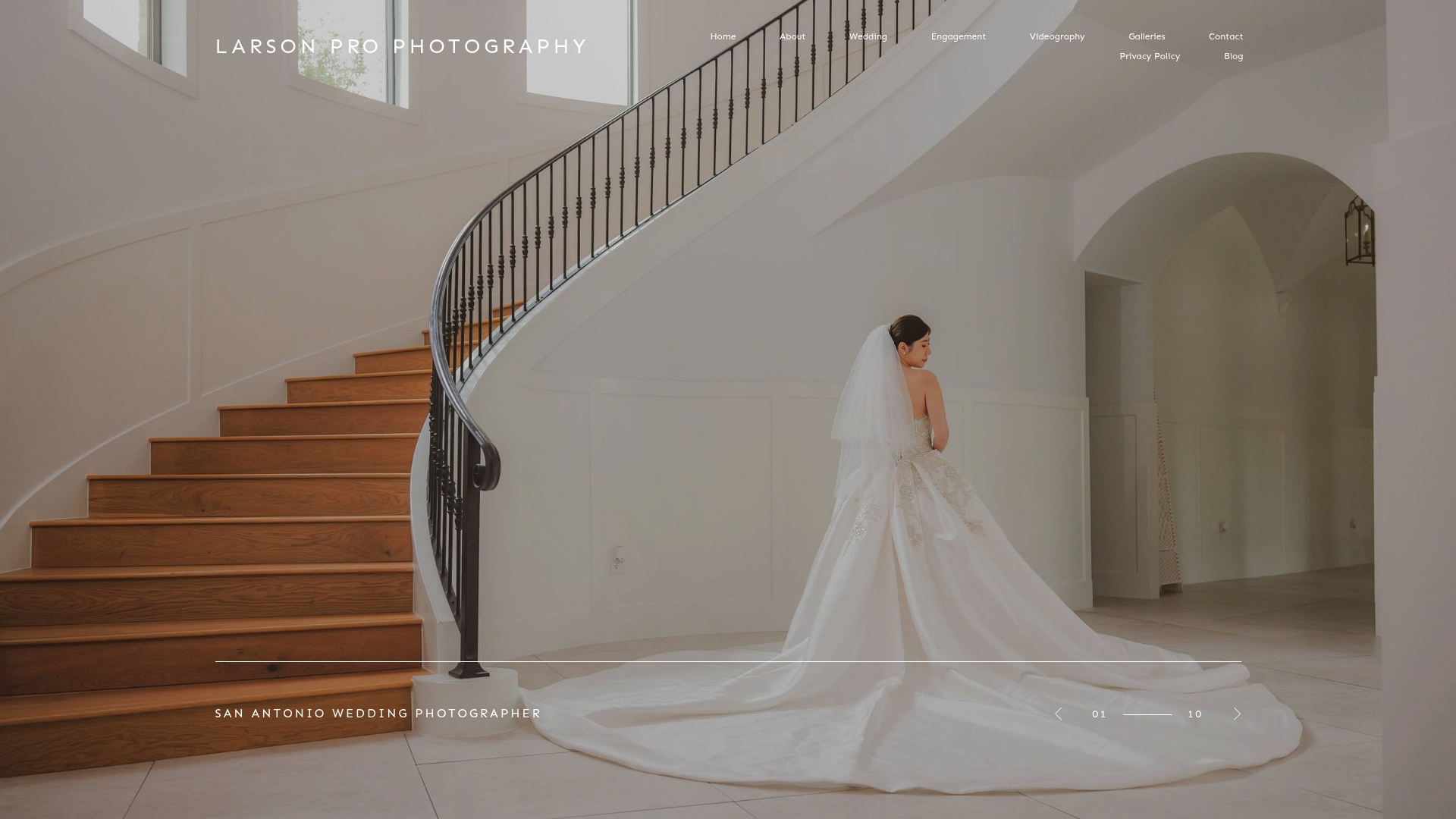
Explore the wedding photography packages at Larsonprophotography to see full galleries, detailed service descriptions, and booking information. You can also browse the client gallery to see consistent, real-wedding results across a range of venues, lighting conditions, and styles. If you are ready to start the conversation, reach out directly through the contact form and bring your questions.
FAQ
Who should be the lead photographer at my wedding?
The photographer whose portfolio you reviewed and whose contract you signed should be the lead shooter on your wedding day. Confirm this by name in the contract before you pay any deposit.
How many photos will I receive from my wedding?
Photographers typically deliver 500 to 1,200 edited images from a full wedding day, even though they may shoot several thousand frames. Confirm the expected minimum count in writing before signing.
How long does it take to receive wedding photos?
Delivery timelines range from 4 to 6 weeks during off-peak months and 8 to 12 weeks during peak season. Sneak peeks typically arrive within 48 to 72 hours after the wedding.
What should a wedding photography contract include?
A solid contract covers cancellation and rescheduling terms, deposit and payment schedules, the number of edited images, delivery deadlines, print rights, and liability insurance documentation. Missing any of these elements creates risk for both parties.
What questions should I ask about engagement photography?
For engagement sessions, the top questions for engagement photographers mirror wedding consultations: confirm the lead shooter, ask to see full engagement galleries, clarify the number of delivered images, and discuss location scouting. You can also review the differences between session types to understand what each format covers before your first meeting.