A photography style guide is a documented system of exact visual and technical rules that keeps every photo consistent, on brand, and recognizable across all shoots and platforms. For couples, wedding planners, and aspiring photographers, understanding what is a photography style guide means the difference between a cohesive wedding album and a collection of mismatched images. Brand consistency can increase business revenue by up to 20%. That number reflects a simple truth: when photos look and feel the same across every touchpoint, they build trust and recognition faster than any caption ever could.
What is a photography style guide, and why does it matter?
A photography style guide is an operational blueprint, not a wish list. It documents the exact lighting setup, color treatment, composition rules, editing style, and file specifications a photographer must follow on every shoot. The industry term for this document is a "visual standards guide," though "photography style guide" is the widely used working term across wedding and brand photography.
The guide removes randomness from the process. Without one, two photographers shooting the same wedding can return with images that look like they came from different events. Style guides turn visual consistency from a series of judgment calls into a repeatable, documented system. That shift matters most when multiple shooters, venues, or lighting conditions are involved.
For couples preparing for their wedding, the importance of a photography style guide shows up in the final album. A guide set before the wedding day tells your photographer exactly which moments to prioritize, which editing tone to apply, and which shots to avoid. The result is a gallery that feels intentional rather than accidental.
What are the key components of a photography style guide?
Eight core decisions form the foundation of any functional photography style guide. These eight decisions are: background, aspect ratio, framing, padding, shadows, color treatment, props, and lifestyle settings. Locking in each one before a shoot prevents the small inconsistencies that accumulate into a disjointed gallery.
Technical specifications
Technical specs are the backbone of photography style guidelines. Standard requirements include:
- Resolution: 300 dpi for print, 72 dpi for web
- Color profiles: sRGB for digital delivery, Adobe RGB for print workflows
- File format: RAW for editing, JPEG or TIFF for final delivery
- File naming: a consistent convention such as "ClientName_Date_SequenceNumber"
- Aspect ratios: locked to 3:2 or 4:5 depending on the platform
Each of these specs removes a decision point on shoot day. A photographer who knows the required color profile and file format can focus entirely on composition and light.
Composition and lighting rules
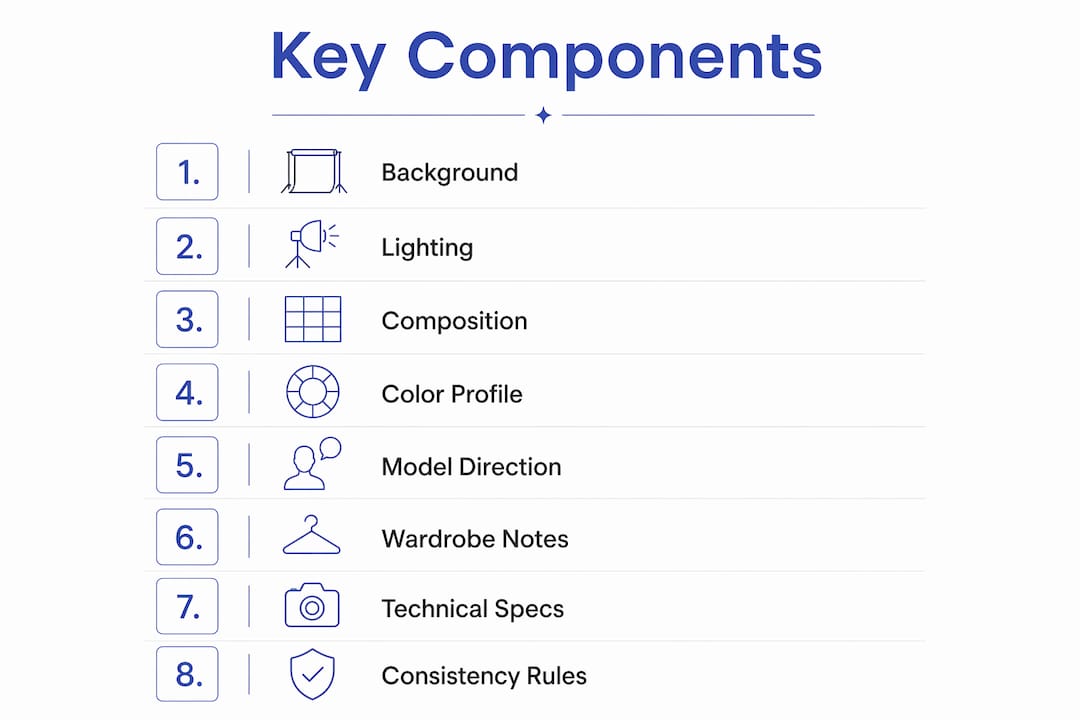
Composition rules define how subjects are placed within the frame. A style guide specifies focal length ranges (for example, 35mm for environmental shots, 85mm for portraits), preferred shot angles, and subject placement relative to the frame. Lighting instructions go further, describing the quality of light (soft and diffused versus direct and dramatic), the color temperature in Kelvin, and whether shadows should be hard, soft, or eliminated entirely.
For wedding photography lighting, natural light is often the preferred standard, but the guide must specify what "natural light" means in practice. Does it mean open shade? A specific time of day? A reflector to fill shadows? Vague instructions produce vague results.
Model direction and wardrobe notes
A wedding style guide should include direction for couples on wardrobe. Color palettes that complement the venue, fabrics that photograph well, and accessories that do not distract from the subject all belong in the guide. This section prevents the common situation where a couple arrives in clothing that clashes with the editing tone the photographer planned to apply.
Pro Tip: Include two or three reference images alongside every written rule. A photo of the exact lighting setup you want communicates more clearly than three paragraphs of description.
How does a style guide differ from a mood board or template?
A mood board is an inspiration collection. It shows colors, textures, and feelings you want to evoke. A template is the final output format, such as a preset album layout or a branded delivery folder. A photography style guide is neither. Style guides are operational blueprints that specify exact technical and visual standards to prevent inconsistent results.
The distinction matters because mood boards are open to interpretation. Two photographers looking at the same mood board can produce images that feel completely different. A style guide closes that gap by replacing inspiration with instruction.
Many couples and planners make the mistake of handing a photographer a Pinterest board and calling it a brief. A Pinterest board shows what you like. A style guide tells the photographer exactly how to produce it. The gap between those two things is where most wedding photography disappointments live.
Pro Tip: Build your style guide alongside your mood board, not instead of it. The mood board captures the feeling; the style guide captures the rules for achieving it.
A template, by contrast, applies the style guide's rules to a specific output. An album template built on your style guide will use the correct fonts, color grading, and image ratios automatically. The style guide is the source of truth; the template is one expression of it.
How to create a photography style guide for your wedding
Creating a photography style guide for a wedding does not require a design background. It requires clarity about what you want and a willingness to make specific decisions before the shoot day.
-
Schedule a setup session. A 30–60 minute collaborative session with your photographer is the starting point. Use this time to align on lighting preferences, editing tone, must-have shots, and any hard exclusions. This session is where vague preferences become documented rules. For more on making this collaboration work, see Larsonprophotography's 2026 wedding collaboration guide.
-
Document every parameter with reference images. Write down the lighting setup, color temperature, prop decisions, and wardrobe guidance. Attach a reference photo to each rule. Written rules without visual references leave too much room for interpretation.
-
Build a do/don't visual list. Do/don't lists prevent the most common wedding photography disappointments. Examples include "Do use open shade for portraits" and "Don't use on-camera flash during the reception." These lists set clear expectations for both the photographer and the couple.
-
Test the guide on one session first. Run the style guide through an engagement shoot before the wedding day. This reveals gaps in the rules and gives the photographer a chance to flag anything that does not work in practice. Larsonprophotography's engagement sessions are designed for exactly this kind of pre-wedding alignment.
-
Set a review cadence. A style guide is a living document, but it should not change constantly. Review and update on a set schedule, such as every 90 days or after a major life or brand change. Frequent reactive changes cause "preset drift," where the guide loses coherence over time.
Pro Tip: Keep the final guide to one page if possible. A guide that takes 20 minutes to read will not be used consistently on a busy shoot day.
What are the most common mistakes in using a photography style guide?
The most damaging mistake is writing vague rules. Vague or multiple options in a style guide erode brand consistency over time. Every rule should have one correct answer, not a range of acceptable options. "Warm tones" is not a rule. "Color temperature between 5,000 and 5,500 Kelvin" is a rule.
The second mistake is over-complicating the guide. A style guide with 40 pages of instructions will not be followed. Photographers working a full wedding day need to make fast decisions. Actionable, concise rules allow new photographers or second shooters to execute without extra clarification. Complexity is the enemy of consistency.
Common pitfalls to avoid:
- Writing rules that say "it depends" without specifying the conditions
- Skipping the do/don't visual list and relying only on written descriptions
- Updating the guide after every shoot based on minor preferences
- Failing to share the guide with every photographer working the event
- Treating the guide as a one-time document rather than a living standard
Onboarding a second shooter or a new team member becomes straightforward when the style guide is specific and concise. Hand them the document, walk through the reference images, and they can execute to standard without a lengthy briefing. That is the real operational value of communicating your vision through a documented guide rather than a verbal conversation.
Key Takeaways
A photography style guide is the single most effective tool for turning a wedding shoot from a gamble into a guaranteed, consistent result.
| Point | Details |
|---|---|
| Define it precisely | A style guide is an operational blueprint of visual and technical rules, not a mood board or inspiration board. |
| Lock in eight core decisions | Background, aspect ratio, framing, padding, shadows, color treatment, props, and lifestyle settings form the foundation. |
| Use do/don't visual lists | Pairing written rules with reference images prevents misunderstandings and common wedding photography disappointments. |
| Test before the wedding day | Run the guide through an engagement shoot to find gaps before the event that cannot be repeated. |
| Avoid preset drift | Review the guide on a set cadence and update only for significant changes, not minor shoot-by-shoot preferences. |
Why I think most couples underestimate the style guide
Most couples I work with arrive with a beautiful Pinterest board and assume that covers the brief. It does not. A mood board tells me what you find beautiful. It does not tell me your color temperature preference, whether you want hard or soft shadows, or how you feel about on-camera flash at the reception. Those gaps show up in the final gallery, and by then there is no way to fix them.
The style guide conversation is the most valuable 45 minutes a couple can spend before their wedding day. When we sit down and work through the specific rules, something shifts. Couples stop thinking about photography as something that happens to them and start thinking about it as something they are directing. That ownership produces better images because the photographer and the couple are working from the same documented standard.
The other thing I have learned is that couples who invest time in defining their visual direction before the shoot are far less likely to be disappointed afterward. Not because the photographer performed better, but because the expectations were clear and specific from the start. A style guide does not limit creativity. It channels it.
— Todd
How Larsonprophotography helps you build your style guide
Larsonprophotography works with every couple and wedding planner to build a photography style guide before the first shutter click. The process starts with a focused setup session where visual preferences, technical requirements, and must-have shots are documented into a working guide tailored to your wedding.
Every wedding photography package at Larsonprophotography includes this collaborative style guide process as a standard step, not an add-on. Couples who want to start the conversation early can visit the client services page to learn more about how the process works and what to expect from the first session through final delivery.
FAQ
What is a photography style guide in simple terms?
A photography style guide is a written document that defines the exact visual and technical rules a photographer follows on every shoot. It covers lighting, color treatment, composition, and file specifications to keep all images consistent.
How long does it take to create a photography style guide?
A focused setup session of 30–60 minutes with your photographer is enough to build the core rules. Refining the guide after a test shoot typically adds another short review session.
Is a mood board the same as a photography style guide?
A mood board is an inspiration collection showing colors and feelings you like. A photography style guide translates those preferences into specific, repeatable technical rules that a photographer can follow on shoot day.
How often should a photography style guide be updated?
Update the guide on a set cadence, such as every 90 days, or after a significant change in your event vision or brand direction. Avoid updating it after every shoot, as frequent changes cause inconsistency over time.
Do couples really need a photography style guide for a wedding?
Yes. A style guide sets clear expectations for lighting, editing tone, and must-have shots before the wedding day. Couples who use one are far less likely to be disappointed with their final gallery.