
Communicating your wedding photography vision is defined as the process of translating your personal style, emotional priorities, and logistical needs into clear, structured information your photographer can act on. Without this process, even the most talented photographer shoots blind. The best results come from three core tools: a mood board, a vibe statement, and a pre-shoot consultation. Couples who use all three consistently report photos that match their personality and event atmosphere, rather than generic wedding imagery that could belong to anyone.
How to communicate vision with photographer using the right tools
The most effective way to share your creative direction is through a combination of visual references and written context. Verbal descriptions alone rarely translate into consistent photographic choices, because words like "romantic" or "natural" mean different things to different people.
Building a mood board that actually works
An effective photography mood board contains 18–30 images organized into 3–5 categories with 1–2 DO or DON'T notes per category. That structure communicates style clearly without locking your photographer into a rigid script. Strong categories include getting ready, ceremony, couple portraits, reception details, and group shots. Each category should hold 3–5 reference images that share a common lighting quality, composition style, or emotional tone.
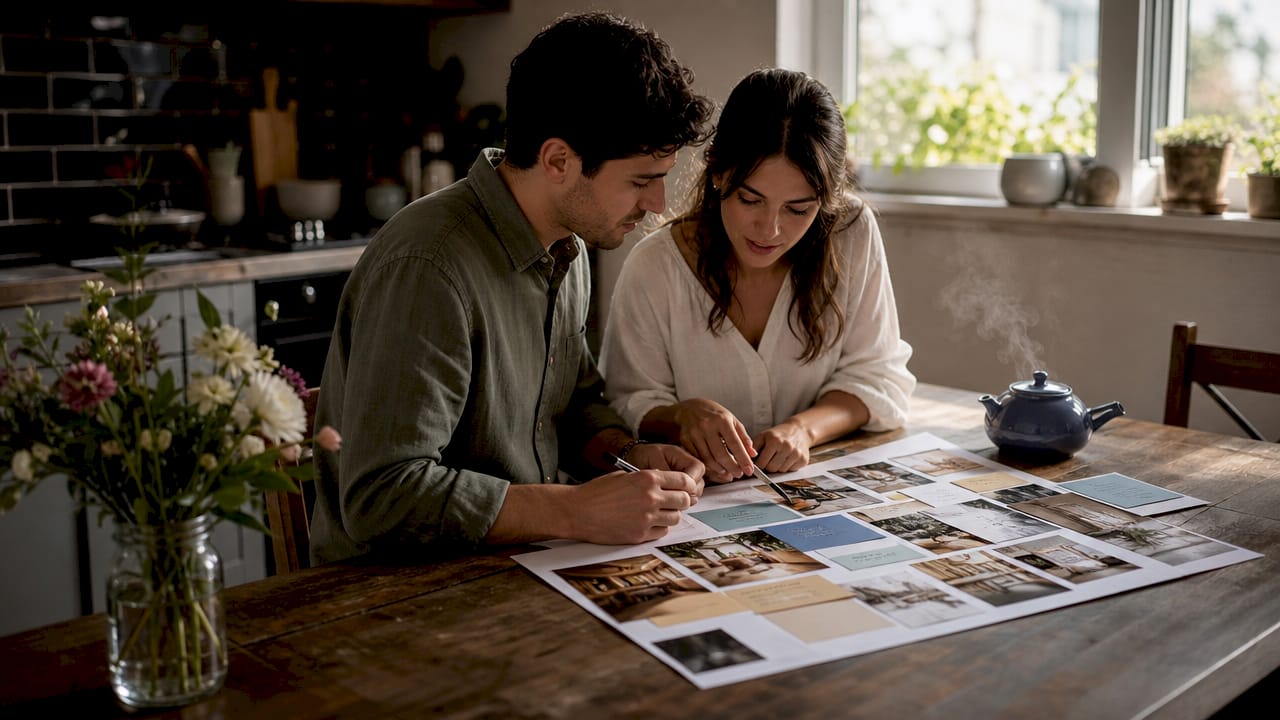
The most common mistake couples make is sending a Pinterest board with 200 images and no annotations. A photographer scrolling through 200 pins gets noise, not direction. Instead, export a single annotated PDF or one curated page. Write a short note next to each category: "Love the soft window light here" or "Avoid heavy flash in reception shots." That specificity gives your photographer creative freedom within a clear framework.
Pro Tip: Organize your mood board by moment, not by aesthetic. A board sorted into ceremony, portraits, and reception is far easier for a photographer to reference on a busy wedding day than one sorted by color palette.
Writing a vibe statement
A vibe statement is a written description of the emotional tone you want your photos to carry. The formula is simple: choose 2–3 adjectives plus a short sentence that describes the feeling you want to remember. For example: "Warm, candid, and joyful. We want our photos to feel like a real party, not a photo shoot." That single sentence tells your photographer more than a two-page questionnaire. It sets the benchmark for every artistic and technical decision, from lens choice to how much they direct guests.
Shot lists vs. mood boards: knowing the difference
Mood boards communicate style and mood; shot lists enumerate specific moments. Confusing the two creates problems. A mood board is not a list of poses. A shot list is not a style guide. Use both, but keep them separate. Prioritize no more than 3 key moments on your shot list to avoid overwhelming your photographer. Must-have moments typically include the first look, the ring exchange, the first dance, and specific family groupings. Everything else should be left to your photographer's instincts.
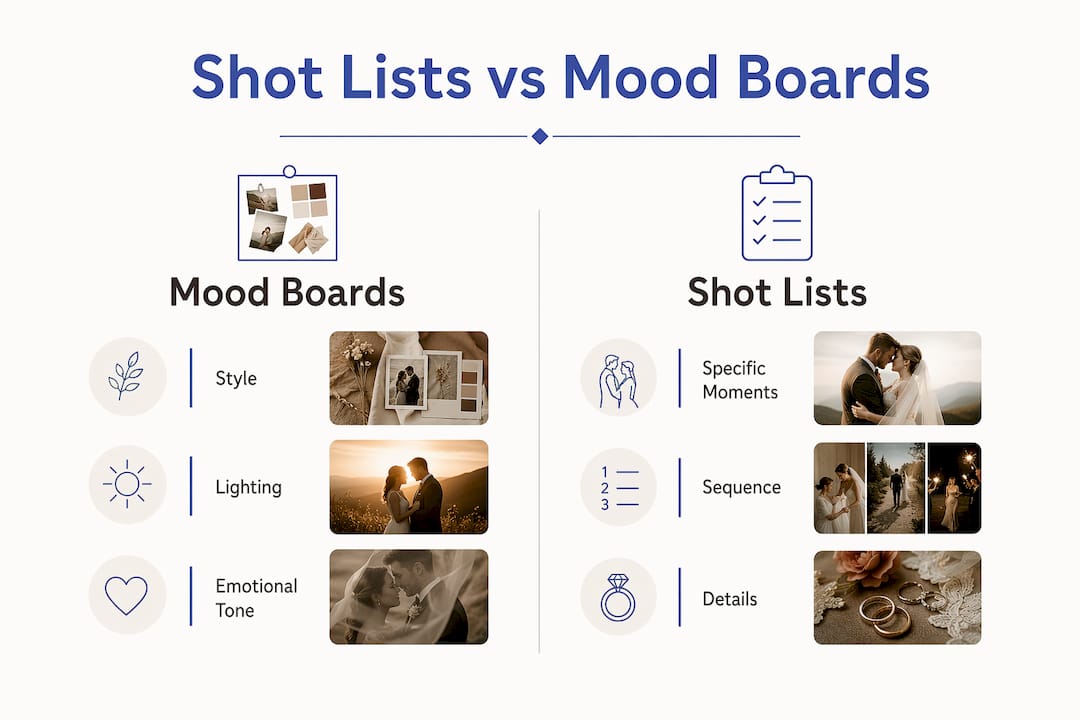
Here is a simple breakdown of how to use each tool:
| Tool | Purpose | Ideal length |
|---|---|---|
| Mood board | Communicate style, lighting, and emotional tone | 18–30 images across 3–5 categories |
| Vibe statement | Set the emotional benchmark in words | 2–3 adjectives plus one sentence |
| Shot list | Identify non-negotiable specific moments | 10–20 items maximum |
For deeper guidance on wedding photography styles and how they map to mood board choices, reviewing a style reference before building your board saves significant time.
What makes a pre-shoot consultation effective?
A pre-shoot consultation is the single most valuable conversation you will have with your photographer before the wedding day. Schedule it after you have finalized your wedding timeline. That timing matters because your photographer needs real start times, venue addresses, and ceremony length to give you useful feedback.
A productive consultation covers five areas in order:
- Review the shot list together. Walk through every item and confirm it is realistic within your timeline. Your photographer will flag conflicts you have not considered, like a 30-minute gap between ceremony and reception that is not enough time for full family portraits.
- Clarify the candid-to-posed ratio. Tell your photographer what percentage of your final gallery you want to feel documentary versus directed. A couple who wants 80% candid shots needs a photographer who stays back and observes. Stating this clearly prevents a mismatch on the day.
- Discuss lighting and venue challenges. Share any restrictions your venue has, including no-flash rules, low-light ceremony spaces, or outdoor areas with harsh midday sun. Venue-specific limitations shared early allow your photographer to prepare the right gear and plan the right positions.
- Name your must-have family groupings. Provide a written list of every family combination you want photographed. Include full names and note any family dynamics that require sensitivity, such as divorced parents who should not be in the same frame.
- Ask for your photographer's input. A good photographer will have suggestions based on your venue and timeline. Holding a pre-shoot consultation after finalizing the timeline lets you refine priorities together rather than presenting a finished plan that ignores practical constraints.
Pro Tip: Send your photographer a written summary of the consultation within 48 hours. A short email confirming the agreed shot list, timeline, and priorities prevents misunderstandings and gives both sides a reference document.
How to plan logistics and designate contacts for the wedding day
Logistics are where most photography communication breaks down. Couples focus on style and mood, then forget to tell their photographer where to park, who to call when the schedule shifts, or that the grandmother of the bride refuses to be photographed.
Assigning a wedding day point person as a liaison is the single most effective operational decision you can make. This person, typically the maid of honor or wedding planner, handles crowd control for family groupings, relays schedule changes, and keeps the photographer informed without interrupting the couple. The photographer stays focused on capturing moments instead of hunting for the right uncle.
Share the following details with your photographer at least two weeks before the wedding:
- Venue layout and access. Provide a floor plan or walkthrough if possible. Note where natural light enters, where the couple will stand during the ceremony, and where the reception dinner will be held.
- Lighting restrictions. If the venue prohibits flash during the ceremony, your photographer needs time to test alternative lighting setups. Communicating venue limitations before the event enables proper gear and lighting preparation.
- Sensitive family dynamics. Tell your photographer if certain family members should not be photographed together, or if a guest has requested privacy. This prevents awkward moments and protects relationships.
- "No photo" preferences. Some couples want certain moments, like a private vow exchange, kept off camera. State this clearly and in writing.
A well-briefed photographer adapts to changes calmly because they understand the priorities. When the florist runs late and the timeline shifts by 20 minutes, a photographer who knows your top three priorities will protect those moments automatically.
Common mistakes that derail photography communication
The most damaging mistake is assuming your photographer will interpret your vision without concrete examples. Photographers are not mind readers; clients must disclose non-negotiable moments, venue lighting challenges, and family dynamics ahead of the event. Vague instructions like "just make it look beautiful" give a photographer nothing to work with.
Avoid these specific pitfalls:
- Overloading the shot list. A shot list with 60 items forces your photographer to spend the day checking boxes instead of watching for genuine moments. Prioritize your top 10–20 items and trust your photographer's instincts for the rest.
- Sending last-minute style changes. Changing your mood board or vibe statement within two weeks of the wedding disrupts your photographer's preparation. Lock in your creative direction at least three weeks before the date.
- Skipping the venue walkthrough. If your photographer has never seen your venue, invite them to a walkthrough or send detailed photos of each space. Early, clear communication preserves candid authenticity and prevents mismatched expectations.
- Ignoring your photographer's expertise. You hired a professional for a reason. After you have shared your vision clearly, give your photographer room to make creative decisions. Micromanaging on the wedding day produces stiff, self-conscious photos.
Pro Tip: Schedule a brief check-in call two weeks before the wedding. Use it to confirm the timeline, answer any remaining questions, and give your photographer a chance to flag anything they need from you. Ten minutes of conversation prevents hours of confusion.
For a complete reference, the wedding photography checklist for 2026 covers every communication step from booking through the wedding day.
Key Takeaways
Clear photography vision communication requires a mood board, a vibe statement, and a designated day-of liaison working together before and during the wedding.
| Point | Details |
|---|---|
| Build a structured mood board | Use 18–30 images in 3–5 categories with DO/DON'T notes to guide style without overprescribing. |
| Write a vibe statement | Combine 2–3 adjectives with one sentence describing the emotional tone you want your photos to carry. |
| Separate shot lists from mood boards | Shot lists name specific moments; mood boards communicate style. Keep them distinct and keep shot lists short. |
| Designate a day-of liaison | Assign a point person to manage family groupings and schedule changes so the photographer stays focused. |
| Lock in details early | Share venue restrictions, family dynamics, and timeline changes at least two weeks before the wedding. |
What I have learned from years of wedding photography briefs
The couples who get the best photos are not the ones with the biggest budgets or the most elaborate venues. They are the ones who show up to the consultation with a clear mood board, a written vibe statement, and a genuine willingness to listen. That combination tells me everything I need to know about what matters to them, and it gives me the creative confidence to go after those moments without hesitation.
The most common thing I see go wrong is a couple who spent months planning every detail of their wedding but gave their photographer a three-sentence email two days before the event. A photographer working from incomplete information defaults to safe, predictable shots. Safe shots are fine. But they are not the photos you will frame and hang on your wall.
What I have found actually works is treating the consultation like a real creative meeting, not a formality. Bring your mood board. Bring your questions. Ask your photographer how they handle low-light ceremonies, or what they do when the timeline runs 30 minutes late. Their answers will tell you whether you are aligned. If you want to understand how professional experience shapes results, the difference between a photographer who asks questions and one who just shows up is significant.
The best brief I ever received was a single annotated PDF with 24 images, a three-sentence vibe statement, and a note that said, "We trust you. These are just reference points." That couple got photos that looked exactly like their vision, because the brief gave me direction without removing my ability to respond to real moments as they happened. Give your photographer a clear starting point, then let them do their job.
— Todd
Working with Larsonprophotography on your wedding vision
Larsonprophotography builds the consultation process around exactly the tools described in this article. Every client receives a structured pre-wedding meeting that covers mood boards, shot list review, venue logistics, and day-of liaison planning before a single photo is taken.
Couples planning weddings in San Antonio work directly with Larsonprophotography to align on style, priorities, and logistics well before the wedding day. The goal is a photographer who arrives fully prepared, not one who is figuring out your vision while the ceremony starts. If you are ready to start that conversation, the client services page outlines exactly how the planning process works and what to expect from the first consultation through final delivery.
FAQ
What should I include in a wedding photography mood board?
A mood board should contain 18–30 images organized into 3–5 categories such as ceremony, portraits, and reception, with 1–2 DO or DON'T notes per category. Keep it to a single annotated PDF rather than a large unfiltered Pinterest collection.
How is a shot list different from a mood board?
A mood board communicates style, lighting, and emotional tone. A shot list names specific moments you need captured, such as the first dance or a particular family grouping. Use both tools separately and keep the shot list to 10–20 items maximum.
When should I schedule a pre-shoot consultation with my photographer?
Schedule the consultation after you have finalized your wedding timeline. That timing lets you and your photographer review realistic shot opportunities, flag lighting challenges, and confirm family groupings with accurate start times in hand.
Who should be the day-of liaison for my photographer?
Assign your maid of honor or wedding planner as the photographer's primary contact on the wedding day. This person manages family groupings, relays schedule changes, and keeps the photographer informed without pulling the couple away from their guests.
How far in advance should I send my mood board and shot list?
Send your mood board, vibe statement, and shot list at least three weeks before the wedding. That window gives your photographer time to prepare gear, scout the venue if needed, and raise any questions before the event.