
A photography brief is a written planning document that defines the purpose, style, logistics, and deliverables of a photoshoot so your photographer can deliver exactly what you need. Think of it as the single source of truth between you and your photographer before a single frame is captured. Without one, even the most talented photographer is guessing. A well-crafted brief can save significant time, stress, and cost compared to projects that start without clear direction. Whether you are planning a wedding in San Antonio or coordinating a corporate event, this document is your most powerful planning tool.
What is a photography brief and why does it matter?
A photography brief is the industry's standard term for a creative project brief applied specifically to photography. It aligns your vision with your photographer's technical execution before the shoot begins. The result is fewer surprises, fewer reshoots, and images that actually reflect what you had in mind.
The brief functions as a roadmap. It tells your photographer the "why" behind the shoot, the mood you want to capture, the shots you cannot miss, and the format you need the final images delivered in. A comprehensive photography brief covers seven core areas: project overview, shot list, mood and style references, location details, deliverable formats, timeline, and key contacts. Each element removes a layer of ambiguity that would otherwise show up as a problem on shoot day.

Couples and event planners who skip this step often find themselves disappointed with results that technically look fine but feel completely off. The brief is what closes that gap between "technically correct" and "exactly right."
What key elements must a photography brief include?
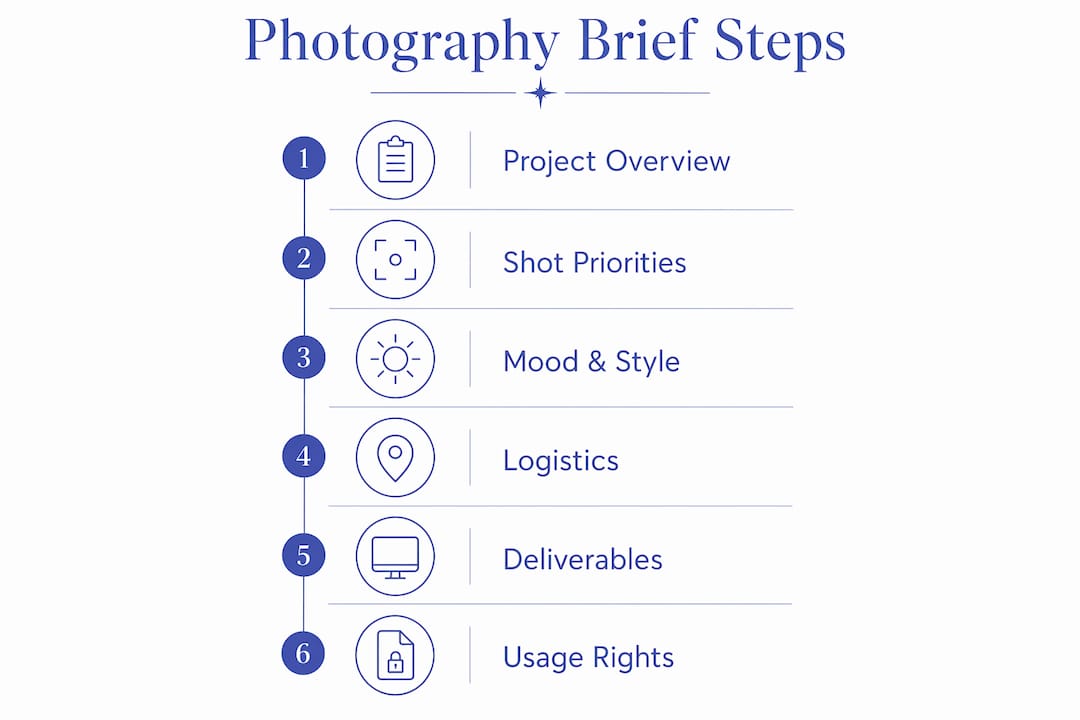
A strong brief covers six distinct areas. Each one answers a question your photographer will need to plan the shoot effectively.
Project overview and objectives
Start with the "why." Are these photos for a wedding album, a social media announcement, a corporate website, or a printed magazine spread? The purpose shapes every creative decision your photographer makes, from lighting choices to the energy they bring to the shoot.
Shot list with priorities
A prioritized shot list separates must-have images from nice-to-haves. This hierarchy matters more than most clients realize. Weather changes, schedules run late, and access gets restricted. When your photographer knows which three shots are non-negotiable, they protect those first and adapt everything else around them.
Pro Tip: Label each shot as either "must-have" or "bonus." Your photographer will thank you when the timeline gets compressed by 30 minutes.
Mood, style, and visual references
Describe the feeling you want the images to evoke. Words like "warm," "editorial," "candid," or "dramatic" give your photographer a creative direction. Visual references help even more, but sharing Pinterest links alone is not enough. Add a note to each image explaining what specifically appeals to you: the lighting, the posing, the color tone, or the energy. Without those notes, one person's "romantic" is another person's "overexposed."
Logistics: location, timing, and access
List every location, the order you plan to visit them, and any permits or access restrictions. For weddings, this means ceremony venue, cocktail hour space, and reception hall, along with the time window at each. For corporate events, include building access rules and any restricted areas.
Deliverables and formats
Specify the number of final images, the file formats you need (JPEG, TIFF, RAW), the aspect ratios for print versus digital, and your expected turnaround time. Precise deliverable details allow your photographer to give you an accurate quote and avoid miscommunication about post-production workload.
Usage rights and licensing
Define how you plan to use the images upfront. Social media use, paid advertising, merchandise, and editorial publication each carry different licensing implications. Failing to specify this early leads to unexpected fees after the shoot is done.
| Brief Element | Why It Matters |
|---|---|
| Project overview | Sets creative direction and purpose |
| Prioritized shot list | Protects essential images when conditions change |
| Mood and style references | Aligns creative vision with technical execution |
| Logistics and timeline | Prevents day-of confusion and missed moments |
| Deliverable specifications | Avoids post-production disputes and surprises |
| Usage rights | Determines licensing terms and final pricing |
How does a photography brief improve project outcomes?
Clear communication reduces the most expensive problem in photography: the reshoot. When your photographer understands the purpose of the images, they plan lighting, equipment, and composition to match that goal from the start. A strong brief gives context and boundaries that empower creative execution rather than restrict it.
Common mistakes that undermine a brief include:
- Vague instructions. Telling a photographer to "do what you think is best" without any shot list leads to missed essential moments that cannot be recreated.
- Too many decision-makers. Multiple approvers create conflicting feedback and project delays. One primary contact keeps communication clean.
- Undefined usage rights. Skipping this conversation early creates licensing complications and unexpected costs after delivery.
- No visual context. Sharing inspiration without notes forces your photographer to guess your intent.
Pro Tip: Assign one person as the single point of contact for all brief feedback and shoot-day decisions. This one step prevents more confusion than any other part of the process.
The practical payoff is real. Briefs that clearly define objectives allow photographers to plan the right equipment, scout locations in advance, and arrive with a shot plan rather than improvising on the day. That preparation shows up directly in the quality of the final images.
What are best practices for writing an effective photography brief?
The best briefs are specific, visual, and focused on outcomes rather than technical instructions. You do not need to know what an f-stop is. You need to know how you want the images to feel.
Start by defining the purpose and the audience for the photos. A wedding gallery shared privately with family calls for a different approach than engagement photos destined for Instagram. That context shapes every decision your photographer makes.
Focus on mood and feeling rather than camera settings. Describe the atmosphere: golden hour warmth, moody overcast tones, bright and airy, or rich and dramatic. Photographers translate emotional intent into technical execution. Your job is to supply the emotion clearly.
Do this in your brief:
- Write a one-paragraph project overview explaining the purpose and audience
- Include a shot list with clear must-have and bonus categories
- Attach visual references with written notes on what specifically appeals to you
- List all locations with addresses, access instructions, and time windows
- Specify file formats, image counts, and delivery timeline
- Name one primary contact for approvals and feedback
Avoid these common errors:
- Sending a brief the day before the shoot
- Using only generic terms like "natural" or "beautiful" without examples
- Leaving usage rights undefined
- Including 10 or more decision-makers in the approval chain
Pro Tip: Share a draft brief with your photographer before finalizing it. Their feedback will catch gaps you did not know existed and often improves the shot list significantly.
For engagement session inspiration that translates well into brief references, visual examples from real shoots help couples articulate their style preferences far more clearly than words alone.
How does a brief change for weddings vs. other events?
Photography briefs vary significantly by project type. The core structure stays the same, but the priorities shift based on what the shoot is trying to capture.
Wedding photography centers on moment-driven storytelling. Your brief should prioritize the ceremony timeline, family grouping lists for formals, and candid moments you want documented. Check out the wedding photography checklist from Larsonprophotography for a detailed breakdown of what to include. Permits for outdoor venues and access to restricted spaces like bridal suites need to be confirmed in advance and documented in the brief.
Engagement sessions focus on style and connection. The brief should emphasize location mood, wardrobe coordination, and the energy you want the images to reflect. Couples planning an engagement session can explore session style examples to build a stronger visual reference section.
Corporate events are brand-driven. The brief needs to specify brand guidelines, key speakers or products to feature, and the platforms where images will be published. Usage rights become especially important here since corporate images often appear in paid advertising.
| Project Type | Primary Focus | Key Brief Additions |
|---|---|---|
| Wedding | Moment-driven storytelling | Timeline, family list, venue access |
| Engagement | Style and connection | Location mood, wardrobe, energy |
| Corporate event | Brand representation | Brand guidelines, speaker list, usage rights |
Understanding how wedding photography licensing works is especially useful when completing the usage rights section of any brief.
Key takeaways
A photography brief is the single most effective tool for aligning your vision with your photographer's execution before the shoot begins.
| Point | Details |
|---|---|
| Define the brief early | Share your brief at least one to two weeks before the shoot to allow proper planning. |
| Prioritize your shot list | Label shots as must-have or bonus so your photographer protects the images that matter most. |
| Add notes to visual references | Pinterest links without context lead to misinterpretation; annotate every inspiration image. |
| Name one approver | A single point of contact prevents conflicting feedback and keeps the project on schedule. |
| Specify usage rights upfront | Defining how images will be used prevents licensing disputes and unexpected post-shoot costs. |
What i have learned after years of working with briefs
The most common thing I hear from couples after a shoot is, "I wish I had told you about that shot sooner." A brief fixes that problem before it starts. After working with hundreds of clients at Larsonprophotography, I can say with confidence that the quality of the brief predicts the quality of the final gallery more reliably than almost any other factor.
Here is the part most articles skip: a brief is not a restriction on creativity. It is the opposite. When I know exactly what a couple needs, I can spend my creative energy on how to deliver it beautifully rather than guessing what they want. The brief frees me to focus on light, timing, and emotion. Without it, I am spending mental energy on logistics that should have been resolved before I picked up a camera.
The briefs that produce the best results are not the longest ones. They are the most honest ones. Couples who tell me they want relaxed, candid images but then hand me a 40-shot formal list are sending mixed signals. The brief is where you reconcile those tensions before they become problems on the day. If you are unsure what to ask your photographer during the briefing process, reviewing questions to ask photographers before you book is a smart starting point.
My honest advice: treat the brief as a conversation, not a form. Write a draft, share it with your photographer, and refine it together. That back-and-forth is where the best shoots are actually planned.
— Todd
Start your photography project the right way
Larsonprophotography works with every client through a guided consultation process designed to build exactly the kind of brief described in this article. Whether you are planning a San Antonio wedding, an engagement session, or a special event, the team walks you through each element so nothing gets missed.
Visit the client services page to learn how Larsonprophotography structures the briefing and planning process for every project. Couples planning an engagement session can explore the engagement photography services page for details on how sessions are tailored to your vision from the first conversation. Starting with a clear brief means starting with confidence.
FAQ
What is a photography brief in simple terms?
A photography brief is a written document that tells your photographer the purpose, style, shot list, logistics, and deliverables for a shoot. It aligns expectations before the project begins.
What should a photography brief include?
A complete brief includes a project overview, prioritized shot list, mood and style references with notes, location and timing details, deliverable specifications, and defined usage rights.
How long should a photography brief be?
An effective brief requires only a few clear paragraphs per section. Clarity and specificity matter more than length.
Do i need technical photography knowledge to write a brief?
No. Focus on mood and feeling rather than camera settings. Describing the atmosphere and emotional tone you want is more useful to a photographer than technical specifications.
When should i share my photography brief?
Share your brief at least one to two weeks before the shoot. This gives your photographer time to scout locations, plan equipment, and flag any gaps before the day arrives.