
Most couples receive their full edited wedding gallery in about 4 to 8 weeks. Sneak peeks or highlight images often show up shortly after the wedding.(https://filterpixel.com/blog/9-steps-to-deliver-wedding-photos-faster-complete-workflow-step-by-step). Some studios, including Larson Pro Photography, spell out both dates in the signed contract so there is no guessing involved. That written commitment is the single detail that separates a smooth wait from a frustrating one.
TL;DR:
- Full wedding galleries generally take 4 to 8 weeks to deliver, but peak season or larger image volumes can extend that beyond 12 weeks.
- A sneak peek typically arrives within one to three days with a few polished images, while a full gallery includes several hundred images with standard editing.
- Manual culling can take 6 to 8 hours, but AI-assisted tools can reduce that stage to under an hour, significantly speeding up the process.
- Contract terms should specify delivery dates, formats, image counts, and communication protocols to prevent delays and clarify expectations.
- Faster delivery options through add-ons usually involve lighter retouching or smaller image sets, not necessarily compromising final quality.
Table of Contents
- How long does wedding photo turnaround actually take?
- What happens to your photos between the wedding and delivery
- What causes delays, and what should raise a flag
- Sneak peeks, highlight galleries, and faster delivery options
- Questions to ask before you book, and contract lines to insist on
- How Larson Pro Photography builds reliable delivery into every wedding
- Amateur, professional, and outsourced workflows compared
- Does a faster turnaround mean lower quality?
- What to do while you wait for your photos
- How Larson Pro Photography keeps delivery dates predictable
- Sources
- FAQ
How long does wedding photo turnaround actually take?
Turnaround time is not one number. It depends on what you are being handed and when.

A short preview gallery, sometimes called a sneak peek, can arrive within about one to three days(https://filterpixel.com/blog/9-steps-to-deliver-wedding-photos-faster-complete-workflow-step-by-step) when a studio uses fast-tier editing. A handful of studios that lean on automated workflows promise full delivery in about one to two weeks(https://filterpixel.com/blog/9-steps-to-deliver-wedding-photos-faster-complete-workflow-step-by-step), though that is closer to the fast end of the spectrum than the norm. The standard full gallery lands in 4 to 8 weeks, and busier studios during peak season can stretch past 12 weeks.
The terms matter as much as the numbers:
- A sneak peek is a small batch, often 3 to 5 images, edited quickly for sharing.
- A highlight gallery is a larger curated set, sometimes 50 to 150 images, with standard editing.
- A full gallery is the complete, finished set, usually several hundred images, with every photo edited to the studio's finished style.
When a photographer quotes a delivery date, compare it against these ranges before assuming it is fast or slow for the industry.
What happens to your photos between the wedding and delivery
A wedding day generates far more raw material than most couples expect, and every one of those files has to pass through several stages before it reaches you.
-
Ingest: files are copied off memory cards and backed up in two or more places.
-
Cull: the photographer or an editing tool sorts through every shot to pick the best frames.
-
Edit: color, exposure, and tone are adjusted across the selected images.
-
Retouch: specific images get finer detail work, skin smoothing, or background cleanup.
-
Export and deliver: final files are formatted and uploaded or shared with you.
A single full-day wedding can produce a large number of raw files(https://filterpixel.com/blog/wedding-photography-workflow-automation-shoot-to-gallery-in-24-hours?hs_amp=true), and a standard 8-hour wedding typically delivers several hundred finished images from that pool.
Culling is usually the biggest single time sink in the whole process. Manual culling can take 6 to 8 hours, while AI-assisted culling tools can compress that same task to under an hour. Combined culling, editing, and retouching across a full wedding often runs many hours of post-production work, which is why heavier retouching or album production tacks extra weeks onto a delivery date.
What causes delays, and what should raise a flag
Some delays are just the nature of a seasonal business. Others are worth a polite phone call.
Reasonable causes for a slower turnaround include:
- Peak wedding season backlog, when a studio is editing several weddings at once.
- A higher image volume than usual, from a longer day or multiple locations.
- Limited editing staff, especially at smaller studios with one or two people doing everything.
- An editor or assistant getting sick or leaving mid-project.
- Detailed retouch requests, like removing objects or blending group shots.
- Late change orders from the couple, such as requesting a different edit style after delivery started.
Red flags look different. A missed contract deadline with no explanation, a photographer who will not commit to any delivery schedule in writing, or repeated silent delays without a status update are all signs to follow up directly.
Pro Tip: Wait a few days past the promised date, then send one short, friendly message asking for a status update rather than a refund or complaint. Most delays get resolved faster with a calm nudge than an escalation.
Sneak peeks, highlight galleries, and faster delivery options
A sneak peek is meant to hold you over, not replace the full gallery. Expect a small set, often just a handful of polished images, cleared for sharing on social media but not the full finished collection.
- Premium fast-delivery add-ons, when offered, usually cover a smaller image set than the standard package.
- These faster tiers exist because AI-assisted culling and editing can shrink the sorting and editing stage from hours to minutes.
- Quality on a fast preview is usually lighter on retouching detail than the final gallery, since the goal is speed over polish.
- The full, deeply edited gallery still follows on the standard timeline even when a preview arrives early.
Faster previews are a genuine convenience, not a replacement for the complete, carefully finished set of images you are ultimately paying for.
Questions to ask before you book, and contract lines to insist on
A photographer's verbal promise means little without it in writing. Before signing, ask for these items to be listed as actual contract terms.
- Sneak peek date: the specific day a preview set will be shared, if offered.
- Final gallery delivery date: a firm date or date range, not "a few weeks."
- Delivery format: online gallery, download link, USB, or printed album, and how long that link stays active.
- Image count: roughly how many finished images you should expect.
- Communication protocol: what happens, and who you contact, if the date is missed.
It also helps to ask directly whether the studio uses AI-assisted culling or editing, whether more than one editor works on a single wedding, and whether any retouching gets subcontracted out. A guaranteed or accelerated delivery timeline is sometimes available for an added fee, which is worth asking about if a firm date matters to your planning.
How Larson Pro Photography builds reliable delivery into every wedding
Larson Pro Photography documents both a sneak-peek process and a same-day delivery workflow that couples can review before booking, rather than relying on a verbal promise.
- Delivery dates are set as part of the booking process, not left open-ended.
- A wedding image curation approach explains how the selection stage works before editing begins.
- Timeline buffers are built in so a guaranteed date accounts for peak-season load without pushing the deadline back.
- Couples can review questions to ask before booking to compare studio promises against their own expectations.
That combination, a documented process plus a written date, is what keeps a preview promise from cutting into the quality of the final gallery.
Amateur, professional, and outsourced workflows compared
Not every photographer moves at the same speed, and the differences usually trace back to staffing and editing style rather than skill alone.
An amateur or part-time photographer often edits every image solo, working around a day job, which can stretch delivery well past 8 weeks even for a modest wedding. A full-time professional studio typically has a defined workflow and dedicated editing hours, which is part of why the 4 to 8 week range holds fairly steady across established photographers.
In-house editing, where the same photographer or a direct employee handles culling and edits, tends to produce more consistent results but can bottleneck during busy months since one team is handling every wedding on the books. Studios that outsource retouching or use AI-assisted culling tools can often move faster, since the most time-consuming stage, sorting thousands of raw files, gets compressed from hours to minutes.
Wedding-season timing plays a role too. Photographers booking heavily in busier months, when physical demands on the day itself increase, often see their editing queues stack up right alongside the shooting schedule, which is one more reason a written delivery date matters more in peak season than in a slower month.
None of this means faster is automatically better. It means the type of workflow behind your photographer's promise is worth understanding before you compare one delivery date against another.

Does a faster turnaround mean lower quality?
Not necessarily, but it depends entirely on what "faster" applies to. A quick sneak peek is intentionally light on retouching because its whole purpose is speed, not final polish. That is a fair trade for a handful of shareable images within days of the wedding.
The real question is whether a compressed full-gallery timeline cuts corners on the final set. AI-assisted culling can shrink the sorting stage from 6 to 8 hours down to under an hour without touching the editing or retouching stages at all, which means a faster overall timeline does not have to mean less attention per image. What does affect depth is the editing style itself: fine art editing and heavy retouching simply take longer per photo than a straightforward color-and-exposure pass, regardless of how fast the culling stage runs.
The safest read is this: ask what stage of the workflow is being sped up. Speeding up culling with automation rarely hurts quality. Speeding up the actual editing and retouching stage, especially under a tight promised deadline, is where corners are more likely to get cut.
What to do while you wait for your photos
Enjoy the sneak peek for what it is, a small taste, and save full album sharing for when the complete gallery arrives. If the promised date passes, wait a week or two before a polite check-in. A clear contract with real dates is what makes that conversation easy instead of tense.
— Todd
How Larson Pro Photography keeps delivery dates predictable
If you want a delivery date you can actually plan around, that commitment should be written into your contract before you book, not promised after. Larson Pro Photography documents its sneak-peek process and full-gallery timeline as part of how it structures wedding coverage, giving couples a specific date range rather than an open-ended "we'll get to it."
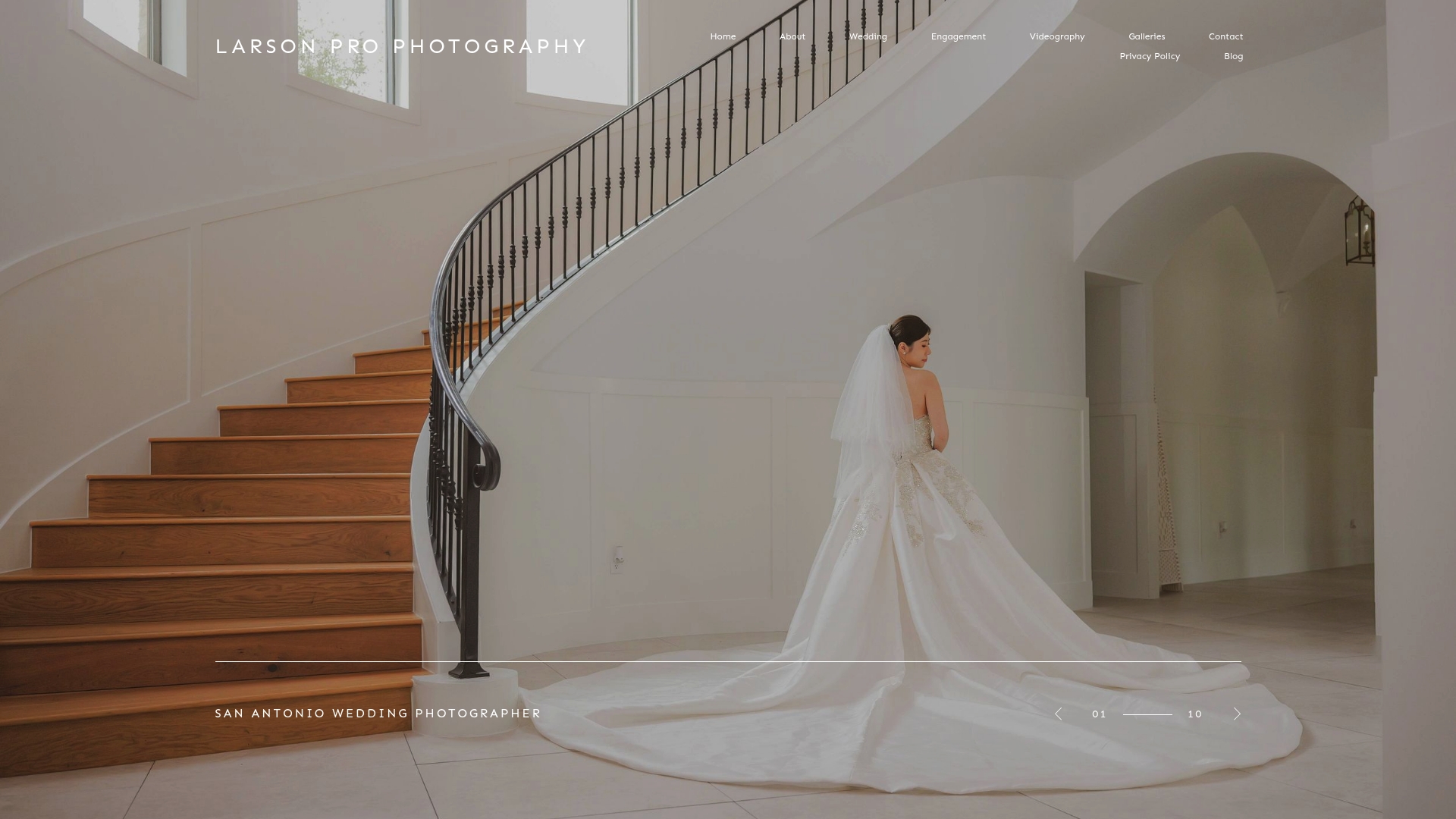
- Sneak peek images are prepared for early sharing without cutting into the full-gallery timeline.
- Standard wedding galleries follow a set delivery window agreed on at booking.
- Engagement sessions and videography can be paired with wedding coverage on their own timelines.
| Service | What it covers | Where to look |
|---|---|---|
| Wedding photography | Full-day coverage with sneak peek and full gallery delivery | Wedding |
| Engagement sessions | Pre-wedding portrait session with its own delivery timeline | Engagement |
| Videography | Highlight films and event video coverage | Videography |
Couples planning a wedding in the San Antonio area can reach out through the wedding services page to ask about a specific delivery timeline before booking.
Sources
- Wedding Photography Workflow: Automated Culling and Editing in 2026
- Wedding Photography Contract Guide: Read Before You Sign
FAQ
What is a realistic wedding photo turnaround time?
Most full, edited galleries arrive within 4 to 8 weeks of the wedding, with some studios promising faster and busier ones running longer. Sneak peeks, when offered, often arrive within days rather than weeks.
Is 2 hours enough time for wedding photos on the day?
Two hours is generally considered tight for a full wedding day photo session, since it needs to cover portraits, family formals, and candid coverage without feeling rushed. Most photographers recommend a longer window, and the exact time needed depends on your venue, guest count, and how many formal photo groupings you want.
What is the 30-5 minute rule for weddings?
This is not a documented industry standard with a single fixed definition, and photographers use different versions of timing guidance for portraits and formals. Ask your own photographer directly how they structure portrait time on the wedding day rather than relying on a general rule.
What is the 20-60-20 rule in photography?
Definitions vary and this is not a term tied to a specific documented wedding photography standard. It is sometimes used informally to describe splitting a shoot into preparation, main coverage, and wrap-up phases, but couples should confirm directly with their photographer how their day is structured.
Is $4,000 a lot for a wedding photographer?
Wedding photography pricing varies widely by market, coverage hours, and deliverables, so there is no single answer to what counts as high or low. Rather than comparing a price alone, ask what is included, such as sneak peeks, full gallery timing, and image count, so you can judge the value against your own contract terms.