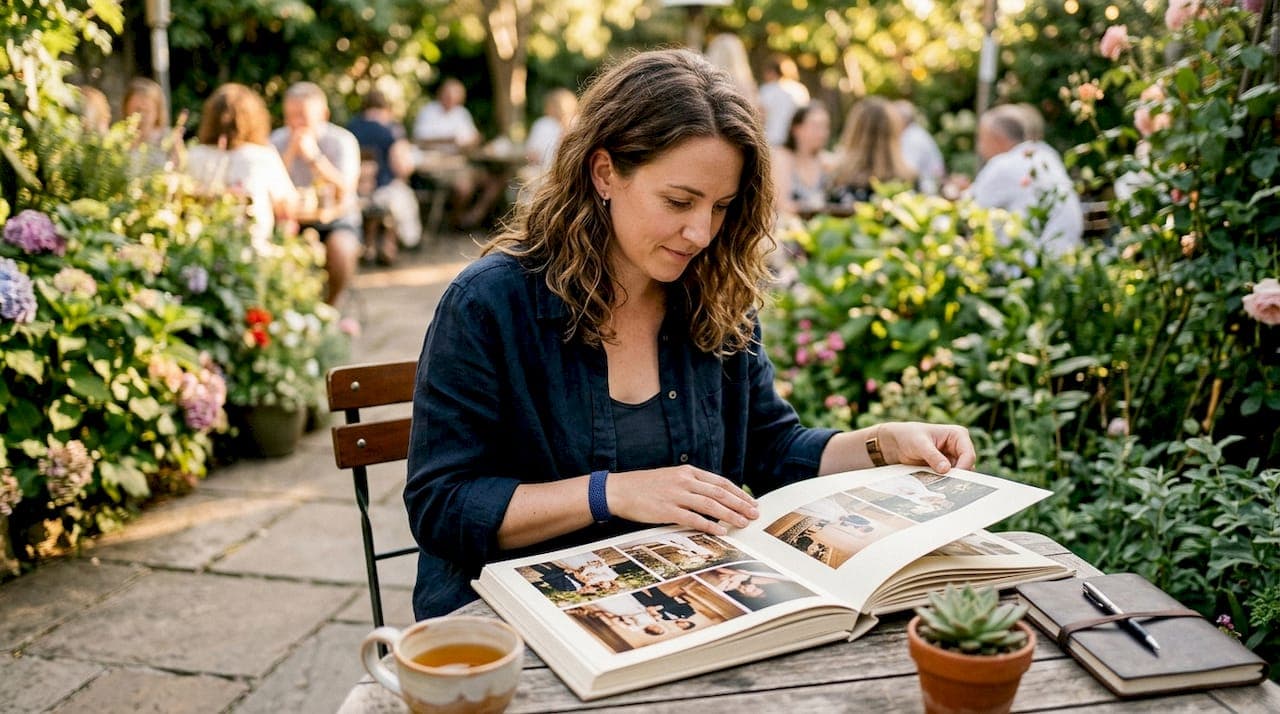
Wedding image curation is the deliberate process of selecting, organizing, and sequencing wedding photographs to tell a complete, emotionally resonant story. It is the recognized industry practice photographers call "photo editing and selection," though the broader term "image curation" captures its full scope. What is image curation for weddings, at its core, is the difference between a folder of raw files and a gallery that makes your mother cry. Larsonprophotography applies this process to every wedding it photographs in San Antonio, combining AI-assisted culling with expert human judgment to deliver galleries that hold up for decades.
What is image curation for weddings and why does it matter?
Wedding image curation is defined as the structured process of reviewing, selecting, and arranging photographs from a wedding day to produce a final gallery that communicates the event's emotional arc. The term covers everything from the first technical cull to the final sequencing of images in a delivered album or online gallery.
The scale of the task surprises most couples. Wedding photographers typically capture 3,000 to 10,000 raw images per event and deliver 600–1,000 curated photos. That means a photographer discards or withholds roughly 85–90% of everything shot. The selection process is not arbitrary. Each kept image must earn its place by contributing to the story, the emotional tone, or the visual variety of the final gallery.
Curation also shapes how couples remember their wedding day. A gallery of 800 well-chosen images feels complete and moving. A dump of 3,000 unedited files feels exhausting. The difference is entirely in the selection and sequencing decisions made before delivery.
How do professionals select and cull wedding photos effectively?
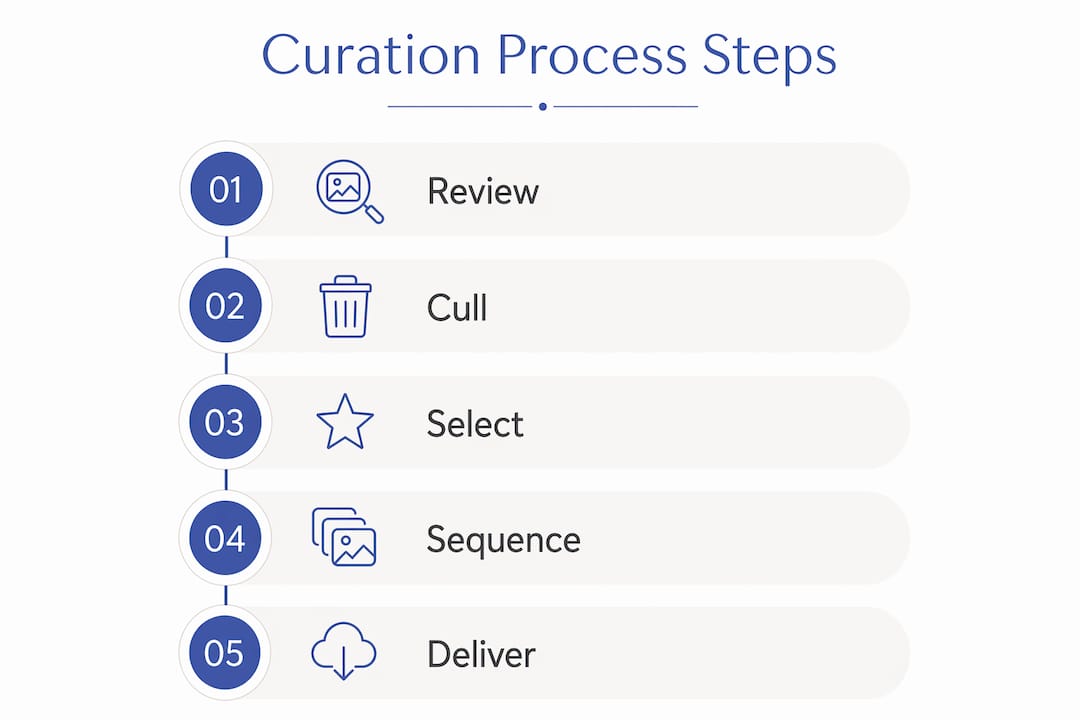
The culling process is where raw volume becomes a manageable story. Most professional photographers work in two passes: a technical cull that removes blurry, duplicate, and poorly exposed frames, followed by a creative cull that selects the strongest images for storytelling.
AI tools have changed the speed of the first pass dramatically. Platforms like Aftershoot and FilterPixel reduce manual review time by up to 90%, cutting what once took hours into a process measured in minutes. That efficiency matters because it frees the photographer to spend more time on the creative decisions that AI cannot make reliably.

The creative cull is where human judgment is irreplaceable. AI tools still require human curation to capture emotional nuance and client preference effectively. A tool can identify a sharp, well-lit frame. Only a photographer who was present knows that the slightly soft image of the groom seeing his bride for the first time is the one that belongs in the album.
Key steps in a professional culling workflow:
- Technical pass: Remove out-of-focus, motion-blurred, and duplicate frames immediately.
- Sequence review: Identify the best frame from each burst or repeated pose.
- Emotional pass: Flag images with strong expressions, genuine reactions, and narrative weight.
- Balance check: Confirm the selected set covers all key moments and maintains variety.
- Final trim: Cut to the target delivery count without losing story continuity.
Pro Tip: Culling backwards through photo sequences is an insider technique that saves time and surfaces the best shots. Photographers who shoot in bursts find that the final frames in a sequence capture the most relaxed, natural expressions. Starting from the end of each burst and working backward means you reach the strongest image faster.
What criteria guide the curation for a compelling wedding photo narrative?
Strong wedding image curation is not about keeping the technically perfect shots. It is about building a visual story with emotional peaks, quiet moments, and a clear sense of progression through the day.
"Albums are memory architecture with deliberate pacing and image pairing rather than chronological dumps." — Wedding album design and curation
That framing changes how photographers approach selection. Every image choice is a structural decision, not just a quality judgment.
The four criteria that drive professional wedding photo selection:
- Emotional resonance. The image must contribute a feeling, not just document a fact. A wide shot of the reception hall is useful context. A close-up of the couple's hands during vows is irreplaceable.
- Narrative position. Each image should belong to a clear chapter of the day: details, getting ready, ceremony, portraits, reception. Wedding albums typically allocate 3–5 photos per segment to maintain flow without repetition.
- Candid and posed balance. The 60% candid and 40% posed split is the professional standard for albums. Candid images carry emotional weight. Posed images provide the formal record couples and families expect. Understanding the difference between candid and posed wedding photos helps couples communicate their preferences before the wedding day.
- Style consistency. Mixing divergent photographic styles without thematic cohesion disrupts emotional continuity and weakens gallery impact. A gallery that shifts between dark and moody, bright and airy, and heavily filtered images in the same sequence feels disjointed. Consistent style is what makes a gallery feel like a single story.
A well-designed album also uses visual rhythm, negative space, and crescendo of image intensity to maintain engagement. Pairing a wide landscape shot with a tight emotional close-up creates visual breathing room. Building toward the first dance or the ceremony kiss creates a natural emotional climax.
How does image curation enhance the experience for couples?
Curated galleries change how couples and their families engage with wedding photos over time. A gallery built around narrative keeps viewers moving through it. A gallery built around volume overwhelms them.
The numbers that define a well-curated wedding album:
| Gallery type | Recommended image count | Key focus |
|---|---|---|
| Print album | 50–80 images | Narrative pacing, emotional peaks |
| Full digital gallery | 600–1,000 images | Complete coverage, variety |
| Highlight gallery | 80–120 images | Shareable, story-driven selection |
| Per-segment allocation | 3–5 images | Prevents repetition within chapters |
Delivery timing shapes client satisfaction as much as the gallery itself. Personalized follow-ups within 48 hours of the wedding, referencing specific memorable moments, increase sharing and viewing rates. A short, warm message that names the moment when the flower girl tripped and laughed, or when the groom's father teared up, signals to the couple that their photographer was paying attention.
The best galleries also encourage sharing. A memorable wedding photo gallery built around emotional storytelling gets shared with family and friends far more often than a large, unedited archive. That sharing extends the reach of the photographer's work and deepens the couple's connection to their images.
Pro Tip: Ask your photographer to organize your gallery by chapter before delivery. Getting ready, ceremony, portraits, and reception should each read as a distinct section. This structure makes it far easier to find specific moments and share targeted selections with family members who were part of each chapter.
What are the latest AI tools used in wedding image curation?
AI has moved from a novelty to a standard part of professional wedding photography workflows. The tools that matter most are those built specifically for the volume and variety of wedding photography.
| Tool | Core function | Wedding-specific feature |
|---|---|---|
| Aftershoot | AI culling and editing | Learns photographer's style over time |
| FilterPixel | Automated culling | Filters by expression, sharpness, and duplicates |
| DeepCull | Moment recognition | Scores emotional content and burst-sequence timing |
DeepCull and Aftershoot score photos on emotional content and technical quality, surfacing the best shots from thousands of frames efficiently. DeepCull specifically incorporates moment recognition and expression quality scoring designed for wedding photography. These are not generic photo tools adapted for weddings. They are built for the specific challenge of finding the best frame from a burst of 20 nearly identical shots.
The workflow integration matters as much as the tool itself. A typical AI-assisted pipeline moves from card ingest to AI cull to manual review to editing to delivery. The manual review step is non-negotiable. A 5–10 minute manual review after AI selection is the minimum standard to catch emotional moments the algorithm missed and remove technically acceptable images that feel wrong in context.
Staying current with wedding photography trends in 2026 also informs curation decisions. Couples increasingly request film-inspired tones and documentary-style sequences, which changes which images a photographer prioritizes during the creative cull.
Key Takeaways
Effective wedding image curation requires combining AI-assisted culling with deliberate human judgment to build a gallery that tells a complete emotional story, not just a technical record.
| Point | Details |
|---|---|
| Curation is storytelling | Selecting and sequencing images creates emotional narrative, not just a photo archive. |
| AI speeds the process | Tools like Aftershoot and DeepCull cut culling time dramatically but require human review. |
| Balance candid and posed | A 60/40 candid-to-posed ratio produces albums with both emotional depth and formal coverage. |
| Delivery timing matters | Personalized gallery delivery within 48 hours increases client engagement and sharing. |
| Style consistency is non-negotiable | Mixing incompatible photographic styles breaks emotional continuity across a gallery. |
Why curation is the most underrated skill in wedding photography
Most photographers talk about their shooting style. Very few talk about their curation philosophy. That gap is where client satisfaction is actually won or lost.
Curation defines how clients perceive a photographer's style and impact rather than just quality control. The gallery a couple receives is the only version of their wedding day they will look at for the rest of their lives. Every image that should not be there dilutes the ones that should. Every missing image leaves a gap in the story.
The mistake I see most often is photographers delivering too many images out of a misplaced sense of generosity. A gallery of 1,500 images is not a gift. It is a burden. Strict gallery limits challenge photographers to prioritize quality and storytelling, and the result is stronger emotional impact and higher client satisfaction every time.
The other mistake is treating curation as the last step. The best photographers think about curation while they are shooting. They know which moments they need to complete the story. They shoot with the final gallery in mind, which means they also cull with confidence because they understand what they were building toward.
For couples, the practical implication is simple. Ask your photographer how many images they deliver and how they decide what stays. The answer tells you more about their craft than any portfolio image.
— Todd
How Larsonprophotography approaches wedding gallery delivery
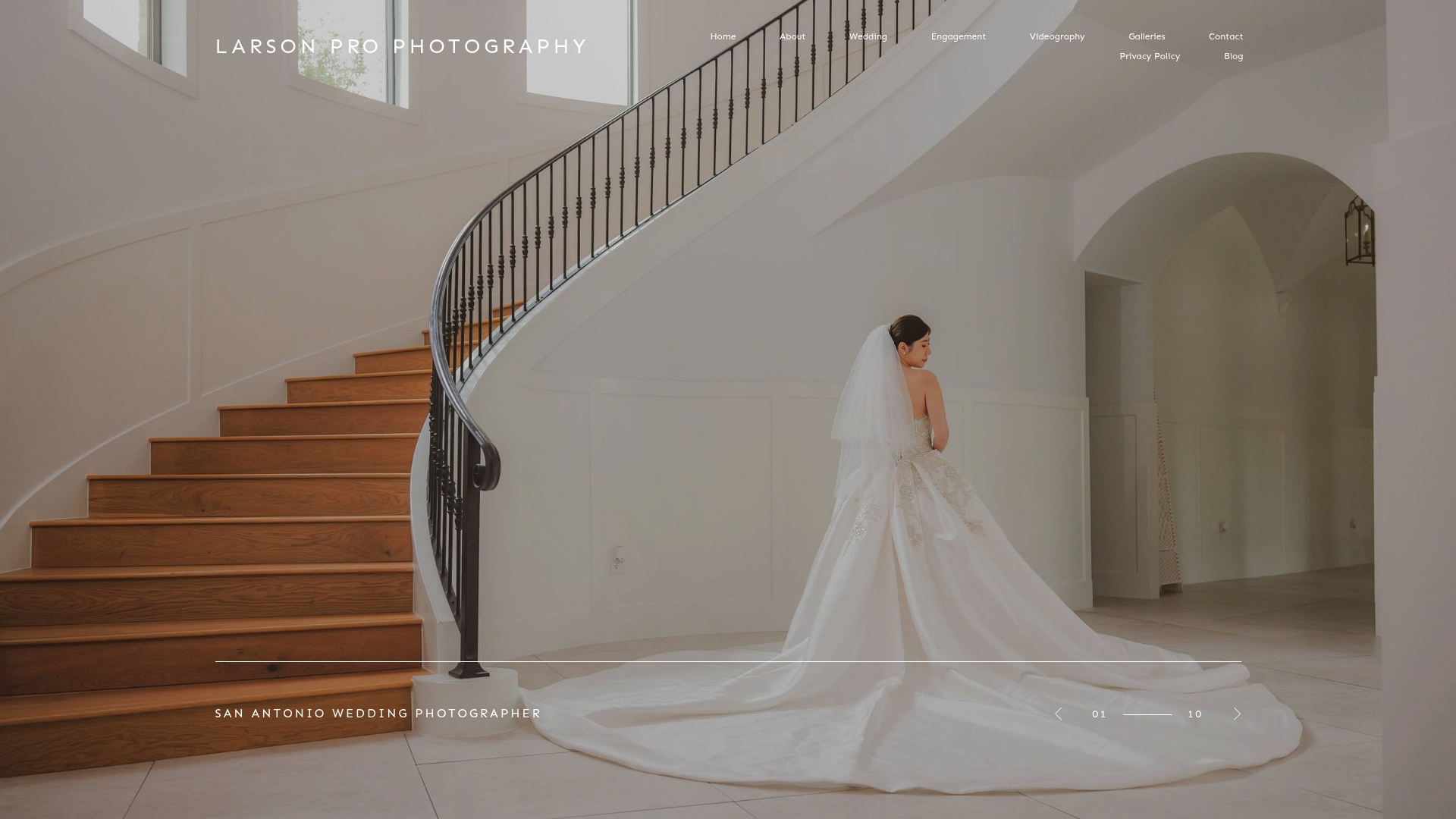
Larsonprophotography brings the same attention to curation that it brings to capturing your wedding day in San Antonio. Every gallery goes through a structured selection process that balances emotional storytelling with complete coverage of your day. The result is a delivered gallery you will actually want to revisit, not an archive you have to sort through yourself.
Couples who work with Larsonprophotography receive galleries organized by chapter, with a curated highlight selection ready for sharing alongside the full delivery. If you are planning a wedding in San Antonio and want to see how expert curation shapes the final experience, view client galleries or reach out to discuss your wedding photography needs directly.
FAQ
What is wedding photo curation in simple terms?
Wedding photo curation is the process of selecting the best images from thousands of raw shots to create a final gallery that tells the story of your wedding day. It combines technical review and creative judgment to produce a collection that is both complete and emotionally engaging.
How many photos should a curated wedding gallery include?
A curated wedding album typically contains 50–120 images for print, while a full digital gallery ranges from 600 to 1,000 photos. The right count depends on the length of the event and the delivery format.
Do AI tools replace photographers in the curation process?
AI tools like Aftershoot, FilterPixel, and DeepCull speed up the technical culling process significantly, but they do not replace human judgment. A manual review after AI selection remains necessary to catch emotional moments and remove images that are technically acceptable but narratively weak.
How does curation affect the quality of a wedding album?
Curation directly determines album quality by controlling pacing, emotional balance, and style consistency. Albums built with deliberate image selection and visual rhythm create stronger emotional engagement than galleries assembled by volume alone.
When should a photographer deliver a curated wedding gallery?
Personalized gallery delivery with a follow-up message referencing specific moments within 48 hours of the wedding maximizes client engagement and sharing. The timing signals attentiveness and sets the tone for the client relationship long after the wedding day.