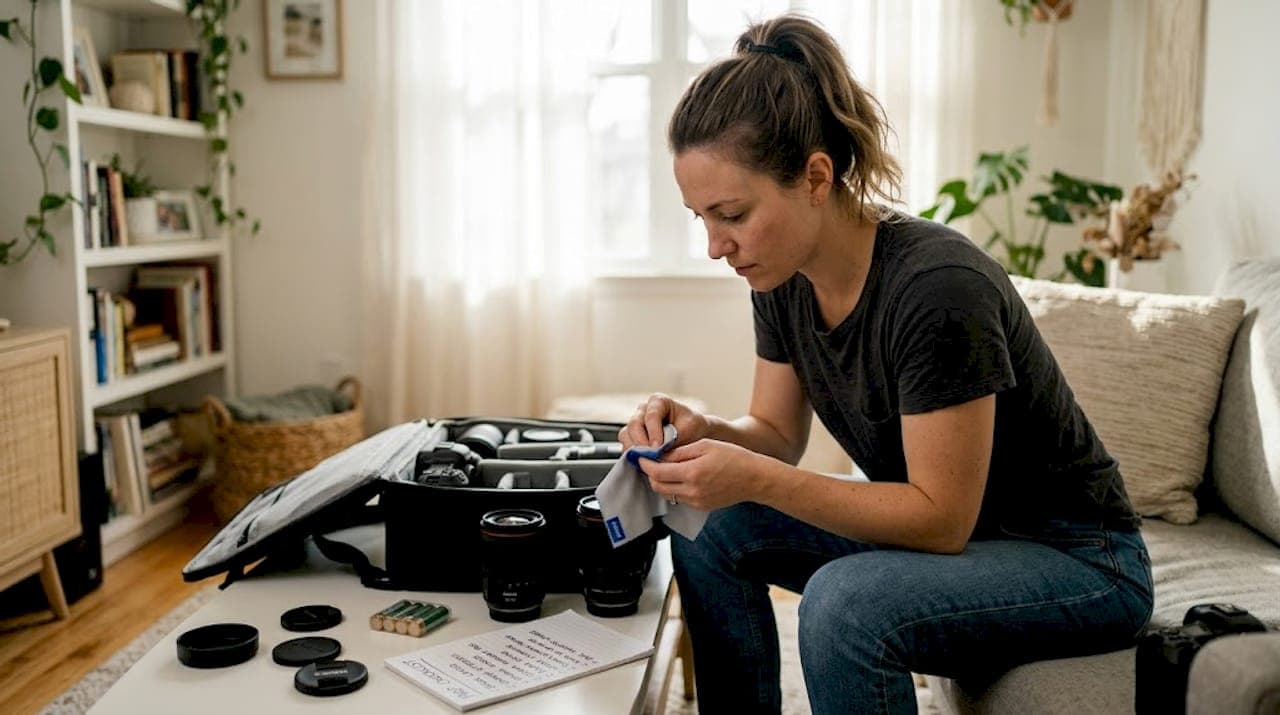
Your wedding day holds moments you will never get back. The nervous laugh before the vows, the tear on your mother's cheek, the wild energy of the last dance. These are the scenes that deserve more than a blurry smartphone shot. Many couples in San Antonio feel real pressure around this, worrying they will miss the candid emotions or not know how to brief their photographer and videographer. This guide walks you through the exact gear, techniques, and style decisions that experienced wedding photographers use, so you can walk into your wedding day with total confidence that every priceless moment will be preserved.
Table of Contents
- What you need to capture unforgettable wedding moments
- Step-by-step: Capturing the ceremony's most meaningful moments
- How to cover the reception: Details, dances, and candid energy
- Photojournalism vs traditional: Finding your unique style
- The truth about capturing unforgettable moments: What most guides won't tell you
- Capture your own wedding story with expert support
- Frequently asked questions
Key Takeaways
| Point | Details |
|---|---|
| Prep is everything | Great wedding coverage starts with the right equipment and a solid plan tailored to your event. |
| Capture emotion, not just poses | Blending candid photojournalism with classic shots tells a more authentic wedding story. |
| Video and audio backups matter | Having multiple angles and audio sources ensures you don't miss the day's biggest moments. |
| Receptions need strategy | A flexible approach helps you get both detail shots and lively guest candids all night long. |
| Expert help saves stress | Partnering with an experienced team means you can enjoy your day while they handle the memories. |
What you need to capture unforgettable wedding moments
Great wedding coverage starts long before the ceremony. The right equipment, settings, and pre-event planning are what separate a forgettable photo album from one you will reach for every anniversary.
Essential gear for photo and video
Key gear benchmarks include full-frame cameras, 24-70mm and 70-200mm lenses, off-camera flash, monopods and gimbals for video, and multiple audio backups. Each piece solves a specific problem. The 24-70mm handles wide room shots and intimate portraits. The 70-200mm lets you capture raw emotion from across the aisle without disrupting the moment. Gimbals keep video footage smooth during movement-heavy moments like the grand entrance.
When you browse wedding photo gear options, you will notice that redundancy is a theme. Two camera bodies, two memory cards, two audio recorders. If one fails, nothing is lost.
Key camera settings by environment
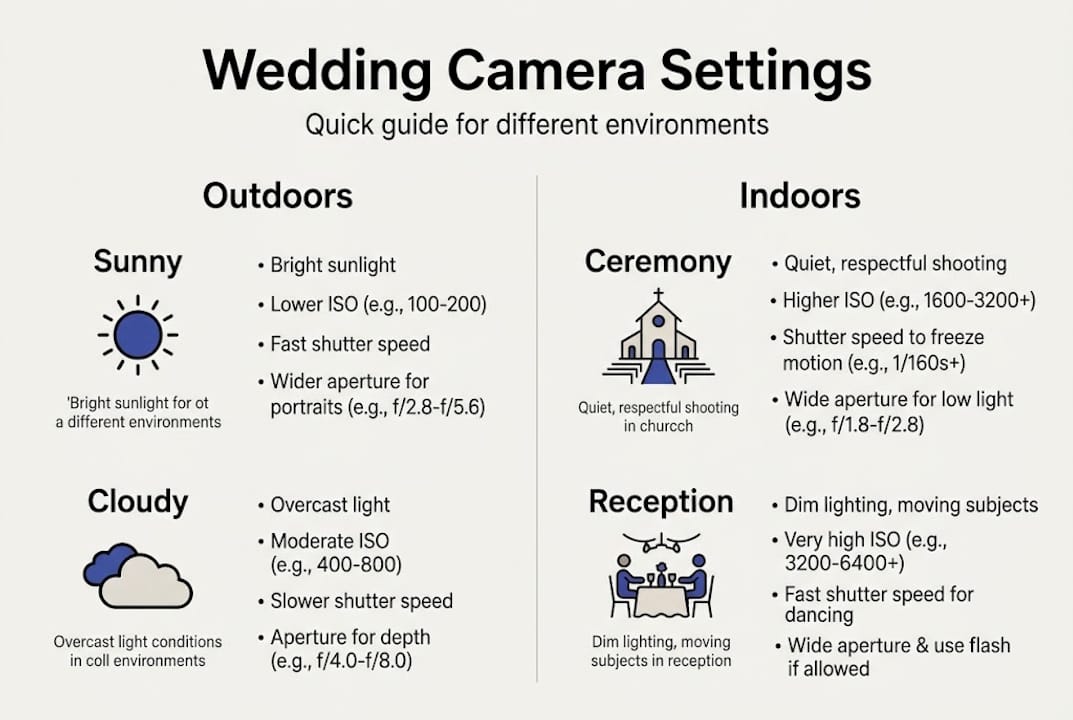
| Environment | Shutter speed | ISO | Aperture |
|---|---|---|---|
| Outdoor ceremony (sunny) | 1/500s | 100-400 | f/4-f/8 |
| Indoor church (dim) | 1/125s | 1600-3200 | f/1.8-f/2.8 |
| Reception (dark) | 1/100s | 3200-6400 | f/2.0-f/2.8 |
| Sparkler exit (night) | 1/60s | 3200+ | f/2.0 |
These are starting points. Every San Antonio venue has its own lighting personality, so your photographer should arrive early to test and adjust.
Pre-event checklist
- Share a detailed shot list at least two weeks before the wedding
- Walk the venue with your photographer to identify tricky lighting spots
- Confirm audio backup plans with your videographer
- Build buffer time into your timeline for family formals
- Charge all batteries and format all memory cards the night before
Pro Tip: Schedule a short engagement session preparation call with your photographer to rehearse poses and build comfort in front of the camera. Couples who do this look noticeably more relaxed in their wedding photos.
Investing in professional coverage is worth it. Wedding photography statistics show that photography consistently ranks as one of the top priorities couples wish they had spent more on after the wedding.
Step-by-step: Capturing the ceremony's most meaningful moments
With your gear prepped, it is time to walk through the key moments of your ceremony and how to capture each with confidence.
The ceremony moves fast. There is no second take on the first look down the aisle or the moment the ring slides onto the finger. Here is a proven sequence to make sure nothing slips through.
- Set the wide safety shot first. Before guests arrive, lock a tripod-mounted camera on a wide angle that covers the entire altar. This is your insurance frame.
- Position a second shooter for reactions. While the primary camera covers the couple, a second angle on the parents and guests captures the emotional story happening in the crowd.
- Switch to handheld for the processional. Movement during the walk down the aisle calls for a flexible handheld or monopod setup to follow the action smoothly.
- Go tight for the vows. This is the emotional peak. A 70-200mm lens from a respectful distance captures tears, smiles, and whispered words without intrusion.
- Anticipate the kiss. Do not wait for it. Pre-focus on the couple the moment the officiant begins the closing words.
- Cover the recessional with energy. Switch back to a wider lens and follow the couple as they walk back through cheering guests.
For video, use a tripod for the wide safety shot, a handheld or monopod for close-ups and reactions, slow motion for special moments, and multiple audio sources including lav mics, a board feed, and a shotgun mic.
Pro Tip: If your ceremony includes a petal toss or confetti moment, fast shutter speed and a front position are essential to freeze the action and capture the burst of color cleanly.
"The best ceremony images come from anticipation, not reaction. A great photographer is always one beat ahead of the moment."
For inspiration on what is working in 2026, check out current wedding photo trends to see how local San Antonio photographers are approaching ceremony coverage.
How to cover the reception: Details, dances, and candid energy
Once the romantic ceremony concludes, it is time to capture the joy and energy of the reception. Here is how to ensure you do not miss a beat.
The reception is a completely different creative challenge. You go from quiet, controlled ceremony moments to a fast-moving, unpredictable party. The approach has to shift with it.
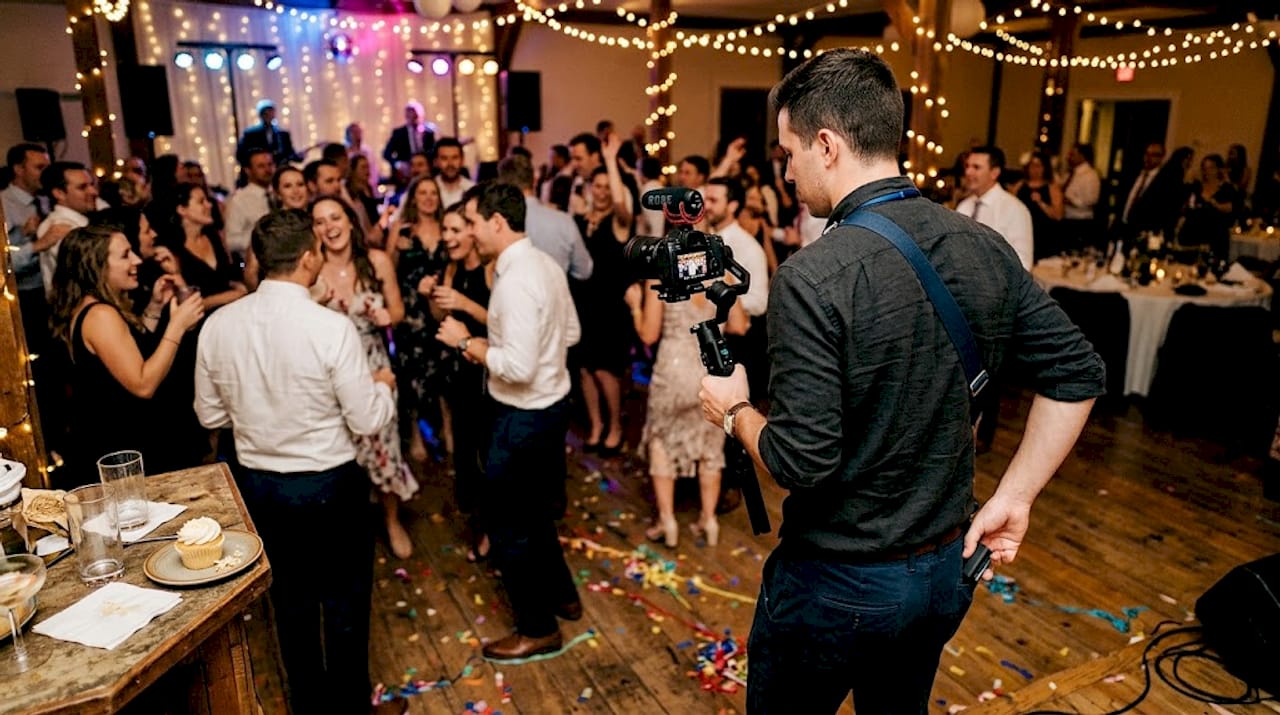
Shooting order for room details vs. crowd energy
| Situation | Start with | Then move to |
|---|---|---|
| Room partially set up | Close-up details (florals, place cards) | Wide room shots once complete |
| Room fully set up | Wide establishing shot | Tight detail close-ups |
| Dance floor active | Wide crowd energy | Tight emotional moments |
| Toasts happening | Tripod on speakers for speaker | Reaction shots from guests |
This timeline equation keeps your coverage logical and complete. Wide and medium shots work best for dances, while tight framing pulls out the emotion.
For video, the approach shifts by moment. Tripod on speakers works for toasts, a gimbal for the first 30 seconds of the first dance, a long lens for parent dances, and pre-set exposure for sparkler exits.
Reception must-capture list
- Grand entrance of the couple
- First dance (full song, multiple angles)
- Parent dances with tight emotional close-ups
- Toasts with both speaker and crowd reactions
- Cake cutting details and couple reactions
- Bouquet and garter toss if applicable
- Sparkler or confetti exit (pre-set your exposure)
For ideas on what couples are requesting in 2026, the latest wedding trends blog covers everything from drone exits to film-style reception edits.
Photojournalism vs traditional: Finding your unique style
Ultimately, the magic of wedding storytelling comes down to choosing a style that fits your relationship and vision. Here is how to find your ideal balance.
This is one of the most important decisions you will make when hiring a photographer or briefing your creative team. Style shapes everything from how your photographer moves during the day to what your final album feels like.
Style comparison
| Style | Approach | Best for | Challenge |
|---|---|---|---|
| Traditional | Posed, structured, directed | Formal albums, family portraits | Can feel stiff or staged |
| Photojournalistic | Candid, hands-off, observational | Real emotion, storytelling | May miss some key formal shots |
| Hybrid | Mix of both | Most couples | Requires strong communication |
A hybrid style combining photojournalistic and traditional approaches is considered optimal by many experts, and 67% of couples report preferring a documentary-leaning style.
How to communicate your style preference
- Share a mood board of images you love before your first meeting
- Identify three moments from your day that must be captured candidly
- List any formal shots that are non-negotiable (family groupings, etc.)
- Ask your photographer to show examples of both styles from past weddings
- Discuss how much direction you want during portrait time
For San Antonio couples exploring documentary wedding styles, the trend is clearly toward authentic storytelling over heavily posed galleries.
67% of couples prefer documentary-leaning wedding photography over fully traditional styles. If you lean toward candid and real, make sure your photographer's portfolio reflects that before you sign.
The truth about capturing unforgettable moments: What most guides won't tell you
Here is something that years of shooting weddings in San Antonio has taught us: technical perfection is not what makes a wedding photo unforgettable. Connection is.
We have seen couples obsess over camera specs and lighting diagrams while completely overlooking the one thing that matters most: giving their photographer space to feel the room. The photographers who deliver the most moving images are not the ones with the most expensive gear. They are the ones who study the couple, learn their dynamic, and position themselves where the emotion is about to happen before it does.
Over-editing is another trap. Heavy presets and dramatic filters can look impressive on Instagram but feel hollow years later. The images that hold up over time are the ones that look like your wedding actually looked, with real light and real faces.
Trust matters more than any technique. When you build a genuine relationship with your photographer through consultations and an engagement session, that comfort shows up in every frame. Browse wedding client experiences to see how that trust translates into real results. Leave room in your day for the unexpected. The unscripted moments are almost always the best ones.
Capture your own wedding story with expert support
You have the knowledge. Now it is time to put it into action with a team that lives and breathes wedding storytelling in San Antonio.
At Larson Pro Photography, we work with every couple from the first consultation through the final gallery delivery. Whether you want a documentary-style film or a mix of candid and classic, our San Antonio wedding photography team builds a custom approach around your vision. See real examples in our client success stories and get a feel for how we work. If you are earlier in your planning, an engagement photo session is the perfect way to get comfortable in front of the camera before the big day. Reach out today and let us start planning your story.
Frequently asked questions
How many wedding photos do we usually receive from a pro photographer?
You can expect 400 to 800 edited images from a total of 1,500 to 3,000 shots, depending on your package length and coverage hours.
What's the difference between photojournalistic and traditional wedding photography?
Photojournalism is hands-off and candid, capturing real emotions as they happen, while traditional photography is posed and structured to ensure key formal shots are covered.
How can we make sure our ceremony video captures all the best moments?
Use a wide tripod shot as your safety frame, add a handheld or monopod camera for close-ups and reactions, and always record audio with at least two independent sources.
Why is off-camera flash so important for wedding receptions?
Off-camera flash balances the dark, mixed lighting of most reception venues, giving you sharp, well-exposed images that still preserve the ambient mood of the room.
Is it worth hiring a pro if I have a good camera?
Absolutely. Pros use experience and thorough preparation to anticipate moments, manage backup plans, and deliver consistent results that go far beyond what any camera alone can provide.