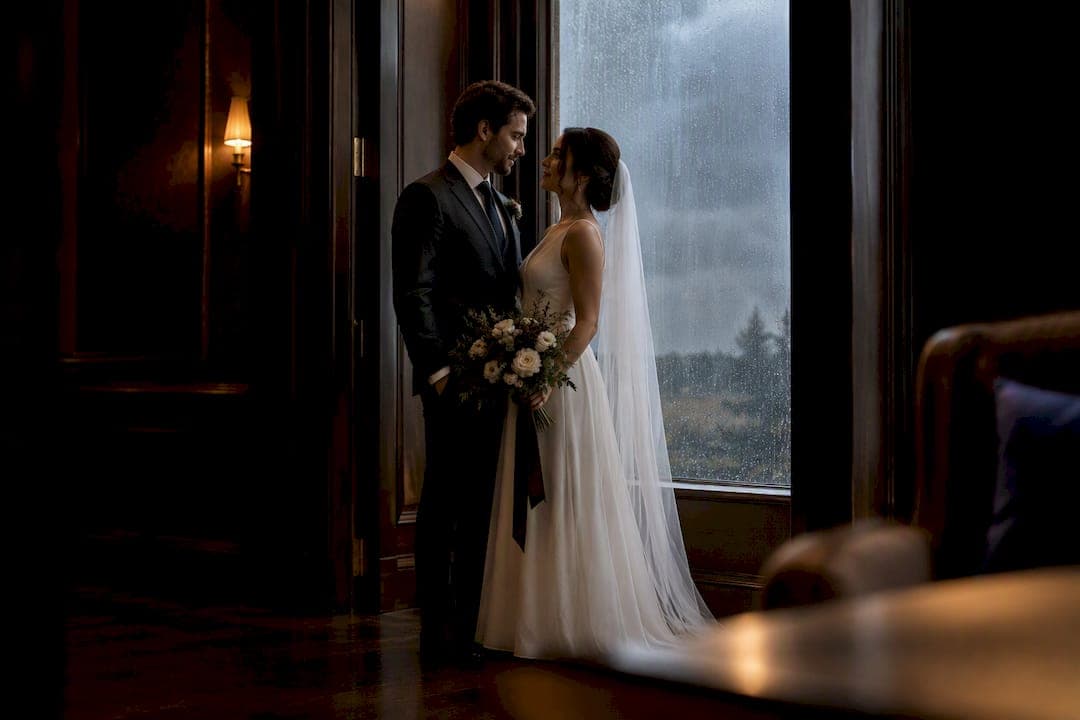
Rain does not ruin wedding photos. It changes them, usually for the better, because overcast skies act as a natural softbox and rain adds texture no sunny afternoon can fake. The only real requirement is a simple plan agreed with your photographer and venue beforehand: clear umbrellas, one covered backup spot, and a photographer who has done this before. Some experienced photographers have built entire rainy-day workflows around exactly this, and the results are often the most cinematic images in the whole gallery.
TL;DR:
- Clear umbrellas and a covered backup spot should be arranged before the wedding to keep outdoor portraits possible during rain.
- A 10 to 20 minute timeline buffer helps accommodate rain delays without rushing important shots or pushing back the schedule.
- Photographers with rain experience will have specific gear, a wet-weather plan, and portfolio examples that demonstrate their ability to shoot in wet conditions.
- Post-shower moments often provide the best light, dramatic skies, and saturated colors for stunning outdoor photos.
- Choosing lighter fabrics like chiffon over satin, and asking for waterproof makeup, reduces visible dampness and prevents wardrobe mishaps in rainy conditions.
Table of Contents
- What Rainy Wedding Photos Actually Look Like
- Practical Rainy Day Wedding Tips to Plan Ahead Of Time
- What Your Photographer Should Pack for a Wet-Weather Wedding
- Building Rain Flexibility Into Your Wedding Timeline
- Posing and Composition Tricks That Make Rain Work For You
- Dressing for Rain Without Sacrificing the Photos
- The Rainy Wedding Day Checklist to Save Right Now
- How Larson Pro Photography Handles a Rainy Wedding Day
- Talking to Your Photographer About Rain Before the Wedding
- Staying Safe When You Shoot in the Rain
- The Editorial Take: Rain Is a Planning Problem, Not a Photography Problem
- Ready for a Rain-Ready Wedding Photographer?
- Sources
- FAQ
What Rainy Wedding Photos Actually Look Like
Couples who dread rain are usually picturing the wrong photo. They imagine soggy hems and squinting faces, not the moody, editorial-looking frames that rainy weddings tend to produce. The mood you end up with depends heavily on which technique your photographer leans into, so it helps to know the options before the walkthrough.
Umbrella portraits create a completely different feel than sheltered portraits taken under a porch or window. Under an umbrella, the couple is boxed into soft, even light with the rain visible just outside the canopy edge, which reads as intimate and a little playful. Sheltered portraits, by contrast, borrow the drama of the storm itself: a couple framed inside a doorway or a big window with rain streaking the glass behind them tends to look more cinematic than intimate, closer to a movie still than a snapshot.
Puddle reflections are the trick most couples never think to ask for. Wet pavement turns into a mirror, and a low camera angle aimed at a reflected church spire, string lights, or the couple themselves produces the kind of symmetry that creates cinematic, emotional images not possible on bright sunny days. City sidewalks, parking lots, even a puddle in the venue's gravel driveway can become a usable backdrop.
Post-shower light is the secret weapon most couples don't plan for at all. The twenty minutes right after rain stops often deliver the deepest, most saturated color of the entire day, along with dramatic, layered skies that flat sunshine never produces.
A few looks worth requesting specifically include the inspiring ideas featured in My Puerto Rico Boudoir Retreat: Why I'll Travel Anywhere to Photograph You, which highlight creative and romantic posing approaches ideal for rainy-day wedding shoots.
- Clear-umbrella walk shots with the couple laughing mid-stride, rain visible on the canopy
- A tight portrait framed through a rain-streaked window or glass door
- A wide shot using a puddle for a reflected symmetry composition
- A backlit shot right after the rain lets up, when the sky is still dramatic
Bring reference images to your planning meeting. Photographers work faster and more confidently when they know which of these moods you actually want, rather than guessing on the day.
Practical Rainy Day Wedding Tips to Plan Ahead Of Time
Most rainy wedding stress comes from decisions nobody made in advance, not from the rain itself. Handle these before the week of the wedding and the day runs itself even if the forecast is ugly.
- Buy or rent clear umbrellas, not colored ones. Dark or patterned umbrellas cast shadows on faces and mute skin tone, while clear umbrellas let light through and keep everyone's face visible in the shot. Budget for at least four or five: one per member of the couple, a couple of spares for the wedding party, and one dedicated purely to shielding camera gear.
- Pack extra towels, plain and absorbent. You need them for wiping down chairs, drying shoes before indoor portraits, and blotting a hem that got too close to a puddle.
- Assign one point person for group photos. Rain scatters a wedding party fast, everyone runs for the nearest cover. Whoever runs your day, whether that's a planner, a parent, or an organized sibling, needs to physically round people up the moment the group shot list starts, because rain adds real friction to a process that is already the slowest part of most timelines.
- Agree on a rain trigger threshold with your photographer and planner before the wedding. Decide together what turns a light drizzle you shoot right through into a downpour that sends portraits fully indoors. Photographers who shoot weddings regularly tend to treat light rain as atmosphere rather than a problem and only pull the plug on outdoor portraits once wind or volume makes gear and safety a real issue.
Pro Tip: Text your photographer a link to two or three rainy wedding photos you love, a week before the wedding, not the morning of. It gives them time to plan the exact locations and angles instead of improvising in the parking lot.
None of this requires a bigger budget or a backup date. It requires four decisions made on a normal Tuesday, weeks before anyone is checking a weather app in a panic.
What Your Photographer Should Pack for a Wet-Weather Wedding
Ask to see a rainy-day gear list before you book, the same way you'd ask about backup cameras. A photographer who has genuinely shot weddings in the rain will have a specific answer, not a vague reassurance.
The standard kit includes:
- Reusable rain covers for each camera body, typically inexpensive gear that pays for itself the first time it's needed
- Multiple microfiber cloths, since one damp cloth stops working fast and a photographer needs several in rotation
- Lens hoods to keep raindrops off the front element during longer outdoor stretches
- A second camera body staged and ready, so a soaked or fogged lens doesn't stall the shoot
- A dedicated umbrella just for the gear, separate from the umbrellas over the couple
The workflow matters as much as the gear itself. Experienced photographers wipe lenses between nearly every frame in active rain, keep a second body under cover and ready to swap in, and only uncover equipment for the seconds it takes to shoot. A written wet-weather plan, a scouted covered spot, and this kind of rain gear are standard items in professional rainy-wedding checklists for a reason: they turn a chaotic ten minutes into a controlled one.
Before you book anyone for a wedding with real rain risk, ask directly: how many rainy weddings have you shot, and can I see examples? A confident answer with actual portfolio images tells you more than any sales pitch. If a photographer hesitates or has nothing to show, that's useful information too. For backup-heavy days, it's also worth understanding how a studio handles equipment redundancy generally, since a rain plan is really just one branch of a bigger preparedness system.
Building Rain Flexibility Into Your Wedding Timeline
The single biggest mistake couples make with a rainy forecast is leaving zero slack in the schedule. Rain slows everything down, walking, group photos, wardrobe adjustments, and a timeline built for a dry day simply cannot absorb that.
- Add a 10 to 20 minute buffer to your portrait block, positioned either right after the ceremony or between the ceremony and reception. This single change absorbs almost every rain-related delay without pushing dinner or forcing a rushed exit shot.
- Watch for short breaks in the rain and move fast. A five to fifteen-minute window right after a shower stops is often the best light of the entire day, deep color, dramatic sky, and no active rain to manage. Photographers who build this flexibility in describe it as one of the more reliable ways to step outside briefly for dramatic light and reflections after a passing storm.
- Scout one specific covered "go-to" spot during your venue walkthrough, then tell every vendor where it is. This might be a covered porch, a breezeway, or a large window with good light. Having one agreed answer prevents the scramble of five people suggesting five different backup locations the moment it starts raining.
Transitions in the rain simply take longer than they look on paper, drying shoes, resetting hair, moving a group indoors, and building that time in up front beats discovering it the hard way at 4:15 PM.
Posing and Composition Tricks That Make Rain Work For You
Overcast skies function as a natural softbox, spreading light evenly across faces and eliminating the harsh shadows and squinting that direct sun causes. That single fact is why so many photographers privately prefer a light overcast day to a blazing one, even though almost no couple ever asks for it. If you want to see how photographers use flat light deliberately, this complete guide to light in wedding portraits breaks down exactly why diffused light flatters skin and reduces retouching.
A few specific techniques separate an average rainy photo from a genuinely striking one:
- Backlighting the rain. A photographer positions a small flash or strobe behind the couple, slightly above head height, paired with a fast shutter speed (often close to 1/200s) to freeze individual droplets rather than blur them into streaks. This is what turns "rain in the background" into rain you can actually see and feel in the final image.
- Shooting low toward puddles. Getting the camera close to ground level over a puddle captures a mirrored reflection of the couple, the venue, or the sky, adding symmetry that flat ground-level shots can't produce.
- Framing through wet glass or under archways. Doorways, arches, and rain-streaked windows let the couple stay dry while the storm remains visible and central to the composition, which is often more dramatic than a fully sheltered shot with no rain in frame at all.
A quick technical detail worth asking about: if your photographer wants that backlit, glowing-droplet look, it takes a positioned light source and a specific shutter speed, not luck. It's a deliberate setup, and asking about it during booking is a fast way to gauge real rainy-day experience versus a photographer who has only shot in the rain by accident.
For couples chasing a more editorial look overall, pairing these techniques with the outdoor lighting approaches covered in this seasonal guide gives your photographer even more to work with once the storm clears.
Dressing for Rain Without Sacrificing the Photos
Fabric choice matters more in rain than most couples realize. Heavy satin holds water and looks visibly damp and heavy in photos, while lighter fabrics handle moisture with more grace.
- Choose chiffon, crepe, or lace over heavy satin if rain is even a possibility, since lighter fabrics dry faster and photograph less "waterlogged."
- Bring a backup pair of shoes strictly for portraits, and have someone assigned to lift or bustle a long train the moment the group steps outside.
- Ask your hair and makeup artist for waterproof products and a slightly simpler style, since humidity is the real enemy, not the rain itself, and elaborate styles are the first thing to wilt.
None of this requires an outfit change. It just means choosing fabric and shoes with rain in mind from the start.
The Rainy Wedding Day Checklist to Save Right Now
Screenshot this or paste it into your run sheet:
- Buy or rent 4 to 5 clear umbrellas (not dark or patterned).
- Pack plain towels, microfiber cloths, and an umbrella dedicated to camera gear.
- Confirm your photographer's rain kit and ask to see rainy-wedding portfolio examples.
- Walk the venue and agree on one covered backup portrait spot with your planner and photographer.
- Name one point person responsible for herding groups quickly when weather turns.
Every item on this list takes one conversation. Do all five before the week of the wedding and rain stops being a threat and starts being just another shooting condition.
How Larson Pro Photography Handles a Rainy Wedding Day
A rainy wedding morning tests preparation more than talent. Todd's approach starts the week before: confirm the rain kit, walk the venue for a covered backup spot, and agree on the rain trigger threshold with the planner so nobody is making that call in the moment.
On one wedding where a downpour hit right as the ceremony ended, the entire portrait session moved under a breezeway scouted during the walkthrough three weeks earlier. The couple got a tight, glowing shot framed by rain streaking off the roofline, one of their favorite images from the whole day, and it only happened because the location was already picked before anyone needed it.
That's the real value a photographer with wet-weather experience brings: not luck, but scouting, gear, and calm morale management when the sky turns.
— Todd
Talking to Your Photographer About Rain Before the Wedding
Managing expectations starts weeks before the ceremony, not the morning a storm rolls in. Bring up the possibility of rain during your planning meeting, even if the forecast looks clear at the time, and ask your photographer directly how they'd adjust the shot list.
A pre-wedding conversation and an agreed shot list genuinely reduce day-of stress, because everyone already knows the fallback plan instead of negotiating it live. Ask specifically which indoor or covered features at your venue, a lobby, a big window, a covered walkway, your photographer would treat as primary locations if outdoor portraits become impossible.
Share your must-have shots in order of priority. If rain forces a shorter outdoor window, your photographer needs to know whether the first dance portrait or the full wedding party shot matters more to you, because they may only get time for one. This single conversation, done in advance, is the difference between a photographer improvising under pressure and one executing a plan you already agreed on together.
Set expectations with your wedding party too. A five-minute warning that "we might step out in the rain for a few shots" prevents confused looks and reluctant cooperation when the moment actually arrives.
Staying Safe When You Shoot in the Rain
Wet surfaces are the real hazard on a rainy wedding day, not the rain falling from the sky. Marble venue steps, tile lobbies, and grass slopes all get dangerously slick, and a wedding dress with a long hem makes tripping far more likely than usual.

Walk every planned photo location in advance and flag anything slippery: smooth stone, painted metal ramps, wet grass on an incline. If a location looks risky, move the shot somewhere safer rather than forcing it, no photo is worth an injury on someone's wedding day.
A few safety habits worth setting as standard practice:
- Have someone hold an arm or offer a hand on any steps or uneven ground, especially for anyone in heels
- Keep camera gear covered between shots, not just for the equipment's sake but so nobody trips over a cable or a dropped lens cap
- Watch footing near puddles used for reflection shots, since the photographer backing up for a wide angle is often looking through a viewfinder, not at their feet
- Give the wedding party a firm, no-nonsense heads-up about where not to walk
Crew safety matters just as much as the couple's. A photographer moving backward to frame a reflection shot, or crouching low near a puddle, needs someone watching the space around them, particularly near traffic, stairs, or a crowd of guests holding umbrellas that block sightlines.
The Editorial Take: Rain Is a Planning Problem, Not a Photography Problem
The conventional wisdom treats rain as bad luck to survive. That framing is backwards. Rain is a lighting condition, and like any lighting condition, it rewards preparation and punishes improvisation. The couples who end up with photos they actually love aren't the ones who got lucky with a break in the clouds. They're the ones who agreed on a covered spot, packed clear umbrellas, and set a rain trigger threshold before anyone was standing in a parking lot checking a radar app.

Where most advice falls short is treating rain gear and backup plans as insurance, something you hope you never need. Better to treat them as part of the actual shot list. The umbrella walk, the puddle reflection, the backlit droplets, these aren't consolation prizes for a ruined sunny-day plan. They're compositions a dry day literally cannot produce. Prioritize the conversation with your photographer over the weather app. The forecast will change five times before the wedding. Your plan shouldn't have to.
Ready for a Rain-Ready Wedding Photographer?
Some photography studios treat a rainy forecast as a creative brief, not a crisis, bringing rain covers, a scouted backup plan, and umbrella and lighting techniques to every wet-weather wedding, engagement, and videography booking. Where a lot of photographers hope for sun and scramble if it doesn't show up, this approach means the wet-weather shot list is planned right alongside the sunny-day one.
If you're planning a wedding with rain even remotely on the radar, start with a look at recent wedding photography packages and ask specifically about wet-weather coverage during your consult. Want a lower-pressure way to test the collaboration first? An engagement session booked on a cloudy day is a good preview of how the studio handles overcast light before your wedding date arrives. Reach out to schedule a consult and request a copy of the wet-weather planning checklist for your own timeline.
Sources
- Rainy Wedding Photography Backup Plan (2026 Playbook) - Tov Studio Photo
- Rainy Wedding Photos: Beautiful Photos in the Rain (THE MAYS)
- Rainy Wedding Day Photography in the UK: The Couple's Guide to Getting Amazing Shots – Lens Of Lights
FAQ
What should you do for wedding photos if it rains?
Bring clear umbrellas, confirm a covered backup portrait spot with your venue and photographer in advance, and build a 10 to 20 minute buffer into your timeline. A photographer with rain experience will already have rain covers, spare bodies, and microfiber cloths ready to go.
What is the 30/5 rule for weddings?
It refers to the idea that rain-day transitions, moving groups, drying shoes, resetting a composition, take roughly 30 minutes when planned for versus a rushed 5 minutes when they're not. Building that extra time into your timeline in advance keeps portraits from feeling frantic.
Is it good to get married on a rainy day?
Rain does not hurt your wedding photos and often improves them. Overcast skies work as a natural softbox, spreading soft, even light across faces, and rain adds puddle reflections, texture, and dramatic sky color you simply cannot get on a bright sunny day.
Are rainy days good for photography in general?
Yes, many photographers actively prefer overcast conditions for portraits because the diffused light eliminates harsh shadows and squinting. Rain adds an extra creative layer on top of that, from backlit droplets to mirror-like puddle reflections.