
Cinematic wedding videography is defined as the art of combining deliberate camera work, emotional storytelling, and structured post-production to produce films that feel more like short cinema than event documentation. Learning how to create cinematic wedding videos means mastering three distinct disciplines: capturing technically strong footage, building a narrative arc, and editing with emotional intelligence. The tools that make this possible include fast prime lenses in the f/1.2 to f/2.8 range, gimbal stabilizers like the DJI RS series, and color grading software such as DaVinci Resolve. When done right, the result is a film a couple will watch on anniversaries for decades, not just once after the honeymoon.
How to create cinematic wedding videos: the gear you actually need
The right equipment does not guarantee a cinematic result, but the wrong equipment guarantees you will not get one. Every piece of gear in your kit should serve a specific visual or audio purpose.
Lenses and cameras form the foundation. Fast prime lenses with apertures between f/1.2 and f/2.8 separate subjects from backgrounds with a shallow depth of field that is the visual signature of cinematic work. A Sony FX3, Canon EOS R5 C, or Blackmagic Pocket Cinema Camera 6K all deliver the sensor size and dynamic range needed for low-light church ceremonies and bright outdoor receptions.
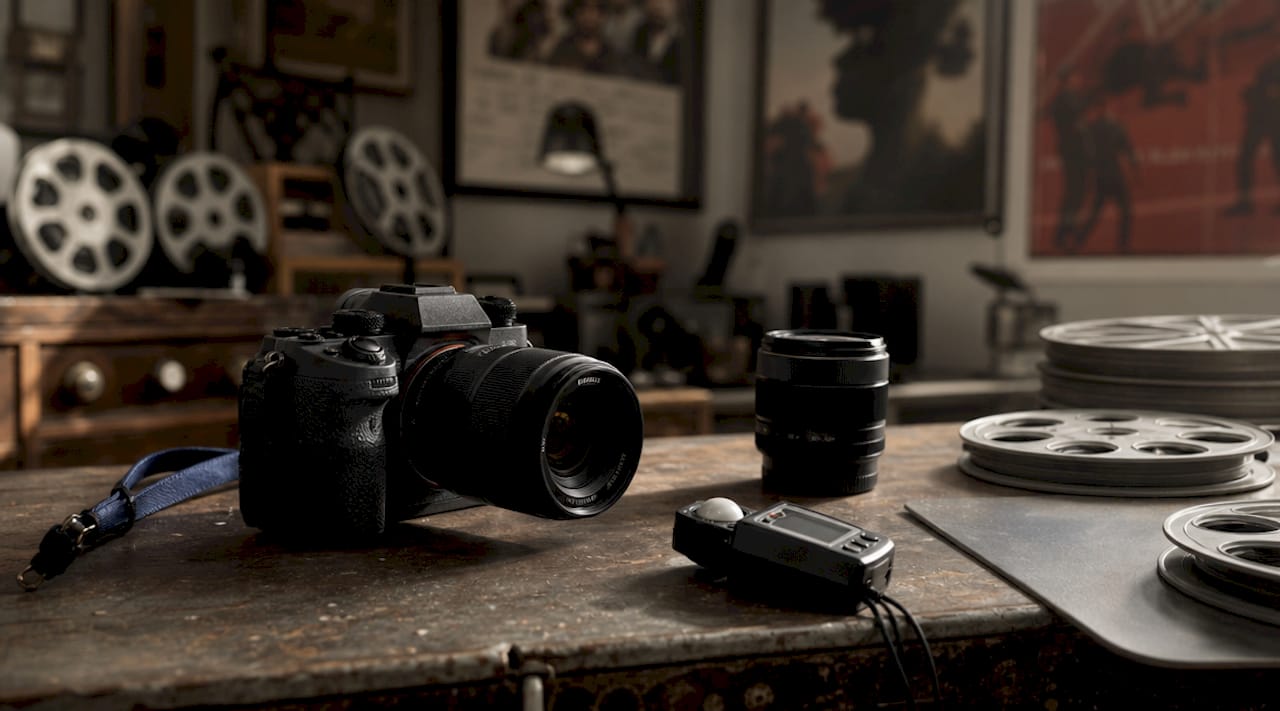
Stabilization is what separates smooth, deliberate movement from shaky event footage. The DJI RS 3 Pro and DJI RS 4 are the industry standard for single-operator work. A slider adds horizontal push-pull motion for detail shots, while a crane or jib creates the sweeping reveal shots that open highlight reels.
Audio is the element most beginners underestimate. Lavalier microphones clipped to the officiant and groom capture clean vow audio. A dedicated recorder like the Zoom H6 or Tascam DR-40X handles backup audio independently of the camera, which matters when a camera battery dies mid-ceremony.
| Gear category | Recommended examples |
|---|---|
| Camera body | Sony FX3, Canon EOS R5 C, Blackmagic Pocket 6K |
| Prime lenses | 35mm f/1.4, 50mm f/1.2, 85mm f/1.8 |
| Stabilization | DJI RS 3 Pro, DJI RS 4, slider |
| Audio | Rode Wireless GO II, Zoom H6, Tascam DR-40X |
| Aerial | DJI Mini 4 Pro, DJI Air 3 |
| Editing software | DaVinci Resolve, Adobe Premiere Pro, Final Cut Pro |
Pro Tip: Bring a zoom lens like the Sony 24-70mm f/2.8 as a backup for ceremony coverage. Prime lenses give you the cinematic look, but a zoom saves you when you cannot reposition.
How do you plan and capture cinematic wedding moments?
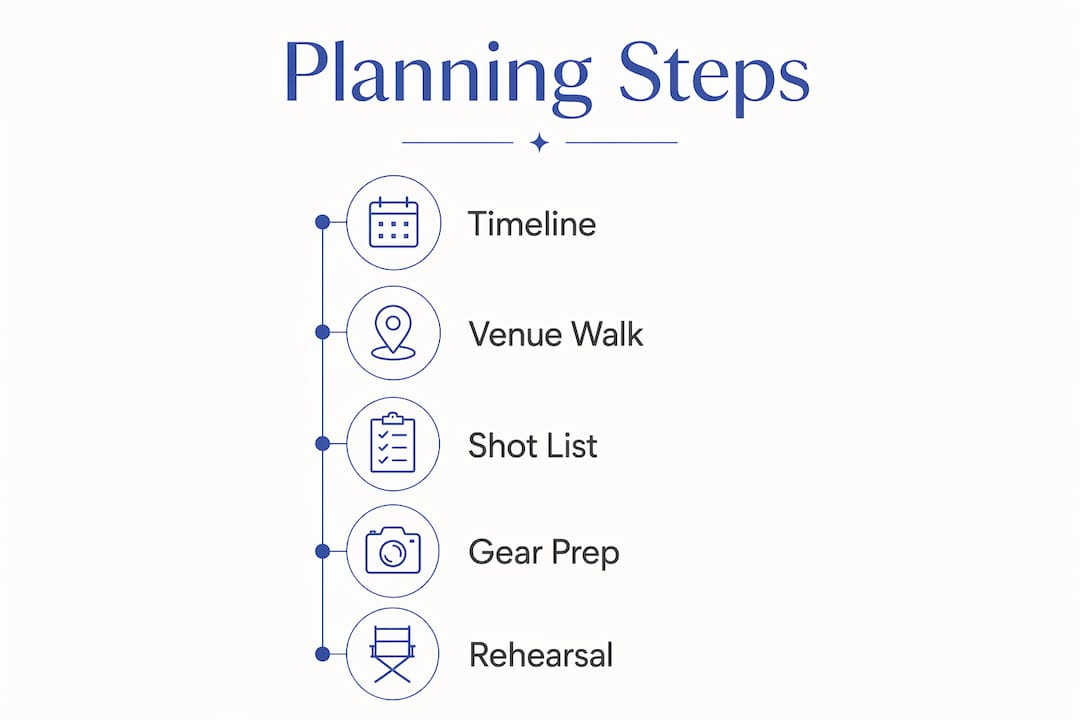
Planning is what separates a videographer who gets lucky from one who consistently delivers. A shot list built from a pre-wedding consultation gives you a framework, but the real skill is knowing when to abandon it.
Start with a structured approach to the day's timeline. Walk the venue before the wedding if possible, noting where natural light falls during the ceremony hour, where the reception speeches will happen, and which locations offer clean backgrounds for detail shots. This reconnaissance directly shapes your camera placement decisions.
Deliberate camera movement is the defining characteristic of cinematic wedding videography. Every move should have a beginning, a middle, and an end. A gimbal push-in during the first look, a slow orbit around the couple during the first dance, a low-angle tracking shot following the bridal party down the aisle. These are not accidental movements. They are choreographed in real time.
For capturing footage that edits well, follow this sequence on the wedding day:
- Arrive early and capture environmental detail shots: flowers, rings, shoes, the empty venue.
- Film the getting-ready sequence with a mix of wide establishing shots and tight close-ups on hands, faces, and reactions.
- Position one camera on a locked-off wide shot during the ceremony and operate a second camera for close-ups and reactions.
- Capture the reception speeches from two angles simultaneously to give yourself editing options.
- Shoot the first dance with a combination of gimbal movement and static shots to vary the edit.
- End the night with candid guest moments and any planned creative shots like sparkler exits or golden-hour portraits.
Pro Tip: Anticipate movement before it happens. If you know the bride is about to turn toward the groom, start your gimbal move two seconds early. Pre-planned match cuts during filming save hours in the edit.
Camera settings matter as much as movement. Shoot at a shutter speed double your frame rate (1/50 for 24fps) to achieve natural motion blur. Use a neutral picture profile or log format to preserve dynamic range for color grading later.
What are the best editing techniques for cinematic wedding videos?
Post-production is where raw footage becomes a film. Professional cinematic wedding videos require a post-production period of around three to five weeks, and rushing that timeline is the single fastest way to produce mediocre work.
The workflow breaks down into four phases:
| Editing phase | Time estimate | Primary task |
|---|---|---|
| File organization | 1 to 2 days | Sync audio, label clips, build folder structure |
| Rough cut | 2 to 3 weeks | Select best takes, build narrative structure |
| Color grading | 3 to 5 days | Apply LUTs, match shots, warm tone correction |
| Audio mixing | 2 to 3 days | Balance music, dialogue, and ambient sound |
Dual-shooter weddings generate between 500GB and 1TB of raw footage, which means file organization is not optional. A clear folder structure by camera, event segment, and audio source prevents the kind of chaos that kills deadlines.
Color grading deserves special attention. Warm-toned color grading with golden and amber hues increases perceived romance by 34% and rewatching rates by 63%. DaVinci Resolve's node-based color system gives you precise control over skin tones, shadows, and highlights independently, which is why most professional wedding editors prefer it over Premiere Pro for grading work.
L-cuts and J-cuts mask transitions and create a fluid, cinematic narrative flow that feels invisible to viewers. An L-cut lets the audio from the next scene begin before the visual cuts, pulling the audience forward emotionally. A J-cut does the reverse, letting the current visual linger while new audio begins. Both techniques are borrowed directly from feature film editing.
Match cuts and speed ramping footage pre-planned during filming sustain narrative energy and visual cohesion. Speed ramping, where footage slows dramatically at an emotional peak and then returns to normal speed, works best on first kiss moments, ring exchanges, and the couple's first look reaction.
Music selection that aligns with emotional tone guides viewer feelings more effectively than purely visual elements. Choose a song with a natural build for the ceremony sequence and a more upbeat track for the reception highlights. The edit should follow the music's dynamics, not fight them.
Pro Tip: Let moments breathe. The instinct is to cut quickly to keep energy high, but a three-second pause on a father's face as he watches his daughter walk down the aisle communicates more than any transition effect.
How does storytelling shape the emotional impact of a wedding film?
The most impactful wedding videos focus on authentic emotions and pacing rather than technical flashiness. A technically perfect video with no emotional arc will be forgotten. A slightly imperfect video that makes the mother of the bride cry every time she watches it will be treasured.
Effective wedding video storytelling relies on a few core principles:
- Choose meaning over chronology. A wedding film does not need to follow the day in order. Opening with a quiet moment from the vows, then cutting back to the getting-ready sequence, creates anticipation and emotional depth that a straight timeline cannot.
- Build anticipation and release. Emotional pacing involves balancing anticipation and release with strategic pauses to create memorable moments. The audience should feel tension before the first look and relief and joy when it happens.
- Use psychological cues beyond visuals. Skilled editors use tone of voice and hesitation to guide emotional storytelling rather than relying solely on visual footage. A groom's voice cracking during vows, edited with a cut to the bride's reaction, creates a moment no camera angle alone could manufacture.
- Highlight vulnerability. Authentic interactions, unscripted laughter, and genuine tears are more cinematic than posed moments. Train yourself to keep the camera rolling after the "official" moment ends.
- Balance style with substance. Drone shots and speed ramps are tools, not the story. In 2026, couples prioritize authentic human feeling over flashy effects, and human editors remain irreplaceable for interpreting emotional nuances that no automated tool can read.
The narrative arc of a strong wedding film mirrors the structure of a short film: an opening that establishes character and setting, a rising emotional middle built around the ceremony, and a resolution that leaves the viewer with warmth and closure. Applying this structure to how you capture wedding moments changes what you look for on the day.
Key takeaways
Cinematic wedding videos require deliberate camera technique, emotional storytelling, and a structured post-production workflow working together to produce films that last.
| Point | Details |
|---|---|
| Gear serves the story | Fast prime lenses, gimbals, and clean audio are the minimum tools for cinematic results. |
| Plan, then adapt | A shot list and venue walkthrough prepare you; emotional instinct guides you on the day. |
| Warm color grading matters | Golden and amber tones measurably increase emotional resonance and rewatching rates. |
| Editing technique is film technique | L-cuts, J-cuts, and match cuts are borrowed from cinema for a reason. Use them. |
| Emotion beats perfection | Authentic moments and pacing create the films couples watch for decades, not technical effects. |
What I have learned after years of filming weddings
The advice I wish someone had given me early on is this: stop trying to make every shot look like a film trailer. The couples who cry watching their wedding video back are not crying because of a perfect lens flare or a drone reveal. They are crying because you captured the way their grandmother squeezed their hand, or the exact second their partner saw them for the first time.
The technical side of this craft matters, and you should take it seriously. But I have seen beautifully graded, technically flawless videos that feel hollow, and I have seen shaky, imperfect films that destroy a room. The difference is always the same: one editor was chasing a look, and the other was chasing a feeling.
The trend toward cinematic wedding video styles that blend documentary authenticity with film-quality production is the right direction. Do not fight it. Learn to hold a shot longer than feels comfortable. Learn to trust silence. Learn to cut on emotion rather than on the beat of the music, at least some of the time.
One practical mistake I see constantly: videographers who do not communicate with the photographer. On a wedding day, two people moving independently with cameras create chaos. A five-minute conversation before the ceremony about who covers which angle changes everything.
— Todd
See what cinematic wedding videography looks like in practice
Knowing the techniques is one thing. Seeing them applied to real San Antonio weddings is another.
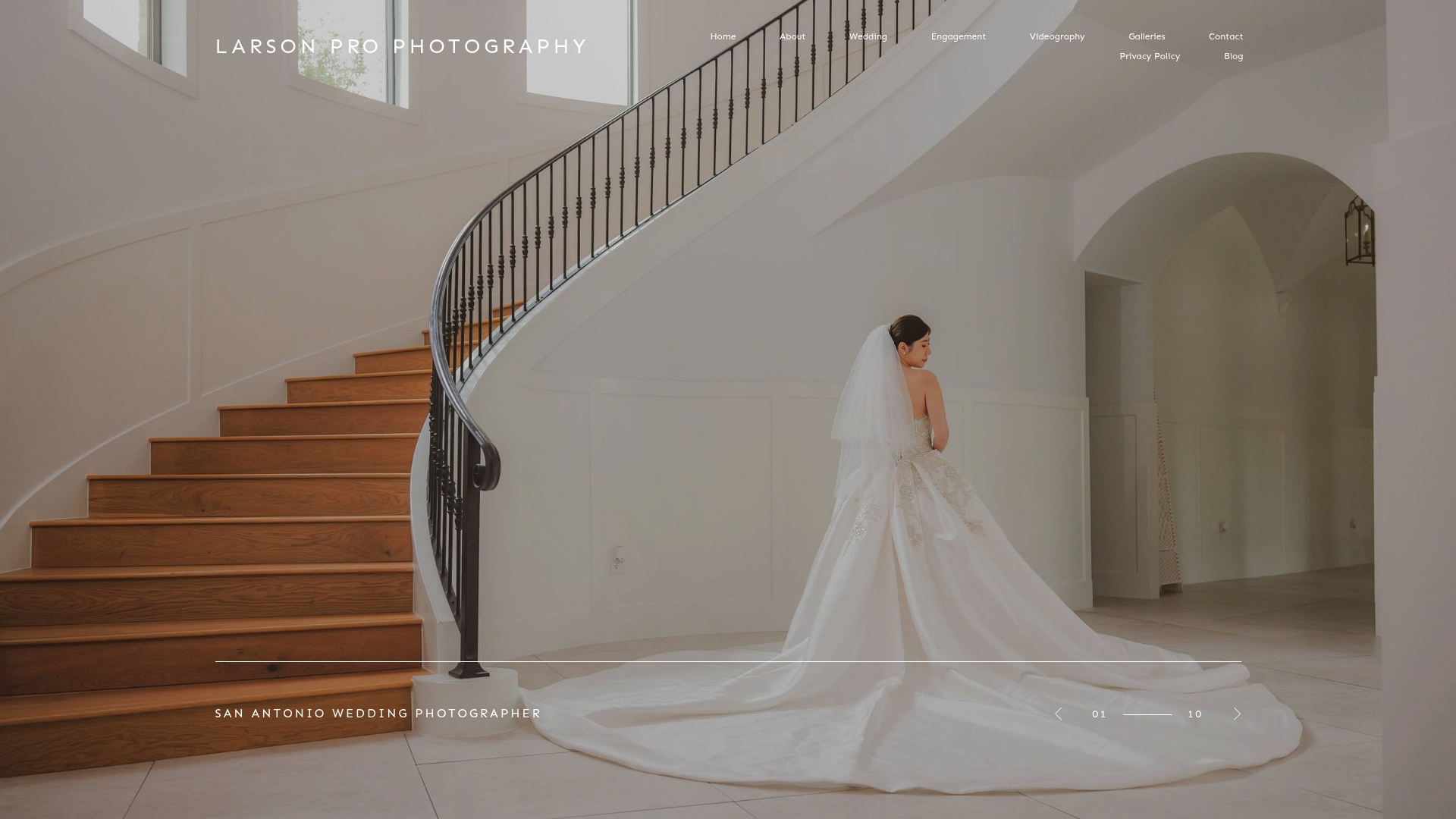
Larsonprophotography specializes in cinematic wedding films that combine the technical depth covered in this guide with genuine emotional storytelling. Every film is shot with fast prime lenses, stabilized camera movement, and a post-production workflow built around the couple's specific story. Browse the portfolio to see how warm color grading, deliberate pacing, and authentic moment capture translate from theory into a film you will actually want to watch again. If you are planning a wedding in San Antonio and want to understand what professional videography delivers, explore the client work and testimonials to see the results firsthand.
FAQ
What cameras work best for cinematic wedding videos?
The Sony FX3, Canon EOS R5 C, and Blackmagic Pocket Cinema Camera 6K are the most widely used cameras for cinematic wedding videography because of their large sensors, log color profiles, and strong low-light performance. Any camera that shoots in a flat or log profile and accepts fast prime lenses can produce cinematic results.
How long does it take to edit a cinematic wedding video?
Professional cinematic wedding videos require a post-production period of around three to five weeks, covering file organization, rough cut, color grading, and audio mixing. Rushing this timeline is the most common reason wedding films feel unpolished.
What is the difference between cinematic and documentary wedding video styles?
Cinematic wedding videos use deliberate camera movement, color grading, and narrative editing to create a film-like experience, while documentary style prioritizes unobtrusive coverage and chronological storytelling. Most professional videographers blend both approaches, using cinematic techniques to frame authentic documentary moments.
Do I need a drone for cinematic wedding videos?
A drone adds aerial establishing shots that create scale and visual variety, but it is not required for a cinematic result. The DJI Mini 4 Pro is the most practical option for wedding use because of its compact size and FAA compliance. Ground-level gimbal work, creative lens choices, and strong editing technique matter more than aerial footage.
How important is music in a wedding highlight video?
Music selection guides viewer emotions more effectively than purely visual elements, making it one of the most important editorial decisions in the entire post-production process. Choose tracks with natural dynamic builds that match the emotional arc of the ceremony and reception sequences.