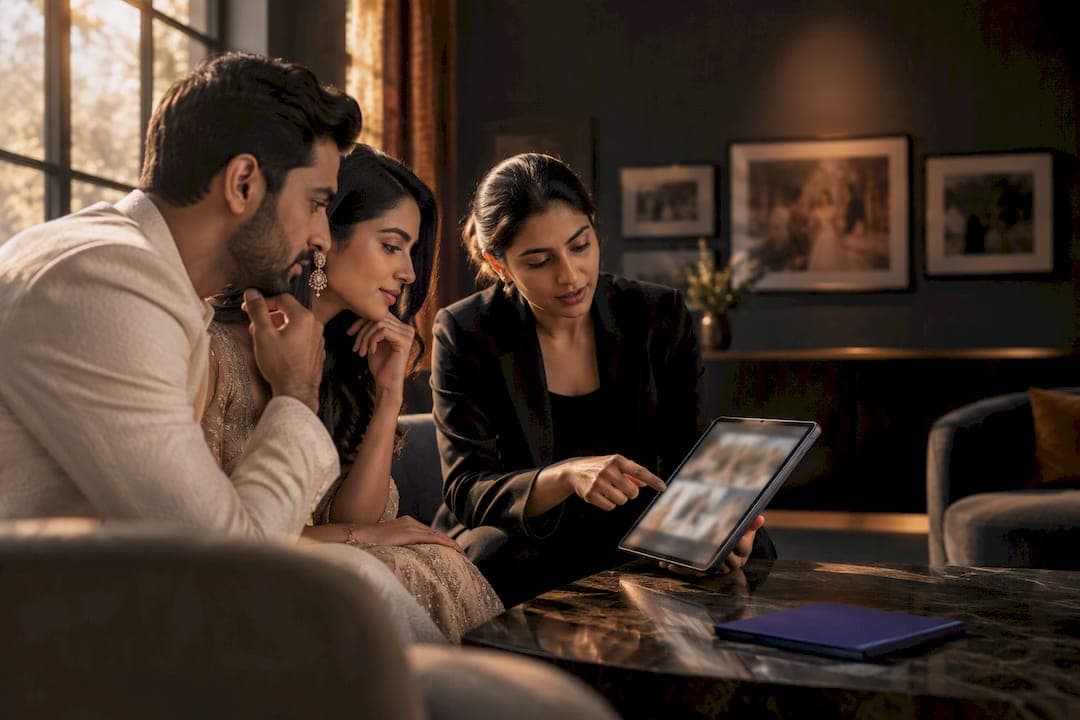
Expect coverage across several distinct events, not just a ceremony and reception, and expect staged portraits alongside unscripted candid moments at each one. The single most important hiring step is confirming a full, unedited wedding gallery from a past client and a contract that names the lead photographer and a fixed delivery date. Skipping either one is how couples end up with a mismatched team or photos that arrive months later than promised.
TL;DR:
- Couples should verify a full wedding gallery from a previous client to ensure consistent quality across all events and conditions.
- Hiring at least two photographers is recommended for multi-day Indian weddings, with three or more advisable for overlapping rituals to prevent missing key moments.
- A detailed, written schedule and shot list should be provided weeks in advance, highlighting essential moments and time-sensitive events like the baraat.
- The contract must specify a fixed delivery date within 30 to 90 days, with clear terms on coverage hours, number of shooters, and usage rights.
- Viewing an entire wedding gallery, not just curated highlights, is crucial to assess the photographer's ability to capture the full scope of events.
Table of Contents
- What photos to expect at each wedding event
- How to choose a photographer experienced in Indian and South Asian weddings
- Building the event schedule and shot list your photographer needs
- Questions and a checklist for vendor meetings
- Delivery timelines, editing choices, and contract pitfalls
- What we tell couples planning multi-event weddings
- How Larson Pro Photography supports multi-event weddings
- Sources
- FAQ
What photos to expect at each wedding event
A typical Indian or South Asian wedding spans multiple events, and each one calls for a different mix of posed and candid shots. Couples and planners should build a wish list event by event, then check that a photographer's sample gallery actually covers the same ground.

For the mehndi, priority shots include close-ups of the henna patterns, the bride surrounded by family, candid laughter during application, and detail shots of the outfits chosen for the occasion. The sangeet calls for performance shots mid-dance, wide shots of the full room, candid reactions from parents and grandparents, and portraits of the couple together before the night gets chaotic.
The baraat needs coverage of the groom's entrance, the dancing procession, close-ups of the horse or car if one is used, and candid shots of the groom's family celebrating along the route. The pheras and core ceremony require the ritual specifics: the mandap details, the exchange of garlands, the seven steps, and quiet emotional moments between the couple and their parents that a documentary-style shooter will catch without direction. The reception rounds it out with the grand entrance, the first dance, family portraits, and candid table shots throughout the night.
- Prep shots: getting-ready details, jewelry, outfits laid out before dressing
- Family portraits: immediate family, extended family, and combined family groupings
- Ritual specifics: mandap details, garland exchange, fire ceremony, ring exchange
- Candid reactions: parents watching, siblings laughing, unplanned tears
- Key entrances: baraat procession, bride's entrance, reception grand entrance
- Detail shots: bridal jewelry, outfit embroidery, mehndi patterns, decor and flowers
Because several of these moments happen at once (the groom dancing in from one direction while the bride's family gathers for a portrait), a single shooter will miss something. According to The Knot's guidance on hiring an Indian wedding photographer, a minimum of two shooters is common for multi-day or multi-event Indian weddings, with three or more recommended when rituals overlap or run simultaneously.
How to choose a photographer experienced in Indian and South Asian weddings
Cultural familiarity shows up in small decisions: knowing when to stay back during a ritual versus when to move in close, understanding what a particular gesture means, and anticipating a spontaneous moment before it happens. A photographer who has shot these weddings before will not need those things explained on the day.
- Ask to view at least one complete wedding gallery from start to finish, not a curated highlight reel, so you can judge consistency across lighting conditions and events.
- Ask directly whether the photographer has experience with the specific rituals on your schedule, and whether anyone on the team speaks the family's language when that would help coordination.
- Confirm team size for the full weekend, whether backup gear is on hand, and how the team plans logistics for multiday coverage across venues.
- Review the contract for a written statement of work: total hours, number of shooters, and a single fixed delivery date rather than a vague range.
Pro Tip: Ask to see one gallery in full, every image from a single wedding, rather than a mix of best shots pulled from ten different weddings.
A studio's Instagram feed will always look impressive because it is curated. A full gallery review, a point echoed in The Knot's real wedding photo advice, is the only way to see how a photographer handles a full day, including the parts that are not glamorous.
Building the event schedule and shot list your photographer needs
A detailed, shared schedule is the tool that lets a photographer staff correctly and position their team before each ritual starts, not during it. Hand this over weeks in advance rather than the week of the wedding.
- List every event by name and time, including the venue for each, since Indian weddings often span multiple locations across several days.
- Mark specific moments as "must have" (garland exchange, first look, grand entrance) so the photographer knows what cannot be missed even if the schedule slips.
- Flag time-sensitive moments separately, such as a baraat that starts at a fixed hour regardless of what came before it.
- Note when vendor meals and breaks are scheduled, since a photographer pulled away during a lull can still miss a moment that happens early.
This same document doubles as your shot list. Larson Pro Photography's essential wedding photography checklist for 2026 covers how to structure this kind of timeline in more detail.
Questions and a checklist for vendor meetings
Bring this list to every photographer meeting so nothing gets decided verbally and forgotten later.
- Confirm the lead photographer's name in the contract, along with total coverage hours and exact delivery date.
- Ask what usage rights you get on the final images and whether there are restrictions on printing or sharing.
- Ask how many second shooters will attend, what the backup plan is for illness or equipment failure, and whether travel fees or vendor meals are included.
- Ask about editing style (saturation, warmth, consistency across events) and whether raw, unedited files are ever available.
For a longer version of this list, see questions to ask wedding photographers before you book.
Delivery timelines, editing choices, and contract pitfalls
Vague delivery language is one of the most common sources of dispute after the wedding. The Knot's guidance on wedding photo delivery puts standard industry turnaround at 30 to 90 days, and recommends the contract state a single fixed number, such as 12 weeks, rather than a range.
A contract that names a specific delivery date, not a range, is the standard recommendation for avoiding disputes over late galleries, according to The Knot's wedding photography contract guidance. Sneak peeks often arrive within days for social sharing, but the full edited gallery takes longer, and both timelines should appear in writing. Common pitfalls include a delivery window left open-ended, no lead photographer named in the contract, and no clause covering rescheduling or cancellation.

What we tell couples planning multi-event weddings
The biggest mistake couples make is assuming a beautiful portfolio means a photographer can handle five events in three days without a plan. It cannot. The photographers who do this well are the ones who ask for your schedule early, staff according to it, and hand you a contract that spells out exactly who shows up and when your photos arrive.
Pro tip from Todd: before you sign anything, ask to see one full wedding gallery from a similar event, and confirm in writing that the lead photographer you met will be the one on site. For more on building your own photography plan, see dos and don'ts of wedding photography and our guide to memorable wedding photos that last.
— Todd
How Larson Pro Photography supports multi-event weddings
Larson Pro Photography offers wedding photography, engagement sessions, and videography, built around covering full events rather than isolated highlights. We provide galleries for review, a documentary and editorial approach across ceremonies, and a team that plans around your schedule rather than improvising on the day.
If you are planning a multi-event wedding and want a team that treats your full-day timeline as the plan rather than an afterthought, get in touch through our wedding services page to check availability.
FAQ
How many photographers do I need for an Indian wedding?
Most multi-day or multi-event Indian weddings need at least two shooters, since events like the baraat and family portraits often overlap. Larger ceremonies with simultaneous rituals may call for three or more to avoid missing key moments.
How long does it take to receive wedding photos?
Standard turnaround runs 30 to 90 days industry wide, and your contract should specify one fixed number of weeks rather than a range. The Knot's delivery guidance recommends a specific date, such as 12 weeks, to avoid ambiguity.
What should a wedding photography contract include?
A solid contract names the lead photographer, states total coverage hours, lists the number of shooters, and gives an exact delivery date. It should also cover usage rights, cancellation terms, and rescheduling policy, as outlined in contract essentials from The Knot.
Should I ask to see a photographer's full gallery before booking?
Yes. A curated highlight reel only shows a photographer's best work, while a full gallery shows consistency across an entire event and different lighting conditions, a distinction covered in The Knot's real wedding gallery advice.
Does Larson Pro Photography cover Indian and South Asian weddings?
Larson Pro Photography offers wedding, engagement, and videography services built around full-event coverage rather than isolated highlights. Contact the team through the wedding services page to discuss your specific event schedule and availability.