
Do prepare your day, respect your photographer's needs, and protect your sightlines. Don't let a tight timeline, a guest's phone, or a dim venue ruin the shots you'll keep for the rest of your life. The dos and don'ts of wedding photography come down to one truth: great images are made in the planning, not just in the moment.
Your quick-start checklist:
- Arrive at the venue at least 30 minutes early for setup and scouting
- Pack a details box (rings, invitation suite, heirlooms) the night before
- Request an unplugged ceremony in writing to guests and on your program
- Build buffers of several minutes between every major block in your timeline
- Confirm your photographer has a backup camera body and dual-card storage
- Book an engagement session before the wedding day
- Ask to see at least two complete recent wedding galleries before signing
- Designate a family photo wrangler for the formal portrait block
One-line guest request you can text or print: "Please keep phones and cameras down during the ceremony so our photographer can capture every moment. Thank you!"
Table of Contents
- What are the most important dos of wedding photography?
- What mistakes should couples avoid on their wedding day?
- How should you build your wedding day timeline?
- When does natural light work, and when do you need artificial lighting?
- What should your photographer contract include?
- What actually ruins wedding photos, and how do you prevent it?
- What should you pack and do on the morning of the wedding?
- Does your photographer need to respect venue rules?
- How should your photographer handle equipment and backups?
- What should your contract say about deliverables?
- Why does coordinating with your videographer matter?
- How should your photographer communicate with you before the wedding?
- How does a photographer stay unobtrusive during the ceremony?
- What happens to your photos after the wedding?
- Key Takeaways
- What working wedding photographers wish couples knew
- Ready to see what professional coverage looks like?
- Useful sources and further reading
What are the most important dos of wedding photography?
Great wedding photos start with decisions made weeks before the wedding day. Here are the actions that consistently make the biggest difference.
Build breathing room into your timeline
A schedule with no slack is the single most common photo-ruining mistake, according to wedding timeline advice from Martha Stewart. When things run five minutes late (and they will), a buffer-free timeline forces your photographer to rush formal portraits, skip golden-hour shots, or cut candid coverage entirely. Add 15 minutes after the ceremony, 10 minutes before portraits, and at least 30 minutes of golden-hour time near sunset.
Create a details box
Gather your rings, invitation suite, vow booklets, heirlooms, and any small meaningful objects into a single box or tray the night before. Detail photography is often the first thing a photographer shoots on arrival, and a ready-made details box saves 20–30 minutes of hunting through bags and tables. Keep the getting-ready room tidy for the same reason: clutter in the background of a flat-lay shot is nearly impossible to fix in post-processing.
Designate a family photo wrangler
Formal portraits eat time when family members wander off between groupings. Assign one person who knows everyone by name and face to gather the right people for each combination. Give that person your shot list the morning of the wedding. This single step can significantly reduce the time spent on formal portraits and free up time for candid coverage.
Schedule golden-hour portraits
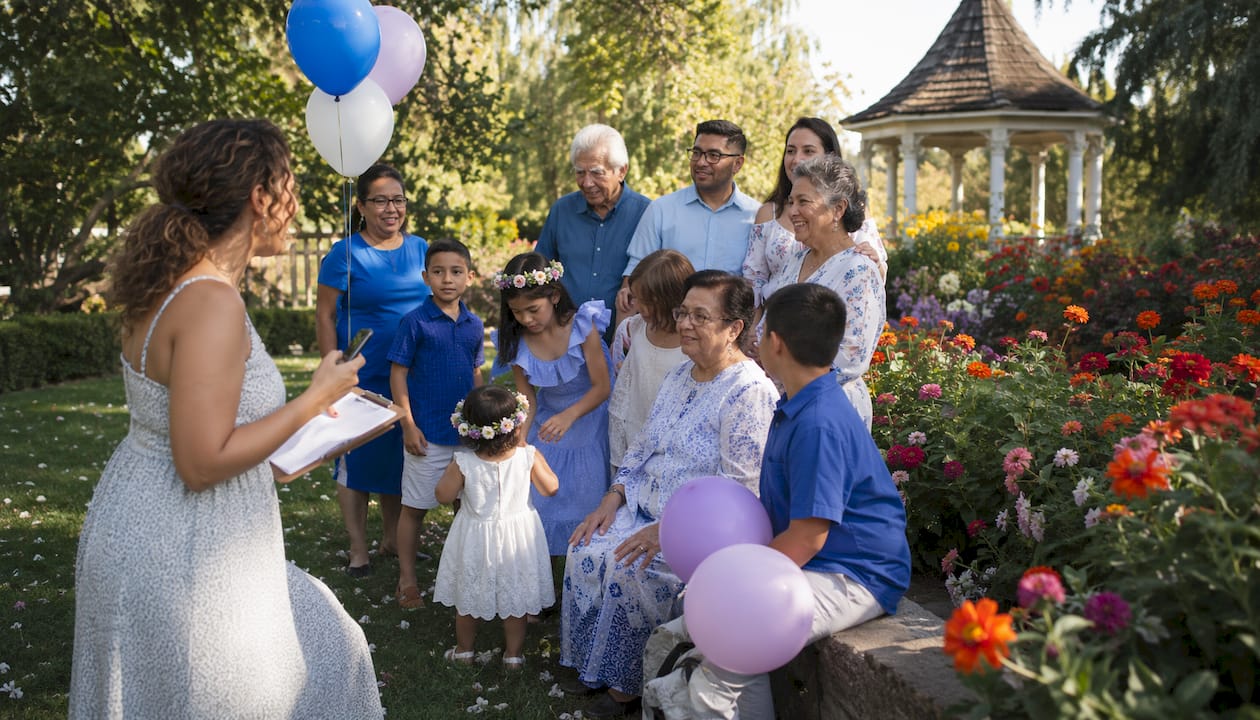
The period before sunset produces the warmest, most flattering light of the entire day. Block that window in your timeline specifically for couple portraits, even if it means stepping away from cocktail hour briefly. Tell your planner and venue coordinator in advance so no one pulls you back inside.
Book an engagement session first
An engagement session is a low-stakes test run that builds real comfort between you and your photographer. You learn how they direct, they learn how you move and respond, and you both arrive on the wedding day with a working shorthand. Research from Paperlust's engagement guide confirms that couples who do a pre-wedding shoot feel noticeably more relaxed in front of the camera on the day itself.
Ask to see full recent wedding galleries before booking
Highlight reels are curated to show only the best 30 images. Ask to see two or three complete galleries from recent weddings, ideally from venues or lighting conditions similar to yours. A full gallery reveals how a photographer handles a dim reception hall, an overcast ceremony, or a chaotic family portrait block — the situations that actually define whether you'll love your photos.
Provide a concise must-have shot list
Keep your family grouping list concise, focusing on the most important combinations. Give it to your photographer at least a week before the wedding, not on the morning of. Include the names of the people in each grouping so the wrangler and photographer are working from the same document.
Pro Tip: Feed your photographer and second shooter a real meal before the reception begins. A photographer who hasn't eaten since 8 AM and is now three hours into a reception is running on adrenaline. A quick vendor meal during dinner service costs almost nothing and keeps their energy and focus sharp for the first dance, toasts, and cake cut.
Mini-checklist for your vendor email (send one week out):
- Attach the family shot list with names
- Confirm arrival time and getting-ready room location
- Share the full timeline with buffer windows noted
- Confirm the golden-hour portrait window
- Ask for confirmation of backup equipment and storage
What mistakes should couples avoid on their wedding day?
Most photo problems are preventable. These are the decisions that most often damage images or create friction with your photographer.
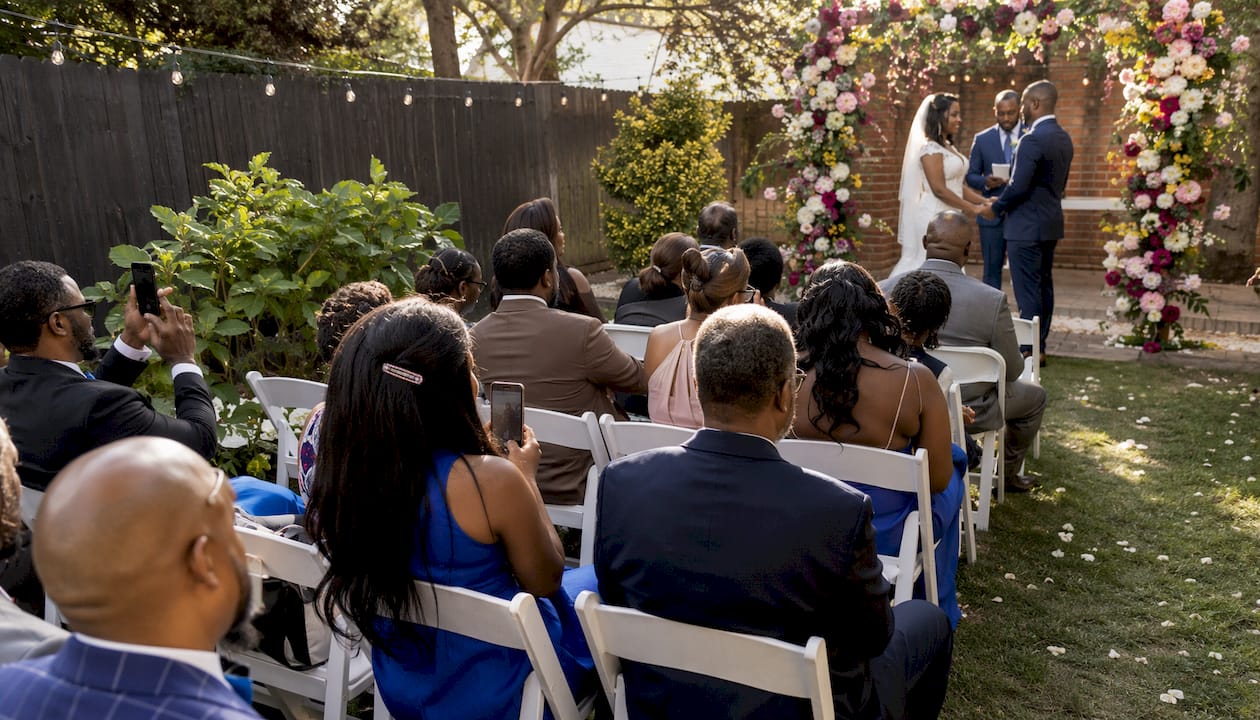
Don't let guests block sightlines with phones
An unplugged ceremony prevents guests from stepping into the aisle, raising tablets, or accidentally spoiling the first kiss with a phone flash. Your photographer cannot move a guest mid-ceremony without causing a scene. Put the unplugged request in your ceremony program, ask your officiant to announce it before you walk down the aisle, and send the one-line text template from the top of this guide to your wedding party.
Don't over-pose or micromanage the shot list
Stiff, over-directed images are almost always the result of a couple trying to control every frame. Guidance from Zola's wedding photography experts is clear: the best photos come from genuine emotion, not performed poses. Give your photographer a style reference (two or three images that show the mood you want), then trust them to direct you. Micromanaging every angle slows the session and shows in the final images.
Don't ban all artificial lighting
Reflexively banning flash is one of the most common mistakes couples make. Dim heritage venues, dark reception halls, and overcast outdoor ceremonies often produce inconsistent, muddy images when a photographer is limited to ambient light alone. Technical guidance from the Institute of Photographers is direct: discreet off-camera flash with a soft modifier is frequently the best tool for consistent, flattering images in low-light spaces. Discuss lighting preferences in advance rather than issuing a blanket ban.
Don't build an overlong formal portrait list
The Knot's research on wedding photography mistakes identifies an overlong shot list as one of the top ways couples turn a joyful day into a stressful checklist. Each additional family grouping takes extra time, so avoid overly long shot lists to preserve time for candid coverage. Prioritize the most important groupings.
Don't skip a second shooter
Simultaneous events — the groom getting ready while the bride walks down the aisle, or the first dance while guests are still eating — are impossible for one photographer to cover alone. The Knot recommends a second shooter specifically to avoid missed moments during transitions. Ask whether a second shooter is included in your package or available as an add-on.
Don't ignore contract red flags
Before you sign, ask these questions directly: Does the contract name a specific backup photographer if the primary is incapacitated? Does it specify dual-card in-camera backup during the shoot? Does it list exact deliverables (number of edited images, album specifications, turnaround time)? A contract that answers "yes" to all three is a contract worth signing.
Watch for these warning signs: no mention of backup equipment, a turnaround clause that says only "reasonable time," and a photographer who cannot show you a complete recent gallery on request.
How should you build your wedding day timeline?
Two frameworks help couples build a schedule that gives photographers the time they need without making the day feel like a production schedule.
The 30–5 rule and the 20–60–20 framework
The 30–5 rule is simple: add 30 minutes of buffer to the start of the day and 5 minutes of buffer between every scheduled block. If hair and makeup is booked for 8:00 AM, tell the team 7:30 AM. If portraits are at 3:00 PM, build in a 5-minute walk-and-settle window before the photographer starts directing.
The 20–60–20 framework divides portrait time into three blocks: 20% for getting-ready and detail shots, 60% for ceremony and candid coverage, and 20% for couple portraits and golden hour. For a 10-hour coverage day, that means roughly 2 hours of detail/prep, 6 hours of ceremony and reception coverage, and 2 hours dedicated to portraits.
Sample timeline with buffers built in
| Time | Block | Buffer |
|---|---|---|
| 8:00 AM | Hair and makeup begins | 30-min early call |
| — | Detail shots (rings, dress, florals) | 15 min before first look |
| 12:00 PM | First look / couple portraits | — |
| 1:00 PM | Family formals | 30 min (wrangler assigned) |
| 2:00 PM | Ceremony | 5-min buffer before processional |
| 3:30 PM | Cocktail hour / candid coverage | Photographer eats here |
| 5:00 PM | Golden-hour portraits | 30 min hard block |
| 5:30 PM | Reception entrance | 5-min buffer |
| — | Last dance / send-off | 15 min before end of coverage |
Why breathing room produces better photos
A rushed timeline creates stiff, posed images. When couples are being hurried from one location to the next, their body language shows it. Breathing room lets genuine emotion surface: a quiet moment between the couple before the ceremony, a laugh between bridesmaids that wasn't staged. Martha Stewart's wedding photography guidance makes the point plainly: authentic moments require time, and time requires planning.
Pro Tip: Assign timeline ownership to one person — your planner, maid of honor, or best man — whose only job is to nudge the schedule when things run ahead or behind. Give them a printed timeline with buffer windows highlighted. Your photographer will thank you, and you won't spend the day watching the clock.
When does natural light work, and when do you need artificial lighting?
Natural light is the first choice for almost every wedding photographer. It's soft, flattering, and requires no additional gear. The problem is that it's only reliably available for a few hours each day, and most weddings don't run on a photographer's preferred schedule.
When natural light falls short
Midday sun is harsh and creates unflattering shadows under the eyes and chin. A ceremony at noon in direct sunlight often produces squinting subjects and blown-out highlights. Dim reception halls, candlelit churches, and heritage venues with small windows present the opposite problem: not enough light for sharp, well-exposed images without pushing camera settings to a range that introduces visible noise.
What discreet artificial lighting actually looks like
Off-camera flash with a soft modifier (a small octabox or bounce diffuser) produces light that looks nothing like the harsh on-camera flash most couples fear. Used correctly, it mimics the quality of window light and fills in the shadows that ambient-only shooting leaves behind. The Institute of Photographers notes that skilled photographers use subtle artificial lighting to match the venue atmosphere and produce consistent skin tones across an entire gallery.
For outdoor ceremonies, discuss altar orientation with your photographer in advance. Facing into direct sun creates squinting; facing away from it, with the sun as a backlight, produces a warm, glowing effect that works beautifully for outdoor wedding photography.
Pro Tip: Before the wedding, send your photographer three or four images that show the mood and light quality you love. Ask them to confirm whether those looks require any specific lighting setup at your venue. This conversation takes ten minutes and prevents a mismatch between your expectations and what the venue actually allows.
- Preferred: overcast sky, open shade, golden hour (one hour before sunset)
- Workable with technique: dim indoor venues, candlelit spaces, overcast outdoor ceremonies
- Challenging without artificial support: midday direct sun, windowless reception halls, dark church interiors
- Always discuss flash policy with your venue before the wedding day
What should your photographer contract include?
Ask to see full recent wedding galleries, confirm backup equipment and insurance, and get every deliverable in writing before you sign. Those three steps eliminate most post-wedding disputes.
Must-have contract items
- Hours of coverage — exact start and end times, with overtime rate specified
- Second shooter — included or available as add-on, named or unnamed
- Backup and storage policy — dual-card in-camera backup during the shoot, off-site backup within 24 hours
- Deliverables — minimum number of edited images, file resolution, digital delivery method, album specifications if applicable
- Turnaround time — specific number of weeks (not "reasonable time"), with a preview or sneak-peek timeline if offered
- Cancellation and reschedule terms — deposit structure, force majeure clause, substitute photographer policy
- Licensing and usage rights — what you can print, share, and publish; what the photographer can use for portfolio or marketing
Questions to ask during the consultation
- Can I see two complete galleries from weddings in the last 12 months?
- What happens if you're sick or injured on my wedding day?
- How do you back up images during and after the shoot?
- Do you carry liability insurance?
- Have you shot at my venue before, or will you scout it in advance?
An engagement session before the wedding also functions as a trust signal: it tells you how the photographer communicates, directs, and delivers before you're relying on them for the most important day of your life.
Coordinating with other vendors
Share your photographer's contact information with your videographer, planner, and venue coordinator at least two weeks before the wedding. The videographer and photographer need to agree on ceremony positioning so they don't block each other's sightlines. The venue coordinator needs to know about any lighting equipment being brought in. Your planner needs the photographer's timeline to align vendor meals and transitions. For a deeper look at wedding day backup processes, Larsonprophotography's guide covers what responsible post-shoot storage actually looks like.
What actually ruins wedding photos, and how do you prevent it?
The most common photo-ruiners, in order of how often they appear: a tight timeline, a cluttered getting-ready room, guest devices blocking sightlines, harsh midday light, and no second shooter. Every one of them is preventable.
- Cluttered getting-ready room: Clear the space before the photographer arrives. Remove bags, food containers, and clothing from surfaces. A tidy room takes 10 minutes to prepare and saves 30 minutes of post-processing.
- Guest devices: An unplugged ceremony request, announced by the officiant, eliminates 90% of aisle-blocking phone incidents.
- Harsh midday sun: Schedule outdoor portraits for golden hour or open shade. If the ceremony is at noon, discuss altar orientation with your photographer in advance.
- Wrong venue for your style: A dark, windowless ballroom and a natural-light photographer are a mismatch. Ask your photographer directly whether your venue suits their style before booking.
- No second shooter: Simultaneous events during prep or reception transitions are impossible to cover alone. Budget for a second shooter if your venue has multiple locations or your day has overlapping moments.
- Unfed or exhausted vendors: A photographer who hasn't had a break in eight hours makes small errors: missed focus, slower reaction time, less creative framing. A vendor meal during dinner service costs almost nothing.
Pro Tip: The week before the wedding, walk through the getting-ready space with your phone camera. If the background looks cluttered on a phone screen, it will look cluttered in your photos. Move anything that doesn't belong in the frame.
What should you pack and do on the morning of the wedding?
A short, practical checklist you can print or drop into a group chat the night before.
Top five items to pack:
- Details box — rings, invitation suite, vow booklets, heirlooms, florals for flat-lays
- Spare boutonniere — pins bend, petals fall; a backup saves a formal portrait
- Touch-up kit — powder, lip color, hair ties, safety pins, fashion tape
- Vendor snacks and water — for your photographer, second shooter, and videographer
- Printed timeline — one copy for your wrangler, one for your planner, one for the photographer
Guest template (read aloud by officiant or printed in program): "We invite you to be fully present with us today. Please keep phones and cameras put away during the ceremony so our photographer can capture every moment for us. Thank you."
Last-minute photographer requests to communicate:
- Any lighting changes at the venue since the site visit (new drapes, moved furniture)
- Ceremony seating arrangement so the photographer knows where immediate family will sit
- Name and phone number of the family photo wrangler
- Any moments added or removed from the timeline since the last check-in
For a complete printable version, Larsonprophotography's wedding photography checklist covers every block of the day in one place.
Does your photographer need to respect venue rules?
Yes, and so do you. Many venues have specific restrictions on flash photography, tripods, or access to certain areas during the ceremony. Ignoring those rules mid-ceremony creates conflict with venue staff and can result in the photographer being asked to stop shooting.
Request a copy of the venue's photography policy when you book the space. Share it with your photographer at least two weeks before the wedding. If the venue prohibits flash during the ceremony, your photographer needs time to plan an alternative approach — whether that's a faster lens, a higher ISO setting, or a discreet off-camera light positioned outside the restricted zone.
Restricted spots are equally important. Some historic venues prohibit photographers from standing at the altar or moving during the processional. Knowing those constraints in advance lets your photographer position themselves correctly from the start rather than being redirected mid-ceremony.
How should your photographer handle equipment and backups?
Every professional wedding photographer should arrive with at least two camera bodies, multiple lenses, and enough memory cards to cover the full day without swapping mid-event. Dual-card recording (writing to two cards simultaneously) is the standard for anyone shooting professionally: if one card fails, the images exist on the second.
Silent shooting mode matters more than most couples realize. Modern mirrorless cameras can shoot in complete silence, which means the photographer can work during quiet moments — the exchange of vows, a prayer, a first look — without the mechanical shutter sound drawing attention. Ask your photographer whether their camera supports silent mode and whether they use it during the ceremony.
After the shoot, images should be backed up to at least two separate locations before the photographer leaves the venue or within hours of returning home. A single hard drive is not a backup. The standard practice is on-site card plus two off-site copies (an external drive and a cloud service). Confirm this process is in your contract.
What should your contract say about deliverables?
A contract that lists only "digital images" is not a contract — it's a placeholder. Get specific. The deliverable clause should name the minimum number of fully edited images (not proofs or previews), the file format and resolution, the delivery method (online gallery, USB drive, or both), and the exact number of weeks from the wedding date to delivery.
Turnaround time in the wedding industry typically runs 6–12 weeks for a full edited gallery. Some photographers offer a sneak-peek preview of 20–30 images within a week. If that matters to you, put it in the contract. If an album is included, the contract should specify the page count, cover material, and revision allowance.
Licensing matters too. Most contracts grant you personal use rights — printing, sharing, framing — but restrict commercial use. Confirm you can post images on social media and share them with family without restriction. If you want to submit photos to a wedding publication, ask whether the contract allows it or requires photographer credit.
Why does coordinating with your videographer matter?
Your photographer and videographer will spend the entire day in the same spaces, often shooting the same moments from different angles. Without coordination, they block each other's sightlines, compete for position during the first dance, and create audio problems when camera shutters appear on the video track.
The fix is a 15-minute pre-wedding call between the two of them, arranged by you. They need to agree on ceremony positioning (who stands where during the processional and vows), reception coverage zones (who takes the wide shot, who goes close), and mic placement (a lavalier mic on the groom can pick up camera sounds if the photographer is too close).
Share both vendors' contact information with each other and with your planner at least two weeks out. A planner who knows both vendors' workflows can prevent most day-of conflicts before they start.
How should your photographer communicate with you before the wedding?
The best photographers schedule at least one detailed pre-wedding consultation, separate from the initial booking meeting. That conversation should cover your must-have moments, the names and relationships of key family members, any sensitive situations (divorced parents, estranged relatives), and your preferred style from posed to documentary.
Canon's guidance on wedding photographer etiquette describes the approach of experienced photographers: they meet with couples multiple times before the wedding, discussing how the couple met, what matters most to them, and who the most important people in the room will be. That information shapes every creative decision on the day.
Send your photographer a one-page brief one week before the wedding. Include the timeline, the family shot list with names, the venue address and parking details, the wrangler's contact information, and any moments you absolutely cannot miss. A photographer who arrives with that brief in hand is a photographer who can focus entirely on shooting.
How does a photographer stay unobtrusive during the ceremony?
The best wedding photographers are present everywhere and visible almost nowhere. They use longer lenses during the ceremony to shoot from a distance, silent shutter mode to avoid drawing attention, and deliberate movement patterns that keep them out of guests' sightlines.
Alison Bounce, a photographer with nearly 300 weddings behind her, describes the discipline required: "When you move, try not to make eye contact, or your subjects will act differently. So when you move, look down, and be quick." The goal is to capture the story without becoming part of it.
For couples, the practical implication is simple: trust your photographer to move. If you see them repositioning during the ceremony, that's intentional. The moment they're moving toward is usually the one you'll want most in your album. For guidance on capturing authentic wedding moments, Larsonprophotography's blog covers the specific techniques that produce candid, emotionally resonant images.
What happens to your photos after the wedding?
Images should be backed up to at least two separate locations before the photographer leaves the venue or within hours of arriving home. On-site card storage plus two off-site copies is the professional standard. Confirm this process is named in your contract, not assumed.
Post-processing for a full wedding gallery typically takes 6–12 weeks. That window covers culling (selecting the best frames from hundreds or thousands of shots), color correction, exposure adjustment, skin tone consistency, and any stylistic editing that matches the photographer's signature look. Rushing this process produces inconsistent results; a photographer who promises a full gallery in one week is either delivering unedited files or cutting corners on selection.
Ask your photographer what post-processing style they apply: light and airy, rich and moody, film-emulated, or true-to-life. Ask to see before-and-after examples if you want to understand how much the editing changes the raw images. The editing style is as much a part of their work as the shooting itself, and it should match the aesthetic you saw in their portfolio when you booked them.
Key Takeaways
Great wedding photos come down to preparation, clear communication, and giving your photographer the time and access they need to do their job.
| Point | Details |
|---|---|
| Build timeline buffers | Add buffers of several minutes between every major block; protect the golden-hour portrait window. |
| Prepare a details box | Pack rings, invitation suite, and heirlooms the night before to save setup time on the day. |
| Request an unplugged ceremony | Ask your officiant to announce it; guest phones are the most common sightline blocker. |
| Confirm contract specifics | Get minimum image count, turnaround weeks, backup policy, and licensing in writing before signing. |
| Book with Larsonprophotography | View full recent galleries and confirm deliverables at larsonprophotography.com/clients before booking. |
What working wedding photographers wish couples knew
The advice in this guide isn't theoretical. The couples who walk away with the galleries they imagined are almost always the ones who did three things: they gave their photographer a clean, tidy space to work in, they built real time into the schedule, and they trusted the process instead of trying to direct every frame.
The detail that surprises most couples is how much the getting-ready room matters. A cluttered hotel room with bags on every surface and bad overhead lighting is genuinely difficult to work in, no matter how skilled the photographer. A tidy space with a window and a clear surface for the details box takes ten minutes to prepare and changes the quality of the first hour of coverage entirely.
The other thing worth saying plainly: the photographers who produce the most emotionally resonant images are the ones who stay focused on the story rather than the social experience of the day. Canon's research on photographer etiquette captures it well: getting too friendly with guests mid-event causes missed moments. The best photographers are warm, professional, and present — but their attention stays on the couple, not the conversation at the bar.
These dos and don'ts exist because the gap between a good wedding gallery and a great one is almost never about camera gear. It's about preparation, communication, and the 30 minutes of breathing room you either built into the timeline or didn't.
Ready to see what professional coverage looks like?
Hiring a professional photographer with a second shooter makes a measurable difference when your day has simultaneous events, multiple locations, or a venue with challenging light. A second camera covers the groom's reaction while the first captures the bride's entrance. A photographer who has scouted your venue knows exactly where to stand before the processional begins.
Larsonprophotography serves couples across San Antonio and nearby cities, specializing in wedding and engagement photography that combines documentary storytelling with warm, cinematic editing. Before you book anyone, view full recent galleries and read the contract deliverables carefully. You can browse Larsonprophotography's client work and check availability directly at larsonprophotography.com/clients. If you're planning an engagement session as a test run first, the engagement page covers what to expect and how to get started.
Useful sources and further reading
The research behind this guide draws from several reliable sources on wedding photography best practices.
| Source | Why it's useful |
|---|---|
| Martha Stewart — Wedding Photo Mistakes | Timeline and scheduling guidance backed by real photographer input |
| The Knot — Top Wedding Photography Mistakes | Practical list of the most common couple-side errors, including shot-list length |
| Canon Europe — Photographer Etiquette | First-hand guidance from a photographer with nearly 300 weddings on staying unobtrusive and focused |
| Institute of Photographers — Common Mistakes | Technical guidance on lighting trade-offs and artificial light use in challenging venues |
| Paperlust — Engagement Photoshoot Guide | Explains the engagement session as a trust-building and comfort-building tool |
- Full gallery review: always ask for two complete recent wedding galleries, not just a highlight reel, before booking any photographer
- Contract checklist: use the seven-item list in the vendor coordination section of this guide as your baseline before signing
- Portfolio examples: Larsonprophotography's client galleries at larsonprophotography.com/clients show complete wedding coverage across a range of San Antonio venues and lighting conditions