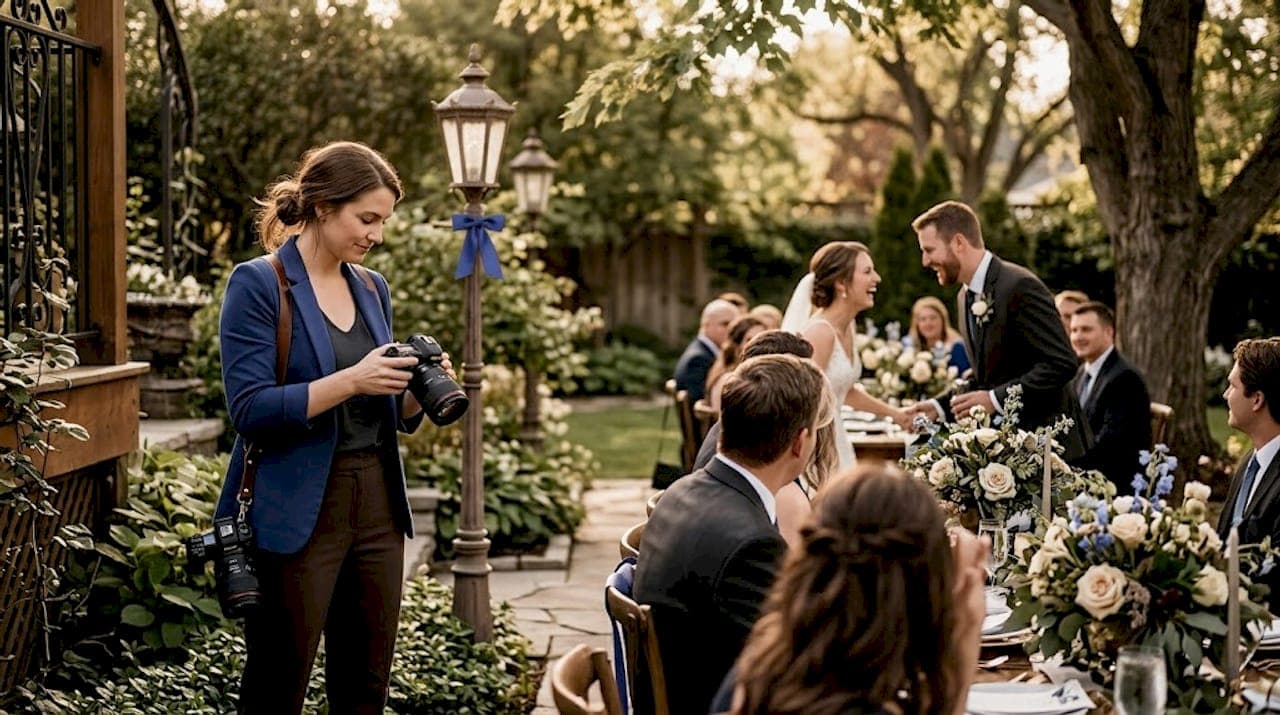
Your wedding photos will outlast almost everything else from your wedding day. The flowers fade, the cake gets eaten, and the music stops. But those images stay with you for decades. That's exactly why wedding photography ethics explained in clear, practical terms matters so much — for couples making a major financial and emotional investment, and for photographers who carry the responsibility of documenting one of life's most significant events. This article covers the ethical foundations, the fast-moving questions around AI editing, and the contract practices that protect everyone involved.
Table of Contents
- Key takeaways
- Wedding photography ethics explained: the core principles
- AI editing and the new ethical frontier
- Day-of conduct: how photographers should behave
- Contracts and business ethics: what should be in writing
- Spotting and preventing common ethical pitfalls
- My honest take on where the real ethical weight falls
- How Larsonprophotography approaches ethical wedding photography
- FAQ
Key takeaways
| Point | Details |
|---|---|
| Documentary trust is foundational | Ethical photography means showing what actually happened, not constructing a better version of it. |
| AI editing requires disclosure | Using AI to composite or significantly alter images crosses an ethical line without client consent. |
| Contract clarity prevents disputes | Specific terms around deliverables, timelines, and editing prevent misunderstandings and protect both parties. |
| Day-of conduct shapes outcomes | Photographers who stay unobtrusive and respectful capture better, more authentic moments. |
| Ask questions before you sign | Couples should clarify what "edited" means to their photographer before any money changes hands. |
Wedding photography ethics explained: the core principles
At its foundation, ethical wedding photography is built on something called documentary trust. It means your photographer's job is to show what actually happened on your wedding day, not to create a more flattering or polished version of a day that didn't quite exist.
The ethical line for editing sits between adjusting how something looks versus changing what happened. Standard color correction, exposure adjustment, and skin smoothing fall squarely on the ethical side. They improve the presentation of a real moment without erasing or fabricating it. What crosses the line is when editing changes the documentary meaning. A photo that shows your grandmother crying at your ceremony carries emotional weight because it happened. A photo that places her there when she wasn't is a fabrication, regardless of how beautiful it looks.
A few principles define ethical documentary practice:
- Capture, don't construct. Photographers should document events as they unfold rather than directing or staging them for a better frame.
- Respect non-repeatable moments. Intentional event alterations are unethical because they compromise the integrity of moments that cannot be re-created.
- Edit for presentation, not for fabrication. Every edit should preserve the documentary truth of what occurred.
- Be consistent. Ethical photographers apply the same standards across all clients, not just the ones who ask.
Pro Tip: Ask your photographer to show you a full wedding gallery from a past client, not just curated highlights. You'll see their editing standards applied to ordinary moments, not just the spectacular ones.
AI editing and the new ethical frontier
The emergence of AI tools has created genuinely difficult questions in wedding photography. Most of these tools are not inherently unethical, but some of the ways they get used absolutely are.
Standard retouching has always been acceptable: removing a temporary blemish, correcting uneven lighting, adjusting white balance. These are refinements of a real image. AI-assisted versions of the same tasks fall into the same ethical category. The problem starts when AI is used to create composites or generate content that was never there.
| Edit type | Ethical? | Why |
|---|---|---|
| Exposure and color correction | Yes | Improves presentation without altering facts |
| Skin smoothing and blemish removal | Yes | Cosmetic; does not change what happened |
| Background sky replacement | Depends | Acceptable if client consents and context is clear |
| Inserting absent guests into photos | No | Creates a scene that did not exist |
| AI compositing two separate shots | No (without consent) | Fabricates a moment rather than documenting one |
| Generative fill to remove unwanted objects | Depends | Minor distractions may be fine; removing people is not |
Disclosure is ethically required when AI goes beyond basic corrections, especially when the result could be mistaken for a real, unaltered scene. The key ethical question is simple: if someone looked at this photo twenty years from now, would they believe something happened that didn't? If the answer is yes, the edit requires a conversation with your client before delivery.
The emotional power of wedding images depends entirely on documentary trust between photographer and client. Once clients discover that a meaningful image was AI-generated rather than captured, that trust is nearly impossible to rebuild. Transparency before delivery is not just courteous. It's an ethical obligation.
Pro Tip: When reviewing photographer contracts, look specifically for language about AI use and compositing. If it isn't addressed at all, ask directly. Silence on this topic in 2026 is a red flag.
Day-of conduct: how photographers should behave
A photographer's behavior on your wedding day matters just as much as their editing choices. Ethical conduct during the event protects your memories, your guests' comfort, and the quality of the final images.
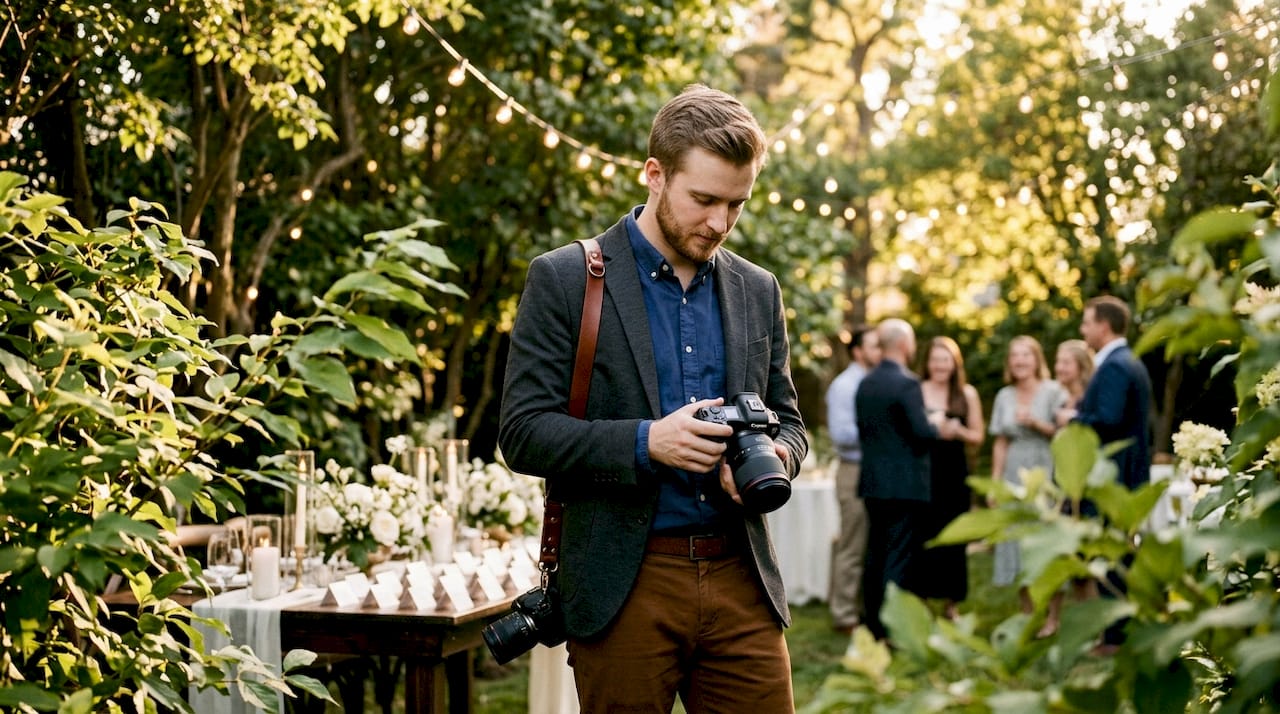
Photojournalistic wedding photography is built on the idea of unobtrusive observation. The photographer moves through your day as a respectful witness, not as a director. This approach captures authentic emotion because people are not performing for the camera. They're actually living the moment.
Here is what ethical day-of conduct looks like in practice:
- Avoid monopolizing the couple's time. Spending three hours on portrait sessions pulls the couple away from their guests and creates a transactional atmosphere rather than a celebration.
- Work with other vendors, not against them. A photographer who blocks the videographer's shot or argues with the officiant about positioning is prioritizing their own output over the couple's experience.
- Respect guest boundaries. Not every guest wants to be photographed. Ethical photographers read body language and do not push a camera into someone's face during a private moment.
- Stay out of the way. Resisting the urge to stage or influence events means accepting that some moments will be imperfect and trusting that authentic imperfection is more valuable than manufactured perfection.
- Handle sensitive moments with discretion. Family dynamics, emotional breakdowns, and unexpected incidents require judgment. A good photographer knows when to put the camera down.
Couples should feel that their photographer is a calm, present professional rather than someone who creates stress. If your photographer is causing chaos during your ceremony, something has gone wrong.
Contracts and business ethics: what should be in writing
A wedding photography contract is not just a legal formality. It's the clearest expression of a photographer's ethical standards. A well-written contract demonstrates that a photographer has thought through every scenario and is prepared to handle it with integrity.
Well-crafted contracts should include the following terms at minimum:
- Scope of coverage: exactly what events, hours, and locations the photographer will cover.
- Deliverables: the number of edited photos or videos to be delivered and in what format.
- Delivery timeline: a specific date or window by which you will receive your final images.
- Payment schedule: deposit amounts, due dates, and payment methods.
- Cancellation and refund policy: what happens if either party must withdraw, and under what conditions deposits are refundable.
- Emergency contingency: what the photographer will do if they have an emergency and cannot fulfill the booking.
- AI and editing disclosures: any policies around the use of AI tools or compositing.
A contract that lacks delivery timelines, cancellation terms, or contingency plans is not just incomplete. It is a warning sign that the photographer has not thought through what they owe their clients when things go wrong.
The consequences of vague or absent contracts are serious. A case in North Carolina resulted in a nearly $1M scam allegation against wedding photographers who collected payment and delivered only previews or unedited files. A court injunction was required to compel delivery. Couples had essentially paid in full for finished work and received almost nothing. That situation was preventable with clear contractual terms and clients who knew what questions to ask.
Ethical clarity in contracts reduces misunderstandings before they become disputes and builds the kind of trust that turns clients into advocates.
Spotting and preventing common ethical pitfalls
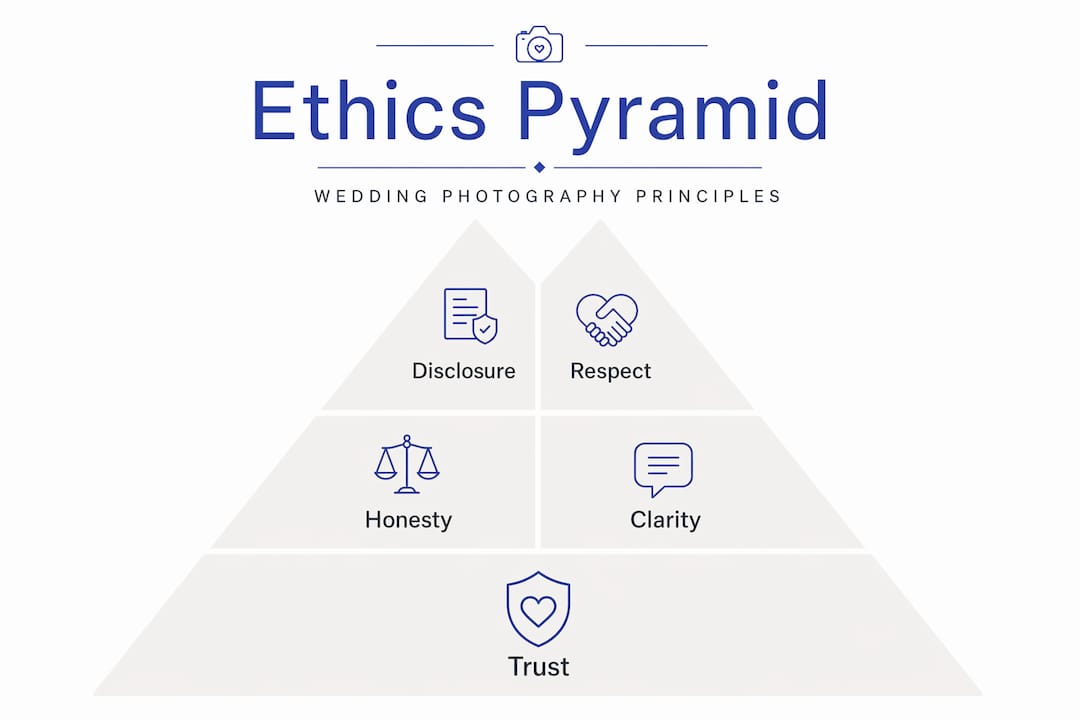
Most ethical failures in wedding photography don't come from bad intentions. They come from vague communication and unexamined assumptions. Both couples and photographers can prevent most problems by asking better questions earlier.
Here is what to clarify before signing any contract:
- What does "edited" mean to you? Some photographers deliver color-corrected files and call it done. Others provide detailed retouching on every image. Get a specific definition.
- How do you handle unpredictable moments? A guest falls during the reception. A family member causes a scene. Ask how the photographer navigates sensitive situations.
- What is your AI policy? If the photographer uses any generative or composite tools, you should know before delivery, not after.
- Who owns the images? Copyright and usage rights need to be spelled out, particularly if you want to print, publish, or post your photos commercially.
Watch for these signs of potentially unethical business practices:
- Portfolios that look too polished. If every image from every wedding looks flawless, ask whether heavy AI compositing might be responsible.
- No written contract or vague terms that rely on verbal promises.
- Resistance to discussing AI use, editing standards, or delivery guarantees.
- Pricing that seems unusually low without a clear explanation of what is included.
Pro Tip: Ask photographers how they have handled a situation where something went wrong. Their answer tells you more about their character and ethics than any portfolio image.
Couples should request clarification about what their photographer counts as "edited" because AI-driven composites can appear completely plausible while fundamentally changing what the images document.
My honest take on where the real ethical weight falls
I've photographed enough weddings to know that the ethical decisions photographers face rarely announce themselves. Nobody stands in front of you and says "this is the moment where you compromise your integrity." It happens quietly. A moment was missed, and the temptation to reconstruct it is right there in your editing software.
In my experience, the hardest ethical calls don't involve AI or contracts. They involve judgment in the moment. Do you ask the father of the bride to redo his reaction because you missed the first one? Most photographers would say no, but plenty do it anyway and rationalize it as serving the client. That rationalization is where documentary trust quietly breaks down.
I've seen the conversation around wedding photography trends shift dramatically with the arrival of AI tools, and my honest view is this: the technology is not the problem. The lack of conversation between photographers and couples about what these tools can and can't do is the problem. When a couple sees a beautifully lit sunset photo and doesn't know the sky was replaced, they're not getting what they paid for, even if the image looks incredible.
Contracts, in my view, are where a photographer's real values show up. A photographer who anticipates every scenario, addresses AI use explicitly, and commits to specific delivery timelines is telling you something important about how they operate under pressure. The ones who wave it off and say "don't worry, we'll take care of you" are making promises they may not be able to keep.
— Todd
How Larsonprophotography approaches ethical wedding photography
At Larsonprophotography, ethical practice is built into every stage of the process, not added on as an afterthought. That means clear contracts with specific delivery timelines, defined editing standards, and explicit policies around AI use. Couples receive honest answers about what their photos will and won't look like before a single deposit is paid.
The photography style at Larsonprophotography is rooted in unobtrusive, documentary coverage. The goal on your wedding day is to capture what actually happens, including the imperfect and unexpected moments that make it yours. If you want to understand exactly what that looks like in practice, explore the wedding photography services at Larsonprophotography, where you will find real gallery work, transparent service descriptions, and a clear starting point for an honest conversation about your day.
FAQ
What does documentary trust mean in wedding photography?
Documentary trust means your images represent what actually happened on your wedding day without fabrication or significant manipulation. It is the foundation of ethical wedding photography and the reason clients rely on their photos as genuine records of real moments.
Is AI editing ethical in wedding photography?
AI tools used for standard corrections like exposure or color are generally ethical. Using AI to composite scenes, insert absent people, or replace major elements without client consent crosses into fabrication and requires explicit disclosure.
What should a wedding photography contract include?
A thorough contract should cover scope of coverage, deliverables, delivery timelines, payment terms, cancellation policies, and contingency plans. Any AI use or compositing policies should also be addressed in writing before signing.
What questions should couples ask a photographer before booking?
Ask what "edited" means in their workflow, how they handle missed or sensitive moments, what their AI policy is, and who retains image rights after delivery. These questions surface assumptions before they become disputes.
How can couples recognize unethical wedding photography practices?
Warning signs include portfolios that look implausibly perfect, vague or missing contracts, refusal to discuss editing standards, and unusual pricing without clear scope. A case involving a North Carolina photography company that collected payment but failed to deliver images shows exactly how serious these situations can become.