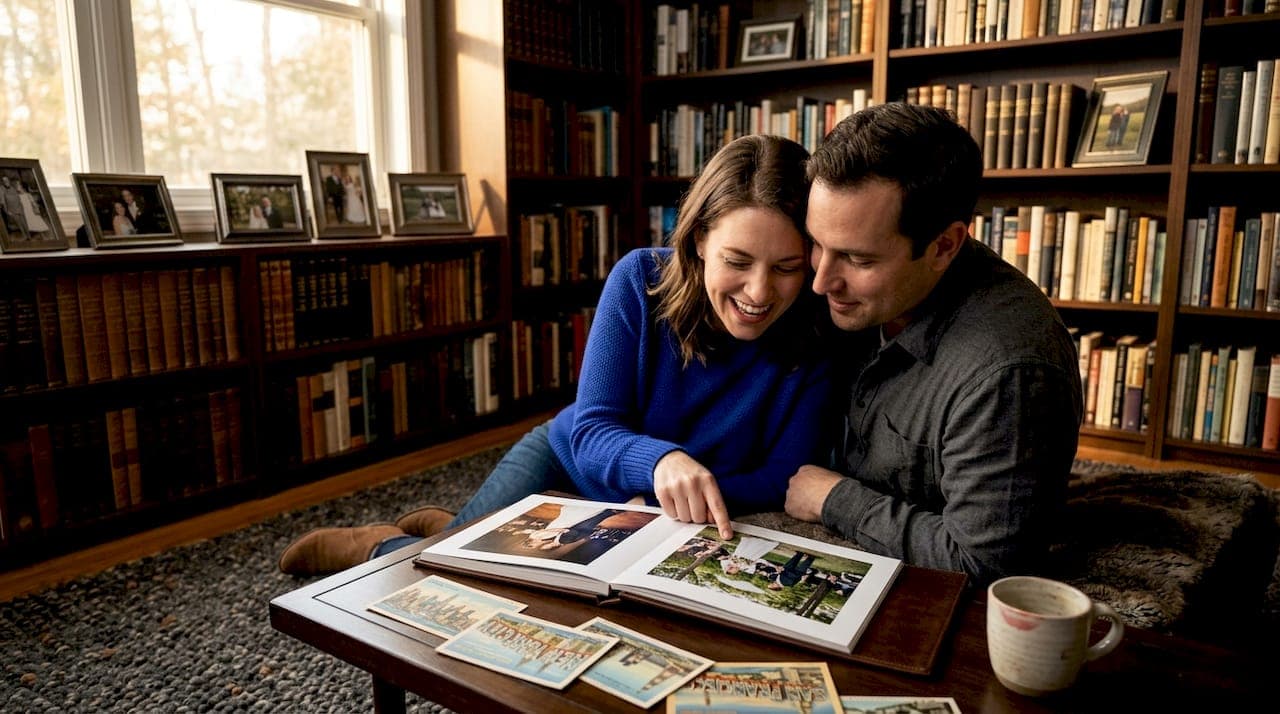
Most couples assume that a good wedding photo album simply means including as many photos as possible. After all, every moment felt meaningful. But that instinct, while understandable, is exactly what separates a forgettable album from one that becomes a family heirloom. Understanding what makes a good wedding photo album comes down to three things: purposeful curation, thoughtful design, and quality materials that hold up for decades. This guide walks San Antonio couples through each of those elements so you can approach your album with confidence and clarity.
Table of Contents
- Why quality layout and pacing are at the heart of a good wedding photo album
- Choosing durable, heirloom-quality materials for lasting memories
- Telling your wedding day story: structuring albums with emotional rhythm
- Balancing curation and proofing for a polished final album
- Formats and styles: choosing the right wedding album for your taste and legacy
- Why less is often more: a fresh view on wedding album curation
- Create your perfect wedding photo album with Larson Pro Photography
- Frequently asked questions
Key Takeaways
| Point | Details |
|---|---|
| Curated selection | A good wedding album includes 50 to 100 meaningful photos, carefully selected to tell your story. |
| Balanced layout | Alternating full-page images and grouped photos with white space improves emotional impact and viewing. |
| Heirloom quality | Durable materials like layflat pages and linen hardcover ensure your album lasts for generations. |
| Story flow | Structuring photos chronologically creates a natural, emotional journey through your wedding day. |
| Proof carefully | Review designs and captions thoroughly before printing to avoid errors and ensure satisfaction. |
Why quality layout and pacing are at the heart of a good wedding photo album
Most people focus on which photos to include, but how those photos are arranged matters just as much. Layout and pacing shape the experience of viewing an album, controlling where the eye travels, how emotion builds, and whether the viewer feels engaged or fatigued.
A well-built album alternates between full-page "hero" images and smaller multi-photo groupings. That rhythm creates visual contrast. A striking ceremony kiss deserves an entire page. A cluster of reception detail shots, a centerpiece, your grandmother laughing, confetti mid-air, works beautifully as a four-image spread. Mixing these two approaches keeps viewers turning pages instead of skimming.
White space is not wasted space. Designers treat it as a tool. When photos are packed edge to edge with no breathing room, the eye has no place to rest, and nothing stands out. Give your strongest images room to speak. A single portrait on a clean white background tells the viewer: this moment matters.
Here are the core layout principles worth knowing before you sit down with your photographer:
- Use one or two full-page hero images per major chapter of the day
- Aim for 4 to 5 photos on multi-image spreads, not 8 or 9
- Alternate between horizontal and vertical layouts for visual rhythm
- Leave consistent margins so the album feels polished and intentional
- Avoid placing two full-bleed images side by side unless they're visually complementary
Pro Tip: Before your album design meeting, pull up your wedding photography checklist and note which moments felt most emotionally significant. Those are your hero image candidates.
Over-including photos is the most common mistake. When every image gets equal weight, nothing stands out. The result feels like a contact sheet, not a story.
Choosing durable, heirloom-quality materials for lasting memories
Understanding layout is vital, but the physical build of your album determines how your memories endure over time. A beautifully curated album printed on flimsy materials will yellow, warp, and fade within a decade. An album built with the right materials will outlast you.

The two most important material decisions are binding style and paper quality. Layflat binding allows pages to open completely flat, which means panoramic ceremony images and wide landscape portraits spread across two full pages without a crease running through the middle. For any photo that crosses the spine, layflat is not optional. It is essential.
Paper quality determines how colors, shadows, and skin tones look in ten years. Archival-grade papers and pigment-based inks resist fading far longer than standard options. FSC-certified paper (paper sourced from responsibly managed forests) adds environmental accountability without compromising print quality.
| Feature | Standard album | Premium heirloom album |
|---|---|---|
| Binding style | Saddle stitch or perfect bind | Layflat / flush-mount |
| Page thickness | Thin, flexible pages | Ultra-thick, rigid pages |
| Cover material | Soft laminate | Linen, leather, or hardcover |
| Ink type | Dye-based | Archival pigment-based |
| Lifespan | 10 to 15 years | 50 to 100 years or more |
| Image quality | Good | Exhibition-grade |
Beyond structure, tactile quality matters. Running your hand across a linen cover or feeling the weight of a thick page creates a sensory experience that reinforces the album's importance. That feeling tells everyone who holds it: these memories were worth the investment.
- Linen and leather covers age beautifully and resist scuffs
- Hardcovers protect pages from bending and moisture better than softcovers
- Thick pages prevent bleed-through and make the album feel substantial
- Archival sleeves or a clamshell box add an extra protection layer for storage
Pro Tip: Ask your photographer specifically about the paper finish. Matte finishes reduce glare for in-hand viewing. Lustre finishes offer a slight sheen that makes colors pop without being reflective. For natural wedding photos, matte tends to feel warmer and more intimate.
Telling your wedding day story: structuring albums with emotional rhythm
With quality materials and layout in place, the next step is creating a narrative flow that reflects your unique wedding day. A random sequence of photos, no matter how beautiful individually, reads as a collection rather than a story.
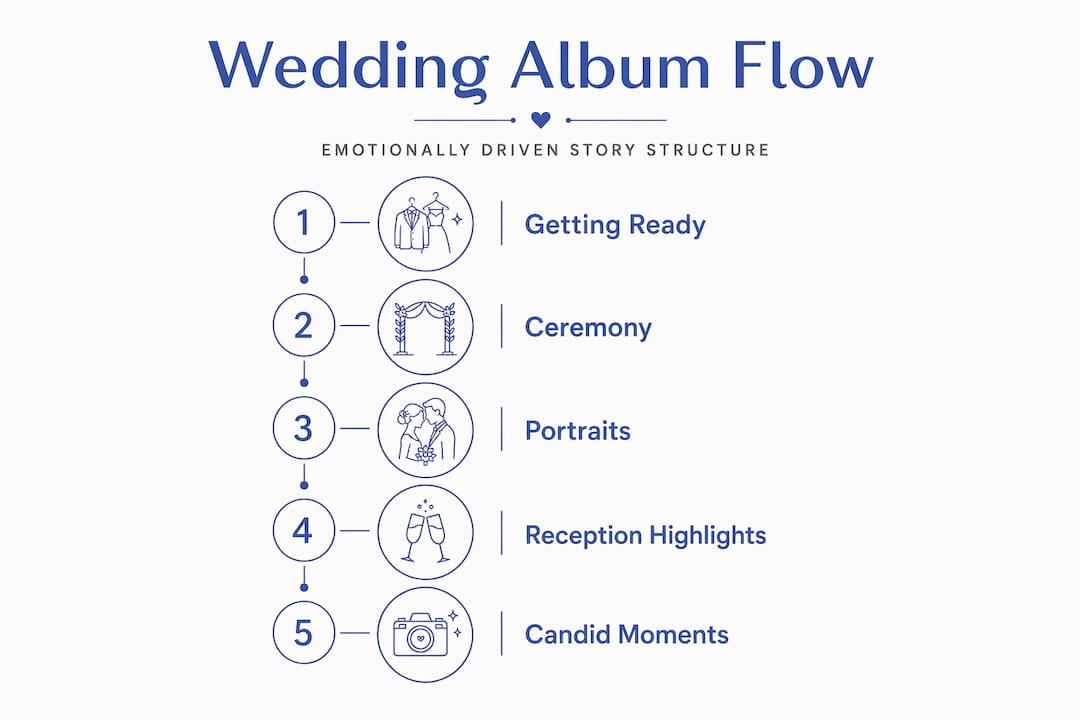
Professional photographers structure albums around the emotional rhythm of the day, with a clear beginning, middle, and end. That structure gives viewers an experience similar to reading a great short story. There is buildup, a climax, and a satisfying close.
A proven narrative sequence for wedding albums looks like this:
- Getting ready. Quiet, intimate moments. Hair and makeup, nervous laughter, a first look in the mirror. This chapter sets the emotional tone.
- The ceremony. Your procession, vows, the ring exchange, the kiss. These are the emotional peak images and deserve the most visual space.
- Formal portraits. Clean, composed images of you as a couple and with family. These anchor the album with clarity.
- Reception and celebration. Dancing, toasts, cake, candid joy. This chapter carries energy and warmth.
- Closing reflections. A quiet portrait at golden hour, your hands together, a final candid. This gives the album an emotional landing.
Pairing key moments with candid details deepens every chapter. The wide shot of your ceremony aisle is powerful. So is the close-up of your mother wiping a tear in the third row. Together, they complete the scene. Alone, either one feels incomplete. Understanding wedding photography trends can also help you identify which details are worth preserving for their visual longevity.
Pro Tip: Think of your album chapters like scenes in a film. Each one should end on an image that makes the viewer want to turn the page.
Balancing curation and proofing for a polished final album
Having structured your story and selected key photos, careful proofing ensures your album comes out flawless and true to your vision. This is the stage most couples rush, and it is where expensive mistakes happen.
Curation actually happens in two stages. First, you and your photographer choose the key moments that earn a place in the album. Then, during layout, you refine again, removing any photos that do not pull their weight once you see them arranged together. Album selection happens twice: once for content and once for design. A photo that looked great in isolation may be redundant when placed next to a similar image on the same spread.
Here is what to evaluate at each curation stage:
- Content curation: Does this photo represent a unique moment or just repeat one already included? Remove duplicates without hesitation.
- Layout curation: Does this image work visually with its neighbors? Does it add to the spread or compete with it?
- Proofing: Check every spread for color accuracy, cropping, and caption errors before approving for print.
A thorough proofing process includes design previews, written approvals at each stage, and a final check before the print order is placed. Skipping this step is how couples end up with a photo cut off at the spine or a name misspelled on the cover.
Budget two to three rounds of review with your photographer. The first review focuses on which photos stay and which go. The second review focuses on layout and flow. The final approval covers print-ready files. Each stage catches different things. Good wedding portraits are particularly worth scrutinizing during layout since they anchor the entire design.
Pro Tip: Print a low-resolution proof at home before giving final approval. Viewing a physical version, even a rough one, reveals layout issues that screens do not.
Formats and styles: choosing the right wedding album for your taste and legacy
Knowing how to finalize your album through curation and proofing, let's look at format choices that align with your style and long-term goals. Format is not just aesthetics. It shapes how you interact with the album for the rest of your life.
Layflat photo books are favored for their panoramic impact and professional weight, while hardcover albums offer timeless protection. Both formats have genuine strengths depending on how you plan to use and display the album.
| Format | Best for | Key advantage | Consider if |
|---|---|---|---|
| Layflat hardcover | Panoramic images, wide shots | No crease across spreads | You want a gallery-quality look |
| Traditional hardcover | Formal, classic couples | Strong protection, elegant feel | You prefer a timeless aesthetic |
| Photo dust jacket | Modern, editorial couples | Customizable outer cover | You want cover flexibility |
| Foil-stamped cover | Personalization lovers | Elegant metallic detail | You want something truly unique |
Beyond format, think about size and orientation. A 12x12 square album feels substantial and coffee-table-worthy. A 10x8 landscape album travels better and fits more easily on a shelf. Neither is wrong. The right choice depends on whether you picture your album displayed or tucked safely away.
A few elements worth considering before you finalize:
- Size: Larger albums (12x12 or larger) give images more visual presence
- Cover material: Linen reads as soft and romantic; leather reads as formal and structured
- Orientation: Landscape suits wide, cinematic photography; portrait suits formal portraits
- Personalization: Foil stamps and custom embossing add a personal touch without being distracting
For guidance on which wedding photography styles translate best into different album formats, matching your style to your format early saves a lot of revision time later.
Why less is often more: a fresh view on wedding album curation
Here is the perspective most photographers will not say out loud: the couples who try to include every good photo almost always end up with the weakest albums.
It is not a failure of taste. It is human. Every image carries a memory. Removing a photo feels like removing the moment itself. But that thinking confuses archives with storytelling. An archive preserves everything. A story selects what matters most and arranges it so others feel the weight of it.
Album quality depends far more on layout rhythm and pacing than on photo quantity. Overloading an album with images flattens the emotional impact because every moment is treated as equally important. When everything is highlighted, nothing is. The viewer moves through the album quickly, feels vaguely impressed, and sets it down. That is not the goal.
The albums that people return to again and again, that get handed to grandchildren, that sit open on coffee tables, have one thing in common: restraint. They contain 60 to 80 images, not 200. They use white space generously. They let one extraordinary photo breathe for an entire page spread before moving forward. They prioritize emotional peaks over documentation.
There is also something irreplaceable about holding a physical album that no digital gallery can offer. Physical wedding albums provide a permanence and sensory experience that digital platforms simply cannot replicate. Screens change. Platforms disappear. File formats become obsolete. A well-built layflat album in a linen cover, stored properly, will be in your family in a hundred years.
Design your album for the person who will hold it in 30 years and experience your wedding day as a complete, emotionally resonant story. That means choosing fewer photos with more intention. It means trusting the layout to carry the narrative. And it means investing in luxury wedding photography and materials that treat your memories as the lasting legacy they are.
Create your perfect wedding photo album with Larson Pro Photography
After everything you have learned about what makes a good wedding photo album, the most important decision is who helps you create it.
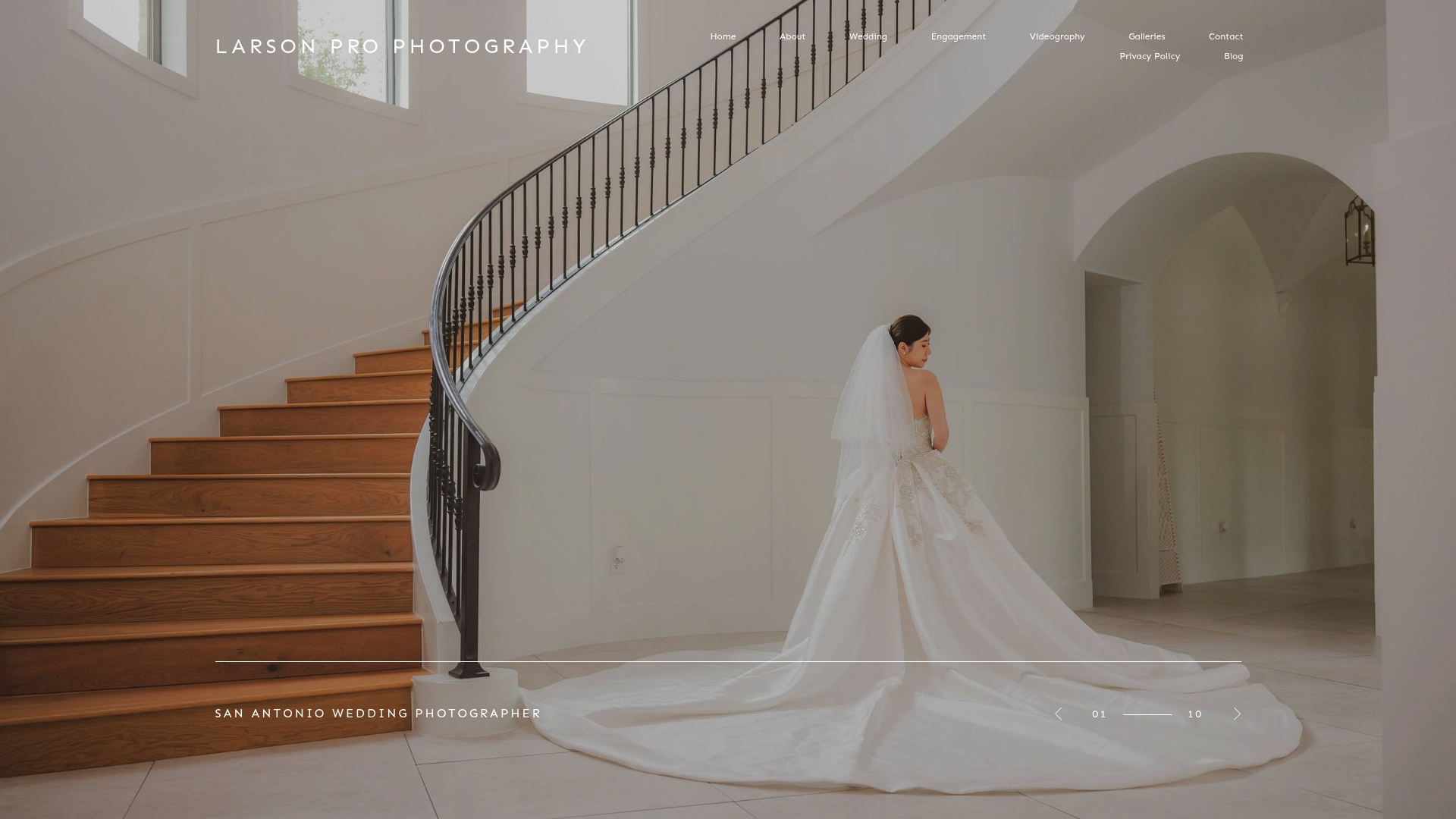
At Larson Pro Photography, we work with San Antonio couples to design wedding albums that are as carefully crafted as the day itself. From expert photo curation and layflat heirloom printing to personalized proofing stages, every detail is handled with the intention your memories deserve. Browse our client wedding galleries to see finished albums and photography styles up close. If you are still in the planning stage, our engagement photography services are a perfect way to start building a visual story before the wedding day even arrives. Let's create something you will be proud to hand down for generations.
Frequently asked questions
How many photos should be included in a good wedding photo album?
A thoughtful wedding album typically includes between 50 and 100 carefully curated photos to maintain emotional impact without overwhelming viewers. Fewer images, chosen with intention, almost always tell a stronger story than a larger collection.
What is layflat binding and why is it recommended for wedding albums?
Layflat binding allows pages to open completely flat, so panoramic photos spread across two pages without a crease running through the center. This format is especially valuable for wide ceremony shots and landscape portraits.
Why is it important to proof a wedding album before final printing?
Proofing lets you review layout, image quality, and any text before the album goes to print. Written approvals at each stage prevent costly reprints and ensure the final product matches your vision exactly.
Can digital wedding albums replace physical photo albums?
Digital albums make sharing easy, but physical albums offer permanence and a tactile, curated storytelling experience that screens cannot replicate. Most couples who invest in both find they return to the physical album far more often.