
Planning a destination wedding is one of the most exciting decisions you'll make as a couple, but it comes with a layer of complexity that many people underestimate. One of the biggest blind spots? Assuming that any talented photographer can show up at your venue in Tuscany, Tulum, or the Texas Hill Country and deliver the same results they would at a local church or ballroom. Destination wedding photography is its own specialty, and understanding what it involves, why it matters, and how to plan for it can mean the difference between a wedding album you cherish forever and one that barely scratches the surface of what your day actually felt like.
Table of Contents
- What is destination wedding photography?
- How destination wedding photography differs from traditional options
- Key skills and services of a destination wedding photographer
- Planning tips for unforgettable destination wedding photos
- Why destination wedding photography is an investment in your memories
- How Larson Pro Photography brings your destination wedding to life
- Frequently asked questions
Key Takeaways
| Point | Details |
|---|---|
| Unique expertise required | Destination wedding photography requires specialized skills adapting to new locations and challenges. |
| More than pictures | A destination specialist preserves authentic moments and the feel of your journey. |
| Plan with your photographer | Early coordination ensures your photographer captures every special scene and emotion. |
| Why invest in quality | Professional destination photography is an investment in reliving your wedding adventure for years to come. |
What is destination wedding photography?
At its core, destination wedding photography is professional photographic coverage of a wedding that takes place outside the couple's hometown, typically in a scenic, culturally rich, or personally meaningful location. That could mean a beach ceremony in the Caribbean, a vineyard in California wine country, a historic hacienda in Mexico, or even a romantic venue right here in the Texas Hill Country, just a short drive from San Antonio. The common thread is that the wedding is happening somewhere unfamiliar, often somewhere visually extraordinary, and that context changes everything about how the photography is planned and executed.
What separates a destination wedding photographer from a generalist is not just technical skill. It is local knowledge, logistical adaptability, and the ability to make creative decisions on the fly. A photographer who has worked in a specific region understands how the afternoon light falls across the landscape, which spots are worth waking up early for, and how local customs might shape the ceremony timeline. These are things you simply cannot Google the night before.
Here is what destination wedding photography typically involves:
- Pre-trip location scouting to identify the best backdrops and lighting windows
- Coordination with local vendors including florists, officiants, and venue managers
- Flexible shooting schedules that account for travel delays, weather shifts, and cultural timing
- Storytelling through environmental context, meaning the landscape becomes part of your love story
- Technical adaptability across different lighting conditions, from bright tropical sun to soft candlelight
"Your destination is not just a backdrop. It is a character in your story. A skilled photographer knows how to let the place speak without letting it overshadow the people."
Many couples assume that a great photographer in San Antonio will automatically translate their skills to a cliffside ceremony in Greece. But wedding photography services designed for destination events require a completely different level of preparation, travel experience, and creative flexibility that not every photographer has developed.
How destination wedding photography differs from traditional options
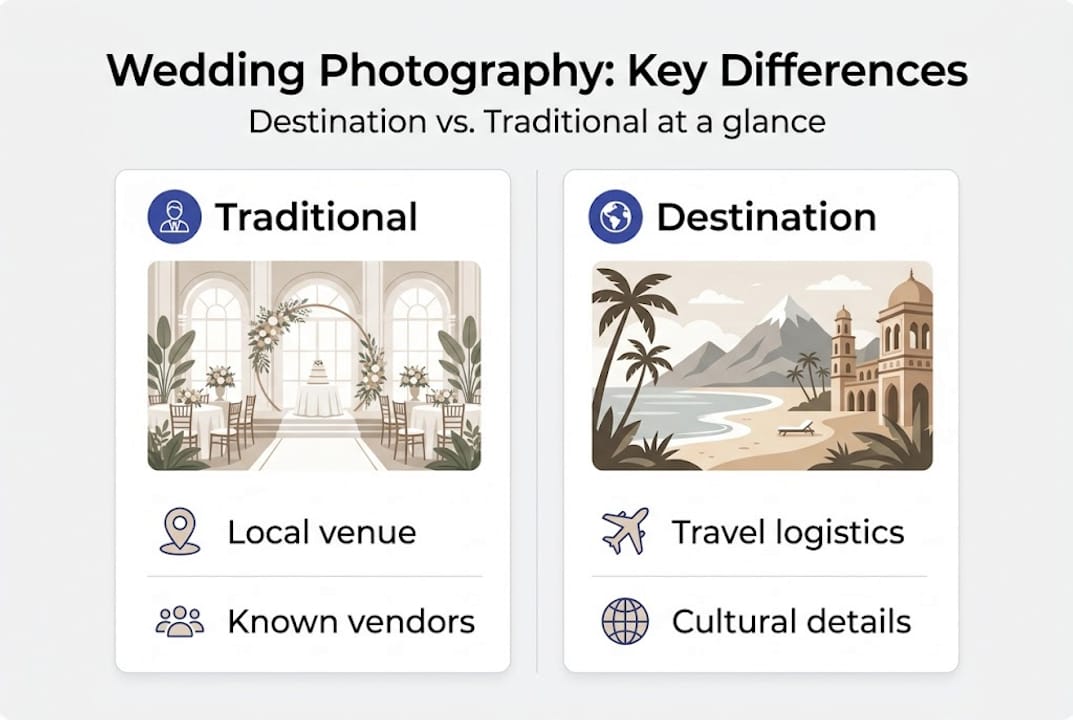
Once you understand what destination wedding photography is, the next step is seeing how it actually compares to hiring a local photographer for a hometown wedding. The differences are more significant than most couples expect, and they affect everything from your budget to your final gallery.
| Factor | Traditional wedding photography | Destination wedding photography |
|---|---|---|
| Venue familiarity | Photographer often knows the venue | Scouting and research required |
| Lighting conditions | Predictable, familiar settings | Variable: tropical sun, coastal haze, mountain shadows |
| Travel logistics | Minimal or none | Flights, accommodation, gear transport |
| Cultural context | Consistent with local norms | Requires cultural sensitivity and awareness |
| Flexibility required | Moderate | High, with contingency planning essential |
| Storytelling scope | Local setting | Immersive, travel-infused narrative |
The logistical side of destination photography is often underestimated. A photographer traveling internationally must transport professional camera bodies, multiple lenses, lighting equipment, and backup gear across customs and baggage restrictions. They need to understand local power standards if they use studio lighting, and they must be prepared for weather that can shift dramatically in tropical or mountainous regions.
Beyond logistics, there is the creative dimension. Client destination wedding galleries show just how different the visual storytelling becomes when the environment is extraordinary. A beach wedding in the Yucatan calls for a completely different compositional approach than a garden ceremony in the Texas Hill Country. The colors, the shadows, the natural elements, all of these require a photographer who can read a new environment quickly and make confident decisions.

Pro Tip: If you are considering a destination wedding, ask your photographer to share galleries from previous events at similar locations or in similar climates. This tells you far more about their adaptability than a portfolio from their home city.
Destination photographers also need to be culturally aware. In some countries, wedding ceremonies follow traditions that differ significantly from what you might expect. A photographer who has traveled internationally for weddings will know how to move respectfully through a ceremony, when to stay back, and when to step in for a key moment. This kind of cultural intelligence is something that develops through experience, not just talent.
Couples who have invested in engagement photography at their destination before the wedding often find that it gives their photographer a huge advantage. It is a chance to scout the location together, understand how you both move in front of the camera, and identify the best spots before the wedding day pressure is on.
Key skills and services of a destination wedding photographer
Knowing what to look for in a destination wedding photographer helps you ask better questions and make a more confident hiring decision. The best professionals in this space offer a clear set of services that span the entire wedding experience, not just the day itself.
Here is what a top-tier destination wedding photographer typically provides:
- Pre-wedding consultation: A detailed conversation about your vision, timeline, and priorities, often including a virtual walkthrough of the venue if an in-person visit is not possible before the event.
- Location scouting: Either in person or through research and local contacts, identifying the best spots for portraits, ceremony coverage, and candid moments.
- Travel coordination: Managing their own logistics so you do not have to, including arrival timing that allows for a venue walkthrough before the wedding day.
- Full event coverage: Capturing getting-ready moments, the ceremony, family portraits, couple portraits, and reception highlights with a blend of candid and posed approaches.
- Post-wedding editing: Professional color grading and retouching that honors the natural beauty of your destination without over-filtering.
- Album design and delivery: Creating a physical or digital album that tells your story from arrival to send-off.
| Service phase | What it includes | Why it matters |
|---|---|---|
| Pre-wedding | Consultations, scouting, planning | Sets the foundation for a smooth day |
| Wedding day | Full coverage, candid and posed | Captures every meaningful moment |
| Post-wedding | Editing, album creation, delivery | Transforms raw images into lasting art |
Experienced destination photographers bring something that cannot be listed on a service menu: creative problem-solving under pressure. When the light changes unexpectedly, when a ceremony runs long, when a planned location is suddenly unavailable, a seasoned photographer does not panic. They pivot. They find the shot that was not in the plan but ends up being the one you love most.
Pro Tip: Ask your photographer how they have handled an unexpected challenge at a destination wedding. Their answer will tell you everything about how they perform when things do not go perfectly, which, at destination weddings, is almost guaranteed to happen at some point.
Adaptability is not a soft skill in this context. It is a core professional requirement. The photographers who thrive in destination settings are the ones who treat every obstacle as a creative prompt rather than a problem.
Planning tips for unforgettable destination wedding photos
Great destination wedding photos do not happen by accident. They are the result of thoughtful planning, clear communication, and a willingness to stay flexible when the unexpected happens. Here are the most effective steps you can take to set your photographer up for success.
- Book early and communicate often: Reach out to your photographer as soon as your venue is confirmed. The earlier they are involved, the better they can prepare for the specific conditions of your location. Following destination wedding photography trends can also help you align your vision with what works best in 2026.
- Build a priority shot list: Identify the moments and locations that matter most to you. This is not about micromanaging your photographer. It is about making sure the images you will want to look at for the rest of your life are never missed.
- Plan around the light: Ask your photographer about the golden hour at your destination, which is the soft, warm light just after sunrise or before sunset. Scheduling your portrait session during this window can transform your images.
- Incorporate local culture and details: The flowers, the textiles, the architecture, the food, these are the details that make your destination wedding feel specific and real rather than generic. Encourage your photographer to capture them.
- Stay flexible and trust the process: Some of the most beautiful destination wedding photos come from unplanned moments. A sudden rainstorm, a local celebration happening nearby, a quiet moment between you and your partner when you thought no one was watching.
Pro Tip: Share your wedding day timeline with your photographer at least two weeks before the event. This gives them time to flag any scheduling concerns and suggest adjustments that protect the most important photo opportunities.
Keeping up with 2026 wedding photography trends can also help you communicate your aesthetic preferences more clearly. Whether you love a film-inspired, moody look or bright and airy imagery, knowing the vocabulary helps your photographer deliver exactly what you have in mind.
Why destination wedding photography is an investment in your memories
Here is something that does not get said enough: destination wedding photography is not a line item you negotiate down. It is the one part of your wedding budget that keeps paying dividends for the rest of your life.
After years of capturing love stories in extraordinary places, one truth stands out above all others. Couples who invest in a specialist almost always say the photos were the best decision they made. Couples who cut corners on photography often say it was their biggest regret. The venue, the flowers, the food, all of it fades. The images stay.
But there is a deeper point here that most planning guides miss. Destination wedding photography is not just about documentation. It is about emotional preservation. When you look at a photo taken in a place that meant something to you, a place you traveled to, a place you chose because it represented who you are as a couple, you do not just see the image. You feel the warmth of that afternoon, the sound of the waves, the nervousness and joy of that exact moment. A skilled photographer captures that feeling, not just the scene.
Browsing real destination wedding outcomes from couples who have been through this process is one of the most convincing things you can do before making your decision. You can see, in concrete terms, what it looks like when a photographer truly understands their environment and their subjects.
The other thing worth saying plainly: hiring a specialist means your story is told with artistry and technical mastery. A generalist might deliver technically correct images. A destination specialist delivers images that feel like your wedding, not just a wedding.
How Larson Pro Photography brings your destination wedding to life
If you are ready to turn your wedding adventure into lasting art, here is how to connect with our expert team.
At Larson Pro Photography, we have built our practice around couples who want more than just photos. They want images that feel as extraordinary as the places they chose to celebrate their love. Our wedding photography expertise covers everything from intimate destination ceremonies to large-scale events across diverse settings. You can browse our client results to see how we approach different venues, lighting conditions, and cultural contexts. If you are still in the early planning stages, an engagement session inspiration visit to your destination is a wonderful way to start the creative conversation and give us a head start on understanding your location before the big day.
Frequently asked questions
How far in advance should we book a destination wedding photographer?
Most photographers recommend booking 9 to 12 months in advance, especially for popular destinations and peak wedding dates. The earlier you book, the more time your photographer has to prepare for your specific location.
What costs are involved in hiring a destination wedding photographer?
You will typically pay the photographer's service fee plus travel expenses, accommodation, and sometimes a per diem for multi-day events. Always ask for a detailed breakdown before signing a contract.
Can we schedule an engagement session at our wedding destination?
Yes, many destination photographers offer engagement sessions at your chosen location, often bundled into a destination package. This also gives your photographer a valuable chance to scout the venue before the wedding day.
What makes a destination wedding photographer different from a local one?
Destination wedding photographers have specific experience adapting to unfamiliar settings, managing travel logistics, and reading new environments quickly. As outlined in professional wedding coverage, this expertise directly shapes the quality and character of your final images.
Do destination photographers help coordinate with other vendors?
Many experienced destination photographers assist with timeline planning and collaborate with local vendors such as florists, officiants, and venue coordinators to ensure seamless coverage throughout your wedding day.