Ambient sound in a wedding film is the intentionally recorded natural audio of the environment: guest laughter, the rustle of a dress, a distant church bell, the clink of glasses during cocktail hour. It is not the vows, not the music, not the DJ's microphone. It is everything in between, and it is often the single biggest factor that separates a wedding film that feels like a memory from one that feels like a video. Larsonprophotography treats ambient audio as a narrative layer, captured with dedicated recorders and shaped across foreground, mid-ground, and background sound-design layers during editing. Hear the soft creak of pew wood as a bride walks past, and you are no longer watching a wedding. You are at one.
Table of Contents
- What does ambient sound actually include?
- How does ambient sound fit into professional sound design?
- How do professionals capture ambient sound on the wedding day?
- How do editors shape ambient sound in post-production?
- When does ambient sound become a problem?
- Questions to ask your videographer about ambient audio
- How Larsonprophotography uses ambient sound: two real-wedding examples
- Key Takeaways
- Why ambient audio is the most underestimated part of a wedding film
- Hear the difference: how Larsonprophotography captures ambient audio
- Useful sources and further reading
What does ambient sound actually include?
Ambient sound, sometimes called natural sound, is the sonic signature of a space. Every venue has one: the low reverb of a cathedral, the open-air hum of a garden, the warm murmur of a ballroom. Videographers record it deliberately, separately from dialogue, so editors can use it to build presence in the final cut.
It is worth distinguishing three categories. Foreground audio is the close-mic content: vows, toasts, officiant words. Background audio is the music bed, whether a live string quartet or a DJ feed. Ambient sound lives in the middle, and it is the layer most couples never think to ask about until they watch their film and feel something is missing.
Here is what that middle layer actually sounds like across a typical wedding day:
Ceremony:
- Footsteps on a stone aisle or hardwood floor
- The soft swish of a dress train against carpet
- Pages turning in a program
- A stifled laugh from the front row
- Birds or wind through open chapel doors
Cocktail hour:
- Murmured conversation and overlapping voices
- Silverware on plates, ice in glasses
- The pop of a champagne cork
- Heels on a patio
Reception:
- Dance-floor squeaks and the thud of a bass line
- DJ announcements echoing across the room
- Waves of laughter from the tables
- A child's voice cutting through the crowd
The same sound can function very differently depending on how an editor uses it. Ocean waves recorded at a beachfront ceremony might appear under the processional, then again under the first dance, and once more under the final send-off shot. Used that way, they become a through-line, a sonic thread that ties the whole film together even when the camera has moved to a completely different location.
How does ambient sound fit into professional sound design?
Sound design in a wedding film works the same way it does in cinema: editors recreate the brain's natural attention by placing sounds at three perceptual distances. The viewer's focus is guided without them noticing.
| Layer | Role in the film | Typical source |
|---|---|---|
| Foreground | Dialogue, vows, toasts — the words that carry the story | Lav mic, boom/shotgun mic |
| Mid-ground | Room tone, ambient atmosphere, guest reactions | Dedicated ambient recorder, camera mic |
| Background | Music, distant effects, score | DJ/house feed, music track |
A real-wedding example makes this concrete. During a ceremony, the officiant's words sit in the foreground, captured on a lav clipped inside the groom's jacket. Soft guest reactions and the natural reverb of the venue fill the mid-ground. A string quartet, recorded separately, anchors the background. When an editor plays all three layers simultaneously, the viewer does not hear "audio." They hear a room.
Premium mixes often use many more layers than this basic three-tier structure, adding foley elements, spatial effects, and multiple ambience beds to build a cinema-quality experience. Standard mixes typically work with two or three layers. The difference is audible within the first thirty seconds of a film.
Pro Tip: Use an ambient bed to bridge cuts. When an editor crossfades a continuous room-tone recording underneath a jump cut or a camera-angle change, the viewer's ear never notices the edit. The ambient layer acts as invisible glue.
How do professionals capture ambient sound on the wedding day?
Clean ambient audio starts with the right gear in the right places, and it requires redundancy. A single camera mic is not a recording strategy; it is a liability.
Core equipment:
- Shotgun/boom microphone (directional, for ceremony and speeches)
- Omnidirectional ambient recorders (small, placed around the venue)
- Lavalier microphones on the officiant and groom
- Portable field recorders (Zoom H-series, Tascam DR-series, or equivalent)
- Windshields and deadcat covers for outdoor use
- Mixer or recording interface for multi-channel capture
Placement guidelines:
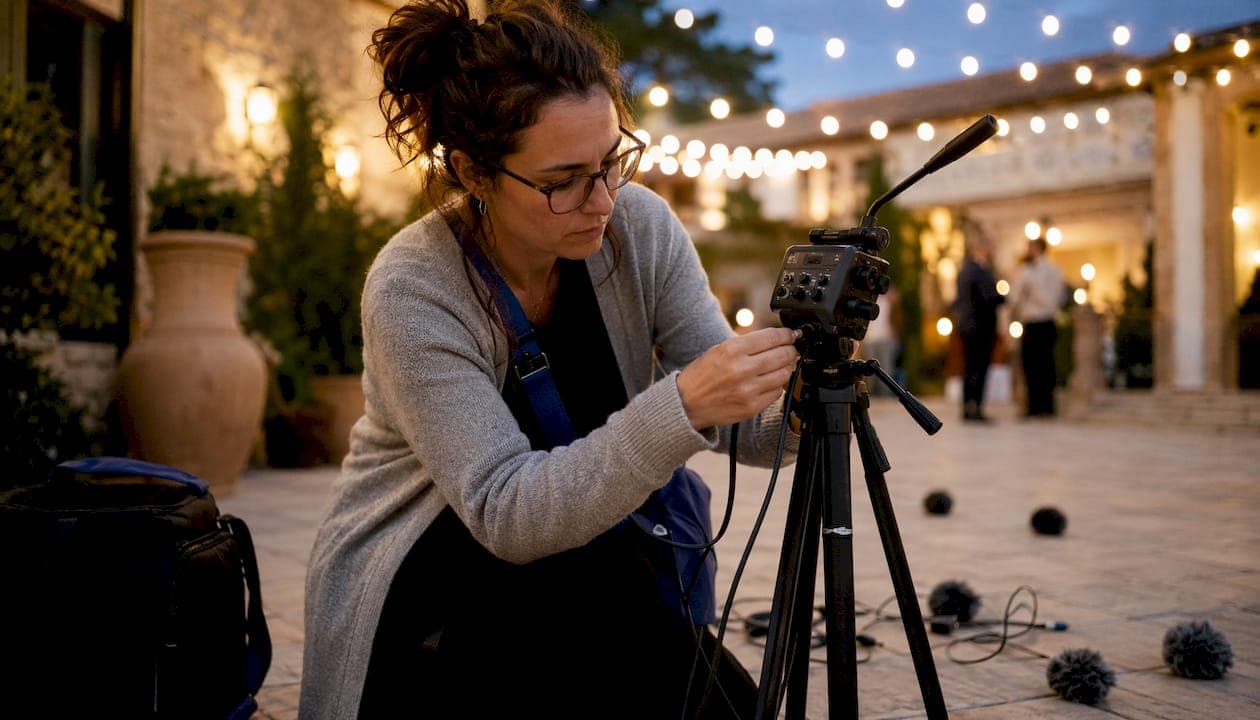
Ambient recorders work best when they are close enough to capture detail but far enough to pick up the full room. Near the altar flanks, they catch ceremony atmosphere without competing with the lav feed. In reception corners, they pull in the ambient energy of the dance floor without overloading from the DJ speakers. At cocktail hour, a recorder placed near a seating cluster captures the natural conversation texture that makes that section of a film feel alive.
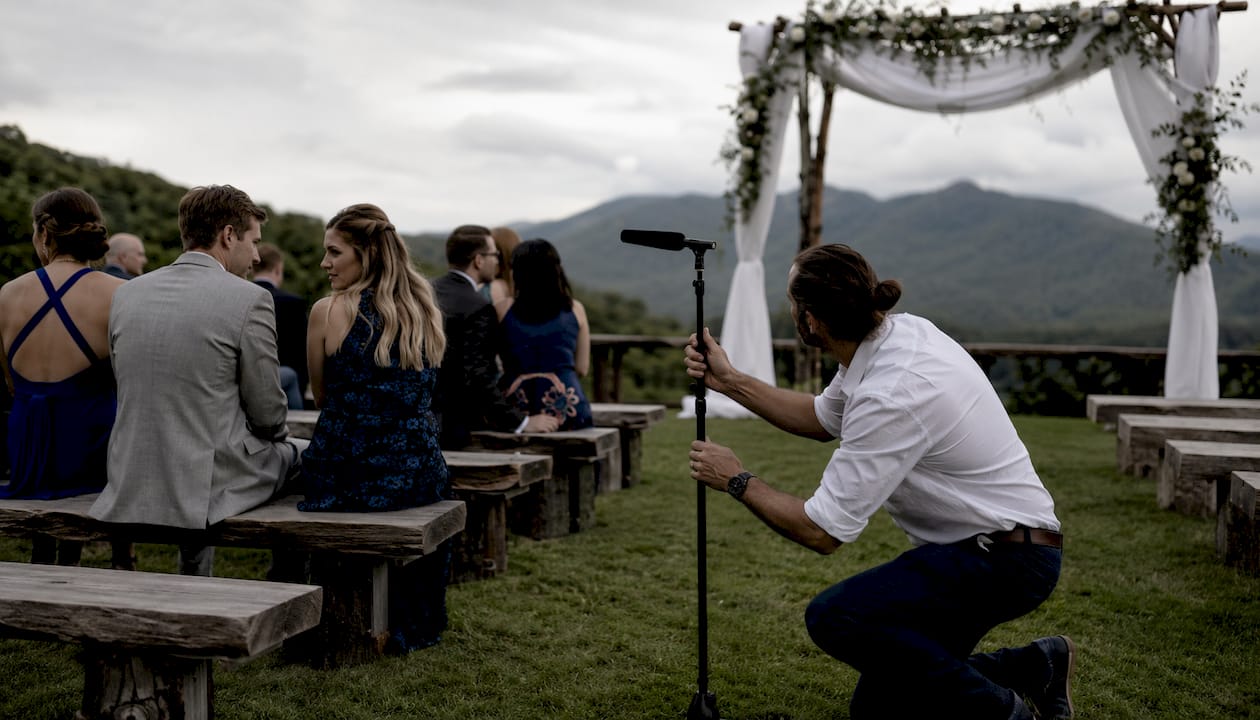
Mic hygiene matters too. Keep recorders off high-traffic paths where guests might kick them. Position them at roughly chest height when possible, not on the floor where low-frequency rumble dominates. And always, always use windscreens outdoors.
Redundancy is standard professional practice: multiple recorders running simultaneously, a lav on the officiant or groom, and a tap into the DJ or house PA feed when the venue allows it. Camera audio runs as a safety track. If one source fails, another covers it.
Pro Tip: For outdoor ceremonies, orient ambient recorders so their capsules face away from the prevailing wind direction, and tuck them behind a natural windbreak like a floral arrangement or a low wall. A deadcat alone is not always enough in an exposed coastal or hilltop setting.
How do editors shape ambient sound in post-production?
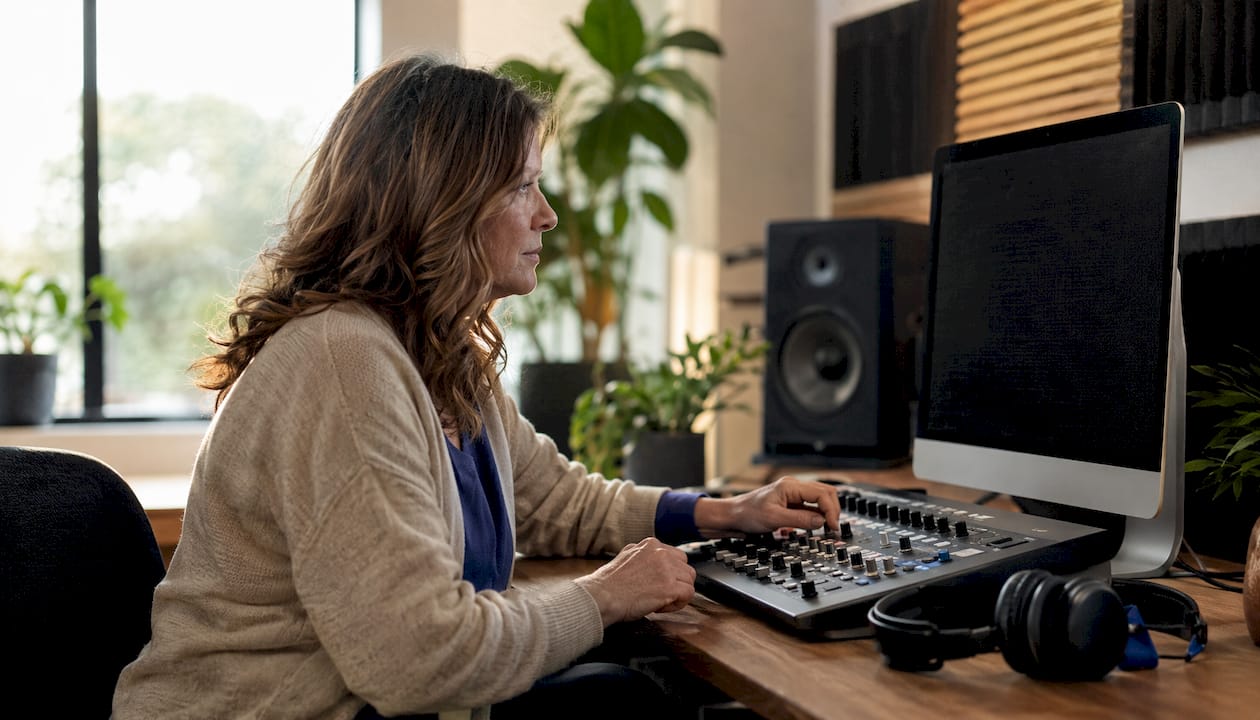
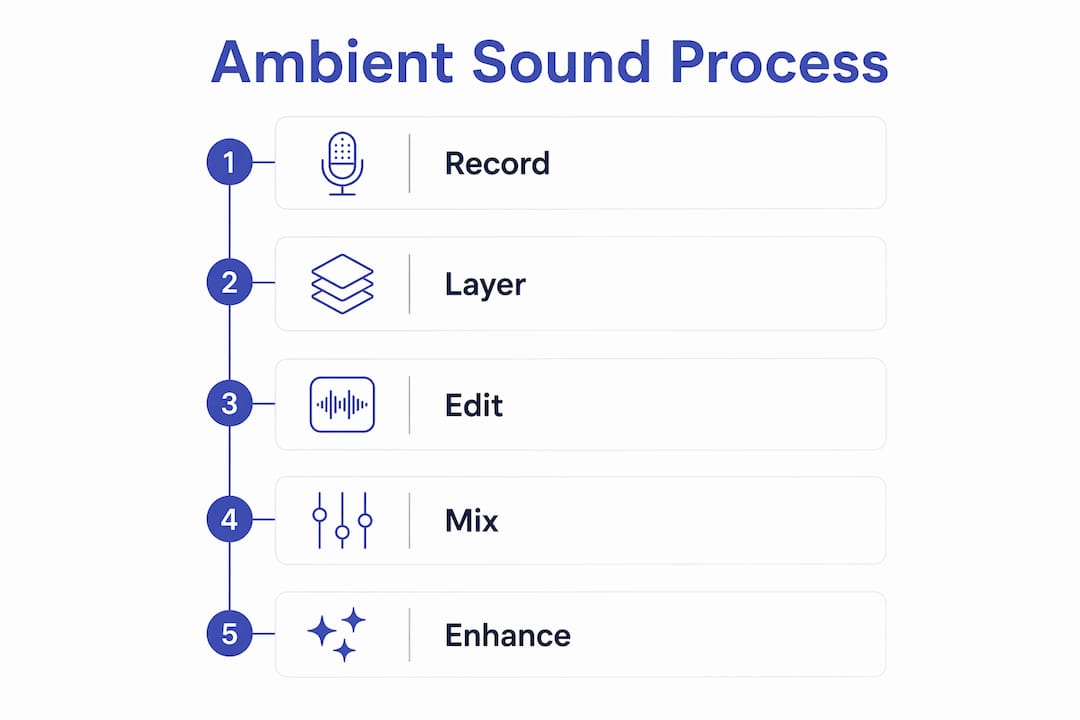
Raw ambient audio from a wedding day is rarely usable straight off the recorder. Editing is where the importance of sound becomes most apparent, because the choices made here determine whether the film feels immersive or flat.
Common post-production techniques include:
- Ambience beds: Editors loop or extend clean ambient recordings to create a continuous sonic backdrop under the entire scene.
- Ducking and side-chain compression: When dialogue or vows are present, the ambient layer is automatically reduced in volume so speech stays intelligible. The ambient layer rises again when dialogue ends.
- Spectral noise reduction: Tools like iZotope RX can isolate and reduce specific problem frequencies (HVAC hum, a persistent fan) without stripping the natural texture of the room.
- Foley layering: When a natural sound was not captured cleanly, editors can layer in a recorded equivalent. A dress rustle, a champagne pour, the soft thud of a bouquet being set down.
- Multi-pass mixing: A first pass sets levels; a second pass refines transitions; a third addresses emotional pacing, making sure the ambient layer swells slightly before a music cue to prime the viewer's emotion.
The difference between a raw clip and a finished mix is dramatic. A raw ceremony recording might carry a persistent air-conditioning hum, uneven lav levels, and a camera mic picking up wind. The finished mix has the hum reduced, the lav balanced against the room tone, and a clean ambient bed running underneath the vows that makes the space feel present without competing with the words.
Not every problem should be fixed, though. A distant cheer from guests when the couple is announced? Keep it. The natural echo of a stone chapel? That is the room's character. Over-processing strips the film of the very texture that makes it feel real.
The editor's job is not to make the audio perfect. It is to make it true. Preserve the emotional cues, reduce the distracting frequencies, and let the ambience tell the viewer where they are. When the music swells, the room should already feel alive beneath it.
When does ambient sound become a problem?
Ambient audio is not always an asset. Three categories of noise cause the most trouble on wedding days, and knowing them helps couples plan around them.
Broadband noise like HVAC systems, refrigeration units, or a venue's ventilation creates a constant low-frequency hum that sits under everything. It is manageable with spectral tools in post, but a severe case can muddy the entire mix. The fix starts on the day: ask the venue coordinator whether the HVAC can be turned off during the ceremony. Many venues will accommodate a fifteen-minute window.
Directional nuisances like traffic, airplane flyovers, or a nearby construction site are harder to predict and impossible to fully remove in post. Scheduling outdoor vows in the early morning, when traffic is lighter, reduces the risk. Positioning recorders away from the street-facing side of the venue helps too.
Intermittent spikes from cellphone interference, a guest's loud laugh directly into a recorder, or a feedback squeal from the PA system can clip the audio beyond repair. Clipped audio, where the waveform is literally cut off at its peak, cannot be restored. This is why backup recorders matter so much: if one source clips, another running at a lower gain level may have captured the moment cleanly.
The tradeoff between "clean" audio and preserved emotional texture is real. Aggressive noise reduction can make a film sound like it was recorded in a studio, which is the opposite of what ambient sound is supposed to achieve. A little room noise, a little imperfection, is often what makes a moment feel genuine. Editors at Larsonprophotography balance clarity with naturalness, and they keep raw atmospherics whenever the emotional value outweighs the technical imperfection.
Questions to ask your videographer about ambient audio
Most couples never think to ask about audio until after they have signed a contract. These questions change that. Copy them, bring them to your vendor meeting, and listen carefully to how the answers come.
- Do you intentionally record ambient sound separately from your camera audio?
- How many audio recorders do you run during the ceremony?
- Where do you typically place ambient recorders at a ceremony and reception?
- Do you use windscreens for outdoor events?
- Do you capture a feed from the DJ or house PA system?
- Do you place a lav mic on the officiant or groom?
- What happens if one recorder fails during the vows?
- Can I hear a sample of your ceremony audio mix, not just the highlight reel?
- Do you do multi-pass audio mixing in post, or is it a single-level adjustment?
- Is ambient sound preserved in the highlight edit, or is it replaced entirely with music?
What good answers sound like: The videographer mentions redundancy without being prompted. They describe specific recorder placement. They offer to send an audio sample. They explain how they handle noise problems on the day rather than just in post.
Red flags: "We use the camera mic as our main audio source." Vague answers about backups. No mention of windscreens for outdoor work. An inability to describe their post-production mixing process. These are not signs of a budget operation; they are signs of a workflow that will cost you on the day that matters most.
For a broader list of vendor vetting questions, the videographer coordination guide from Larsonprophotography covers the full pre-wedding conversation, including mic placement logistics and day-of communication with officiants and DJs.
How Larsonprophotography uses ambient sound: two real-wedding examples
Hill Country outdoor ceremony. The challenge at this venue was wind: an exposed hilltop with no natural windbreak near the altar. The Larsonprophotography crew ran two wind-shielded ambient recorders tucked behind the floral arch, oriented away from the prevailing breeze, plus a lav on the officiant and a camera safety track. The ambient recorders caught the low rustle of live oak branches and the distant sound of a hawk, both of which appeared in the final edit under the processional. The wind itself was reduced in post using spectral tools, but the organic texture of the outdoor space was preserved. The result was a ceremony sequence that felt genuinely open-air rather than artificially clean.
Downtown San Antonio ballroom reception. The main challenge here was the gap between the DJ's PA volume and the ambient energy of the room. A direct feed from the DJ board captured the music cleanly. Two ambient recorders in opposite corners of the ballroom picked up the crowd reaction, the laughter, and the spontaneous cheer when the couple walked in for their first dance. In the edit, those crowd reactions were layered under the music feed at a lower volume, giving the first-dance sequence a sense of scale and shared joy that a music-only track could not replicate.
The day-of audio checklist Larsonprophotography uses on every wedding includes: lav mics on officiant and groom, minimum two ambient recorders with windscreens, DJ/house feed capture when permitted, camera audio as safety track, and a pre-ceremony recorder placement walk with the lead videographer. Couples who want to see how this translates to a finished film can view client work directly on the site.
Key Takeaways
Ambient sound is the layer of a wedding film that makes the difference between watching an event and feeling like you were there.
| Point | Details |
|---|---|
| What ambient sound is | Intentionally recorded natural audio (room tone, guest reactions, environmental sounds) distinct from vows and music. |
| Its role in sound design | Ambient audio fills the mid-ground layer, guiding viewer attention and creating immersive presence in the final mix. |
| How it is captured | Multi-recorder setups with wind-shielded ambient recorders, lavs, and a DJ feed backup protect against single-source failure. |
| When it causes problems | HVAC hum, wind, and clipped audio are the main risks; day-of planning and redundancy are the primary fixes. |
| Larsonprophotography's approach | Multi-recorder ambient capture and multi-pass mixing on every wedding, with client film samples available on request. |
Why ambient audio is the most underestimated part of a wedding film
Most couples spend weeks choosing a music track for their highlight reel. Almost none of them think about the ambient layer underneath it. That gap is where wedding films succeed or fail.
Music sets a mood. Ambient sound sets a place. You can swap the music in a film and it still works. Remove the ambient layer and the film loses its sense of reality. The laughter becomes abstract. The ceremony feels staged. The reception could be anywhere.
What surprises people when they hear a well-mixed wedding film for the first time is not the music choice. It is the moment they recognize a sound they had forgotten: the specific echo of their venue, a friend's laugh, the particular way the wind moved through the trees outside the chapel. That recognition is not accidental. It is the result of a crew that treated audio as seriously as the camera work, and an editor who knew which sounds to keep.
The conventional wisdom in wedding videography still tilts heavily toward visuals: camera bodies, lenses, color grading. Audio gets treated as a support function. That framing is backwards. Couples rewatch their wedding films because of how those films make them feel, and feeling is driven by sound more than any other sensory channel. A technically flawless visual with mediocre audio will be watched once. A film with honest, well-mixed ambient sound gets watched every anniversary.
Hear the difference: how Larsonprophotography captures ambient audio
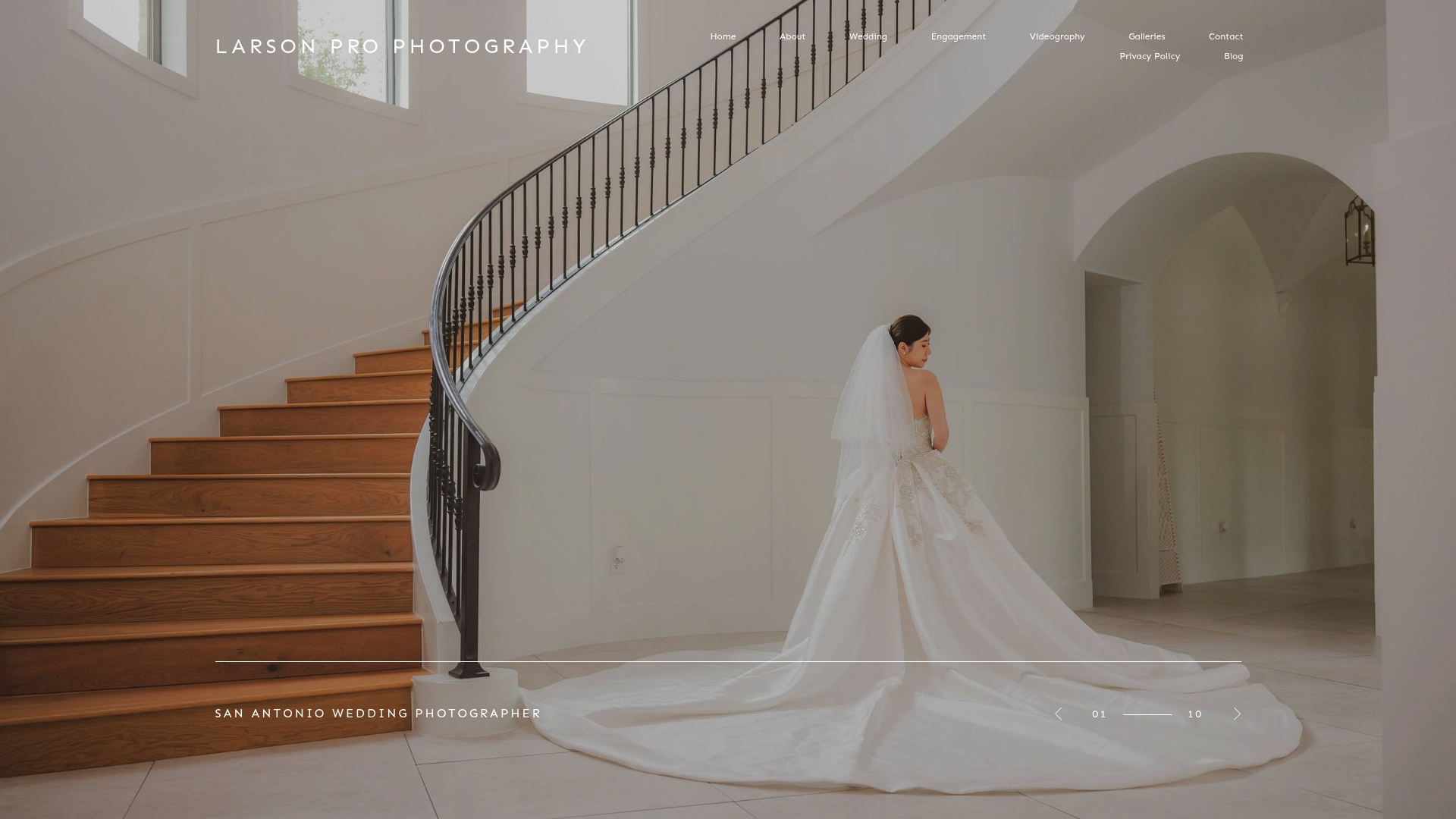
Larsonprophotography runs a multi-recorder ambient audio workflow on every wedding, including dedicated wind-shielded recorders placed at ceremony and reception locations, lav mics on the officiant and groom, a DJ feed capture when available, and multi-pass mixing in post. The result is a film where the room sounds as real as it looked.
If you are comparing videographers and want to hear the difference ambient audio makes, ask for a ceremony audio sample, not just the highlight reel. A highlight reel can mask weak audio behind a music track. A ceremony mix cannot. When you contact Larsonprophotography, you can request a short audio-specific sample to hear exactly how ambient sound is handled before you book.
View client films to see full-day work, or reach out directly to ask about availability for your San Antonio wedding date.
Useful sources and further reading
- The Secret to Great Wedding Video Audio — practical breakdown of ambient recording strategies and vendor questions
- How Sound Design Transforms Your Wedding Film — covers perceptual layering and the emotional role of ambient audio
- The Role of Sound Design in Wedding Videography — equipment and placement guidance for ambient capture
- The Importance of Sound in Wedding Videography — covers ambient mic placement and its effect on viewer experience
- Ambient Sound — Filmmakers Academy Glossary — technical definition of ambient/natural sound in film
- Wedding Videography Guide — couples' planning checklist including audio evaluation criteria
- Foley (filmmaking) — Wikipedia) — background on foley techniques referenced in the mixing section
- Cinematic techniques in wedding films — Larsonprophotography's guide to layering audio and visuals for cinematic results
- What is cinematic videography? — broader context on how audio and visuals combine to evoke emotion