
A photography portfolio is a curated collection of your strongest images that communicates your style, skills, and professional focus to clients or employers. Every working photographer needs one, whether you shoot weddings in San Antonio or portraits in a studio. This guide explains what a photography portfolio contains, why the importance of a photography portfolio cannot be overstated, and exactly how to build one that books work. Platforms like Pixieset and Adobe Express make the process more accessible than ever, but the strategy behind your selections matters far more than the tool you use.
What is a photography portfolio and why does it matter?
A photography portfolio is a sales tool that signals what kinds of jobs you want to be hired for, not just a record of everything you have ever shot. That distinction changes everything about how you build one. Clients do not browse your portfolio to admire your range. They scan it to answer one question: can this photographer deliver exactly what I need?
The importance of a photography portfolio comes down to trust. Before a client calls you, your images do the talking. A focused, consistent portfolio tells a potential client that you understand their needs and have the skills to meet them. A scattered one raises doubt, even if the individual images are technically strong.

Many talented photographers fail to get hired because of a communication gap in their portfolio. Clients want proof of specific, reliable skills for their project type. Showing twenty different styles across twenty different genres does not prove reliability. It proves versatility, which is not what most clients are buying.
Photography portfolios also serve personal branding. Your portfolio defines how the market perceives you before you ever speak to anyone. Larsonprophotography, for example, uses its portfolio to signal expertise in wedding and engagement photography in the San Antonio area, which attracts exactly the couples it wants to serve.
What are the essential elements of a successful photography portfolio?
The components of a photography portfolio fall into two categories: the images themselves and the supporting structure around them.
Image selection and consistency
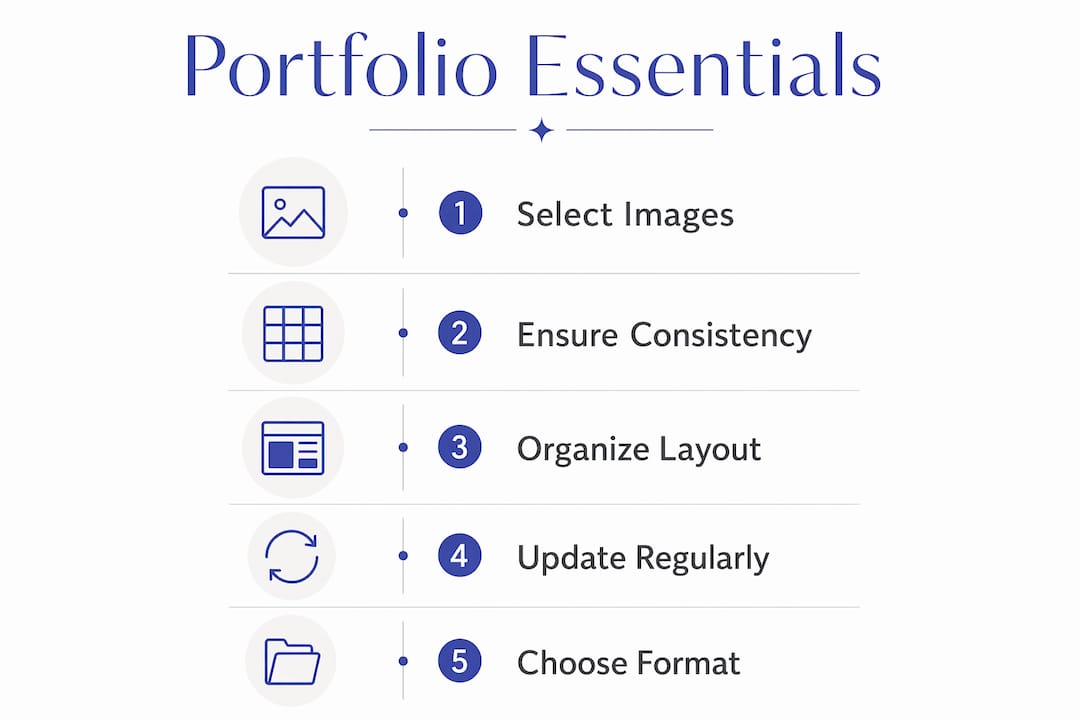
The recommended range for a focused portfolio is 15–25 images per specialty. That number forces you to be ruthless. Every image must earn its place. A smaller, cohesive set books more work than a large, varied collection because clients trust consistency in lighting, color, and editing over sheer volume.
Consistency is the most misunderstood element of portfolio curation. Photographers often confuse it with repetition. Consistency means your images feel like they came from the same creative mind, even when the subjects differ. Your editing style, your use of light, your framing choices should all feel unified.
Supporting structure
Strong images alone are not enough. The structure around them builds client confidence.
- About page: Lead with what you do and who you serve, not your personal history. An effective About page focuses on your specialization and the types of clients you work with. Clients hire people, not portfolios, and a clear bio closes the gap.
- Contact information: Make it impossible to miss. A buried contact form loses bookings.
- Testimonials or client logos: Social proof accelerates trust, especially for new visitors.
- Specialty sections: If you shoot weddings, portraits, and commercial work, separate them. Mixing genres in one gallery confuses clients looking for a specialist.
Digital vs. print portfolios
Both formats serve different purposes and neither replaces the other.
| Format | Best use case | Key advantage |
|---|---|---|
| Digital portfolio | Online discovery, social sharing, 24/7 access | Reaches clients anywhere, any time |
| Printed portfolio | In-person meetings, gallery reviews, high-stakes pitches | Conveys professionalism and tactile quality |
| PDF portfolio | Remote client presentations, email follow-ups | Combines digital access with print-like presentation |
Pro Tip: Keep your digital portfolio website loading in under 3 seconds. Site performance directly impacts how long potential clients stay on your page. A slow site loses visitors before they see your best work.
How to create and organize your photography portfolio
Building a portfolio from scratch follows a clear sequence. Skipping steps leads to a gallery that looks assembled rather than curated.
-
Take inventory of your existing images. Pull every strong image you have shot, including personal projects, spec work, and client assignments. Do not edit at this stage. Just gather.
-
Identify the work you want to book. Select images that represent the type of photography you want to be hired for going forward, not just what you have done in the past. Portfolios should signal future intent, not just past variety.
-
Create portfolio pieces if your inventory is thin. Without paid clients, use styled shoots planned with mood boards and reference images to build cohesive portfolio content. A well-planned styled shoot produces images indistinguishable from client work.
-
Organize by specialty or client type. If you shoot both weddings and portraits, give each its own section. Clients looking for a wedding photographer should not have to scroll past headshots to find relevant work. For inspiration on what strong wedding images look like in a portfolio context, explore outdoor wedding photography ideas that translate well to curated galleries.
-
Sequence images for maximum impact. Open with your single strongest image. Close with your second strongest. Place the rest in between with attention to visual flow, varying orientation and subject matter to maintain momentum.
-
Build and publish using a dedicated platform. Pixieset and Adobe Express both offer clean, photography-focused templates. Choose a platform that prioritizes image quality and fast load times over decorative features.
Pro Tip: Before you publish, test your portfolio on a mobile device. More than half of web traffic comes from phones. If your gallery loads slowly or images crop awkwardly on mobile, you are losing clients before they see your work.
Why ongoing portfolio maintenance matters
A photography portfolio is a living document, not a one-time project. Update your portfolio content at least every three months to keep it current and representative of where your skills and style are today. That cadence matters because your work improves, your focus shifts, and the market changes.
Here is what a regular maintenance routine looks like in practice:
- Remove your weakest images first. As you add new work, older images that no longer represent your best output should come out. The floor of your portfolio should rise with every update.
- Match updates to your current client focus. If you are actively pursuing wedding clients, your most recent wedding work should be front and center. Stale images from a different phase of your career send the wrong signal.
- Seek feedback from peers or past clients. Fresh eyes catch things you miss. A photographer colleague or a trusted past client can tell you which images feel off or which sections feel weak. That feedback is more valuable than any algorithm.
- Track which images generate inquiries. If clients consistently mention a specific image when they reach out, that image belongs in a prominent position. Your portfolio should reflect what actually converts, not just what you personally love.
Consistent maintenance also builds client trust over time. A portfolio that shows recent, relevant work tells clients you are active, growing, and invested in your craft. A portfolio with images from three years ago raises questions about whether you are still available or still at the same level.
Pro Tip: Set a calendar reminder every 90 days to review your portfolio. Treat it like a quarterly business review. Ask yourself: does every image still represent the work I want to book today? If the answer is no, replace it.
What formats and presentation methods work best today?
Digital portfolios are the non-negotiable starting point. A professional photography website functions as a 24/7 showcase that works while you sleep. Technical performance is critical to keeping visitors engaged. Load times under three seconds are the industry standard for professional photography websites.
Print portfolios remain essential for serious client meetings and portfolio reviews. Printed portfolio books with 20–30 images on archival paper make an impression that a screen cannot replicate. For commercial photographers, fine art photographers, and anyone pursuing gallery representation, a printed book is not optional. It signals that you take your work seriously enough to invest in it physically.
The right format depends on the context. For an initial inquiry from a couple planning a wedding, your website does the work. For a face-to-face meeting with a commercial art director or a gallery curator, a printed book carries weight that a laptop screen cannot match. Understanding how photography shapes brand identity helps clarify why format choice matters as much as image selection in high-stakes presentations.
For photographers building their first portfolio, start digital and add print when you have a strong enough body of work to fill a book with confidence.
Key takeaways
A photography portfolio is a curated sales tool built around consistency, client focus, and regular updates, not a comprehensive archive of everything you have shot.
| Point | Details |
|---|---|
| Curate, do not collect | Limit each specialty to 15–25 of your strongest images to build client trust. |
| Consistency books work | Unified lighting, color, and editing style converts more clients than showing artistic range. |
| Support your images | A focused About page and visible contact info are as important as the photos themselves. |
| Update every 90 days | Remove outdated work and add new images on a quarterly schedule to stay relevant. |
| Use both digital and print | A website handles discovery while a printed book closes high-stakes in-person meetings. |
What I have learned building portfolios that actually book clients
Todd here. After years of shooting weddings and engagement sessions in San Antonio, the single biggest mistake I see photographers make is treating their portfolio like a scrapbook. They include everything they are proud of. The result is a gallery that impresses other photographers and confuses clients.
Clients are not evaluating your technical range. They are asking one question: has this person done exactly what I need? When your portfolio answers that question clearly in the first three images, you get the inquiry. When it does not, you get silence.
The About page is the most underestimated part of any portfolio. I have seen photographers with stunning work lose bookings because their bio read like a resume. Clients want to know who you are to work with, not just what gear you use. A two-paragraph bio that says who you serve, what you love about that work, and why clients enjoy working with you does more for bookings than a fifth gallery section ever will.
My honest advice: build your portfolio for the client you want, not the client you have had. If you want to shoot more weddings, fill your portfolio with your best wedding work and nothing else. The work you show is the work you will be hired to do.
— Todd
See Larsonprophotography's portfolio in action
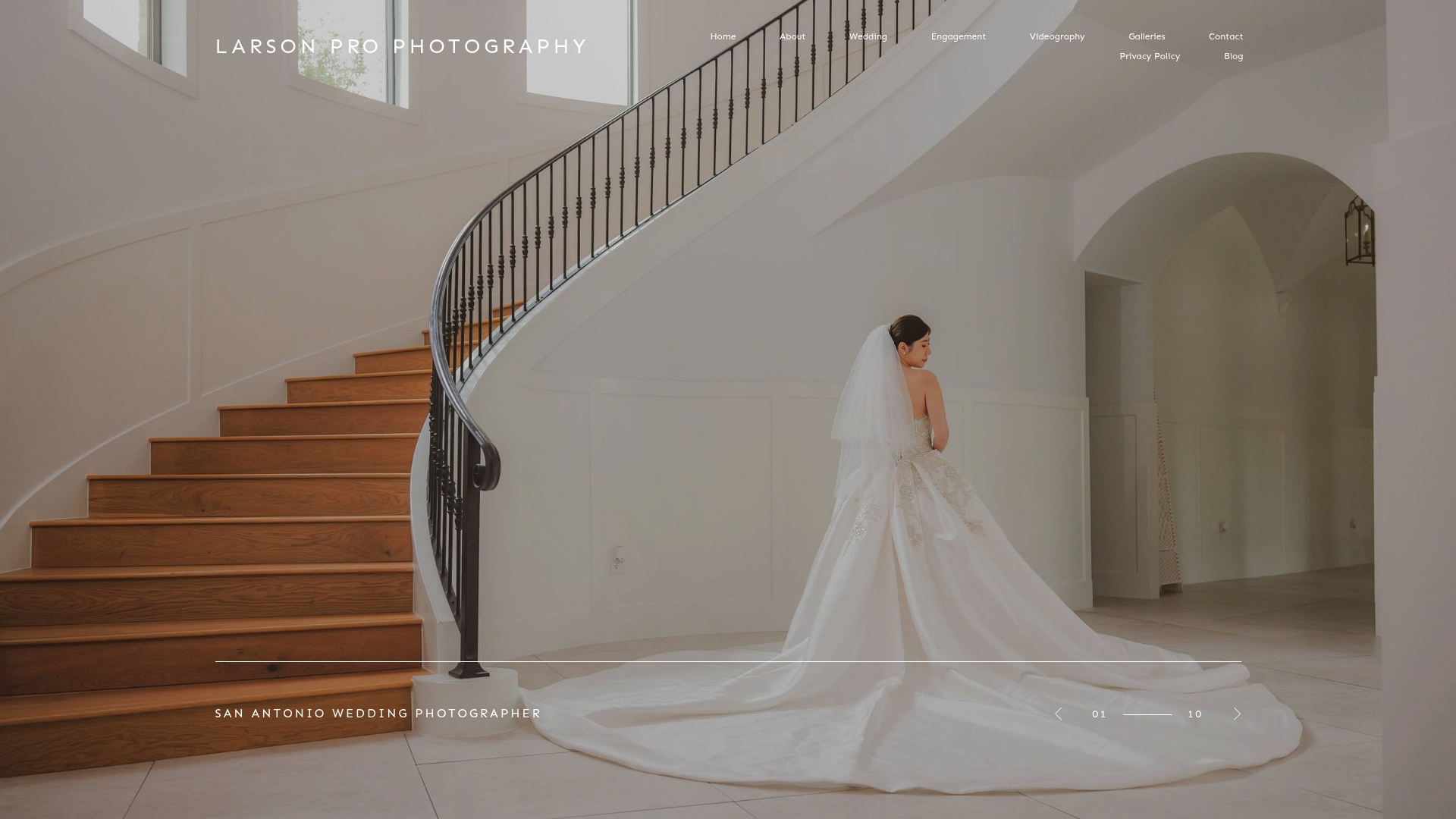
Larsonprophotography specializes in wedding and engagement photography in San Antonio, and the portfolio reflects exactly what this guide describes: consistent style, focused curation, and images selected to speak directly to couples planning one of the most important days of their lives. If you want to see what a client-focused photography portfolio looks like in practice, browse the client gallery and work to get a real-world example of these principles applied. Couples currently planning their wedding or engagement session are welcome to reach out directly to discuss availability and booking. The portfolio is the starting point. The conversation is where it becomes personal.
FAQ
What is a photography portfolio used for?
A photography portfolio communicates a photographer's style, skills, and professional focus to potential clients or employers. It functions as a visual resume that answers the client's core question: can this photographer deliver what I need?
How many photos should a photography portfolio include?
The recommended range is 15–25 images per specialty. A smaller, cohesive set builds more client trust than a large, mixed collection.
How often should you update your photography portfolio?
Update your portfolio at least every three months. Remove images that no longer represent your best work and replace them with your strongest recent shots.
Do photographers still need a printed portfolio?
Yes. Printed portfolio books with 20–30 images on archival paper remain important for in-person meetings, gallery submissions, and high-stakes client presentations where a screen cannot replicate the physical impression.
What should an About page in a photography portfolio include?
Lead with what you do and who you serve, not your personal history. A focused bio that communicates your specialization and client type builds confidence and increases the likelihood a client will reach out.