
Wedding photography licensing is the legal permission a photographer grants you to use your images under defined terms, while the photographer typically retains full copyright ownership. Most couples assume that paying a photographer means owning every image outright. That assumption is wrong, and it creates real legal exposure. Understanding wedding photo licenses before you sign a contract protects you from takedown demands, usage restrictions, and costly surprises after your wedding day. Organizations like WPIC and legal resources like LegalClarity confirm that the default in U.S. wedding photography is a license, not an ownership transfer.
Wedding photography licensing explained: copyright vs. license
The photographer owns your wedding photos the moment the shutter clicks. Under U.S. copyright law, copyright belongs to the creator automatically upon creation, with no registration required. You are not the creator. The photographer is. That ownership does not transfer to you simply because you hired and paid them.
A license is a contractual permission to use those images within specific boundaries. Think of it like renting an apartment. You live there, you decorate it, but you do not own the building. Hiring a freelance photographer results in a license to use images, not a transfer of copyright. The photographer retains the right to reproduce, sell, or license those images to others unless the contract explicitly says otherwise.
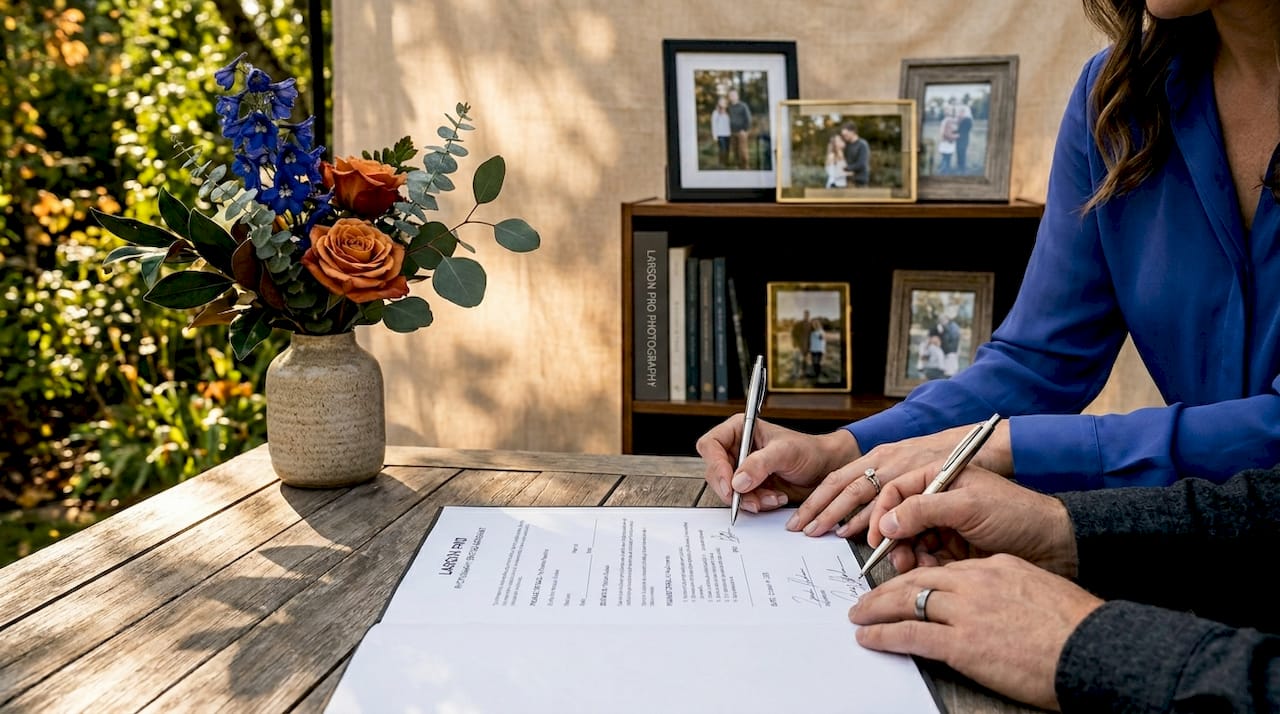
Some couples point to "work made for hire" language in contracts as proof they own the images. This rarely holds up. The "work made for hire" doctrine almost never applies to commissioned wedding photography because strict legal criteria go unmet. A contract using that phrase without satisfying those criteria does not transfer copyright. If you want true ownership, you need a written copyright assignment, which is a separate and stronger deal term that most photographers charge significantly more to provide.
Pro Tip: Ask your photographer directly: "Does this contract give me a license or a full copyright transfer?" If they cannot answer clearly, that is a signal to request a revised contract or consult a legal professional before signing.
The practical difference matters. With a license, the photographer can still display your photos in their portfolio, submit them to wedding publications like The Knot or Style Me Pretty, and license them to vendors who appeared in the images. With a copyright assignment, none of that happens without your permission.
What contract terms actually control your usage rights
Licensing contract terms define four variables that directly control what you can and cannot do with your photos: usage scope, duration, territory, and exclusivity. Most couples skim past these terms. That is the mistake.
Usage scope defines the specific activities the license permits. A standard wedding photography license covers personal use: printing photos for your home, sharing on social media, sending to family. It does not automatically cover commercial use, which includes advertising, product packaging, or stock photo submissions. Two contracts that both say "you own the photos" can differ drastically if one limits scope to personal use and the other grants broader rights. Precise contract language is everything.
Duration determines how long your rights last. Some licenses are perpetual, meaning they never expire. Others are time-bound, covering five or ten years. Many licenses claim "all rights" but are still limited by duration or exclusivity clauses buried in the fine print. Confirm explicitly whether your license is perpetual before signing.
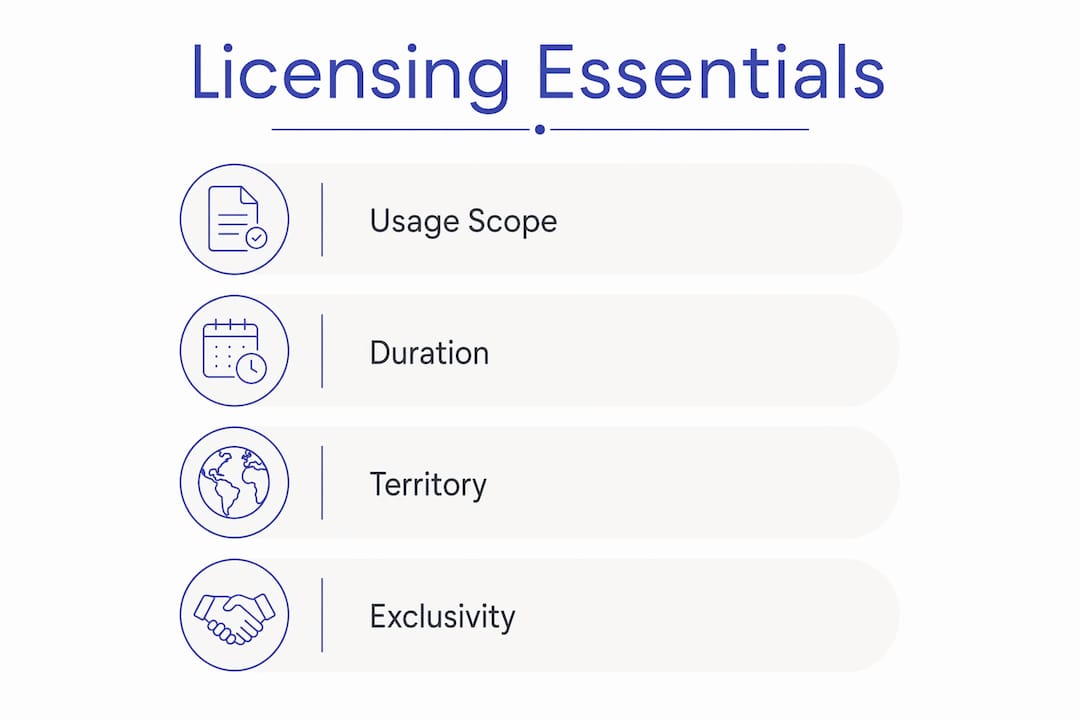
Territory specifies where you can use the images. Most wedding licenses are worldwide, but some restrict usage to specific regions. This matters if you plan to use photos in international publications or for a business with global reach.
Exclusivity answers whether the photographer can license the same images to other parties. A non-exclusive license means your photographer can sell those images to the florist, the venue, or a wedding blog. An exclusive license prevents that. Exclusive licenses cost more and are less common in standard wedding packages.
| License term | What it controls | What to confirm |
|---|---|---|
| Usage scope | Personal vs. commercial use | Is advertising or stock use permitted? |
| Duration | How long rights last | Is the license perpetual or time-limited? |
| Territory | Where images can be used | Worldwide or region-specific? |
| Exclusivity | Whether others can license same images | Can vendors use your photos without asking you? |
Pro Tip: Before signing, highlight every sentence in the contract that contains the words "use," "license," "rights," or "commercial." Read those sentences twice. Those are the terms that govern your actual permissions.
Why model releases matter for commercial use of wedding photos
A model release is a signed document granting permission to use a person's likeness in commercial contexts. Without one, using a photo commercially exposes both you and the photographer to legal risk. Commercial use of photos typically requires signed model releases to legally use the likeness of people in marketing or advertising.
Here is where couples get surprised: model releases are not just about the bride and groom. Releases must be obtained from all identifiable individuals if photos are reused commercially, which can include guests at your wedding. If a vendor wants to use a photo featuring your aunt in the background for their advertising campaign, your aunt's release is required.
The situations that most commonly trigger release requirements include:
- Using wedding photos in a business you own, such as a venue, catering company, or bridal boutique
- Submitting images to stock photography platforms like Getty Images or Shutterstock
- Featuring photos in paid advertising, including social media ads
- Allowing vendors to use images in their own marketing materials
- Publishing images in commercial print media
Model releases become a hidden bottleneck when images are reused for vendor marketing or stock photography, especially when guests appear prominently. Most standard wedding contracts do not include pre-signed releases from guests. If commercial use is a possibility, address this with your photographer before the wedding, not after.
For editorial use, which includes wedding blogs, news coverage, and non-commercial publications, model releases are generally not required. The line between editorial and commercial use is not always obvious, so when in doubt, get the release.
Common licensing misconceptions and how to avoid them
The most persistent myth in wedding photography is that paying the photographer means you own everything. Many couples assume paying means owning images outright, but the default is licensing usage rights. This misunderstanding leads to real consequences, including copyright infringement claims and takedown demands.
Photographers can and do enforce their rights. Photographers can require takedown of images if clients use photos beyond agreed license terms. If you print your wedding photo on merchandise to sell online and your contract only permits personal use, the photographer has legal grounds to demand you stop. Written permission for extended uses is not optional. It is legally necessary.
Social media adds another layer of confusion. Posting your photos to Instagram or Facebook does not transfer copyright to the platform or to you. Social media platforms receive a broad license to use uploaded photos, but photographers retain copyright. Deleting the post ends the platform's license, but it does not affect the photographer's underlying ownership.
Here is a practical checklist for protecting yourself before and after signing:
- Request a written summary of exactly what personal uses are permitted under the license.
- Ask whether the license is perpetual or expires after a set period.
- Confirm whether the photographer can license your images to vendors or publications without notifying you.
- Negotiate additional rights in writing if you anticipate commercial use, such as using photos in a business you own.
- Credit the photographer as specified in the contract. Many licenses require attribution, and failing to credit can constitute a breach.
- If you want to use photos for something not covered in the original contract, contact the photographer and get written approval before proceeding.
Negotiating extended or commercial use rights requires explicit contract amendments or separate licenses. Most photographers are open to these conversations when approached respectfully and early. Waiting until after the wedding to ask for expanded rights puts you in a weaker negotiating position and can strain the relationship.
Pro Tip: If you run a business and plan to use wedding photos in any professional capacity, tell your photographer during the booking conversation. Addressing commercial use upfront is far simpler than renegotiating after the contract is signed.
Understanding wedding photography ethics alongside licensing gives you a fuller picture of the professional standards that govern the photographer-client relationship.
Key takeaways
Wedding photography licensing grants you specific usage rights while the photographer retains copyright ownership, and the exact scope of those rights is determined entirely by your contract language.
| Point | Details |
|---|---|
| Copyright stays with the photographer | Paying for photography does not transfer ownership; you receive a license by default. |
| Four terms control your rights | Confirm usage scope, duration, territory, and exclusivity before signing any contract. |
| Model releases are required for commercial use | All identifiable individuals in photos must sign releases before images are used commercially. |
| Exceeding license terms carries legal risk | Photographers can demand takedowns if you use images beyond what the contract permits. |
| Extended rights require written amendments | Negotiate commercial or expanded use rights explicitly in the contract, not verbally. |
What I've learned from years of licensing conversations with couples
Most couples arrive at their first photography consultation focused entirely on style and price. Licensing is the last thing on their minds. I understand that. But after years of working with couples in San Antonio and watching licensing disputes unfold in the broader wedding industry, I can tell you that the contracts couples skim through are the ones that cause problems later.
The most common issue I see is not bad intent on either side. It is a gap between what couples assume and what the contract actually says. A couple posts their photos to a business website, a vendor uses an image in an ad without asking, or someone submits photos to a contest without checking the terms. These situations are avoidable with one honest conversation before the contract is signed.
My advice is direct: read the contract terms before you sign, not after. Ask your photographer to walk you through the license section. A good photographer welcomes that conversation because it prevents misunderstandings that damage relationships. If a photographer is evasive about usage rights, that tells you something important about how disputes will be handled later.
Transparency is not a legal formality. It is the foundation of a working relationship that produces great photos and zero regrets.
— Todd
How Larsonprophotography handles licensing for every couple
At Larsonprophotography, every wedding package includes a clear, written license that spells out exactly what you can do with your photos from day one. No buried clauses, no vague language. Couples receive personal use rights covering printing, sharing, and displaying images without expiration. For couples who need commercial rights or extended usage, those options are available as explicit contract additions discussed during the booking process.
If you are planning a wedding in San Antonio and want a photographer who treats licensing as a conversation rather than fine print, visit the wedding photography packages page to review service details and reach out directly. Knowing your rights before you book is the smartest move you can make.
FAQ
What does a wedding photography license actually give me?
A wedding photography license grants you specific rights to use your images, typically for personal printing and social media sharing, while the photographer retains copyright. The exact permissions depend entirely on the contract terms you agree to before the wedding.
Can my photographer take down photos I post online?
Yes. If your usage exceeds the terms of your license, the photographer has legal grounds to request a takedown. Always confirm what social media and online sharing rights are included in your contract before posting.
Do I need a model release to share my wedding photos on social media?
Model releases are generally not required for personal social media sharing, which qualifies as personal use. Releases become legally necessary when photos are used commercially, such as in advertising or on a business website.
What is the difference between a copyright assignment and a license?
A copyright assignment transfers full ownership of the images to you, while a license only grants permission to use them under defined terms. Copyright assignments are rare in wedding photography and typically cost significantly more than a standard license.
How do I get commercial rights to my wedding photos?
Negotiating commercial use rights requires an explicit written amendment to your original contract or a separate licensing agreement. Raise this need during the booking conversation, before the contract is finalized, to get the clearest and most favorable terms.