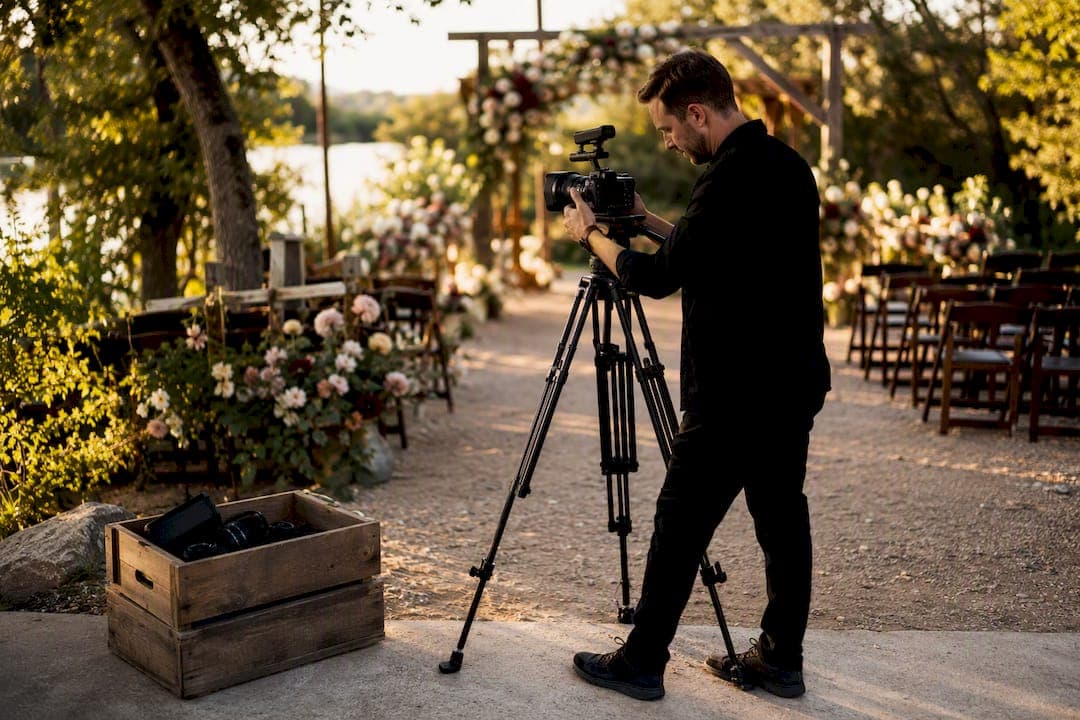
A same day edit video is a short highlight film shot and edited on your wedding day, then screened for guests during the reception. Expect a runtime of 2 to 6 minutes, built as a live-audience moment, not a substitute for your full wedding film. Pulling one off means committing to three things upfront:
- A dedicated on-site editor working the entire day
- A story arc planned before the ceremony starts, not during the reception
- A hard cutoff time for footage so the edit can actually finish
If your reception has room for a screen moment and your vendor can staff it properly, a same day edit wedding video is worth adding. If your timeline is already tight, it may cause more stress than it's worth.
TL;DR:
- A same day edit typically runs 3 to 5 minutes and includes key moments like vows, ring exchange, and reception highlights, but excludes speeches and extended coverage.
- The editing process starts immediately after the ceremony and must be completed 60 to 120 minutes before the scheduled screening with no additional footage accepted afterward.
- Proper preparation involves locking the story arc weeks in advance, testing templates and music, and coordinating AV setup to prevent playback failures during screening.
- Speed relies on disciplined shooting, short purposeful clips, backup audio plans, and using pre-built editing templates to ensure efficient workflow.
- Costs are usually charged separately and depend on staffing, additional cameras, and AV requirements, with vendors advising on testing and timing for smooth delivery.
Table of Contents
- What a Same-Day Wedding Video Edit Actually Includes
- When Does Editing Start, and What's the Cutoff Time?
- How Do You Prepare for a Wedding Same-Day Edit?
- What Should Videographers Prioritize When Shooting for a Quick Turnaround?
- Editing Fast Without Making It Look Rushed
- Testing the Room Before the Screening Actually Happens
- How Much Does a Same-Day Edit Typically Cost?
- Todd and Larson Pro Photography's Same-Day Edit Process
- The Planner-Friendly Way to Think About Same-Day Edits
- Book a Same-Day Edit With Larson Pro Photography
- Key Takeaways
- Sources
What a Same-Day Wedding Video Edit Actually Includes
Editors work fast because they're selective, not comprehensive. A same day film edit typically pulls from getting-ready footage, the first look, ceremony highlights (vows, ring exchange, the kiss), and a handful of curated reception B-roll shots.
What gets left out matters just as much:
- Full speeches, toasts, and extended reception coverage
- Documentary-style sequences meant for the full-length film
- Anything requiring lengthy color grading or sound design
That restraint is intentional. Guests standing near a bar with a drink in hand won't sit through a 20-minute cut. Vendors who build for reception pacing generally land the video highlight reel in the 3 to 5 minute range, since that length holds the room's attention without dragging the schedule.
When Does Editing Start, and What's the Cutoff Time?
The clock on a same day video production starts the moment ceremony footage exists, not when the reception begins. Here's how a typical day breaks down:
- Ceremony ends, first offload begins. Editors pull ceremony cards immediately while the crew keeps shooting cocktail hour.
- Second offload during cocktail hour. More footage transfers as reception setup happens elsewhere.
- Editing runs in parallel with dinner service. The editor works while the room eats, not after.
- Hard cutoff for new footage. Set this 60 to 120 minutes before the screening slot, longer for events with more guests or multiple camera cards.
- Final export and AV check. Nothing new gets added after this point, no matter how good the shot was.
Most receptions screen the edit right before toasts or right after dinner, timed with the caterer and DJ so nothing overlaps.
Pro Tip: Give your DJ or MC the exact screening cue in writing during the week before the wedding, not the day of. A verbal "sometime around dinner" plan is how same day edits get bumped or forgotten.
How Do You Prepare for a Wedding Same-Day Edit?
The edit succeeds or fails based on decisions made weeks before the wedding, not during it. Lock the story arc first: which moments the video needs, in what order, and how they map to your actual run-of-show. Skipping this step costs editors 30 to 45 minutes they don't have.
Staffing comes next. A single dedicated editor handles most weddings fine. Once you cross roughly 300 guests or run multiple camera setups, add a second editor so one person can cut while the other verifies exports.
Before the wedding day, build and test:
- Intro and title graphics
- Lower-third name/date templates
- A pre-selected music bed with the license already cleared
- A quick run-through with the actual footage format you'll shoot
Pro Tip: Test your template with last year's footage, not blank placeholders. Templates that look perfect empty sometimes break the moment real, imperfect wedding clips get dropped in.
Planners coordinating multiple vendors can borrow from a broader videographer coordination checklist to keep everyone's day-of expectations aligned.
What Should Videographers Prioritize When Shooting for a Quick Turnaround?
Speed in the edit bay starts with discipline behind the camera. Must-have shots for any same day film edit: the vow reading, ring exchange, the first kiss, tight reactions from parents and the wedding party, plus a wide establishing shot of the ceremony space.
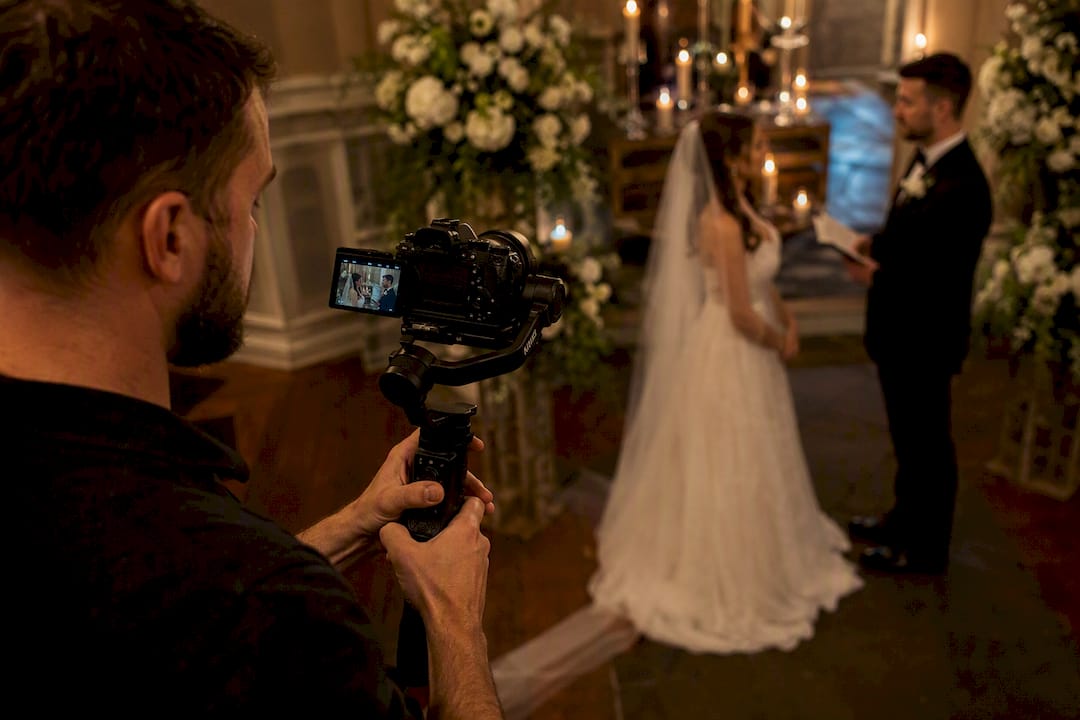
Keep individual clips short and purposeful. Five to ten seconds of clean, usable footage per shot beats a long take an editor has to hunt through under deadline. Mix wide, medium, and close coverage of the same moment so the editor has options without needing extra takes.
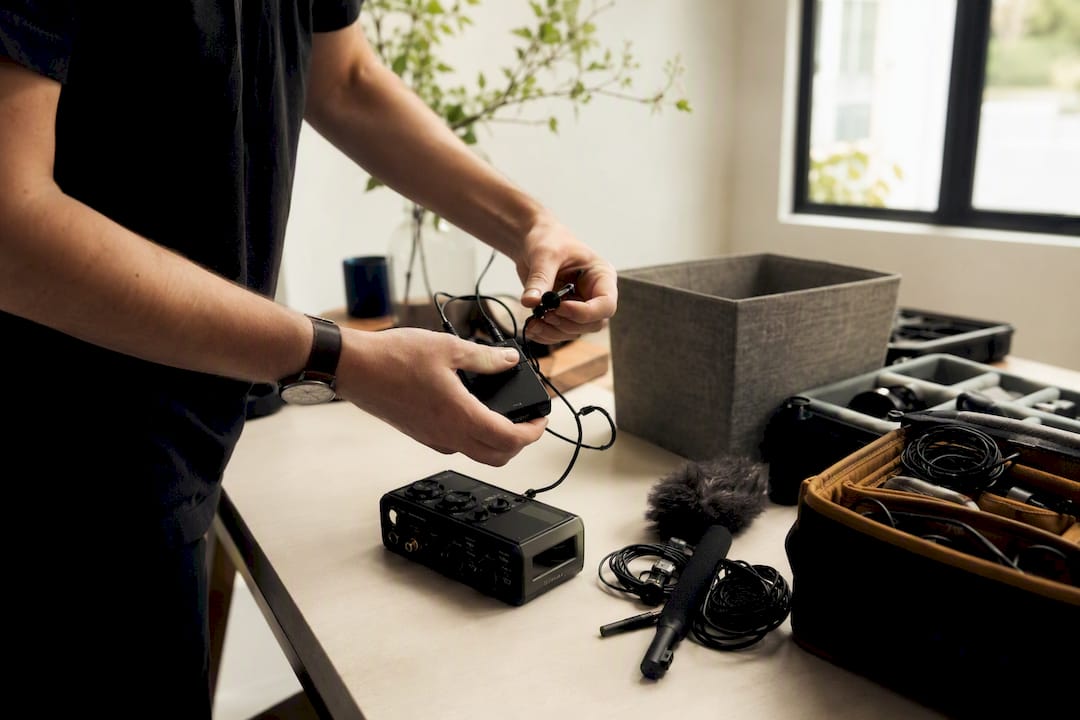
Audio needs backup plans. Lav mics on the couple capture vows cleanly; a direct feed from the ceremony sound board is even better when the venue allows it. Always record a second audio source, since a single point of failure on vows is the one mistake you can't fix in post.
Editing Fast Without Making It Look Rushed
Speed comes from preparation, not shortcuts. A working template turns a blank timeline into a fill-in-the-blanks job.
- Drop footage straight into the pre-built template, using proxy files instead of raw 4K to keep the timeline responsive.
- Mark music beats first, then cut visuals to match rather than editing blind and syncing later.
- Split the workload. One editor keeps cutting while a second checks exports and confirms the file plays correctly on venue equipment.
- Run the export checklist: correct aspect ratio for the screen, a codec the venue's player supports, normalized audio levels, and a 10 to 15 minute buffer built in for last-minute AV testing.
Editors who skip pre-built templates and music beds routinely lose the time cushion that separates a smooth premiere from a scramble. The math is simple: every minute spent deciding on a font style or transition during the edit is a minute not spent selecting the shot that actually makes guests cry. Studios that treat instant video editing as a technical exercise, not a creative one, hit their marks more consistently. For couples curious about the broader editing philosophy behind these films, cinematic wedding video techniques explain how pacing and story structure carry over from the SDE into the full-length film.
Testing the Room Before the Screening Actually Happens
Playback failures are almost always AV problems, not editing problems. Test the projector, HDMI connection, audio feed, and volume level with the DJ or AV tech well before guests arrive, not five minutes before the cue.
- Bring a laptop loaded with a local copy of the finished file, no dependence on Wi-Fi or cloud links
- Confirm the right adapters and a charged power supply are on hand
- Walk through the exact screening cue with the DJ or MC, including how room lighting will shift for viewing
Vendors who export locally and test playback in advance rarely run into surprises when it's time to hit play.
How Much Does a Same-Day Edit Typically Cost?
An SDE almost always shows up as an add-on rather than a standard inclusion, since it demands a dedicated editor and a reworked day-of schedule that a standard package doesn't require. Vendors price it separately from the full wedding film for that reason.
What drives the price up: a second editor for larger events, extra cameras to cover more ceremony angles, travel for out-of-town crew, rented AV or playback equipment, and any rush fees tied to compressed timelines.
Before booking, ask your vendor directly:
- Is on-site AV and playback testing included, or billed separately?
- How is the finished file delivered, and how fast after the reception?
- Are minor re-edits included if a cue changes at the last minute?
Todd and Larson Pro Photography's Same-Day Edit Process
Todd leads production for Larson Pro Photography, where same-day edits follow the same discipline outlined above: a locked story arc going into the day, a dedicated on-site editor, and full AV testing with the venue's DJ before any screening....
The Planner-Friendly Way to Think About Same-Day Edits
Most advice on same day edit videos focuses on camera gear and editing software, as if better equipment fixes a tight deadline. It doesn't. The real bottleneck is almost always planning, not processing power. A team with a locked shot list and a $150 laptop will outperform a team with cinema cameras and no plan for what story they're telling.
The conventional wisdom undersells staffing and oversells creativity. Couples get sold on the emotional payoff, which is real, but rarely get warned that the payoff depends entirely on logistics nobody finds glamorous: offload windows, cutoff times, AV testing. Skip those and the "surprise" moment becomes the couple apologizing to 150 guests for a frozen screen.
If you take one thing from this, prioritize the cutoff time and the AV test over anything creative. A same day film edit that starts ten minutes late because nobody checked the HDMI cable does more damage to the moment than a slightly less polished cut ever would. Protect the mechanics first. The emotion takes care of itself once the footage is good.
— Todd
Book a Same-Day Edit With Larson Pro Photography
Larson Pro Photography builds every same-day edit around the same three commitments this guide covers: a dedicated on-site editor who works nothing else that day, a locked timeline coordinated with your caterer and DJ, and full playback testing before the room ever sees the screen.
That combination is what separates a same day edit wedding video that lands cleanly from one that gets rushed together in a hallway ten minutes before dinner ends. When you reach out, ask about editor staffing for your guest count, the cutoff time for your specific reception schedule, and whether AV testing happens on-site or gets assumed. Browse recent weddings on the Larson Pro Photography clients page to see finished same-day edits in action, then send a message to check availability for your date.
Key Takeaways
A same day edit succeeds or fails based on staffing, timeline discipline, and AV testing, not camera equipment or editing software.
| Point | Details |
|---|---|
| Runtime target | Aim for 3 to 5 minutes; anything longer loses reception guests' attention. |
| Set a hard cutoff | Stop accepting new footage 60 to 120 minutes before the screening slot. |
| Staff appropriately | One dedicated editor covers most weddings; add a second editor past roughly 300 guests. |
| Test playback early | Check projector, HDMI, and audio with the DJ well before guests arrive, using a local file backup. |
| Work with Larson Pro Photography | Todd's team builds same-day edits around locked story arcs, on-site editing, and pre-screening AV checks. |
Sources
For deeper technique background, see the 2026 planning guide for same-day edit production and the step-by-step wedding SDE workflow for editors and planners.
- Same-Day Edit Video Production: 2026 Planning Guide
- How to Do a Same-Day Edit for a Wedding Video — Filmora