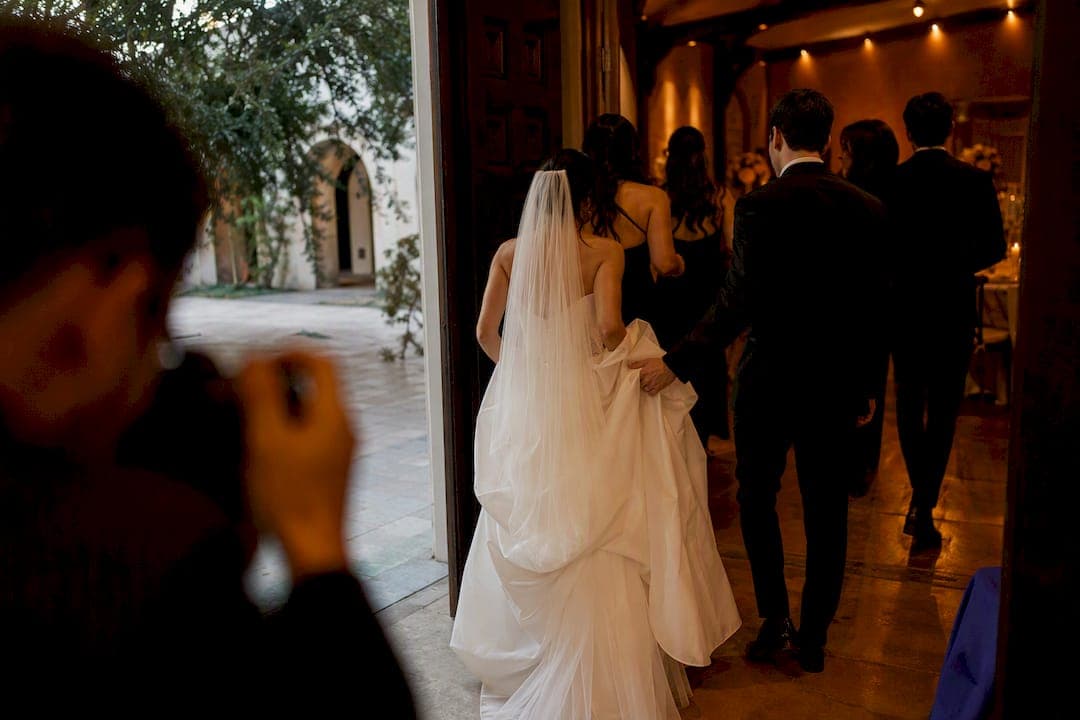
Eight hours is the right call for most weddings. It covers getting-ready detail shots, the ceremony, family formals, golden hour, and enough of the reception to catch the first dance and toasts. Drop to 6 only for a tight, single-location micro-wedding; go to 10 or more when you've got multiple venues, a late-night exit, or want full getting-ready coverage for both partners.
TL;DR:
- Couples should consider at least an eight-hour coverage to capture all key moments without feeling rushed or missing critical transitions.
- Shorter six-hour packages are suitable only for small, simple weddings but leave little room for delays or additional moments.
- Ten or more hours are necessary when multiple venues, lengthy ceremonies, or full getting-ready footage for both partners are involved.
- Proper planning including buffer times and a prioritized shot list helps ensure all essential moments are reliably documented.
- Clarifying transportation times and overtime policies with photographers before signing contracts can prevent coverage gaps or unexpected costs.
Table of Contents
- Wedding Coverage Hours: What 6, 8, and 10 Hours Actually Get You
- Sample Wedding Photography Timelines by Coverage Length
- What Pushes Your Wedding Above or Below 8 Hours
- How to Choose the Right Coverage Duration: A Checklist
- A Photographer's Take on Timeline Planning
- My Take: Book for Moments, Not Package Names
- Book Your Wedding Photography Coverage With Larson Pro Photography
- Sources
Wedding Coverage Hours: What 6, 8, and 10 Hours Actually Get You
Coverage length isn't about how long your wedding lasts; consider also event display options like a well-timed photo wall for events to capture memories throughout your reception. It's about how many transitions, locations, and "must-have" moments you're cramming into the day, and how much room you leave for things to run long, because they will.
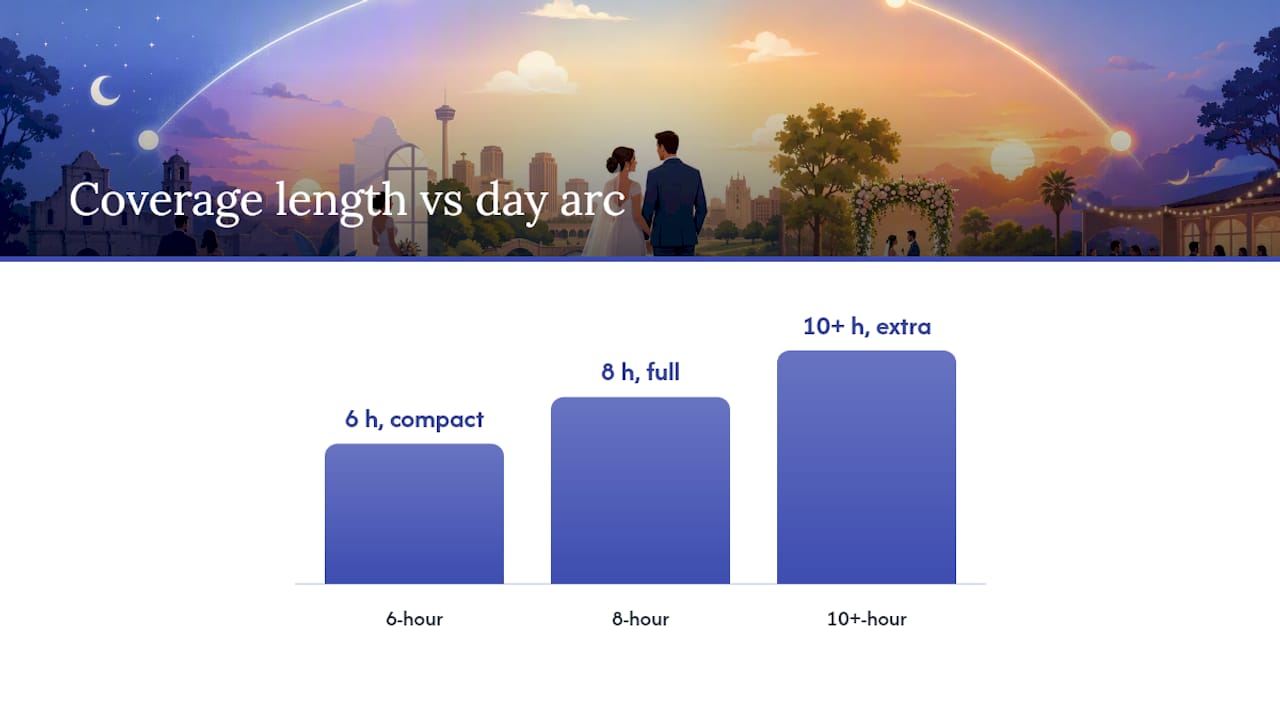
Six hours works when the wedding is compact: one venue, a short ceremony, and a guest list small enough that formals take fifteen minutes instead of forty. The risk is real, though. According to Merry Ohler's breakdown of coverage needs, six-hour packages leave almost no cushion for delays, and something almost always runs behind: hair and makeup, a late limo, an officiant who runs long.
Eight hours is the industry workhorse, and for good reason. Multiple wedding photography timeline templates build around this number because it fits the standard arc of a single-venue wedding, from final prep through the first dance, without forcing you to cut anything essential.
Ten-plus hours earns its cost when the day gets complicated: a ceremony at one address and a reception at another, a religious or cultural ceremony that runs 90 minutes instead of 20, or a couple who wants full getting-ready footage for both partners plus the sparkler exit at 10 p.m.
What typically gets cut as hours shrink:
- Under 6 hours: getting-ready detail shots, extended family formals, golden-hour portraits
- At 6 hours: second-location travel, full reception coverage, grand exit
- At 8 hours: full getting-ready for both partners, late-night dancing shots, multiple portrait locations
Sample Wedding Photography Timelines by Coverage Length
A timeline only works if you build in room for it to slip. Here's how each coverage length typically breaks down.
Six-hour day (ceremony at 4 p.m.)
- 1:00 p.m.: Photographer arrives, final hair/makeup and detail shots
- 1:45 p.m.: First look and couple's portraits
- 2:30 p.m.: Wedding party portraits
- 3:15 p.m.: Buffer and setup
- 4:00 p.m.: Ceremony
- 4:30 p.m.: Family formals
- 5:00 p.m.: Cocktail hour, candid coverage
- 7:00 p.m.: Coverage ends before dinner service wraps
Eight-hour day (ceremony at 4:30 p.m.)
- 12:00 p.m.: Photographer arrives as hair and makeup are finishing, not starting, so downstream slots don't slide
- 12:30 p.m.: Detail shots (rings, dress, invitations)
- 1:00 p.m.: First look
- 1:30 p.m.: Couple and wedding party portraits
- 2:30 p.m.: Buffer, touch-ups, travel to ceremony site
- 4:30 p.m.: Ceremony
- 5:00 p.m.: Family formals
- 5:30 p.m.: Cocktail hour
- 6:30 p.m.: Golden-hour portrait slot
- 7:00 p.m.: Reception entrance, toasts, first dance
- 8:00 p.m.: Coverage ends
This structure lines up closely with Tov Studio Photo's sample 8-hour day, which typically starts the photographer 2 to 2.5 hours before the ceremony to support a first-look workflow.
Ten-hour day (ceremony at 5 p.m., two venues)
- 10:00 a.m.: Arrival for both partners' getting-ready coverage
- 11:30 a.m.: Detail shots, first look
- 12:30 p.m.: Portraits at venue one
- 1:30 p.m.: Travel buffer to ceremony site
- 5:00 p.m.: Ceremony
- 5:30 p.m.: Family formals
- 6:00 p.m.: Cocktail hour
- 7:00 p.m.: Golden-hour portraits
- 8:00 p.m.: Reception, dancing
- 8:00 p.m. to midnight: Dinner, dancing, late-night exit shots
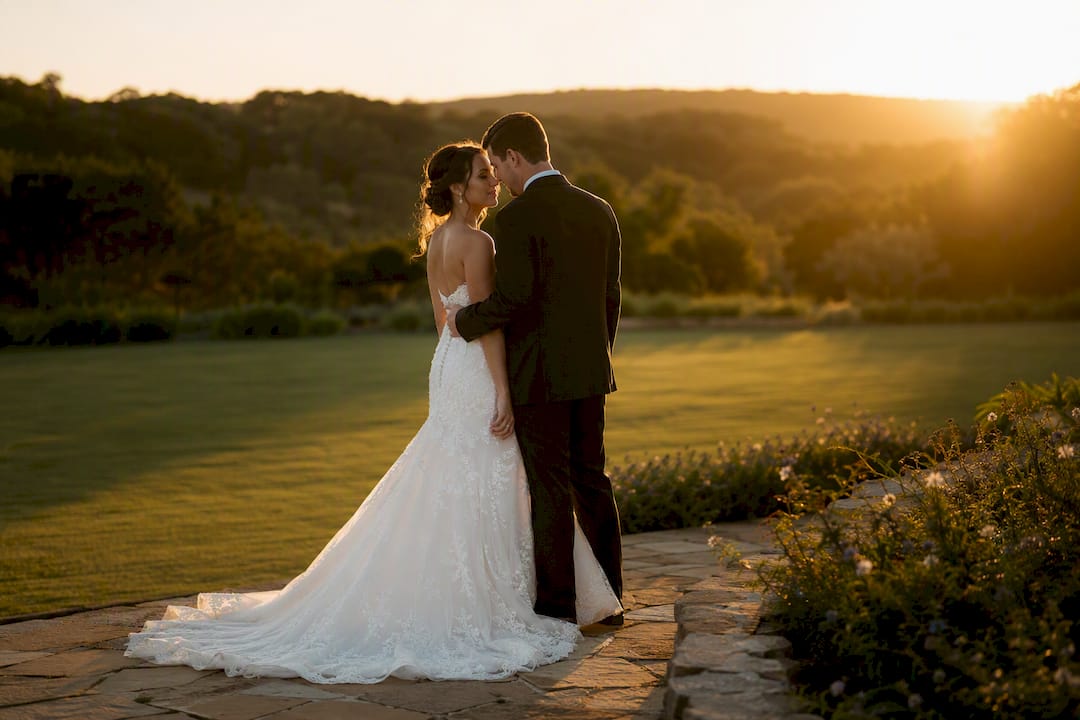
Buffer math matters more than most couples expect. Add 5 to 15 minutes to every short transition and 10 to 20 minutes for any venue change, even when the drive itself is quick, and protect golden hour with a fixed slot rather than hoping it happens organically.
Pro Tip: Block your golden-hour portraits on the timeline by name, not "if there's time." A 15 to 20 minute golden-hour window needs to be scheduled the same way the ceremony is, or cocktail hour will swallow it whole.
Family formals eat more time than couples plan for. A tight, pre-numbered shot list keeps that block to 20 or 30 minutes; a scattered, calling-names-off-the-cuff approach can double it.
What Pushes Your Wedding Above or Below 8 Hours
A handful of details separate a wedding that fits comfortably into 8 hours from one that genuinely needs 10 or more, or one that can safely trim to 6.
- Multiple venues: every extra address adds travel buffer, not just drive time. Parking, unloading gear, and re-setting lighting all eat minutes.
- Wedding party size: a 12-person bridal party with blended families can turn a 20-minute formals block into 45.
- Ceremony length and rituals: a full Catholic Mass or a multi-hour cultural ceremony changes the math completely compared to a 15-minute civil ceremony.
- What you're prioritizing: full getting-ready footage for both partners, sunset portraits, and a sparkler exit all demand dedicated time, not leftover time.
- Second shooter as an alternative: adding a second photographer sometimes solves a scheduling conflict, like simultaneous prep coverage at two locations, without adding hours to the primary package. Coordinating with a videographer on the same schedule matters here too, since overlapping crews need the same buffer logic.
How to Choose the Right Coverage Duration: A Checklist
Start by separating what you must have from what would be nice. That single exercise resolves most coverage-hours debates before you even call a photographer.
Must-have vs. nice-to-have:
- Must-have: ceremony, family formals, first dance, cake cutting
- Often nice-to-have: full second getting-ready location, sparkler exit, extended reception dancing
Questions to ask any photographer during a discovery call:
- What time do you arrive relative to hair and makeup finishing?
- Does travel between venues count against my coverage hours?
- Is a second shooter available, and at what added cost?
- What's the overtime rate if the day runs long?
- What's included in the final deliverables, and what's the turnaround time?
Contract red flags: vague language around "approximate" hours, no stated overtime rate, and no written delivery timeline. Get all three confirmed in writing before you sign. Our essential wedding photography checklist walks through the rest of what belongs in that contract.
Pro Tip: Ask "does travel count?" before you ask about price. A photographer who bills venue-to-venue drive time against your hours effectively shrinks your coverage without changing the number on the invoice.
A Photographer's Take on Timeline Planning
Most timeline problems trace back to the same handful of habits. Arrive when hair and makeup are finishing, not starting. That single adjustment keeps detail shots from delaying the first look, which delays everything after it.
Assign one person, a sibling, a planner, anyone but the couple, to be the family formals wrangler. A numbered shot list handed to that one person turns a chaotic 45-minute scramble into a clean 20-minute block, and it's the single easiest fix on any wedding day.
Protecting the portrait block matters just as much. Once golden hour slips, there's no getting it back that day. Before booking, ask for a short timeline review call. Walking through your specific ceremony time, venue count, and family size against a sample schedule catches problems while they're still cheap to fix, not on the wedding day itself.
My Take: Book for Moments, Not Package Names
The biggest mistake I see couples make isn't picking the wrong number of hours. It's picking a number before they've listed what actually matters to them. A couple who wants a sparkler exit but books 8 hours ending at 8 p.m. has bought the wrong package regardless of what the label said.
Build your priority list first, then let that list tell you whether you need 6, 8, or 10 hours. The number should follow the moments, not the other way around.
— Todd
Book Your Wedding Photography Coverage With Larson Pro Photography
Coverage packages can be built around your actual timeline instead of a generic hour count, so you're not stuck cutting golden-hour portraits or family formals because a package ran short. Couples can work with a photographer to map ceremony time, venue count, and must-have moments onto a schedule that fits 6, 8, or 10-plus hours, with second-shooter staffing sometimes available when two locations need coverage at once.
Browse real wedding-day galleries on the client portfolio page to see how these timelines play out in practice, or look at an engagement session if you want a preview of style before your wedding date. If you're weighing 6 hours against 8 or wondering whether your two-venue day needs a second shooter, consider booking a timeline consultation to get guidance before you sign anything.
Sources
- Wedding Photography Timeline (Schedules + Buffers) — Photo-logica
- Wedding Photography 8-Hour Timeline (2026 Sample Day) - Tov Studio Photo