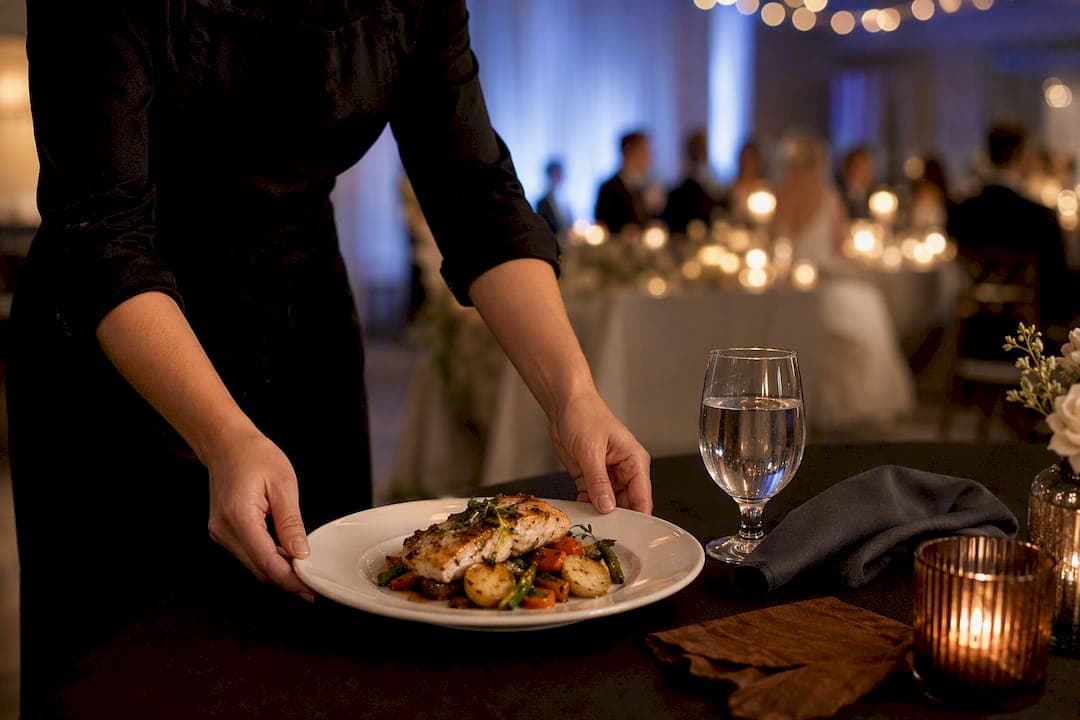
Feed vendors who work through dinner, generally anyone onsite for 5 to 8 hours or more. It's not a legal requirement, but it is the near-universal etiquette standard, and skipping it risks a mid-reception vendor who's hungry, distracted, or gone. The couple typically covers the cost, and a vendor meal usually runs cheaper than a guest plate.
TL;DR:
- Vendors working for six hours or more should ideally receive a hot meal, which generally costs less than a guest plate and should be confirmed in advance.
- Feeding vendors during the reception, when their coverage is critical, helps maintain continuous photo, video, and sound coverage without gaps.
- It is best to schedule vendor meals during the main dinner and include a rotation plan to ensure coverage persists while vendors eat.
- Confirm dietary restrictions and meal details with the caterer early, and get the cost and menu adjustments in writing about five months before the wedding.
- Proper contract language should specify who pays, how many plates are provided, when they are served, and how dietary needs are handled to avoid confusion on the day.
Table of Contents
- What Is a Vendor Meal Policy and Who Needs One?
- When and Where Should Vendors Eat?
- What Should You Serve, and How Do You Handle Dietary Needs?
- What Do Vendor Meals Cost, and How Do You Budget for Them?
- What Contract Language Covers Vendor Meals?
- How Do You Coordinate Vendor Meals With Your Venue and Caterer?
- Day-Of Vendor Meal Checklist
- A Photographer's View on Vendor Meals and Contract Terms
- Plan Your Timeline With Larson Pro Photography
- Sources
- FAQ
What Is a Vendor Meal Policy and Who Needs One?
A vendor meal policy is simply the plan for who gets fed, when, and how, spelled out ahead of the wedding day so nobody is scrambling at 6 p.m. The standard rule of thumb is straightforward: anyone working roughly 6 to 8 hours or more should get a real meal, according to The Knot's vendor guidance. Shorter bookings make a meal a nice gesture rather than an obligation.
Vendors who typically qualify:
- Lead photographer and second shooter
- Videographer and any assistant crew
- DJ or live band members
- Wedding coordinator or planner
- AV and lighting technicians
- Photo booth attendants staying through the reception
Vendors who usually don't need one: hair and makeup artists who wrap before the ceremony, and florists who deliver and leave before dinner service starts. The safest move is checking each contract for a meal clause, then confirming preferences directly with each vendor rather than guessing.
When and Where Should Vendors Eat?
The cleanest approach is having vendors eat when you eat, right during the seated dinner. That keeps everyone on the same clock and avoids a separate meal service the caterer has to squeeze in. Bands are the exception. Many need to eat before their set starts so they're not performing on an empty stomach or ducking out mid reception.
Coverage doesn't have to stop just because someone's eating. A rotation plan, where a second shooter or assistant covers the room while the lead takes a break, keeps photo and video coverage continuous, a technique second shooters commonly use to protect key moments.
- Confirm meal timing with the caterer during the final walk-through.
- Assign a staging spot, a green room, quiet corner, or back-of-house area, away from guest traffic.
- Build a 15 to 20 minute rotation into the timeline so no single vendor is out of position for long.
- For small venues without backstage space, ask about to-go boxes or a short scheduled break instead.
Pro Tip: A 15 minute buffer built into the reception timeline can absorb a vendor meal break without pushing back the cake cutting or first dance. It's a small adjustment that saves the whole schedule from cascading delays.
What Should You Serve, and How Do You Handle Dietary Needs?
Vendors don't need the same plated filet as your guests, but they do need something hot and filling. A boxed lunch works fine for daytime setup crews; a simplified hot plate is the better call for anyone working through dinner. Skip the protein bar and leftover appetizer tray as the sole meal, since photographers in particular expect a real dinner and sometimes carry a backup snack only as insurance, per Abbey Rose Weddings.
Practical points to nail down early:
- Ask every vendor about allergies or dietary restrictions before you finalize the catering order.
- Note those restrictions directly on the caterer's order sheet, not just in a group text.
- If the caterer offers a discounted vendor plate, ask exactly what's in it and whether swaps are allowed.
- Confirm the vendor plate is hot and served around the same time as the guest meal, not an afterthought at the end of service.
Most vendors will happily accept a simpler plate as long as it's substantial and matches their dietary needs, rather than an exact copy of the guest entrée.
What Do Vendor Meals Cost, and How Do You Budget for Them?
Vendor plates are usually cheaper than guest entrées, and most caterers bill them separately, either added to the final invoice or charged per plate ordered. Confirming pricing with the caterer before menu finalization avoids a surprise line item.
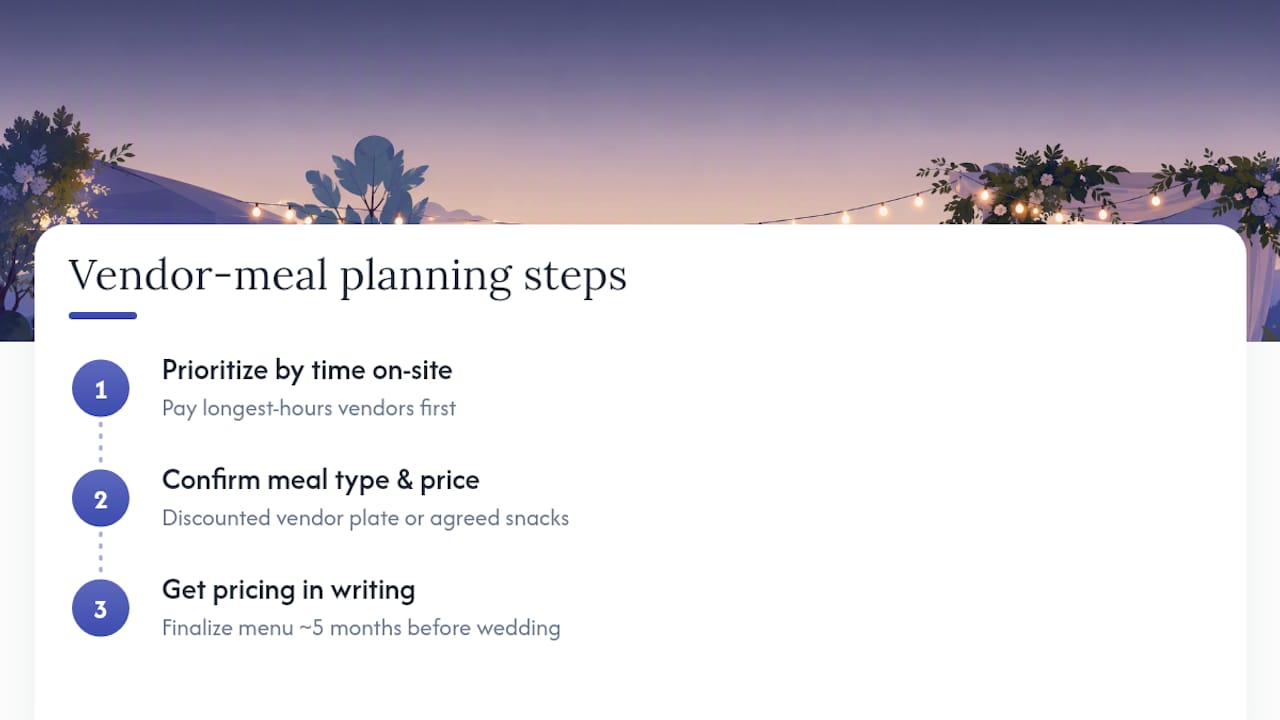
If the budget is tight, prioritize the vendors on-site the longest first, since a two-hour hair stylist matters far less here than an eight-hour videography team. Many caterers offer a discounted vendor plate option specifically to make this easier on couples. Offering snacks or drinks instead of a full meal is only acceptable if the vendor agrees to it in advance. Get vendor-meal pricing in writing when you finalize the menu, roughly five months before the wedding, so the number doesn't shift later.
What Contract Language Covers Vendor Meals?
A good vendor-meal clause names four things: who pays, how many plates, when they're served, and how dietary needs get handled. Vague language ("meals will be provided") invites confusion on the day itself.
Phrasing worth requesting or inserting into a vendor or caterer agreement:
- "A hot meal will be provided to [vendor] during dinner service if the event exceeds 6 hours."
- "The couple will supply [number] vendor meals, with dietary restrictions accommodated as noted below."
- "If no meal is provided, [vendor] reserves the right to take a break offsite."
That last line isn't a threat. Some vendors genuinely will leave to grab food if nothing is arranged, and written confirmation prevents that standoff from happening mid-reception. Keep an email or signed acknowledgment from both the caterer and each vendor confirming the plan.
How Do You Coordinate Vendor Meals With Your Venue and Caterer?
Bring up vendor meals twice: once during initial contract review, and again at menu finalization, about five months before the wedding, according to The Knot. Waiting until the final month leaves too little room to fix pricing surprises or dietary gaps.
- At contract review, ask whether the caterer or venue offers a vendor-plate rate at all.
- At menu finalization, lock the vendor-plate menu, pricing, and any allergy accommodations.
- Confirm the day-of contact who will make sure vendor meals actually arrive on schedule.
- Walk the staging location during your final venue walk-through so everyone knows where meals will be set.
- If leftover guest food might be repurposed for vendors, get the caterer's sign-off first. Food-safety standards still apply.
Day-Of Vendor Meal Checklist
Paste this into your planning doc or share it with your coordinator:
- Full vendor list with hours booked and meal eligibility
- Exact number of vendor meals ordered, matched to headcount
- Dietary restrictions logged with the caterer's order
- Staging location assigned and communicated to vendors
- Coverage rotation plan for photo, video, and DJ breaks
- Day-of contact name and phone number for meal logistics
- Payment method confirmed and invoice line item verified
| Checklist Item | Why It Matters |
|---|---|
| Vendor list with hours | Determines who meets the 6 to 8 hour meal threshold |
| Meal count matched to headcount | Prevents last-minute shortages |
| Dietary restrictions logged | Avoids allergy issues and wasted plates |
| Staging location assigned | Keeps gear secure and breaks quick |
| Coverage rotation plan | Maintains photo and video coverage during meals |
| Day-of contact confirmed | Gives vendors someone to flag issues to immediately |
A Photographer's View on Vendor Meals and Contract Terms
Coverage doesn't pause just because dinner starts. When a full-day shoot is booked, a vendor meal clause goes into the contract for a reason: eight hours of shooting without a real meal produces worse photos, not just a hungrier photographer. The fix is simple, a rotation with a second shooter covering the room while the lead eats, timed to match the dinner service, so nothing important gets missed. That fifteen-minute break also matters for photo delivery. A rested photographer during golden hour and the reception's final dances edits faster and shoots sharper than one running on an energy bar.
— Todd
Plan Your Timeline With Larson Pro Photography
Vendor-meal timing can be built directly into the wedding day schedule to ensure photography and videography coverage does not have a gap during dinner service. Instead of guessing when breaks should happen, you get a coordinated plan built around your actual reception flow, editorial and documentary coverage included.
If you're planning a full-day shoot, our wedding photography services page walks through coverage hours and what to expect on the timeline. Combining photo and video coverage adds its own scheduling wrinkles, and our videography services page covers how that pairing typically works. Reach out through either page to talk through your day-of schedule, including where vendor meal breaks fit, before you finalize your catering order.
Sources
- All Your Questions About Wedding Vendor Meals Answered by Pros | The Knot
- Do I Feed My Wedding Photographer and DJ? | The Abbey Rose Wedding Venue
- Who to Feed at Your Wedding and Why Vendor Meals Matter — RFP
- Do I Have To Feed My Wedding Photographer? — Dan Wagner
FAQ
What Is a Vendor Meal?
A vendor meal is a meal the couple provides to wedding professionals working on-site for a large chunk of the day, typically 6 to 8 hours or more, according to The Knot. It's meant to keep vendors fueled and stationed without leaving to find food.
Do You Have to Pay for Vendor Meals at a Wedding?
There's no legal requirement, but it's standard wedding etiquette to pay for meals for any vendor working through dinner. Many contracts, especially with photographers, include a clause requiring it.
Who Typically Gets a Vendor Meal at a Wedding?
Photographers, videographers, DJs or bands, coordinators, and AV crews who are onsite for most of the event typically qualify. Vendors who finish early, like hair and makeup artists, usually don't need one.
Who Pays for the Dinner the Night Before the Wedding?
That's the rehearsal dinner, a separate event from vendor meals, and it's traditionally hosted and paid for by the groom's family, though many couples now split or cover it themselves. It has no bearing on wedding-day vendor meal costs, which fall under the couple's catering budget.
Do I Have to Feed My Wedding Photographer Specifically?
Yes, if your photographer is booked for a full day, most contracts specify a hot vendor meal during dinner service, and skipping it can leave you without coverage during a key part of the reception. Larson Pro Photography builds meal timing into the coverage plan on every full-day wedding booking so this never becomes a day-of scramble.