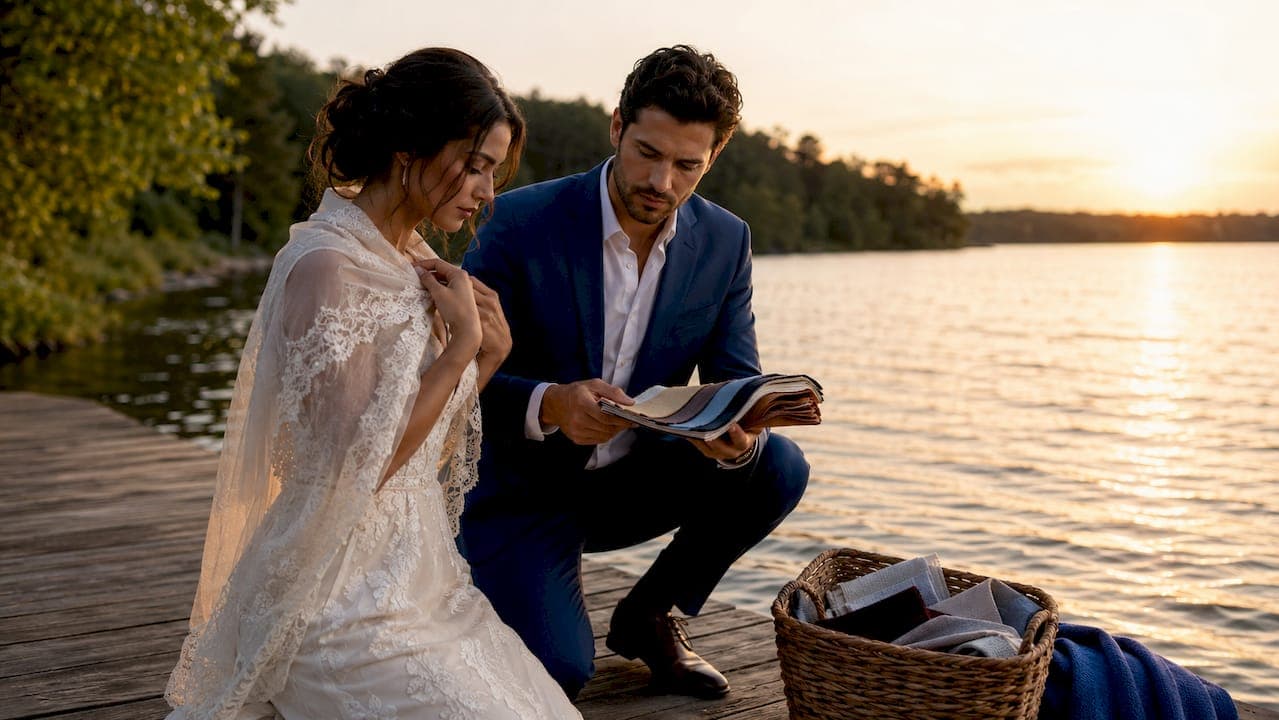
Your wedding photos last forever, and your outfit choices determine whether they look timeless or dated. This guide to selecting wedding photo outfits covers every decision that matters: color coordination, location-appropriate fabrics, patterns that photograph well, and the comfort factors most couples overlook. The difference between photos you love and photos you merely tolerate often comes down to three things: coordination over matching, texture over flatness, and comfort over trend-chasing. Get these right, and your photographer can focus on capturing genuine moments instead of working around styling problems.
How to coordinate wedding outfits without matching
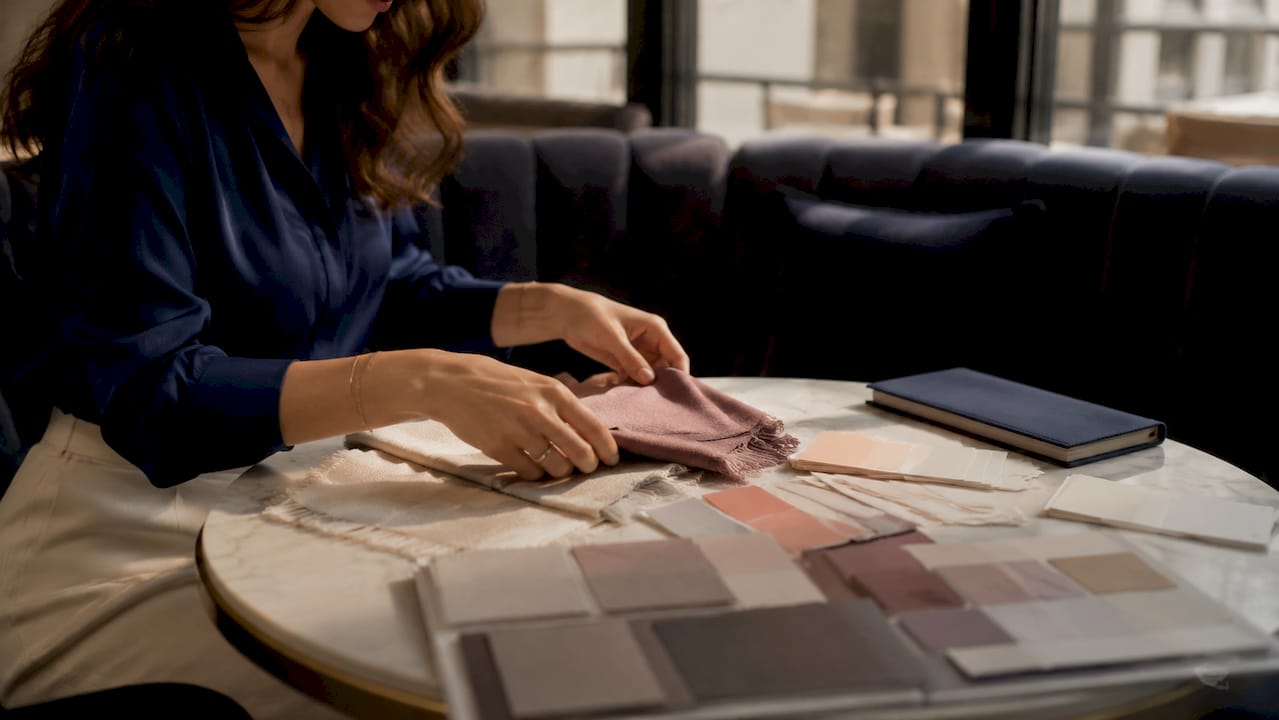
Coordination beats matching every time. Matching identical outfits creates a stiff, costume-like appearance that reads as forced in photos. Coordination, by contrast, creates visual harmony while letting each person's personality show through.
The most effective approach is to build a shared color palette of 2–3 complementary tones. Choose colors that sit near each other on the color wheel. Dusty blue and sage green work together naturally. Terracotta and warm ivory feel cohesive without being identical. These pairings create a connected look without duplication.
Here is how to build a coordinated palette for your wedding party:
- Anchor color: Choose one dominant color, typically worn by the bride or the couple, that sets the tone for the whole group.
- Complementary color: Select a second tone that sits adjacent on the color wheel. This goes on bridesmaids, groomsmen, or a second outfit.
- Neutral accent: Add ivory, champagne, or warm gray as a third element to tie the group together without visual noise.
- Vary the shades: Let different members wear lighter or deeper versions of the same hue. This adds depth without breaking the palette.
- Avoid identical pieces: Two people in the exact same dress or suit removes individuality and flattens the group composition.
Pro Tip: Photograph fabric swatches together in natural light before committing. Colors that look coordinated in a store can clash badly outdoors.
Outfit color palettes also affect the overall composition of your photos. A well-chosen palette draws the eye to faces and expressions rather than clothing.
What outfits work best for your shoot location and season?
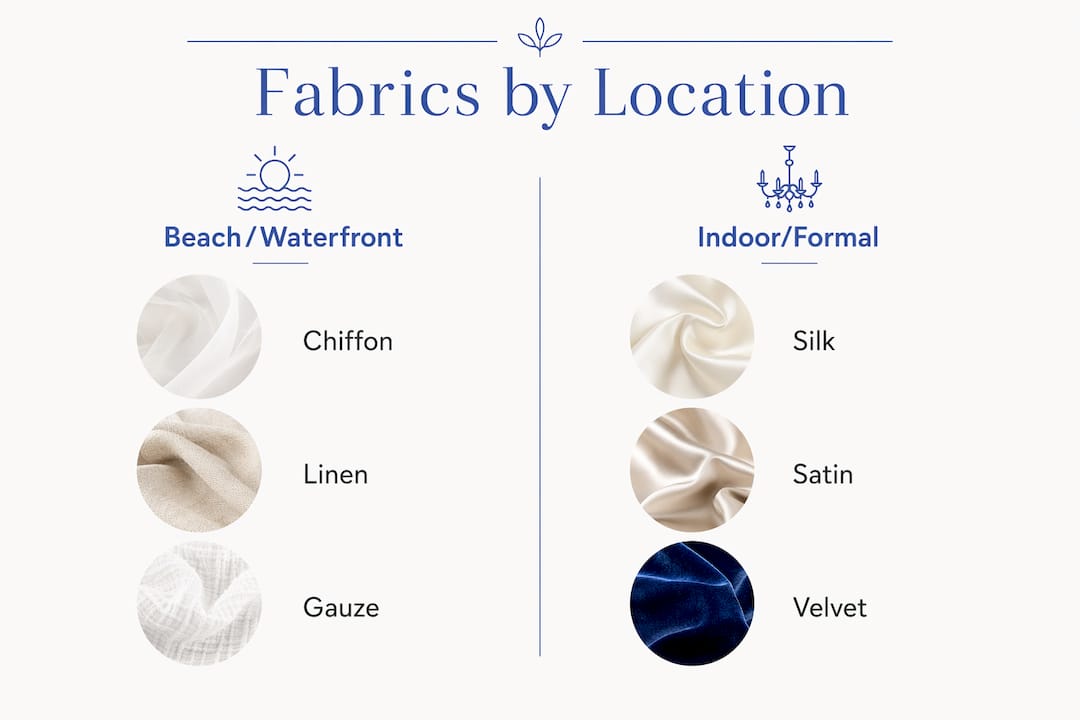
Location is the single biggest factor most couples ignore when choosing wedding attire. An outfit that looks stunning in a studio can look completely wrong on a beach or in a forest. Flowy fabrics like chiffon and linen suit beach and outdoor settings, while structured pieces fit urban environments far better.
| Location | Recommended fabrics | Formality level | What to avoid |
|---|---|---|---|
| Beach or waterfront | Chiffon, linen, gauze | Relaxed, flowing | Heavy structured gowns, stiff suits |
| Urban or downtown | Cotton, structured satin, wool blend | Smart casual to formal | Overly casual fabrics like jersey |
| Forest or countryside | Linen, velvet, soft knits | Relaxed to semi-formal | Overly formal ballgowns |
| Indoor venue | Silk, satin, lace | Formal | Casual sundresses or shorts |
Seasonal choices matter just as much as location. In summer, lightweight breathable fabrics prevent visible sweat and discomfort. In fall and winter, layering with a tailored coat or wrap adds visual interest and keeps you warm enough to stay relaxed. Spring sessions in San Antonio call for lighter pastels and breathable weaves that move well in the breeze.
Formality should always match the environment. A ball gown on a hiking trail looks jarring in photos. A casual sundress in a grand cathedral feels equally out of place. The goal is for your outfit to feel like it belongs in the setting, not like it was dropped into it.
Pro Tip: Visit your shoot location before the session. Walk the terrain in your planned footwear and check how your outfit moves in that environment.
For more ideas on outdoor outfit choices that work across different settings, Larsonprophotography's blog covers specific fabric and color considerations for varied outdoor environments.
What colors and patterns photograph well for wedding photos?
Color choice is where most couples make their biggest mistakes. Neutral and earth tones like sage, dusty blue, terracotta, and warm ivory produce timeless, flattering results across all lighting conditions. These tones work because they reflect light evenly and do not compete with skin tones.
Two specific colors to avoid are pure white and pure black. Pure white overexposes in bright light and loses all detail. Pure black absorbs light and loses texture in shadows. Ivory replaces white beautifully. Charcoal replaces black without the same technical problems.
Patterns require equal attention. Small busy patterns cause moiré distortion in digital photos. This is a visual vibration effect where fine repeating lines create an unpleasant optical illusion on screen and in print. Neon colors produce unnatural color casts on skin. Both problems are impossible to fix in editing.
Colors and patterns that consistently photograph well:
- Sage green: Flatters most skin tones and reads beautifully in natural light.
- Dusty blue: Works across seasons and pairs well with ivory or warm gray.
- Terracotta and rust: Especially strong in fall and golden-hour sessions.
- Soft blush and mauve: Classic choices that age well and avoid trend fatigue.
- Large-scale patterns: Bold florals or wide stripes work. Fine checks and tiny prints do not.
Texture and layering add visual depth that flat, solid-color outfits cannot achieve alone. Lace, linen, knit, and leather each catch light differently. That variation creates a more professional, three-dimensional look in photos. A bride in a lace gown photographs with far more visual interest than one in a flat satin sheath, even if both dresses cost the same.
| Texture type | Visual effect in photos | Best setting |
|---|---|---|
| Lace | Soft, romantic depth | Indoor, garden, golden hour |
| Linen | Natural, relaxed texture | Outdoor, beach, countryside |
| Velvet | Rich, dramatic depth | Fall, winter, indoor venues |
| Knit | Casual warmth and dimension | Casual outdoor, fall sessions |
Practical tips for comfort, footwear, and outfit planning
Comfort directly controls how natural you look in photos. Discomfort from restrictive clothing shows up in body language and cannot be corrected in editing. Stiff posture, tense shoulders, and forced smiles all trace back to physical discomfort. No amount of posing direction fixes an outfit that hurts.
Follow these steps to plan outfits that keep you comfortable and confident:
- Wear your outfit for a full hour before the shoot. Sit, walk, and move in it. Identify any pinching, pulling, or restriction before the session day.
- Choose footwear for the terrain, not just the look. Heels sink into grass and cobblestones. Wedges offer height with more stability. Flat sandals work on sand. Always bring a practical backup pair.
- Pack a second outfit. A change of clothes gives your photographer variety and gives you a fresh look if the first outfit gets dirty or uncomfortable.
- Plan outfits at least two weeks before the session. Last-minute outfit decisions at the shoot location lead to poor coordination and visible styling mistakes. Two weeks gives you time to make adjustments.
- Steam or press everything the night before. Wrinkles read clearly in photos, especially on structured fabrics like cotton and linen.
- Bring touch-up essentials. A small bag with a lint roller, safety pins, and a stain pen handles most on-site emergencies.
Pro Tip: If you want heels in your photos, wear them for the formal shots and switch to flats for the candid walking shots. Your posture and comfort will show the difference.
Footwear problems affect body language more than most couples expect. A bride who cannot walk comfortably in her shoes will show tension in every full-length shot. Bring at least two pairs and let your photographer know which shots call for which option.
Timeless, elevated attire also means choosing classic silhouettes over trend-driven pieces. Overly trendy outfits date photos quickly. A well-cut dress in a classic silhouette looks current in 2026 and will still look current in 2036.
Key Takeaways
Selecting photo-ready wedding attire comes down to coordination, location-appropriate fabrics, camera-friendly colors, and comfort that lets your natural personality show through.
| Point | Details |
|---|---|
| Coordinate, do not match | Build a 2–3 color palette using adjacent tones on the color wheel for a natural, connected look. |
| Match outfit to location | Choose flowy fabrics for outdoor settings and structured pieces for urban or indoor venues. |
| Avoid pure white, black, and busy patterns | Opt for ivory, charcoal, and solid or large-scale patterns to prevent overexposure and moiré distortion. |
| Add texture for depth | Lace, linen, velvet, and knit create visual dimension that flat fabrics cannot achieve. |
| Plan ahead and prioritize comfort | Finalize outfits two weeks out and wear them in advance to catch any comfort issues before the session. |
What I have learned after years behind the lens
Most couples spend months choosing a venue and weeks choosing flowers, then pick their outfits the week before the shoot. That order is backwards. Your outfits appear in every single photo. Your centerpieces do not.
The most common mistake I see is over-coordination. Couples buy matching outfits thinking it looks polished. In photos, it looks like a uniform. The couples whose photos age best are the ones who wore something that felt genuinely like them, in colors that worked together without being identical.
The second mistake is ignoring comfort until it is too late. I have photographed sessions where a bride spent the first hour adjusting her dress and the groom kept pulling at his collar. Those sessions produce technically fine photos with zero warmth in them. The body language tells the whole story.
Small details matter more than most people realize. A well-chosen belt, a textured jacket, or a simple piece of jewelry can lift an ordinary outfit into something that reads beautifully on camera. You do not need an expensive wardrobe. You need thoughtful choices.
My honest advice: choose outfits you would wear again. If you would not wear it to a nice dinner, it probably does not belong in your wedding photos either. Authenticity reads on camera in a way that no styling trick can replicate. Check the wedding photography checklist to make sure outfit planning fits into your full session prep.
— Todd
Plan your session with Larsonprophotography
Choosing the right outfits is only one part of getting wedding photos you will love for decades. Larsonprophotography works with couples in San Antonio to plan sessions where every element, from location to lighting to attire, works together.
Before your session, Larsonprophotography provides styling guidance tailored to your chosen location and the look you want to achieve. Whether you are booking a full wedding photography session or an engagement shoot to test your outfits and chemistry on camera, the team brings the experience to make your choices work. Reach out through the website to discuss your vision and get outfit recommendations specific to your session details.
FAQ
What colors work best for wedding photos?
Neutral and earth tones like sage, dusty blue, terracotta, and ivory produce the most flattering and timeless results. Avoid pure white, pure black, and neon colors, as these create overexposure, lost detail, or unnatural skin casts.
Should the wedding party wear matching outfits?
Matching identical outfits creates a stiff, costume-like look in photos. Coordinating with a shared 2–3 color palette looks more natural and allows each person's personality to come through.
How far in advance should I plan my wedding photo outfits?
Plan and finalize outfits at least two weeks before your session. Last-minute decisions at the shoot location lead to poor coordination and styling mistakes that show clearly in photos.
What fabrics photograph best outdoors?
Chiffon, linen, and gauze work well for outdoor and beach settings because they move naturally and suit relaxed environments. Structured fabrics like wool blends and satin work better for urban or indoor venues.
Does footwear really affect wedding photos?
Footwear affects posture, comfort, and body language throughout the session. Bring at least two pairs, including a practical option for walking on uneven terrain, and switch between them based on the shot.