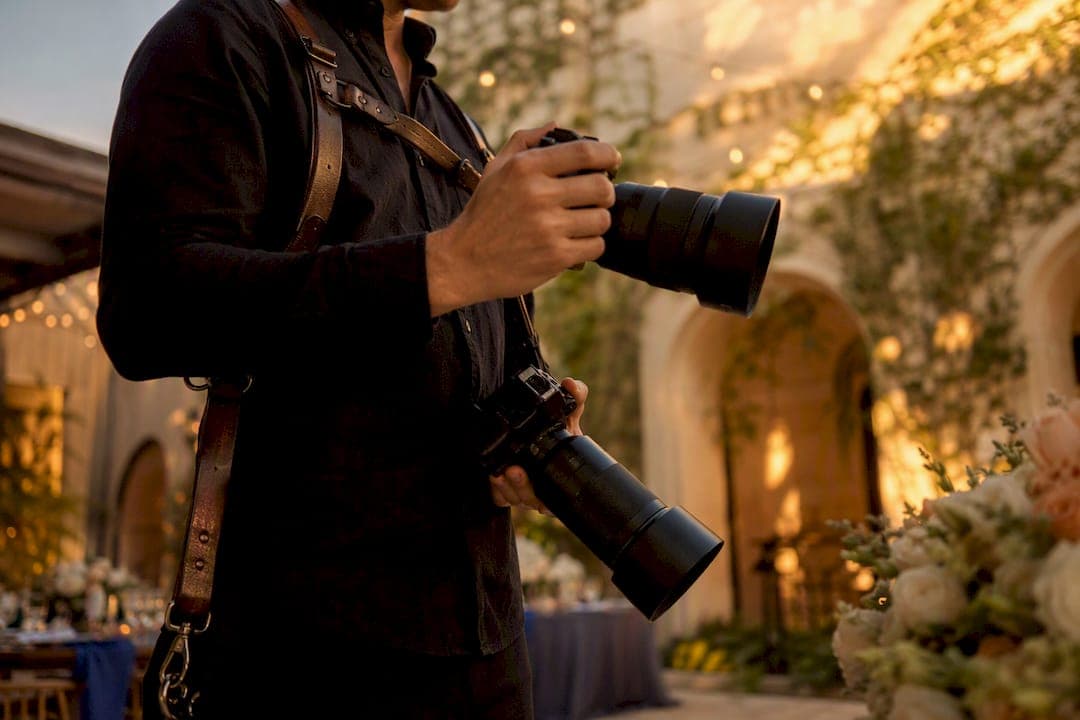
Yes. For most weddings, hiring a photographer who shoots with two camera bodies gets you faster coverage, built-in backup, and a gallery with real variety instead of one repetitive angle all day. The Institute of Photographers points to rising demand for multi-perspective coverage as couples ask for more than a single, static point of view. At Larson Pro Photography, that's the default setup, not an upsell.
- Speed: two ready bodies mean no lens-change during a fast-moving moment like the first kiss.
- Backup: if one camera fails, the second is already on the strap and shooting.
Key Takeaways
A two-camera setup gives most wedding photographers faster coverage, built-in backup, and a wider range of shots than a single body can produce.
| Point | Details |
|---|---|
| Two focal lengths, ready | Wide (24-35mm) and tight (50-85mm) bodies avoid lens changes during fast moments. |
| Redundancy on the strap | A second working body means no lost coverage if one camera fails mid-ceremony. |
| Not every wedding needs it | Small elopements with relaxed timelines can work fine with a single versatile lens. |
| Ask about color matching | A good photographer standardizes profiles between bodies before the wedding starts. |
| Larson Pro Photography | Builds matched two-camera coverage into standard wedding packages, not as an upsell. |
Table of Contents
- Why Use Dual Cameras During a Wedding Day?
- What Do Couples Actually Get From Two Cameras?
- When Is a Two-Camera Setup Essential, and When Is One Body Enough?
- Questions to Ask Before You Book
- How Todd at Larson Pro Photography Runs a Two-Camera Wedding
- What Two Cameras Mean for Editing and Delivery
- The Real Downsides of Shooting With Two Cameras
- Does Shooting With Two Cameras Change a Photographer's Style?
- Why I Shoot Every Wedding With Two Bodies
- If You Want Two-Camera Reliability on Your Wedding Day
- Sources
Why Use Dual Cameras During a Wedding Day?
A two-camera setup works because it puts two different tools in a photographer's hands at once, not because two cameras are simply "more." One body typically wears a wide or environmental lens (24mm or 35mm), and the other carries something tighter for portraits and reactions (50mm or 85mm). That pairing lets a photographer capture the whole room and an intimate expression without missing either.
The point isn't just avoiding a lens change, though that matters. It's about never having to choose between "wide" and "tight" in the three seconds a moment actually lasts. A common combination pairs a 35mm for tight spaces like a getting-ready suite with an 85mm for compressed, isolated portraits from across a room.
With two bodies ready, a second camera also opens up shooting roles a single setup can't cover simultaneously:
- Reaction shots from guests while the primary lens is locked on the couple.
- A second angle on the same moment, useful during vows or a first look.
- Simultaneous prep coverage when partners are getting ready in different rooms.
Recent coverage trends favor pairs like 24-70mm with 70-200mm for receptions, or matched primes for ceremonies where speed and low light both matter.
What Do Couples Actually Get From Two Cameras?
The technical setup is one thing. What it buys you on your actual wedding day is another, and it's the part most couples care about.
- You don't lose the first kiss to a fumbled lens change. With a wide body and a tight body both ready, your photographer swings between them instead of digging through a bag.
- Getting-ready coverage doesn't force a choice. If you and your partner are prepping in separate spaces, a two-camera photographer (or a photographer paired with a second shooter) can be closer to covering both without one side losing minutes of coverage.
- Family formals move faster. A second body loaded with a different focal length means fewer stalls between poses, which matters when you have twenty minutes before the reception starts.
- Your gallery has range. Wide shots of the ceremony space next to tight, emotional close-ups from the same five minutes make for a much richer final album than one lens working overtime all day.
Redundancy matters here too. A photographer wearing both cameras on a double strap always has a working body within reach, rather than a backup buried in a bag across the room if something fails mid-vows.
Pro Tip: Ask whether your photographer's backup camera lives on their body or in a bag. A bag-stored backup can cost thirty seconds you don't get back during a ceremony.
When Is a Two-Camera Setup Essential, and When Is One Body Enough?
Not every wedding needs the full two-body treatment, and a good photographer will tell you that honestly rather than upselling gear you don't need.
Run through this before you decide — and consider insights on candid wedding photography to understand how multiple perspectives increase candid coverage.
- Guest count and venue size. A large reception hall with multiple simultaneous activities (dancing, toasts, a dessert table) benefits from quick focal-length switching.
- Simultaneous prep locations. Two getting-ready rooms in different parts of a venue push hard toward needing two bodies, sometimes two shooters.
- Timeline tightness. A packed schedule with little buffer time rewards a photographer who never has to pause to swap lenses.
- Desire for multi-angle storytelling. If a rich, editorial-style gallery matters to you, two bodies deliver more raw material to work with.
For a small elopement or an intimate backyard ceremony with a relaxed schedule, a single camera with a versatile zoom is often genuinely fine. The trade-offs on the two-camera side are real: heavier gear on the photographer, a marginally longer setup, and slightly more complex file management afterward. None of that outweighs the benefit for a full wedding day, but it's worth naming.
Questions to Ask Before You Book
These are the questions that separate a photographer who talks about two-camera coverage from one who actually shoots that way.
- "Do you shoot with two matching camera bodies, or one body and a backup in a bag?" A strong answer names both bodies and their roles; a weak one is vague about what's actually on them during the ceremony.
- "What lens combinations do you bring to a wedding?" Listen for specifics like 35mm and 85mm, not "a variety of lenses."
- "How do you keep color consistent between two cameras?" Photographers who've thought about this mention matching camera profiles or shared white balance settings, not "I fix it in editing."
- "How do you handle backups and file delivery?" You want a described process, not a shrug.
Pro Tip: Follow up with, "How do you make sure images from both cameras look like they came from one shooter?" That question exposes whether a photographer has a real post-production workflow or just hopes it works out.
How Todd at Larson Pro Photography Runs a Two-Camera Wedding
Todd shoots most full wedding days with two bodies on a double strap, one set with a wide lens for ceremony space and reception context, the other with a tighter portrait lens for close, emotional frames. The roles are decided before the day starts, not improvised on the fly.
- Wide body: covers the room, the walk down the aisle, the full scene during speeches.
- Tight body: covers reactions, ring details, and portrait-style frames during quieter moments.
- Both bodies use matched camera profiles and synced white balance, an approach the Institute of Photographers identifies as the difference between a gallery that looks like one cohesive story and one that looks stitched together.
- File naming and backup follow a documented process so nothing gets lost between two memory cards worth of images.
Sample galleries shot this way are viewable on the Larson Pro Photography clients page, where you can judge the consistency for yourself.
| Point | Details |
|---|---|
| Two roles, two lenses | One body handles wide context, the other handles tight portraits and reactions. |
| Matched profiles | Color and white balance are synced between bodies before shooting starts. |
| Documented backup | A written file-naming and backup process prevents lost images across two cards. |
What Two Cameras Mean for Editing and Delivery
Two bodies mean more raw material, and that has real effects on the editing side, not just the shooting side.
- Culling takes longer when there are more frames to sort, simply because there's more footage from two active sources instead of one.
- Color and white balance need to be reconciled between bodies, though this step shrinks a lot when camera profiles were standardized before the wedding rather than fixed after.
- You typically end up with more final selects to choose from, since two angles on the same moment often both turn out usable.
Standardizing profiles between cameras upfront is what keeps color grading consistent across the whole gallery instead of looking like two different photographers shot your day. Ask about delivery timelines specifically for two-camera coverage. Some studios build in a few extra editing days for larger dual-camera weddings, and that's a reasonable trade for a bigger, more varied final gallery.
The Real Downsides of Shooting With Two Cameras
Two bodies aren't free of trade-offs, and a photographer who pretends otherwise isn't being straight with you.
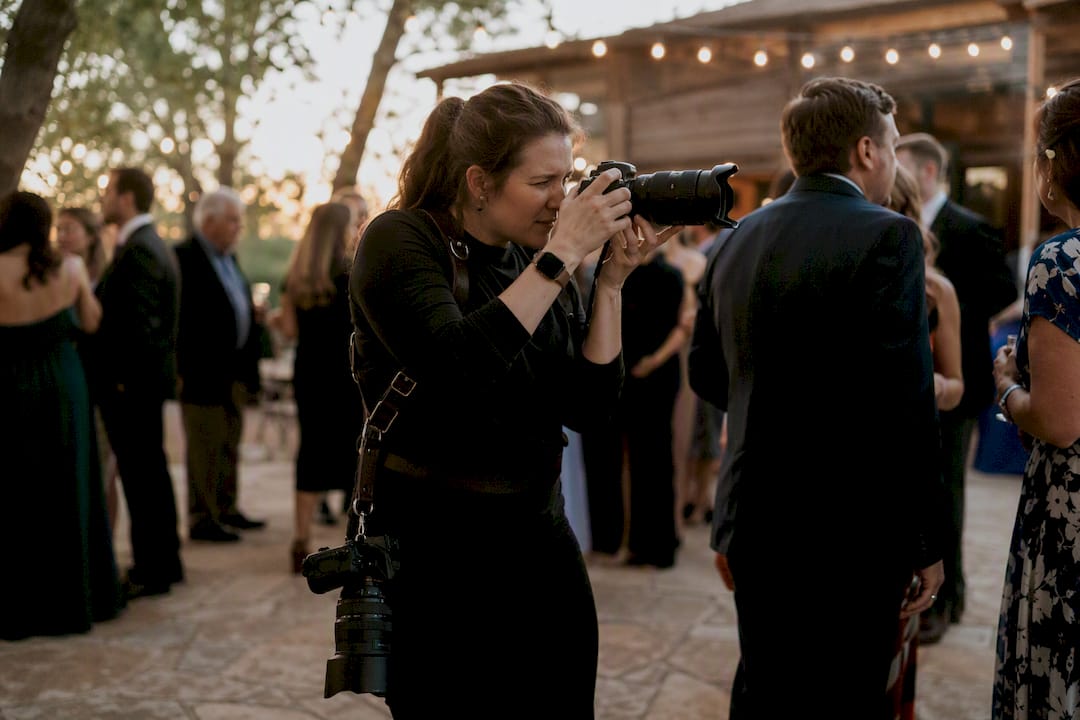
The most obvious cost is physical. Carrying two camera bodies with lenses attached for eight or ten hours adds real weight, and a photographer managing that gear all day is working harder than one with a single body and a lens change here and there. Fatigue is a factor, especially at outdoor weddings in Texas heat, where a heavier rig on a double strap starts to matter by hour six.
There's also a setup and coordination cost. Two bodies mean two sets of settings to check before the ceremony starts, two batteries to track, two memory cards to manage. Skipping that prep is how photographers end up with mismatched exposure or color between cameras, which then becomes an editing headache later.
Complexity is the trade you're making for flexibility. A single-camera shooter has one thing to think about; a two-camera shooter is constantly deciding which body to raise in a split second. That decision-making adds cognitive load during exactly the moments where speed matters most, which is why experienced photographers train that switch until it's automatic rather than something they're thinking through mid-ceremony.
None of this argues against two cameras for a full wedding day. It argues for hiring someone who's done the reps, because a two-camera setup handled poorly is worse than a well-run single-camera day.
Does Shooting With Two Cameras Change a Photographer's Style?
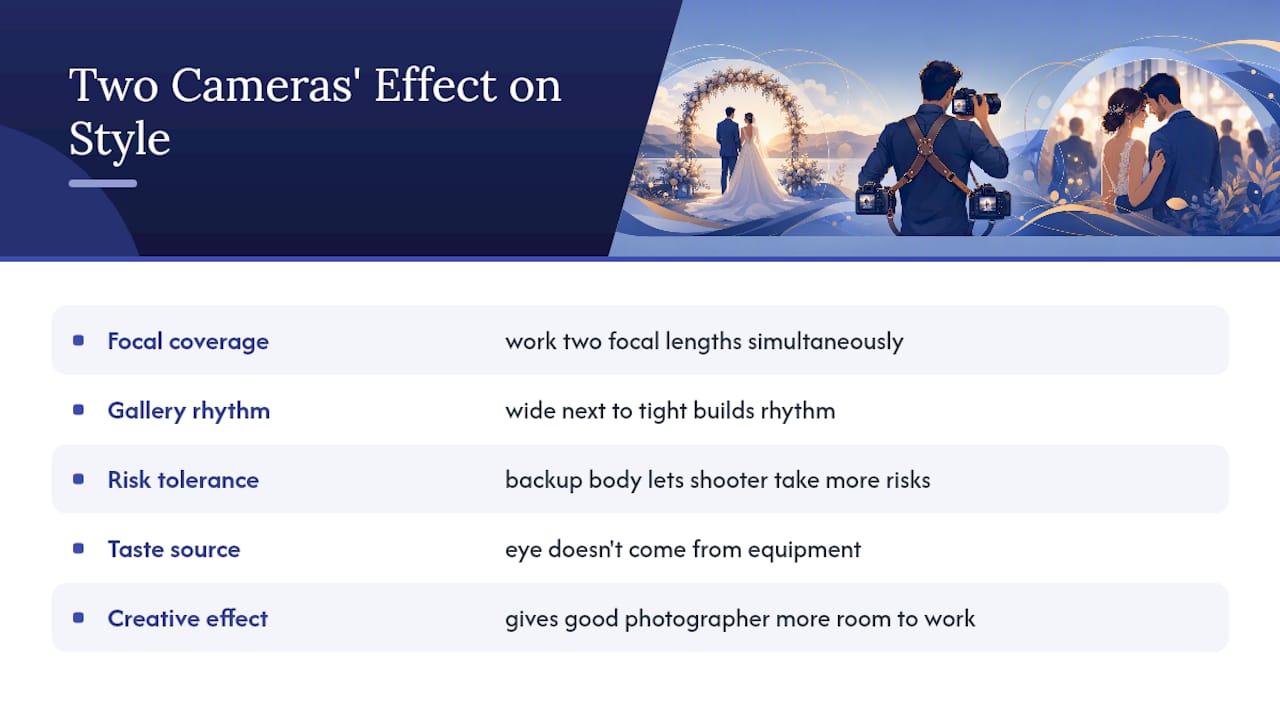
It changes what's possible more than it changes taste. A photographer's eye, their sense of composition and moment, doesn't come from equipment. But two bodies do open creative options a single camera closes off.
Working two focal lengths simultaneously means a photographer can chase both the wide, cinematic frame and the tight, intimate one in the same sixty seconds, rather than picking one and living with that choice. That flexibility shows up in how a gallery gets built. A photographer with two bodies can lean into contrast on purpose, wide establishing shots next to tight emotional close-ups from the same scene, building a rhythm through the final edit that a single lens can't produce on its own.
It also changes what a photographer is willing to attempt. Knowing a backup body is on the other strap means a shooter can take more risks with a single frame (an unusual angle, a slower shutter for motion blur) without worrying that a missed shot on one camera means missing the moment entirely. That safety net is part of what lets creative style show up rather than get flattened by caution. The gear doesn't make the photographer better. It gives a good photographer more room to work.
Why I Shoot Every Wedding With Two Bodies
I don't think about two cameras as extra gear. I think about it as insurance against the version of the day where I guessed wrong. A ceremony doesn't pause so I can change a lens, and a couple doesn't get their first kiss back if I miss it. Two bodies mean I'm never choosing between the wide shot and the close one. You can see how that plays out in the galleries I've shot.
If You Want Two-Camera Reliability on Your Wedding Day
Larson Pro Photography builds two-camera coverage into wedding packages as standard, not an add-on you have to request. That means matched bodies, pre-set color profiles, and a documented backup process so your gallery reads as one cohesive story instead of two mismatched feeds stitched together after the fact.
Packages are structured around full-day wedding coverage, with two-camera shooting included rather than priced as an extra. If you're planning an engagement session first, that same setup carries over. Browse real wedding galleries on the Larson Pro Photography wedding page, check the engagement session details, and reach out to book a consultation for your date.
Sources
- Two-Camera Wedding Setup That Actually Works | Fstoppers
- Why Wedding Photographers Use Two Cameras | ComposeClick
- The Two Photographer Experience: Defining Excellence in Modern Wedding Coverage | Institute of Photographers