
Your wedding photos deserve more than a folder buried on a hard drive. Many couples assume that saving thousands of digital images covers all their bases, but the uncomfortable truth is that digital files are fragile, format-dependent, and often forgotten within a few years. Printed wedding photos, by contrast, offer something tangible, emotionally resonant, and genuinely built to last. This guide walks you through the real reasons why printing your wedding photos is one of the smartest decisions you can make for your future family.
Table of Contents
- Digital vs. printed: What's the difference for your memories?
- Why printed photos last: The science behind preservation
- How expert printing turns moments into lasting treasures
- Practical ways to display and protect your printed wedding photos
- The expert perspective: Why printed photos mean more than pixels
- Preserve your wedding memories: Expert solutions in San Antonio
- Frequently asked questions
Key Takeaways
| Point | Details |
|---|---|
| Prints ensure lasting memories | Printed wedding photos are tangible keepsakes that survive technology shifts and family generations. |
| Archival materials matter | Choosing acid-free, archival paper greatly improves photo longevity compared to standard materials. |
| Professional printing pays off | Expert processes and album design add value, beauty, and resilience to wedding memories. |
| Care and storage count | Proper storage and handling preserve your printed photos and albums for decades to come. |
Digital vs. printed: What's the difference for your memories?
The convenience of digital photography has quietly created a false sense of security. You have the files, so the memories are safe, right? Not exactly. Digital storage comes with real risks that most couples don't consider until years later, when a hard drive fails, a cloud subscription lapses, or a file format becomes unreadable on modern devices.
Printed photos, on the other hand, require no software, no subscription, and no power source. You pick them up, you hold them, and you feel something. That physical presence creates a layer of emotional connection that a screen simply cannot replicate. Research into the neuroscience of memory suggests that touching physical objects creates stronger memory anchors than viewing them on a screen, which means a printed album may literally help you remember your wedding day more vividly.
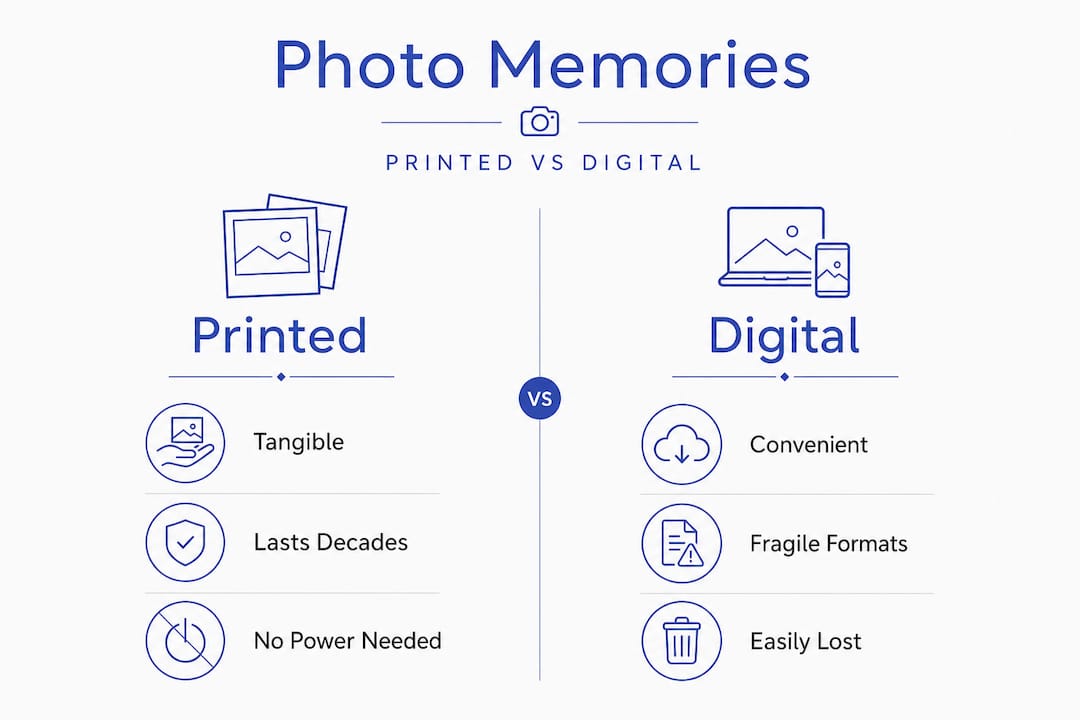
Here's a direct comparison of how digital and printed wedding photos stack up across the factors that matter most:
| Factor | Digital photos | Printed photos |
|---|---|---|
| Longevity | 10 to 30 years (format-dependent) | 75 to 200+ years (archival quality) |
| Emotional impact | Moderate (screen-dependent) | High (tactile, displayable) |
| Accessibility | Requires device/software | No equipment needed |
| Risk of loss | High (file corruption, data loss) | Low (with proper care) |
| Display options | Limited to screens | Unlimited (walls, albums, frames) |
| Family heirloom value | Minimal | Very high |
The numbers tell a clear story. While digital files work for sharing and convenience, they fall short when it comes to creating lasting keepsakes. Keeping up with wedding photo trends often means embracing new formats, but a beautifully printed photo never goes out of style.
Key advantages of printed wedding photos include:
- Instant accessibility: No passwords, no devices, no app updates required
- Emotional depth: A physical object triggers more powerful memories than a pixel on a screen
- Display value: Prints bring warmth and personality into your home in a way digital files never can
- Family sharing: Grandparents, parents, and older relatives can enjoy prints without needing technology
- Longevity: Archival acid-free paper is manufactured without acidic chemicals and lignin, helping resist yellowing and deterioration over time
"A printed photo doesn't need Wi-Fi. It just needs a shelf." That simple truth captures why generations of families have treasured photo albums far more than any digital archive.
Planning a wedding across locations? The destination wedding photography guide explains how professional photographers capture those sweeping moments in ways that translate beautifully to large-format prints.
Why printed photos last: The science behind preservation
After seeing the benefits of printed photos, it's crucial to understand what makes them last for generations. The answer lies in materials science and professional printing techniques that most people never think about when they're ordering prints online.
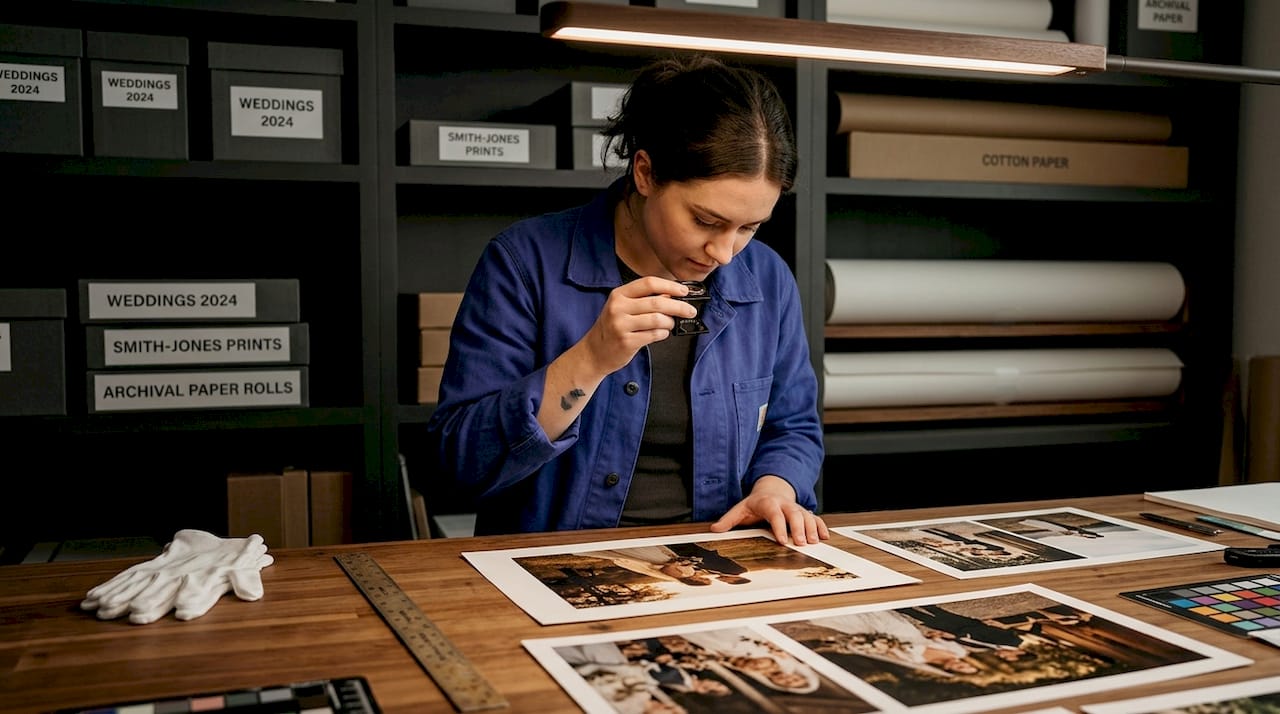
The most important factor is paper quality. Standard consumer-grade photo paper contains acidic chemicals that break down the fibers over time, causing yellowing and brittleness within 20 to 30 years. Archival acid-free paper resists yellowing and deterioration by removing those harmful chemicals from the manufacturing process entirely, extending the life of a print to 75 years or more under normal display conditions.
Here's how different printing materials compare in longevity:
| Material type | Estimated lifespan | Best use case |
|---|---|---|
| Consumer inkjet paper | 10 to 25 years | Casual snapshots |
| Standard photo lab paper | 25 to 50 years | General photo printing |
| Archival acid-free paper | 75 to 200+ years | Wedding albums, heirlooms |
| Fine art cotton rag paper | 100 to 300+ years | Museum-quality prints |
| Metal or acrylic prints | 50 to 100 years | Wall display pieces |
Professional printing also involves ink quality, coating processes, and UV-resistant laminates that protect images from fading when displayed near windows or under artificial lighting. These are details that a quick online print order rarely addresses.
Pro Tip: When reviewing a printing provider, ask specifically whether they use acid-free, lignin-free paper and archival-quality inks. If they can't answer that question, look elsewhere. This single question separates professional-grade providers from bargain labs.
Here's a step-by-step overview of how professional printing preserves your wedding photos:
- Image preparation: The photographer exports your photos at the highest resolution with a wide color profile (typically Adobe RGB) to ensure color accuracy in print
- Paper selection: Archival acid-free paper is chosen based on the intended display environment and aesthetic goals
- Calibrated printing: Professional labs use color-calibrated printers to match the intended colors, avoiding the warm or cool color shifts common in consumer printing
- UV-resistant coating: A protective coating is applied to guard against light-induced fading
- Quality review: Each print is inspected against the original digital file before delivery
- Album binding: For bound albums, archival adhesives and covers protect pages from moisture and physical damage
Learning from experienced photographers matters enormously here. Reading pro photography tips can help you understand how image capture decisions made on your wedding day directly affect the quality of the final print. A sharp, well-exposed file prints stunningly. A blurry, underexposed file never looks good in large format, no matter the paper quality.
If you want the most authentic wedding memories captured in a way that translates beautifully to print, the entire process starts with how your photographer shoots. Refer to the wedding photo checklist to make sure your photographer captures every key moment in print-ready quality.
How expert printing turns moments into lasting treasures
Now that we know what makes prints last, let's focus on the role of San Antonio experts in preserving your wedding memories. Working with a professional photographer who also guides you through the printing process is a fundamentally different experience from uploading files to a budget print website.
San Antonio professional photographers who specialize in weddings typically offer services that go well beyond shooting. They include album design consultations, print size recommendations, layout planning, and partnerships with professional-grade printing labs. These relationships mean your photos pass through expert hands from the moment they're captured to the moment they're placed in your album.
What to look for when choosing a print provider or photography studio:
- Archival material disclosure: A quality provider will openly share what materials they use and why. If the information isn't available upfront, that's a warning sign.
- Sample albums: Ask to see and touch physical samples. The weight and texture of a quality album tells you immediately whether it's built to last.
- Layout and design services: The best studios offer curated album designs that tell the story of your wedding day, not just a grid of your favorite shots.
- Color accuracy guarantees: Professional labs stand behind their color calibration. Your photos should look on paper exactly as they appeared in the original file.
- Customization options: From cover materials to page thickness and print size, a professional provider gives you real choices.
The archival processes that reduce yellowing and brittleness are the foundation of any truly professional print service. Don't accept vague answers about materials.
Pro Tip: Request a single test print before committing to a full album order. A professional lab will welcome this request. It lets you evaluate color accuracy, paper texture, and overall print quality before investing in a complete album.
For couples seeking truly exceptional results, exploring luxury wedding photography options in San Antonio reveals how artistic direction combined with professional printing creates wedding albums that genuinely function as family heirlooms. Browse wedding photography insights to see how professionals approach the process from capture to print.
Practical ways to display and protect your printed wedding photos
With expert printing available, couples need practical strategies for showcasing and preserving their wedding photos at home. The good news is that a few simple habits can add decades to the life of your prints.
Creative display ideas for printed wedding photos:
- Gallery wall: Create a curated collection of your favorite shots in matching frames for a living room feature wall
- Floating shelves: Rotate seasonal favorites or milestone prints throughout the year
- Large-scale statement print: A single dramatic image, printed large on fine art paper, transforms a hallway or staircase
- Bedside or desk frames: Keep intimate, personal shots in your most-used spaces for daily emotional connection
- Coffee table album: A professionally designed lay-flat album on your coffee table invites guests to engage with your story
- Entryway installation: Welcome guests with a curated display of your wedding day highlights
For long-term storage, follow these steps to keep your prints in perfect condition:
- Choose acid-free albums and boxes: Archival acid-free materials ensure photos maintain quality over time, while standard plastic sleeves and boxes can trap moisture and cause staining
- Store away from direct sunlight: UV light fades prints over time. Store albums in a dark, stable environment, not in attics or garages where temperature swings are dramatic
- Control humidity: Aim for a humidity level between 30% and 50%. High humidity encourages mold, while very low humidity dries out paper fibers
- Handle with clean, dry hands: Oils and moisture from your skin can transfer to prints and cause long-term staining
- Avoid PVC plastic sleeves: PVC off-gasses chemicals over time that can yellow and damage photos. Use polyethylene or polypropylene sleeves instead
- Make backup digital scans: Even with perfect print care, creating high-resolution digital scans of your most treasured prints provides a useful safety net
For couples exploring their options, the wedding print services available through professional photographers in San Antonio cover everything from standard prints to fully custom heirloom albums. If you're earlier in the planning process, engagement photography sessions offer a perfect opportunity to test print quality and album design before your wedding day.
The expert perspective: Why printed photos mean more than pixels
Here's the opinion that might surprise you: in over a decade of photographing weddings, the couples who order physical albums universally report a deeper sense of satisfaction with their wedding memories than those who choose digital files only. That's not a coincidence.
Digital files feed a different kind of satisfaction. They're easy to share, easy to store, and they check the box of "we have our photos." But they rarely get looked at. Studies show that most people view their wedding photos intensely in the first few weeks after the wedding, then increasingly rarely as years pass. A folder of digital files, even a beautifully organized one, competes with everything else on your phone or computer.
A physical album does something different. It sits on your shelf. It gets picked up during quiet evenings or family visits. It gets handed to grandchildren who are meeting your younger selves for the first time. That ritual of looking through a physical album is something no cloud folder can replicate.
There's also a practical reality that most people resist acknowledging: technology changes relentlessly. The file formats, devices, and platforms we rely on today may not exist in recognizable forms 30 years from now. Think about how many formats have already become obsolete in your lifetime. Prints require none of that infrastructure. They exist independently of any technology ecosystem.
The archival acid-free materials that ensure quality over time mean that an album made today can be handed to your grandchildren in 80 years without any special care. A digital file requires someone to actively maintain it, migrate it, and remember it exists.
Our strong recommendation, backed by years of experience in artistic excellence in wedding photography, is this: don't treat printing as an afterthought. Plan for it from the beginning, budget for archival-quality materials, and work with professionals who understand that a printed album is the real final product of your wedding photography investment.
Preserve your wedding memories: Expert solutions in San Antonio
Your wedding photos represent one of the most significant investments of your entire wedding budget. They deserve to be treated accordingly, not just stored on a drive but displayed, shared, and built to last for generations.
At Larson Pro Photography, we guide San Antonio couples through the entire journey, from capturing your most meaningful moments on your wedding day to designing and producing heirloom-quality albums that you'll treasure for the rest of your lives. Our San Antonio wedding photography services are built around the belief that great photography only reaches its full potential when it's printed and placed in your hands. Browse our client gallery to see the quality we deliver, or explore our engagement photography services to start your journey with us before the big day.
Frequently asked questions
What materials make printed wedding photos last the longest?
Archival acid-free paper, manufactured without acidic chemicals and lignin, combined with professional archival inks and UV-resistant coatings, gives printed wedding photos the longest possible lifespan, often exceeding 100 years.
Can digital wedding photos be easily lost or corrupted?
Yes. Digital photos are vulnerable to hard drive failure, accidental deletion, outdated file formats, and lapsed cloud subscriptions, all of which can make your wedding images permanently inaccessible without any warning.
How should printed wedding photos be stored for maximum longevity?
Store printed photos in acid-free albums away from direct sunlight, extreme temperatures, and high humidity to preserve their color and structural integrity over decades.
What's the best way to display printed wedding photos at home?
Use high-quality frames with UV-protective glass and position prints away from windows or direct light sources to prevent fading, keeping your most treasured images vibrant for years to come.