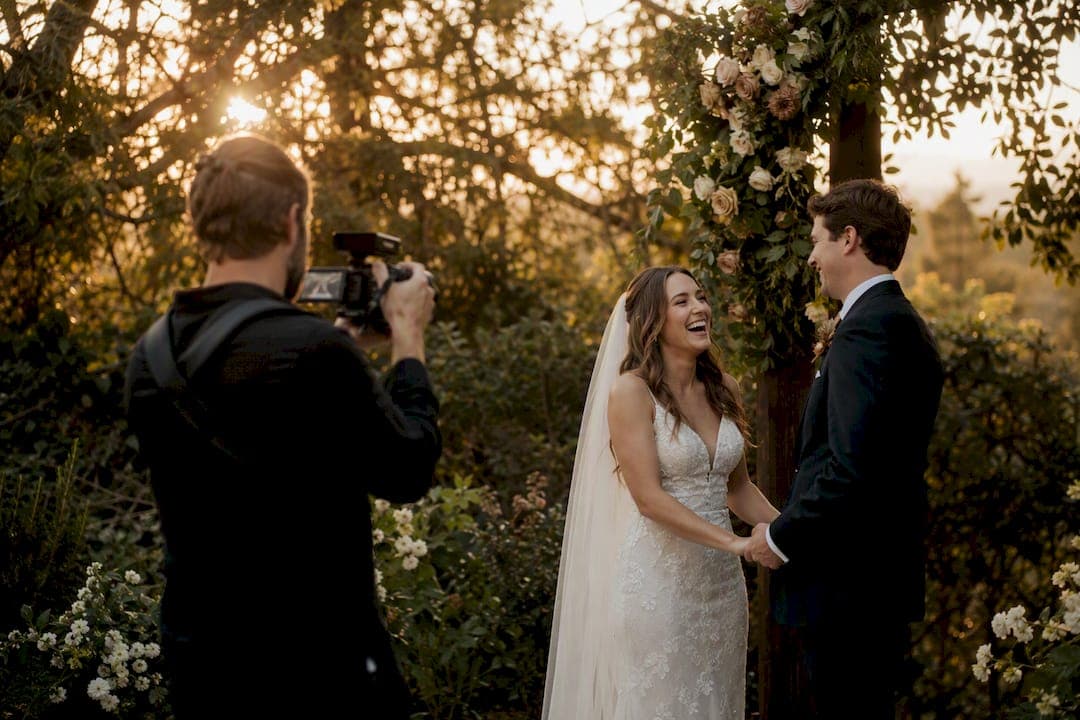
Choose documentary-style wedding videos if you want an honest record of your day rather than a polished highlight reel built for Instagram. This approach suits couples who care more about hearing Grandpa's full toast and seeing their own unscripted laughter than they do about slow-motion drone shots and a music-video pace.
Documentary coverage works because it captures the wedding as it actually happened, in order, with real sound. That means less posing, less direction, and a film you can watch in twenty years and still recognize exactly how the day felt. Many couples don't have to pick just one style, either.
- A hybrid package (short highlight plus full documentary edit) is one of the most common compromises videographers offer.
- It gives you a shareable three-to-five-minute film alongside a complete archival record.
Pro Tip: Ask any videographer you're considering whether they offer both a highlight and a full sequential edit as a package. If they only do one, you'll know which style they actually specialize in.
Key Takeaways
Documentary-style wedding videos work because they trade staged polish for real audio and unscripted moments, producing a film that holds up decades later.
| Point | Details |
|---|---|
| Verdict | Choose documentary style if you value authenticity and archival value over a short, trend-driven highlight film. |
| Runtime difference | Documentary edits typically run 30 to 90 minutes versus 3 to 8 minutes for cinematic highlights. |
| Evaluation method | Watch full-day edits, not just highlight reels, to judge whether a videographer truly shoots documentary style. |
| Best pairing | A hybrid package with both a short highlight and full documentary edit avoids having to choose only one. |
| Larson Pro Photography | Offers unobtrusive, sequential documentary coverage with full edits, highlights, and add-on audio capture for weddings in and around San Antonio. |
Table of Contents
- What Makes Documentary-Style Wedding Videos Different
- The Real Benefits of Choosing a Documentary Approach
- When Documentary Style Might Not Be Your Best Fit
- How to Evaluate a Videographer's Documentary Reel
- What to Expect on the Day and What You'll Receive
- Getting the Most Out of Your Documentary Team
- Real Weddings, Real Reactions to Documentary Coverage
- A Working Photographer's Take on Documentary Coverage
- If You Want This Style, Here's How Larson Pro Photography Delivers It
- Frequently Asked Questions
- Sources
What Makes Documentary-Style Wedding Videos Different
The standard industry term for this approach is documentary-style wedding videography, sometimes called observational or unobtrusive filming. The filmmaker stays out of the way, letting the day unfold without staged reaction shots or repeated "walk down the aisle again" takes. One videography source describes it as an utterly hands-off style of filmmaking, where the edit is intentionally more sequential than story-driven, sometimes showing moments the couple missed entirely.
That editing philosophy shows up in three practical ways:
- Chronological structure instead of a non-linear, cinematic narrative built around a voiceover or a single emotional arc.
- Natural audio first — full vows, full speeches, ambient laughter and clinking glasses, rather than a wall-to-wall music track.
- Longer runtime. Cinematic highlight films typically run 3 to 8 minutes, while documentary films typically stretch from about half an hour to an hour and a half because they're built to preserve, not just to impress.
Pro Tip: If a sample video sounds like a movie trailer with heavy narration, it's cinematic. If it sounds like your own reception, complete with clinking forks and mid-sentence laughs, that's documentary.
The Real Benefits of Choosing a Documentary Approach
The biggest draw is emotional authenticity. Documentary footage catches the moment your dad's voice cracks during his toast, or the split second your partner sees you for the first time, before anyone had a chance to compose themselves for the camera. Nothing about those moments is repeatable, and a documentary crew is positioned to catch them the first and only time they happen.
There's also a strong archival argument here. A documentary edit preserves full ceremonies and complete speeches rather than the ten-second clip a cinematic highlight would keep. That matters more the further you get from the wedding day itself, when you'd rather watch the whole toast than a fragment of it.
A few more advantages worth weighing:
- Less pressure on the day. Fewer staged setups mean fewer interruptions to your actual timeline.
- It tends to age well. Documentary films rely on real human connection rather than trends in transitions, filters, or music, so they don't feel dated the way a heavily stylized cinematic edit sometimes does within a few years.
- Flexible deliverables. Most documentary-focused studios, including Larson Pro Photography, offer a short highlight alongside the full edit, so you're never forced to choose only one format.
Documentary-style wedding videography tends to appeal most to couples who see their wedding film as a family heirloom first and a social media asset second, though good hybrid packages let you have both without much compromise.
When Documentary Style Might Not Be Your Best Fit
Documentary coverage isn't the right call for every couple, and it's worth being honest about that upfront. If your top priority is a punchy, shareable film under five minutes that plays like a movie trailer, a cinematic edit will usually serve you better as the primary deliverable.
Couples who love heavily choreographed portrait sessions, dramatic staged silhouettes, or stylized color grading also tend to lean cinematic rather than documentary. And if your venue or family expects posed "big moment" shots recreated for the camera, an unobtrusive documentary crew may leave you wanting more direction than they're built to provide.
- Longer runtimes mean more footage to review and cut, which can extend editing time.
- More footage also means larger file deliveries and storage considerations on both ends.
Pro Tip: If you're torn, ask about a hybrid package before ruling documentary out entirely. Most studios can deliver both a highlight and a full edit for a modest add-on rather than forcing a binary choice.
How to Evaluate a Videographer's Documentary Reel
Watching a two-minute highlight reel tells you almost nothing about whether someone actually shoots documentary style. Highlight reels are curated by definition. What you need to see is a full-day edit, because that's where sequential storytelling, natural audio, and unobtrusive camera work either show up or don't.
Practitioners consistently recommend watching full-day edits rather than curated highlights before booking, since a highlight reel can hide a heavily directed shooting style behind good music and tight editing.
Here's a practical checklist:
- Ask for a full ceremony-to-reception edit, not just the sizzle reel on their homepage.
- Listen for real audio — vows, toasts, ambient sound — rather than a soundtrack that never lets up.
- Look for candid framing. Are people looking at each other, or occasionally glancing at the camera on cue?
- Watch for red flags: repeated posed "looks," excessive slow motion used to smooth over directed shots, or a reel that's suspiciously similar across every couple.
- Ask direct questions: How do you approach editing? What's your turnaround time? Do you deliver raw footage or only the edited film?
A vendor who genuinely works in documentary style will have no hesitation showing you a complete, unedited-feeling day. If every sample you're offered is under five minutes and set to the same trending song, you're looking at a cinematic specialist marketing themselves as something else.
Portfolio variety matters too. A videographer who can show several full-length edits across different venues and guest counts has real experience, not just one lucky wedding that cut well.
What to Expect on the Day and What You'll Receive
A documentary team typically works in pairs, moving quietly around the room rather than directing traffic. Expect minimal instruction, natural light prioritized over harsh supplemental lighting during key moments, and very little "can you do that again" from your filmmakers.
Standard deliverables usually include:
- A short highlight film (3 to 8 minutes) for easy sharing.
- A full documentary edit, often 30 to 90 minutes, covering the day sequentially.
- A ceremony-only video, useful for family members who couldn't attend.
- Raw or extended footage, depending on the package.
A typical timeline looks like this:
- Getting ready — quiet, observational coverage with lavalier mics ready for later use.
- Ceremony — full audio capture of vows using hidden or discreet microphones.
- Cocktail hour and portraits — light direction only, mostly candid movement.
- Reception and speeches — full audio recording of every toast, minimal interruption.
Expect delivery through an online gallery or downloadable link rather than a physical drive in most cases, with file sizes for full documentary edits running considerably larger than a short highlight.
Getting the Most Out of Your Documentary Team
The best documentary footage comes from couples who prepare a little and then get out of their own way. Share your guest list, key relationships, and any must-capture moments (a grandparent's toast, a surprise performance) with your filmmaker in advance, because they can't read the room the way a family member can.
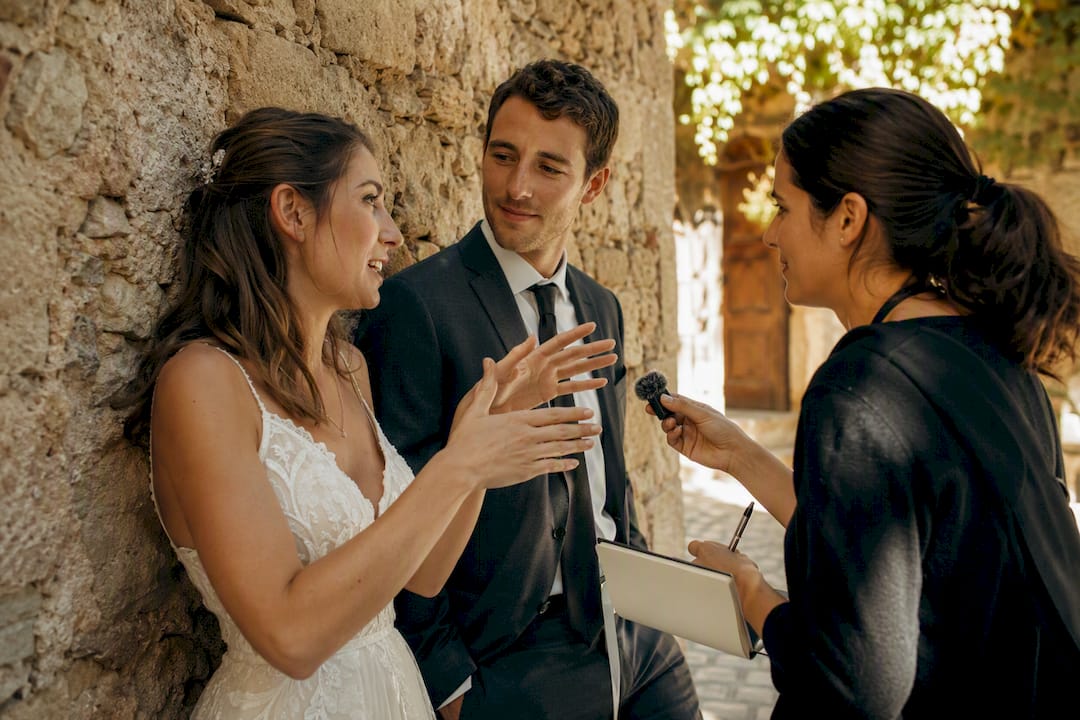
Build breathing room into your timeline. A rushed schedule forces staged shortcuts even from a documentary crew, while an unhurried cocktail hour and realistic portrait window gives real moments time to happen naturally.
A few coordination basics:
- Loop in your planner and photographer early so the videographer can stay unobtrusive rather than competing for angles.
- Confirm who mics up for vows and speeches, and when.
- Tell your bridal party the crew will blend in, so nobody performs for the camera.
- Share your must-have list two to three weeks before the wedding.
- Walk the venue together if possible, so the team knows sightlines in advance.
- On the day, just be present. Trust the filmmaker to catch what matters.
Real Weddings, Real Reactions to Documentary Coverage
Couples who choose documentary coverage tend to describe the same thing afterward: they forgot the cameras were there. That's the entire point of the approach, and it's usually the detail that shows up most often in feedback after the fact.
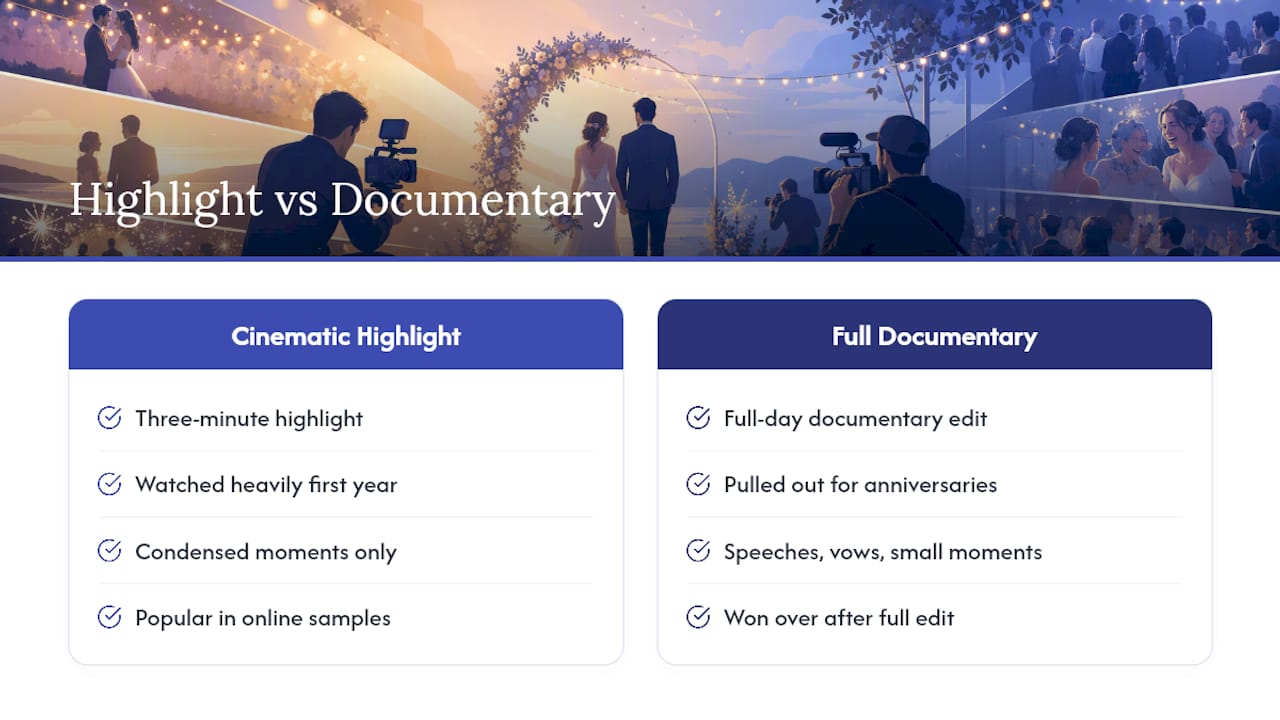
The value tends to compound over time rather than fade. A cinematic highlight gets watched heavily in the first year and then occasionally after that. A full documentary edit, by contrast, becomes the version families pull out for anniversaries, because it holds the actual speeches, the actual vows, and the small in-between moments a three-minute highlight never had room for.
Case studies across the industry echo a consistent pattern: couples who initially worried a documentary approach would feel "too plain" compared to cinematic samples they'd seen online were won over the moment they watched a completed full-day edit and heard their own ceremony again, word for word; you can see an excellent example of this approach in Lauren & Jordan's June wedding at Solton Manor wedding venue, which showcases candid, documentary-style photography in practice. That reaction is common enough that many studios now lead with full edits, not highlights, when showing new clients sample work. It's also why reviewing a portfolio's full-length samples, not just its trailer-style reels, matters more than most couples realize going in.
A Working Photographer's Take on Documentary Coverage
At Larson Pro Photography, documentary work means staying close enough to catch the moment but far enough back that nobody's performing for us. Todd has spent years shooting weddings across San Antonio and the surrounding area, and the pattern holds: the shots couples cherish most are almost never the posed ones.
Documentary isn't always the right call, though. For couples who want a tight, trend-forward film built for sharing, we'll usually recommend a hybrid or cinematic-leaning edit instead.
If You Want This Style, Here's How Larson Pro Photography Delivers It
Larson Pro Photography builds documentary coverage around one idea: you should be living your wedding, not directing it. Our team works unobtrusively, prioritizes natural audio for vows and speeches, and edits sequentially so the final film actually feels like your day rather than a highlight reel with your faces in it.
Typical packages include a short highlight for easy sharing alongside a full documentary edit, with add-ons available for extended coverage or dedicated audio capture during speeches. If you're weighing documentary against a more cinematic approach, we can walk you through both during a consultation so you pick the style that actually fits your priorities, not just what looked good on someone else's feed.
The best next step is simple: browse our wedding services and packages, then request sample full-day edits so you can judge our documentary work the right way, by watching the whole thing, not just the trailer.
Frequently Asked Questions
Why choose documentary style videos over a cinematic highlight film? Documentary style gives you the full, unscripted story of your day, including complete speeches and ceremony audio, rather than a short, music-driven summary built mainly for sharing.
Is documentary style effective for capturing real emotions? Yes. Because the filmmaker stays hands-off and unobtrusive, documentary coverage tends to catch genuine reactions that a directed, posed setup usually misses.
Can I get both a highlight reel and a full documentary edit? Most studios, including Larson Pro Photography, offer hybrid packages that pair a short highlight with a longer sequential edit, so you don't have to choose one over the other.
What should I ask a videographer to confirm they shoot documentary style? Ask to see a full-day edit, not just a highlight, and ask directly about their editing philosophy, turnaround time, and whether they capture natural audio for vows and speeches.
Does documentary-style coverage cost more than cinematic? It can, since longer runtimes and more raw footage sometimes mean more editing time and larger file deliveries, though pricing varies by studio and package.
Sources
- How long is a normal wedding video? | Zola expert advice
- Wedding videography style guide | Brides
- Why documentary-style wedding videography captures the heart of your day | Lindsay Morgan
- Documentary Style Wedding Videography: Complete Guide for Couples in 2026 | Riss Productions