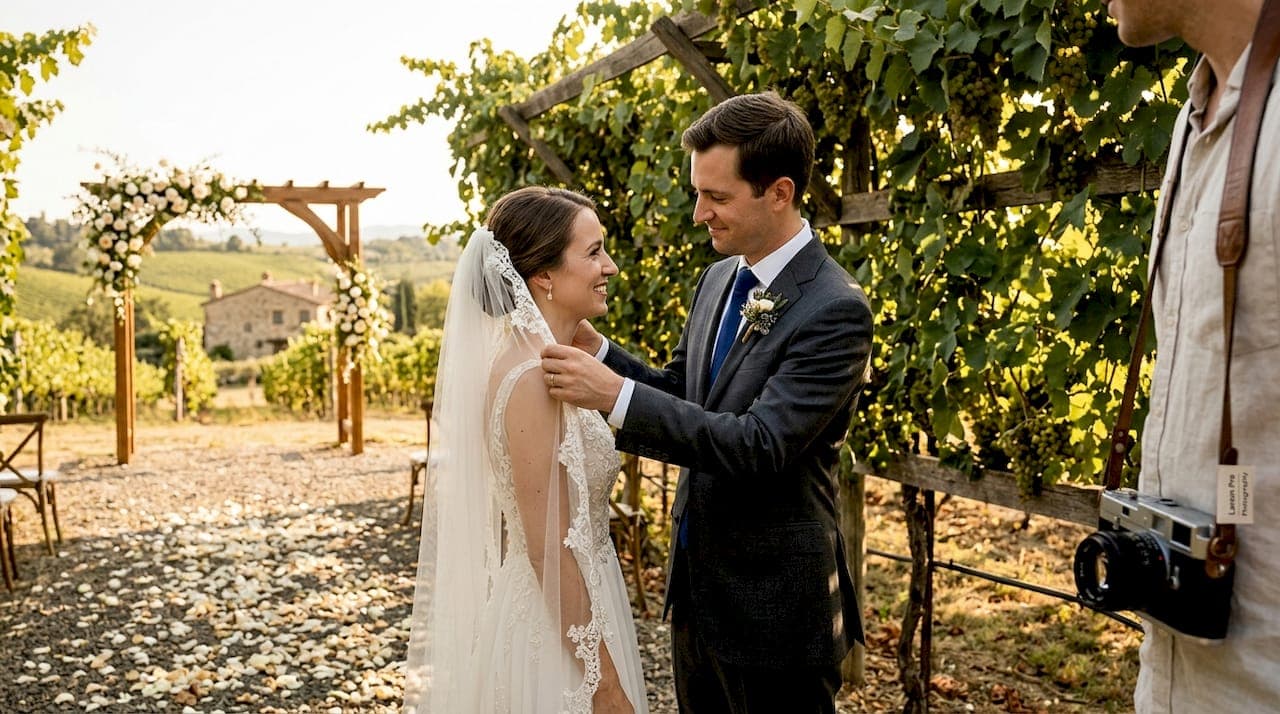
Film wedding photography is the practice of capturing your wedding day on physical photographic film, producing images with a warmth, grain, and emotional depth that digital sensors cannot replicate. Couples choosing film in 2026 are not chasing a trend. They are making a deliberate decision to prioritize artistry, presence, and lasting emotional impact over volume and convenience. Photographers working with Kodak Portra, Fuji 400H, or Ilford HP5 on cameras like the Contax 645 or Mamiya RZ67 produce images that feel lived-in and timeless from the moment the lab scans the negative. If you are asking why use film photography for weddings, the answer starts with intention.
Why use film photography for weddings: the core case
Film changes how a photographer works, and that change flows directly into your images. Film photographers shoot fewer frames with far more intention, since a single roll of 120 medium format film holds only 16 exposures. Digital photographers can fire hundreds of frames in an hour without a second thought. That constraint is not a limitation. It is a creative discipline that produces a curated gallery instead of thousands of near-identical duplicates.
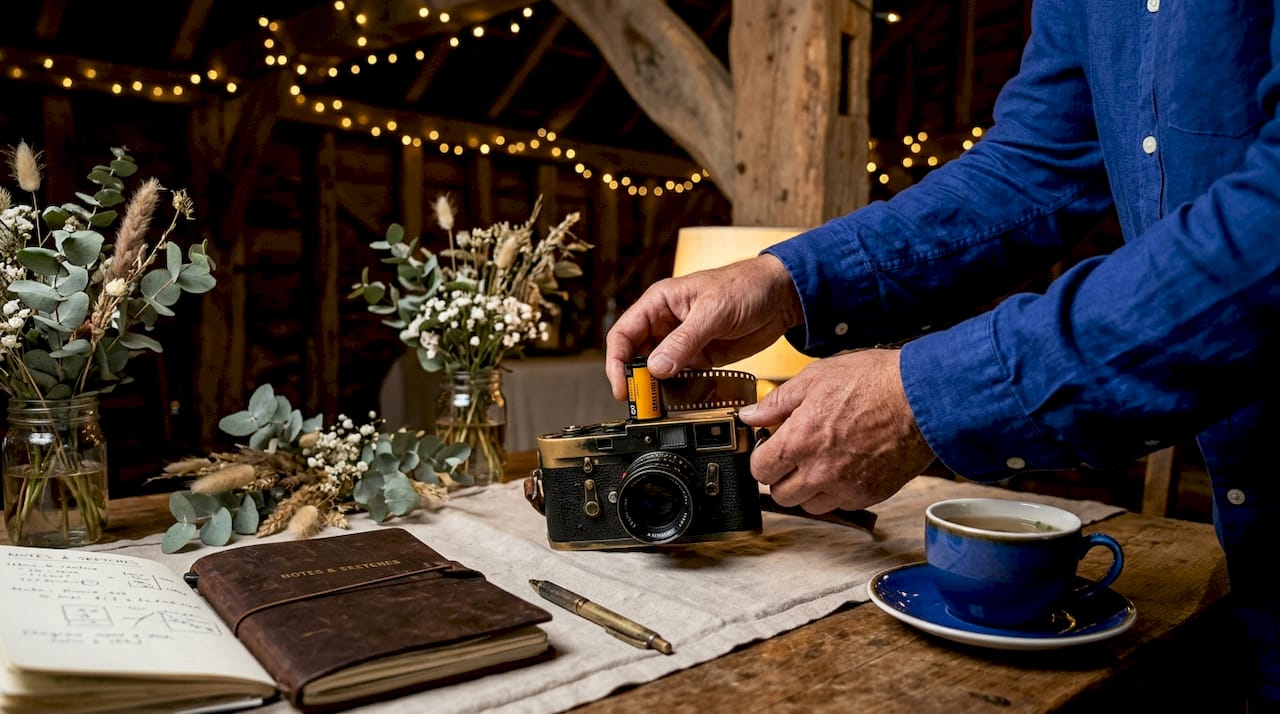
The 2026 cultural shift toward analog hobbies reflects a broader desire for screen-free, mindful creative experiences. Couples who choose film are participating in that shift on one of the most meaningful days of their lives. The result is a wedding gallery that feels considered, not exhaustive.
Physical negatives also matter in a way that a hard drive never will. When your photographer hands you a box of developed negatives alongside your prints, you hold the actual light from your wedding day. That tactile reality strengthens memory and emotional connection in ways no digital file can match.
Here is what the film experience delivers that digital cannot:
- Intentional composition: Every frame costs money and thought, so photographers commit fully before pressing the shutter.
- Curated galleries: Couples receive 300 to 500 carefully selected images rather than 2,000 raw files to sort through.
- Tactile workflow: Lab development, scanning, and printing reconnect both photographer and couple to photography as a craft.
- Anticipation: Waiting for developed film creates a genuine sense of excitement that instant digital review eliminates.
- Physical archive: Negatives stored properly last over 100 years, outlasting most digital storage formats.
Pro Tip: Ask your film photographer which lab they use for development. Reputable labs like Indie Film Lab or Richard Photo Lab produce consistent, color-accurate scans that honor the film stock's natural character.
What makes film emotionally and artistically superior
Film's aesthetic qualities are not accidents. They are the product of chemistry, and film stocks have distinct personalities that shape every image through their inherent limitations and imperfections. Kodak Portra 400 renders skin tones with a warmth that feels almost painterly. Fuji 400H produces cooler, more ethereal greens and blues. These are not filters applied in Lightroom. They are baked into the negative at the moment of exposure.
"Film photography acts as an antidote to digital and AI burnout, offering a slower, more intentional creative process that reconnects photographers to their craft as a tactile, enduring art form."
The nostalgic quality of film resonates emotionally because it mirrors how memory actually works. Memories are not sharp and perfectly exposed. They are warm, slightly soft, and colored by feeling. A film image of your grandmother wiping away a tear during the ceremony does not look like a surveillance photo. It looks like a memory. That distinction matters enormously when you are looking at your wedding album twenty years from now.
Mindful photography reduces stress and promotes emotional expression, which means the slower pace of film shooting actually benefits the couple during the wedding day itself. A photographer who is not machine-gunning frames is a photographer who is present, calm, and connecting with you rather than hiding behind a camera.
The artistic benefits of film for weddings include:
- Natural grain: Adds texture and depth that digital noise cannot replicate authentically.
- Highlight rolloff: Film handles overexposed areas with a gentle fade rather than harsh digital clipping.
- Color rendering: Skin tones appear organic and flattering without heavy post-processing.
- Light leaks and imperfections: These occasional artifacts add character and reinforce the handmade quality of the work.
- Timeless feel: Film images from 2026 will not look dated in 2046 the way heavily filtered digital images often do.
Film vs digital wedding photography: what you need to know
Understanding the practical differences between film and digital helps you make an informed choice rather than a romantic one.
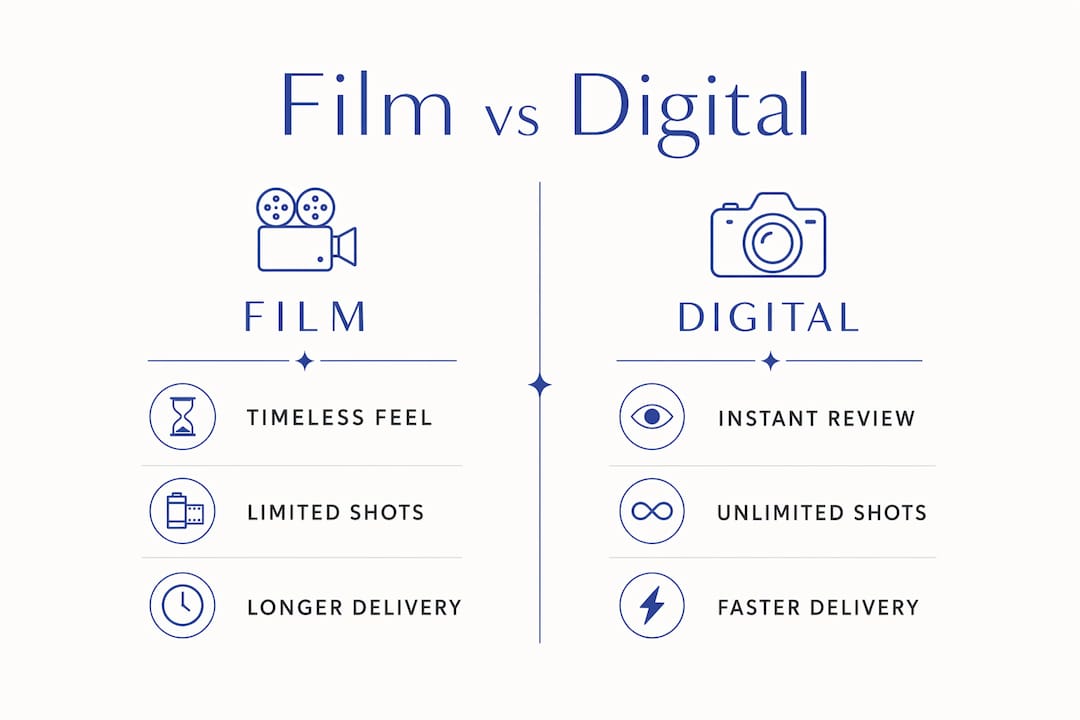
| Factor | Film photography | Digital photography |
|---|---|---|
| Image count | 300 to 500 curated images | 1,500 to 3,000+ raw files |
| Editing flexibility | Limited; color set at exposure | High; extensive post-processing possible |
| Turnaround time | 6 to 12 weeks for lab processing | 2 to 6 weeks typical |
| Aesthetic | Warm, organic, nostalgic grain | Sharp, clean, highly customizable |
| Cost | Higher per image due to film and lab fees | Lower per image at volume |
| Archive longevity | Negatives last 100+ years | Dependent on digital storage maintenance |
Film does not allow instant image review, which means your photographer cannot chimp the back of the camera after every shot. This forces a deeper engagement with the moment and a stronger trust in their own eye. For couples, it means releasing control and trusting the artist you hired. That trust, when placed well, produces extraordinary results.
The turnaround timeline is the most significant practical trade-off. Film must be shipped to a lab, developed, scanned, and returned before editing begins. Budget 8 to 12 weeks for delivery rather than the 4 to 6 weeks common with digital. Many couples find the wait worthwhile. Receiving your gallery feels like a second gift from your wedding day.
Hybrid wedding coverage combining film and digital is the most popular approach in 2026. A photographer might shoot the ceremony and portraits on film for emotional depth, then switch to digital for reception dancing where speed and low-light performance matter. This balances film's emotional aesthetic with digital's flexibility and volume without sacrificing either.
Pro Tip: If you are considering a hybrid approach, discuss the split with your photographer before booking. Knowing which moments they plan to shoot on film helps you understand where the artistic priority lies.
Practical tips for couples choosing film wedding photography
Making film work for your wedding requires planning beyond simply hiring a film photographer.
- Vet the photographer's film portfolio specifically. Many photographers list film as a service but shoot it rarely. Ask to see complete film wedding galleries, not just highlight shots. Look for consistent color, exposure, and composition across an entire day.
- Plan your timeline with lab processing in mind. If you need photos for a thank-you card mailing six weeks after the wedding, film may not meet that deadline. Build your timeline around an 8 to 12 week delivery window.
- Discuss lighting conditions in advance. Film performs beautifully in natural light but requires more planning in dark reception venues. Ask your photographer whether they use flash, and if so, what type. Open flash with a Vivitar 283 produces a very different result than a softbox setup.
- Prioritize printed photos and negative archiving. Physical prints preserve memories better than digital files stored on drives that fail or become obsolete. Ask your photographer about print packages and store your negatives in acid-free sleeves in a cool, dry location.
- Understand the budget reality. Film and lab fees add real cost to every session. A film photographer may charge more than a comparable digital shooter because their cost of goods is higher. That premium reflects the material investment in your images, not just their time.
- Book an engagement session on film first. Shooting your engagement session on film lets you experience the workflow, trust the process, and see how you photograph on film before your wedding day.
Key takeaways
Film wedding photography produces emotionally resonant, timeless images because its physical constraints force intentional artistry, mindful presence, and a curated approach that digital volume shooting cannot replicate.
| Point | Details |
|---|---|
| Intentional frame count | Film limits photographers to 16 to 36 frames per roll, producing curated galleries over raw file dumps. |
| Emotional aesthetic | Kodak Portra and Fuji 400H render skin tones and light with warmth that mirrors how memory feels. |
| Workflow trade-offs | Lab processing adds 6 to 12 weeks to delivery, requiring timeline planning from the start. |
| Hybrid coverage | Combining film and digital balances artistic depth with reception flexibility and volume. |
| Physical archive value | Negatives stored properly outlast digital files, preserving your wedding images for generations. |
Why I believe film is worth every extra dollar and every extra week
When I first started shooting weddings on film, I expected the results to look different. What I did not expect was how differently I would work. Slowing down to compose a frame on a Contax 645 with a roll of Kodak Portra 800 in low church light changed how I saw the entire day. I stopped scanning the room for the next shot and started actually watching what was happening in front of me.
Clients notice that presence. Couples have told me that their film photographer felt less like a vendor and more like a guest who happened to have a camera. That shift in dynamic produces genuine expressions rather than posed ones, and genuine expressions are what make a wedding gallery worth returning to.
The images themselves age differently too. I have looked at film wedding galleries from the 1990s and from last year, and the film work from both decades holds up in a way that heavily processed digital images from even five years ago do not. Film does not go out of style because it never chased a style to begin with. It just recorded light on chemistry, and light does not date.
My honest advice to any couple on the fence: book one session on film before you commit. See how the images feel when you hold a print. See how the waiting feels when you know something beautiful is coming. Most couples who try it never go back to asking for a digital-only package.
— Todd
Explore film wedding photography with Larsonprophotography
Larsonprophotography specializes in wedding photography that combines technical expertise with genuine artistic vision, including film-based coverage for couples who want images that feel as meaningful as the day itself. Based in San Antonio, the team works with couples who understand that great wedding photography is not about volume. It is about the right moments, captured with intention. If you are ready to see what film can do for your wedding gallery, explore the portfolio and reach out through the client inquiry page to start the conversation about your date and vision.
FAQ
What is film wedding photography?
Film wedding photography uses physical photographic film, developed in a lab, to create images with organic warmth, grain, and a timeless aesthetic that digital cameras cannot replicate natively.
Is film photography better for weddings than digital?
Film is not objectively better, but it produces a distinct emotional and artistic result. Couples who prioritize a curated, nostalgic gallery over volume and instant delivery consistently prefer film.
How many photos do you get with film wedding photography?
Most film wedding photographers deliver 300 to 500 carefully selected images, compared to the 1,500 to 3,000 files common with digital coverage. Fewer images means more intentional ones.
How long does film wedding photography take to deliver?
Lab processing and scanning add time to the workflow. Expect a delivery window of 8 to 12 weeks, compared to 4 to 6 weeks for digital-only coverage.
Can you combine film and digital photography at a wedding?
Yes. Hybrid wedding coverage is the most popular approach in 2026, using film for ceremony and portraits and digital for reception moments where speed and low-light flexibility matter most.