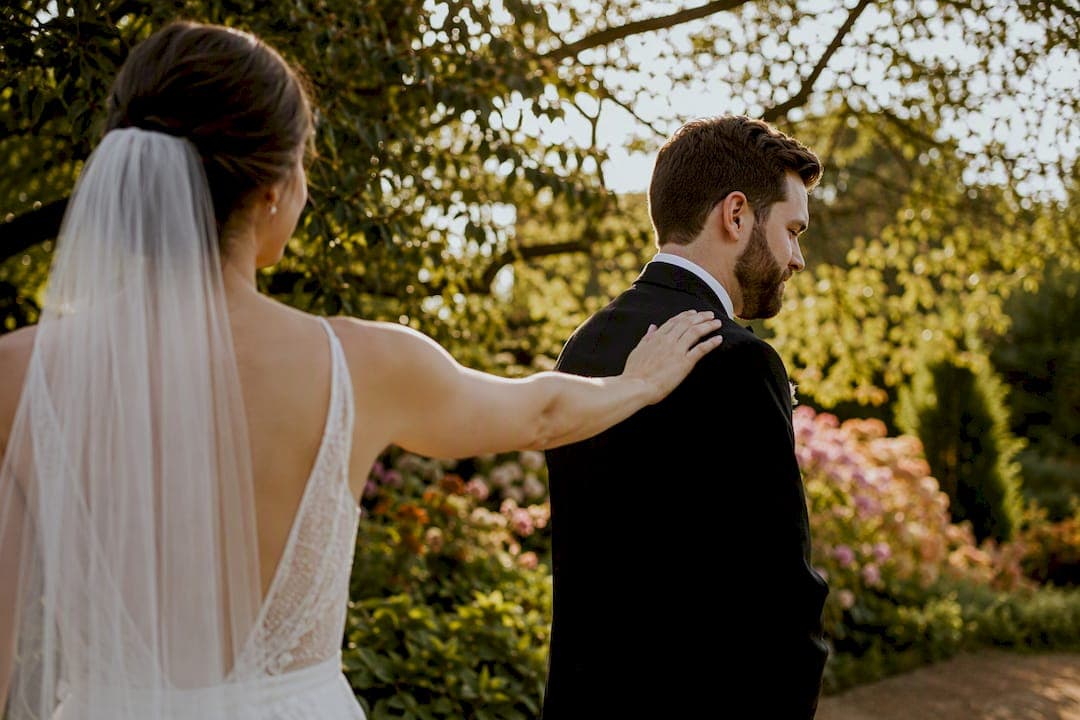
A first look is a planned, private moment before the ceremony when a couple sees each other in wedding attire for the first time, with a photographer present to capture the reaction. It's not a spontaneous run into each other's arms in the hallway. It's staged, timed, and treated as its own mini photo session.
Most couples who choose it do so because they want calmer nerves before the ceremony, more time for portraits, and a private version of the moment that traditionally happens in front of every guest at once. Roughly half of couples in the United States now build a first look into their wedding day, which tells you this isn't a niche preference anymore. If you want fewer surprises in your timeline and a quieter emotional moment before the crowd shows up, keep reading. If you're set on the aisle reveal, you'll still find useful planning logic here.
Key Takeaways
A first look works because it trades a public five-second reveal for a private, well-lit moment that also frees up your afternoon for portraits.
| Point | Details |
|---|---|
| Roughly half of couples choose it | About 50% of couples in the U.S. now build a first look into their wedding day. |
| Schedule 60 to 90 minutes early | Plan for a 15-minute reveal plus 45 to 60 minutes of portrait time afterward. |
| Light matters more than time of day | Open shade or indoor windows beat direct midday sun for the reveal itself. |
| Compromise options exist | A first touch or letter exchange offers a calming moment without spoiling the surprise. |
| Larson Pro Photography builds it into the plan | Full timeline mapping and second-shooter staffing come standard with first-look coverage. |
Table of Contents
- What Is a First Look Session, Exactly?
- Weighing the Pros and Cons of a First Look
- Who Actually Chooses a First Look?
- How a First Look Actually Unfolds
- Sample Timelines: With and Without a First Look
- What Your Photographer and Videographer Should Be Doing
- Choosing a Location and Handling Light or Weather
- Common Myths About First Looks, Debunked
- A Simple Checklist for Planning Your First Look
- What Years of Wedding Days Have Taught Us About Timing
- Our Honest Take on First Looks
- Book Your First Look Session With Larson Pro Photography
- Sources
What Is a First Look Session, Exactly?
A first look session is a scheduled block of time, usually 15 to 30 minutes, where the couple meets privately before the ceremony while a photographer (and often a videographer) documents it. One partner is typically staged with their back to the approach path. The other walks up, taps a shoulder or says a cue word, and turns around. The camera catches the turn, the reaction, and whatever happens in the next minute or two, whether that's tears, laughter, or both.
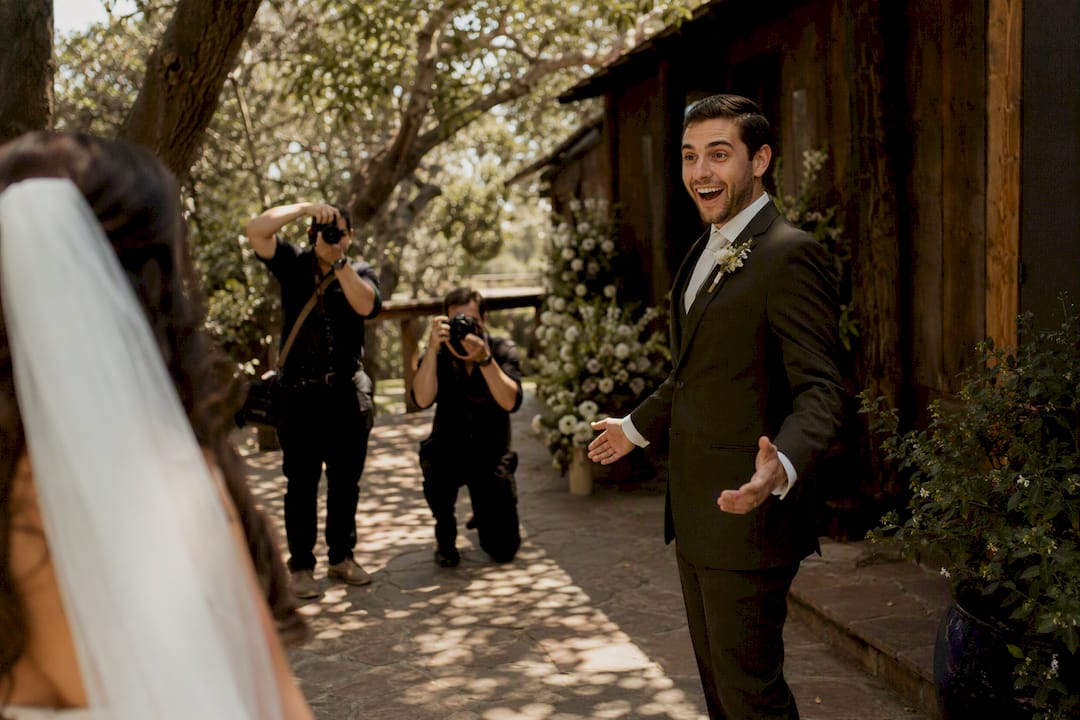
The idea grew out of a shift in wedding photography itself. Decades ago, weddings were shot in a formal, posed style, portrait after portrait, with the ceremony as the emotional center. As documentary and candid photography took over the industry, photographers started looking for ways to capture real, unscripted reactions instead of stiff poses. The first look emerged as a solution: it creates a genuine emotional beat that can be lit, positioned, and shot properly, unlike the ceremony reveal, which happens fast, from a distance, often backlit by whatever the venue gives you.
The contrast with the traditional aisle reveal is really about privacy versus performance. At the altar, you're reacting in front of 100 guests, a photographer, and sometimes a livestream. During a first look, it's just the two of you and your photography team. Some couples find that privacy makes the moment more honest. Others feel it removes the drama they've been picturing since childhood. Neither instinct is wrong.
Weighing the Pros and Cons of a First Look
The case for a first look usually comes down to nerves, light, and time. The case against it usually comes down to tradition and personal preference for surprise.
Reasons couples choose a first look:
- It calms pre-ceremony nerves by giving you a private moment to reset before facing a room full of guests.
- It frees up your afternoon for more couple portraits without eating into cocktail hour.
- It gives photographers better light to work with, since midday sessions can be scheduled around available shade or indoor options.
- It creates a private, unhurried moment instead of a five-second glance down the aisle.
- It converts otherwise-lost portrait time into social time later, so you're not disappearing during your own cocktail hour.
Reasons couples skip it:
- It removes the surprise and public drama of the traditional aisle reveal.
- It requires hair, makeup, and attire to be fully finished earlier in the day than a no-first-look schedule demands.
- Midday timing can mean harsher light unless the location and time are chosen carefully.
- Some family members expect the classic reveal and may push back on skipping it.
If you're the type who gets shaky before big moments, or if you'd rather have 45 extra minutes with your photographer than a dramatic aisle walk, a first look tends to be the better fit. If the aisle moment is non-negotiable for you emotionally, skip it and build your timeline around a longer cocktail hour instead.
Who Actually Chooses a First Look?
Not every couple needs to agonize over this decision. A few patterns show up again and again once you look at who books a first look and who skips it.
- Couples with large guest lists who feel shy in front of crowds often prefer the privacy of a first look over an aisle moment with hundreds of eyes on them.
- Sunset-priority couples who want golden hour portraits often schedule a first look earlier so they're not scrambling for photo time after the ceremony.
- Traditionally-minded couples who've dreamed of the classic aisle reveal since they got engaged usually skip it, and that's a completely valid call.
- Couples with tight ceremony-to-reception windows (a common issue with venues that only allow a few hours) lean on the first look to bank portrait time in advance.
If you and your partner land on different sides of this, there's a middle ground. A first touch, where you hold hands or exchange letters without seeing each other, gives you a calming pre-ceremony moment while preserving the full surprise for the aisle.
How a First Look Actually Unfolds
The choreography is more predictable than people expect. Photographers who do this regularly follow a rhythm that keeps the moment feeling natural instead of stiff.
- Hair and makeup wrap up on both partners, along with full attire and accessories, roughly 90 minutes before the ceremony.
- One partner is positioned in a chosen spot, usually facing away from the approach, while the photographer sets up lighting and framing.
- The second partner approaches slowly, often walking a path the photographer has scouted for good light and a clean background.
- The reveal happens, either with a tap on the shoulder or a verbal cue, and the photographer captures the turn and immediate reaction.
- A short private window follows, usually a minute or two, where couples talk, laugh, or just stand there taking it in without direction.
- Guided portraits begin, moving through couple shots, then wedding party if scheduled, transitioning into whatever the timeline calls for next.
Photographers often set the stage for the initial reveal, then let the moment run documentary-style rather than directing every second, which tends to produce more authentic expressions than a fully scripted approach. Alternatives like a letter exchange or a private vow reading follow a similar structure but skip the visual reveal entirely, which some couples find gives them nerves-calming intimacy without touching the surprise factor.
Sample Timelines: With and Without a First Look
Seeing the clock times side by side makes the trade-off concrete. Here's how a 4:00 PM ceremony typically breaks down both ways.
| Time | With a First Look | Without a First Look |
|---|---|---|
| — | Hair and makeup finish, both partners fully dressed | Hair and makeup continues on later schedule |
| 1:00 PM | First look reveal begins (about 15 minutes) | Partners get ready separately, no shared moment |
| 1:15 PM | Couple portraits, 45 to 60 minutes | Final touch-ups and detail shots |
| 2:15 PM | Wedding party and family portraits | Wedding party portraits (one side only) |
| 4:00 PM | Ceremony | Ceremony, including aisle reveal |
| 4:30 PM | Cocktail hour, couple joins guests | Couple and family portraits, guests wait through longer cocktail hour |
| 6:00 PM | Reception begins on schedule | Reception may start 30 to 45 minutes later |
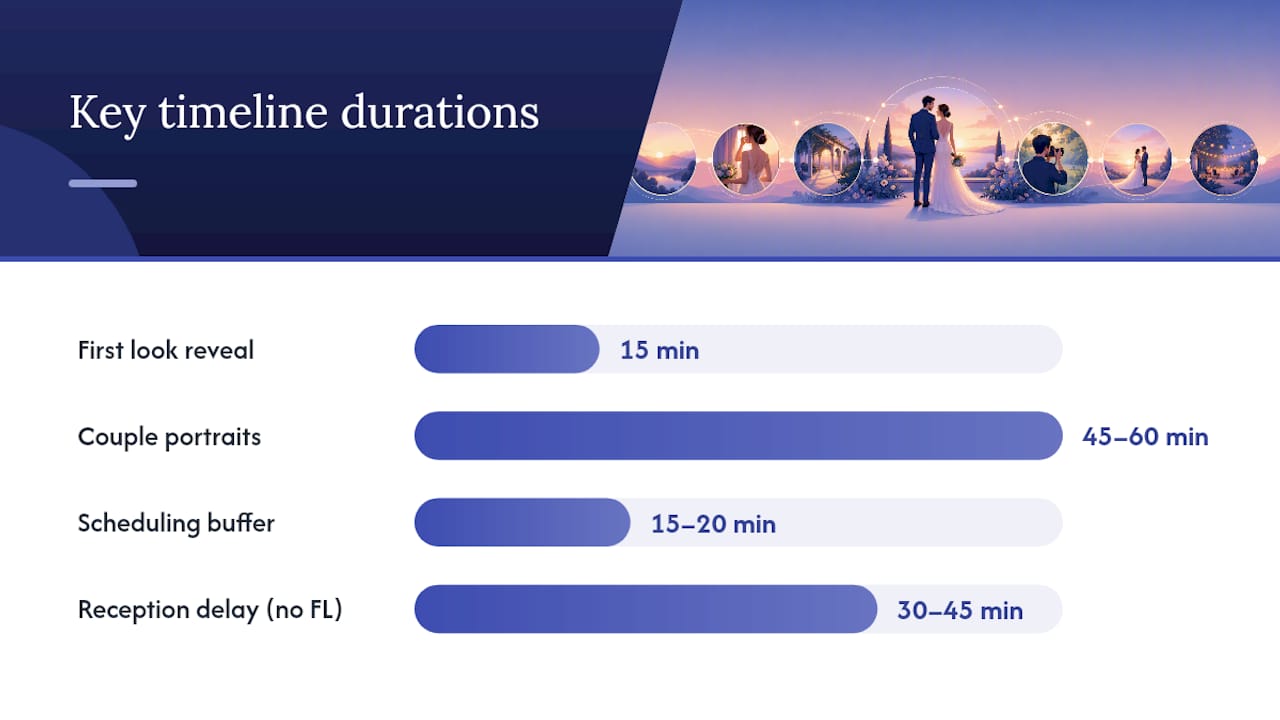
Scheduling the first look 60 to 90 minutes before the ceremony leaves enough buffer for the reveal itself, plus portraits, without rushing anyone. If your wedding party is large or you're doing family combinations on both sides, check out this guide on how to organize family portraits on your wedding day to make sure nothing gets cut short. Build in a 15 to 20 minute buffer regardless, because hair and makeup almost always run long.
What Your Photographer and Videographer Should Be Doing
A good first look session isn't just "stand here and turn around." It's a shot list, a lighting plan, and usually a second photographer working simultaneously.
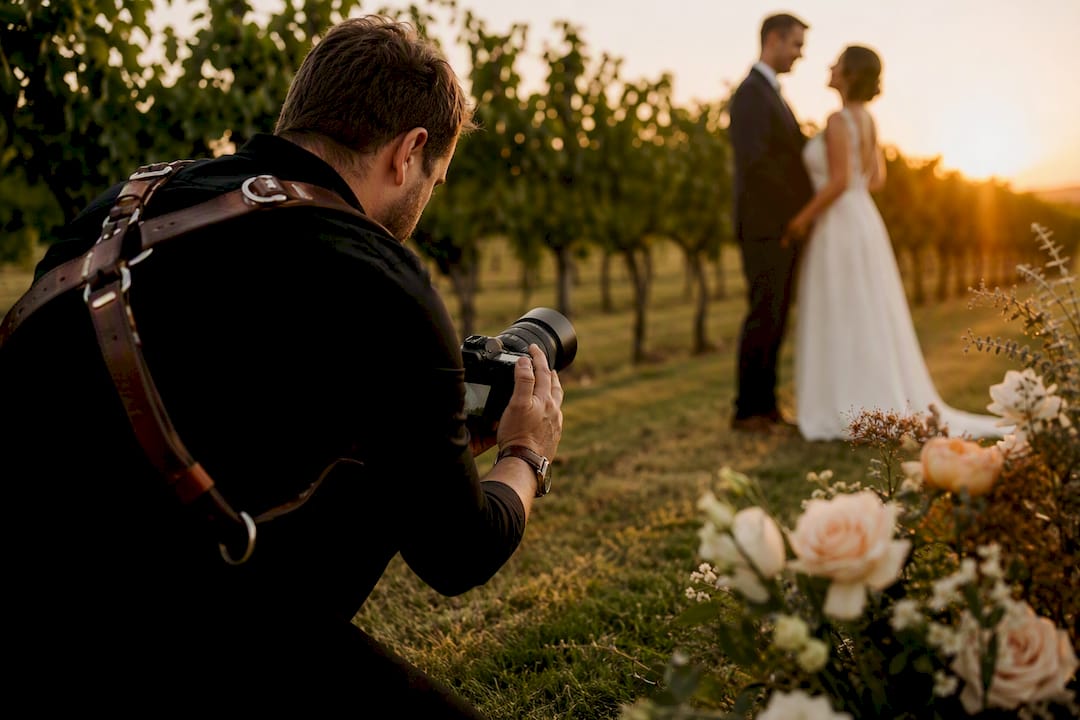
The standard shot list covers the approach (wide shot showing the walk up), the reveal itself (the turn and first eye contact), tight reaction close-ups on both faces, and a wider environmental shot that shows the location. Missing any of these usually means the couple only gets one angle of a moment that deserves more.
Style choices matter too. A fully guided approach gives you controlled poses and predictable results, useful if you want a specific look for an album. A documentary approach lets the moment run without direction, which tends to produce rawer, more candid reactions. Most working photographers land on a hybrid: light staging to set the scene, then stepping back to let real reactions happen, which tends to produce both a planned frame and an unscripted one from the same few minutes.
Before the day, confirm a few logistics with your team:
- Whether a second shooter will cover the reaction from the partner's face while the lead photographer captures the approach.
- How the videographer will sync audio if vows or a first message are exchanged during the moment.
- Whether they'll ask you to repeat the walk-up if the first pass gets blocked or missed.
Pro Tip: Ask your photographer to bring a second shooter for the first look specifically. One camera on the approaching partner and one on the reaction gives you both halves of the story instead of one angle stitched together after the fact.
Choosing a Location and Handling Light or Weather
Privacy matters as much as prettiness here. A courtyard, a hotel corridor, a rooftop, or an indoor room with large windows all work, as long as you can keep the space clear of early guests and wandering relatives.
Lighting deserves real planning since first looks often land at midday, which isn't naturally flattering. A few rules of thumb:
- Look for open shade or overcast conditions rather than direct sun, which creates harsh shadows on faces.
- Avoid full midday sun entirely if you have a choice of timing or location.
- Save dramatic golden-hour portraits for after the ceremony, since the first look window usually falls earlier.
- Scout an indoor backup location in advance in case of rain, since first looks are harder to reschedule than a ceremony processional.
Open shade or diffused light near large windows tends to flatter skin tones far better than direct sun, which is why so many photographers push indoor or covered locations for this specific session even on sunny days.
Common Myths About First Looks, Debunked
"It ruins the emotional impact of the ceremony." Couples who've done a first look consistently report that seeing each other privately doesn't drain the aisle moment. It just changes what that moment is about: relief and joy instead of shock.
"It's basically a kiss-and-tell moment, so is kissing appropriate?" Yes, plenty of couples kiss during a first look, and plenty don't. There's no etiquette rule against it. It's your moment to react however feels natural.
"It takes forever and eats into the whole day." A typical session runs 15 to 30 minutes total, including the reveal and a few immediate portraits, not the full portrait block.
"There's no real drawback, so everyone should do one." That's not true either. If the surprise of the aisle reveal genuinely matters to you, skipping the first look is a legitimate choice with zero downside for the right couple.
A Simple Checklist for Planning Your First Look
Send this to your photographer, planner, and venue contact so everyone's working from the same plan.
Confirm with your photography team:
- Exact time and duration of the first look, plus a 15 minute buffer
- Location scouted in advance, with a rain backup identified
- Second shooter assigned for reaction coverage
- Shot list agreed on: approach, reveal, close-ups, wide environmental frame
- Who's present (just the couple, or a videographer too)
Confirm with your venue and wedding party:
- Which room or outdoor space stays reserved and guest-free during the session
- What time hair and makeup absolutely must wrap up to hit the schedule
- Whether the wedding party needs to be ready and staged nearby for portraits right after
- How many final portraits you actually want, so the timeline doesn't run long
Reviewing a full wedding photography checklist alongside this list catches anything specific to your venue or vendor lineup.
What Years of Wedding Days Have Taught Us About Timing
One case that stands out involved a couple with a strict 4:30 PM ceremony start and a venue that only allowed access two hours before. Without a first look, there simply wasn't time for family portraits, couple portraits, and the ceremony itself. Building in a first look at the top of that window meant the couple's portraits and half the family combinations were finished before the ceremony even started, and cocktail hour became actual social time instead of a photo scramble.
The biggest recommendation from experience: staff it with a second shooter. One camera on the reveal, one on the reaction. Missing either half means losing part of the story...
Our Honest Take on First Looks
Larson Pro Photography most often recommends a first look for couples juggling a large wedding party, a tight ceremony window, or genuine nerves about walking down the aisle in front of a crowd. It's not a universal fix, but for those specific pressures, it solves real logistical problems.
The practical next step: pull up your ceremony start time and count backward. If hair, makeup, and travel leave you less than two hours of breathing room before guests arrive, a first look is worth a serious conversation with your photographer this week.
Book Your First Look Session With Larson Pro Photography
Choosing whether to do a first look is really a scheduling decision disguised as an emotional one, and that's exactly where a photography team with a real system pays off. Larson Pro Photography builds first-look coverage, second-shooter staffing, and full timeline planning into every wedding package, so you're not piecing together vendor logistics on your own.
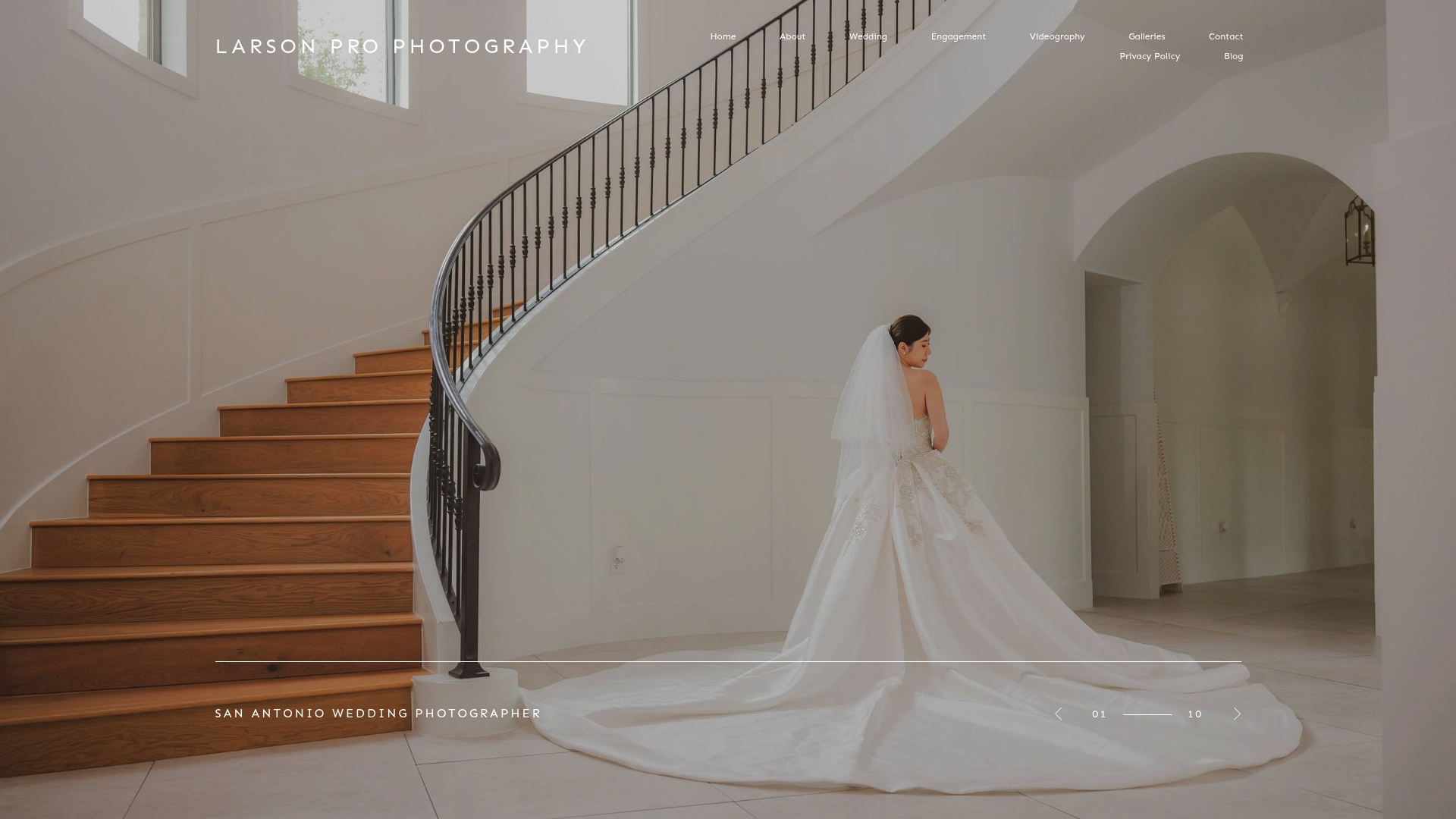
Whether you're picturing a documentary-style reveal or a fully guided one, our team scouts your venue for light and privacy ahead of time and maps the choreography before your wedding day arrives. Couples booking engagement sessions often use that shoot as a trial run for how they react on camera together, which makes the real first look feel far less unfamiliar. Visit the Larson Pro Photography clients page to check availability for your date and start building a timeline that actually fits your ceremony window.
Sources
- Pros and cons of doing a first look
- Wedding First Look: How to Plan It, What to Expect & Is It Right for You?
- Wedding First Look: Pros, Cons, Timing, Locations + How to Plan Yours - Paperlust