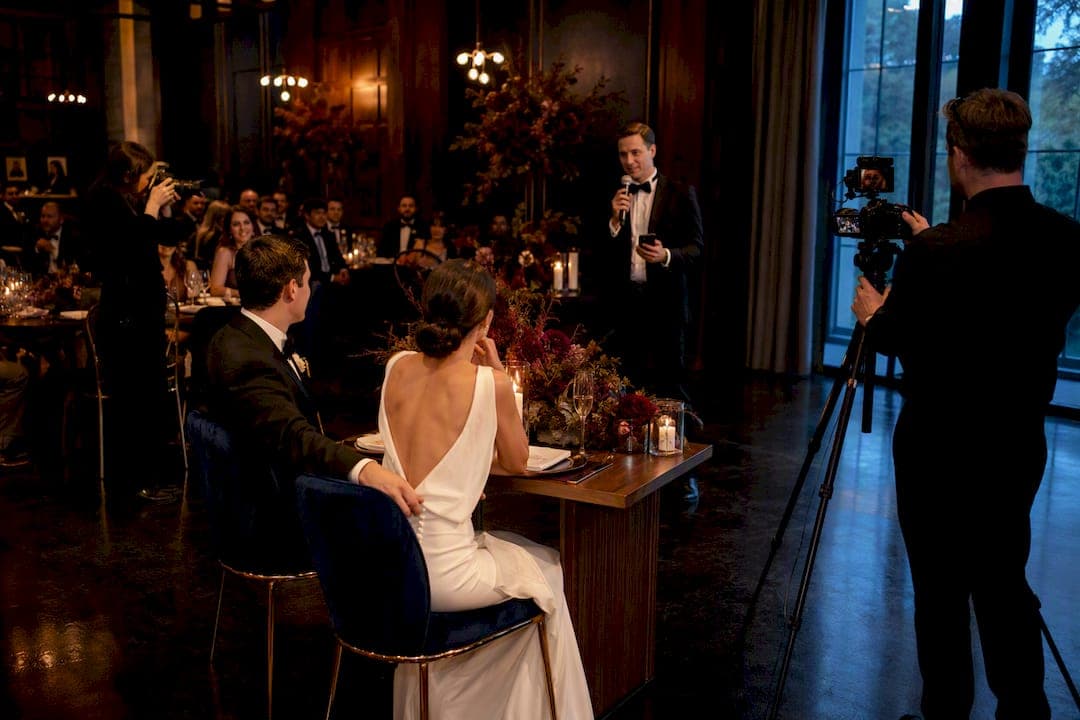
Bundle photo and video only when both portfolios show the same level of skill across a full wedding, not just a highlight reel. Expect roughly a 10 to 20 percent discount compared to booking two separate vendors, simpler logistics, and one contract instead of two. Before you sign anything, ask for full-day sample galleries. That single request tells you more than any pricing page will.
TL;DR:
- Bundling photo and video only makes sense if both portfolios demonstrate consistent, high-quality work across the full wedding day from a single, well-coordinated team.
- Expect discounts of 10 to 20 percent on combined packages, but verify savings through itemized quotes that include potential travel fees or add-ons.
- Full-day sample galleries and highlight reels from the same wedding are essential to assess the vendor’s quality and consistency before making a decision.
- Pricing for wedding photography generally ranges from $2,000 to over $6,000, with videography typically between $1,500 and $8,000, depending on deliverables and hours.
- Always clarify contract terms, including cancellation policies, overtime rates, and licensing rights, before signing any wedding photography or videography agreement.
Table of Contents
- What's Included in Wedding Photo Video Packages by Tier
- What Photo and Video Packages Actually Include
- How Much Do Wedding Photo Video Packages Cost?
- When Should You Bundle Photo and Video Instead of Hiring Separately?
- What Questions Should You Ask Before Booking a Package?
- How Long Does It Take to Receive Your Wedding Photos and Film?
- A Practitioner's View on Structuring Photo and Video Packages
- What's the Real Total Cost of a Wedding Photo and Video Package?
- What Contract Terms and Cancellation Policies Should You Expect?
- How Do Wedding Vendors Typically Structure Payment?
- How Do You Judge a Vendor's Style and Quality From Their Portfolio?
- Why Quality Consistency Matters More Than the Lowest Price
- Ready to Book Your Wedding Photo and Video Package?
- Sources
What's Included in Wedding Photo Video Packages by Tier
Most studios build their pricing pages around three or four tiers, and once you know the pattern, comparing quotes gets a lot faster. Here's the typical breakdown, based on how package architecture is commonly structured across the industry:
- Lite: 4 to 6 hours of coverage, one photographer and often one videographer, a short highlight film (2 to 4 minutes), and a set of edited digital images delivered through an online gallery. No album, no second shooter.
- Standard: 6 to 8 hours, sometimes a second shooter added for photo, a highlight film in the 4 to 6 minute range, a larger batch of edited images, and an option to add a basic album.
- Full day: 8 to 10 hours of coverage (getting ready through reception send off), two shooters for photo and often two for video, a longer highlight film, full ceremony and speech edits, and an album included rather than optional.
- Premium: 10+ hours, multiple shooters across both photo and video, drone coverage, a feature-length film alongside the highlight reel, a premium album, and sometimes a second-day or rehearsal dinner add-on.
Watch how the bundle discount actually shows up in a quote. Some studios subtract a flat percentage from the combined total; others waive one travel fee or throw in an add-on like an engagement session at no extra charge. Ask the vendor to show you the itemized breakdown so you can see exactly where the savings land, not just the bottom-line number.
What Photo and Video Packages Actually Include
Every package has a baseline, and then a layer of upgrades that vendors will happily add for a price. Knowing the difference keeps you from either overpaying or getting surprised later.
Standard inclusions across most contracts:
- Edited digital images (color-corrected, not raw) delivered via a private online gallery
- A highlight film with licensed music, typically 3 to 8 minutes
- Basic color and exposure correction on both photo and video
- A download or sharing link for guests, sometimes time-limited
Common optional upgrades:
- Full ceremony or full speech edits (not just highlights)
- Raw, unedited footage or images
- Printed albums, parent albums, or framed prints
- A second shooter for either photo or video
- Drone coverage for aerial shots
- Livestreaming for guests who can't attend in person
Get the rights question in writing. Most contracts give you a personal-use license to print and share images, while the studio retains copyright. That's standard, but confirm it before booking, especially if you plan to sell prints or use footage commercially down the road.
Pro Tip: Ask specifically whether the highlight film's music is licensed for the delivery format you'll use. Some royalty-free tracks are cleared for private viewing but not for public platforms like YouTube, which matters if you want to share the film widely.
How Much Do Wedding Photo Video Packages Cost?
Pricing swings widely by market, but there are consistent bands worth knowing before you start collecting quotes. Photography alone commonly runs from around $2,000 on the low end to well over $6,000 for full-day, multi-shooter coverage. Videography alone typically falls between $1,500 and $8,000, depending on film length and deliverables. Combined bundles for an 8-hour day frequently land somewhere between $3,000 and $6,000 in a mid-market range, though premium studios in major metros push well past that.
By the numbers: Couples typically spend 10 to 15 percent of their total wedding budget on photo and video combined. On a $30,000 wedding, that's $3,000 to $4,500 set aside before you even start comparing vendors.
The biggest cost drivers aren't mysterious: years of experience, total hours booked, number of shooters, how long the final film runs, and how far the team has to travel. A studio charging $2,500 for 6 hours with one shooter is doing fundamentally different work than one charging $5,500 for 10 hours with two shooters per role. Compare the inputs, not just the sticker price.
When Should You Bundle Photo and Video Instead of Hiring Separately?
Bundling makes sense for a specific kind of couple, and it's a mistake for another kind. Here's how to tell which one you are.
Reasons to bundle:
- One team means one timeline, one point of contact, and one contract to manage
- Coordination friction drops significantly when the photographer and videographer already work together
- You typically save 10 to 20 percent versus two separate vendors, plus one travel fee instead of two
Reasons to hire separately:
- Some bundled studios have a strong photo portfolio but subcontract video (or vice versa), which means uneven quality
- Subcontracted vendors may have never worked with the lead team before your wedding day
- You lose the ability to mix the single best photographer with the single best videographer in your market
The decision rule is simple: bundle only if both full galleries (not the highlight reel) show consistent, strong work, and the two roles are filled by employees or documented, repeat collaborators. If a studio can't show you that, hire separately.
What Questions Should You Ask Before Booking a Package?
Comparing quotes on price alone is how couples end up disappointed. Use this rubric to sort vendors fast.
Must-haves: confirmed team size, a full-day sample gallery from an actual wedding, and a stated delivery timeline in writing.
Deal-breakers: no full-day samples available on request, or a studio presenting subcontracted videographers as in-house staff without disclosing it.
Nice-to-haves: album options, drone coverage, engagement session bundling.
Ten questions worth asking every vendor you're considering:
- Are the photographer and videographer employees, or subcontracted for the day?
- How many weddings have this photo and video team worked together?
- Can you send one full wedding gallery and its matching highlight film from the same date?
- What percentage of images actually get delivered edited, versus just culled?
- What's your overtime rate if the reception runs long?
- Are travel fees included, and at what distance do they start?
- What are the cancellation and rescheduling terms?
- Is raw, unedited footage available as an add-on?
- Who builds the day-of shot list and timeline, us or you?
- What's the realistic turnaround for the sneak peek, full gallery, and final film?
Pro Tip: Always request one complete wedding, photo gallery and highlight film both, from the same date. A studio that only shows you highlight reels stitched together from a dozen different weddings is hiding something about consistency.
For more on how the two roles actually divide labor on the day, a guide comparing photographer and videographer responsibilities breaks down where overlap and friction typically happen.
How Long Does It Take to Receive Your Wedding Photos and Film?
Delivery timelines vary by studio size and season, but the general pattern holds across most markets:
- Sneak peek (a handful of edited images): 48 to 72 hours
- Full photo gallery: 3 to 12 weeks
- Highlight film: 4 to 12 weeks
- Full ceremony or speech edit: 4 to 16 weeks
Popular add-ons and rough price bands: an extra hour of coverage, a second shooter, albums running $200 to $1,200 or more depending on materials, drone footage around $200 to $1,000, and expedited delivery fees if you need your gallery faster than the standard window. A reasonable budgeting habit is setting aside 5 to 10 percent of your package price for add-ons or overtime you didn't originally plan for. Wedding days rarely run exactly on schedule.
A Practitioner's View on Structuring Photo and Video Packages
At Larson Pro Photography, package tiers are built around hours and team size first, deliverables second. An 8 to 10 hour full-day package with two shooters isn't padding. It's what it actually takes to cover getting-ready shots, the ceremony, family formals, and reception coverage without gaps.
Coordination matters as much as talent. Pre-wedding walkthroughs, a single owner of the day-of timeline, and clearly assigned shot responsibilities between photo and video prevent the two teams from competing for the same angle during a first kiss or toast. That's a detail couples rarely think to ask about until it goes wrong.
What's the Real Total Cost of a Wedding Photo and Video Package?
The quoted package price is rarely the final number. Travel fees are the most common add, and they kick in once a venue sits beyond a studio's standard service radius, often 20 to 30 miles, with per-mile or flat surcharges beyond that. Ask for the exact radius and rate up front rather than assuming it's included.
Rush delivery is another line item that catches couples off guard. If you need your gallery or film faster than the standard turnaround, most studios charge an expedite fee, sometimes a flat rate, sometimes a percentage of the package price. If you're not in a hurry, skip it and save the money.
Permits show up more than people expect, especially for ceremonies or receptions at public parks, beaches, or historic venues that require a photography permit or a liability certificate naming the venue as insured. Some venues bill this directly; others expect the couple or vendor to handle it. Clarify who's responsible before the contract is signed.
Other line items worth confirming: overtime rates if the day runs long, sales tax where applicable, and whether a second-day session (like a rehearsal dinner) is billed as a separate booking or an add-on to the main package. None of these are hidden in a shady sense, they're just easy to miss when you're comparing base prices across three or four vendors.
What Contract Terms and Cancellation Policies Should You Expect?
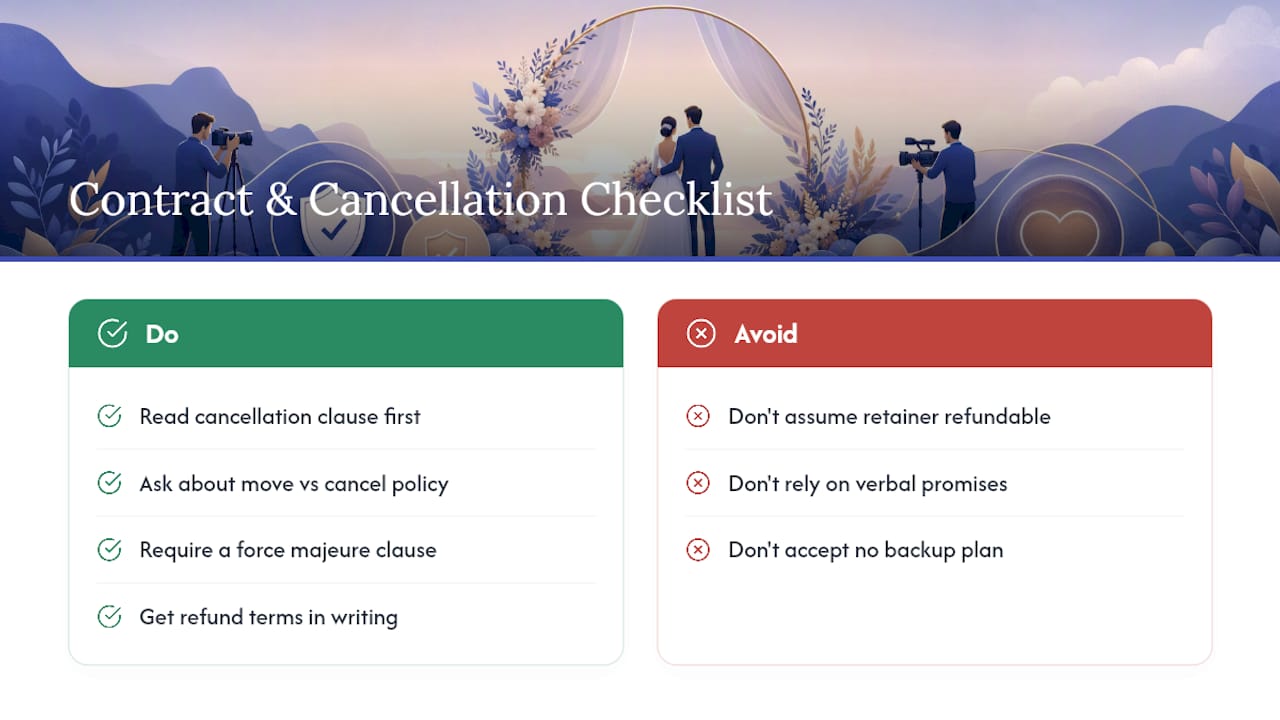
A wedding photo and video contract should spell out coverage hours, deliverables, payment schedule, and what happens if either side needs to cancel or reschedule. Read the cancellation clause before anything else. Most studios keep the retainer (the upfront deposit) as non-refundable once signed, since that date is now blocked off and turned away from other clients.
Rescheduling terms differ from cancellation terms, and couples often confuse the two. A studio might allow a date change with no penalty inside a certain window, say 30 to 60 days before the original date, but charge a rebooking fee closer to the event. Ask specifically what happens if you move the wedding versus canceling it outright.
Look for a force majeure clause covering events outside anyone's control (severe weather, illness, venue closure) and how it affects payment and rescheduling. Also check what happens if the photographer or videographer becomes unavailable due to illness or emergency. A solid contract names a backup shooter or outlines a refund path rather than leaving that scenario undefined.
Finally, confirm what "cancellation" actually refunds. Some contracts refund nothing past the retainer once signed; others prorate based on how close to the date you cancel. Get this in writing, not as a verbal assurance during your consultation.
How Do Wedding Vendors Typically Structure Payment?
Most studios split payment into two or three installments rather than requiring the full package price up front. A common structure looks like a retainer due at booking (often 20 to 50 percent of the total) to hold the date, a second payment at a milestone before the wedding, sometimes 60 to 90 days out, and the remaining balance due shortly before or on the wedding day itself.
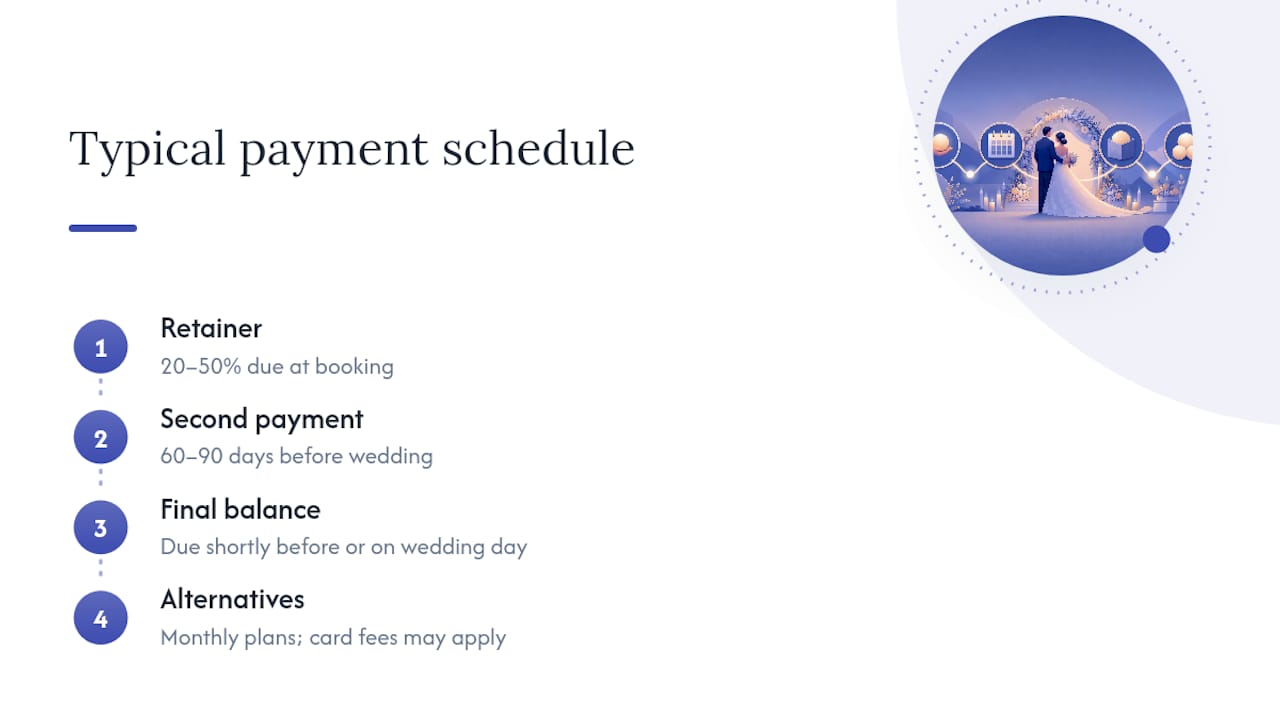
Accepted payment methods usually include credit card, bank transfer, and check, with some studios offering payment plans that split the balance into smaller monthly installments rather than two or three lump sums. Credit card payments sometimes carry a small processing fee, so ask whether that applies before choosing how to pay.
Avoid any vendor asking for full payment before the wedding with no milestone structure at all. It's not standard practice, and it removes your leverage if a dispute comes up over deliverables afterward. A clear payment schedule tied to specific dates, written into the contract, protects both sides.
How Do You Judge a Vendor's Style and Quality From Their Portfolio?
A polished website doesn't tell you much. What tells you everything is asking for a full, unedited-by-highlight-reel wedding gallery from start to finish, ceremony, reception, the quiet moments in between. Highlight reels are curated from the best 2 percent of a shoot. Full galleries show you consistency, or the lack of it.
Look specifically at lighting handling across different conditions: outdoor golden hour, dim reception lighting, bright midday ceremonies. A photographer who shines in one setting and struggles in another will show it in a full gallery, never in a highlight reel.
For video, watch how a highlight film handles pacing and sound mixing during speeches specifically. Speeches are the hardest audio to capture cleanly, and a studio that nails that detail is usually strong across the board. Practical tips on coordinating shots between photo and video teams are worth reading if you want to understand what separates a well-run shoot from a chaotic one.
Also check how recent the portfolio samples are. Editing styles shift year to year, and a gallery from five years ago may not reflect what you'll actually receive.
Why Quality Consistency Matters More Than the Lowest Price
The conventional wisdom says shop for the best price and negotiate hard. That advice falls apart the moment you're comparing two bundles that look identical on paper but deliver wildly different results on the actual wedding day. Price tells you almost nothing about whether the photo and video teams have worked together before, or whether the "bundle" is really one studio managing two strangers.
What the research actually supports is simple: full-day sample consistency predicts satisfaction far better than the number on the quote. A 10 to 20 percent bundle discount is real, but it only pays off when both halves of the team are equally strong. Chase the cheapest combined package and you risk paying full price for uneven work.
Prioritize this first: request the full gallery and matching film from one real wedding before you compare a single dollar figure. Everything else, tiers, add-ons, delivery windows, matters less if the underlying work isn't consistent.
— Todd
Ready to Book Your Wedding Photo and Video Package?
Larson Pro Photography builds custom packages around your actual wedding day, not a rigid tier that ignores your venue, guest count, or timeline. Hours, team size, and deliverables get scoped to what your day genuinely needs, whether that's a tight 6-hour celebration or a full 10-hour production with drone coverage and a feature film.
You don't have to guess what you're getting. Full wedding galleries and matching highlight films are available to review before you commit to anything, so you can judge consistency for yourself rather than relying on a curated reel. If an engagement session is part of your plans, Larson Pro's engagement page shows how that work pairs with wedding day coverage. When you're ready to see real samples and get a custom quote, visit the clients page to start the conversation. For photographers and studios building out their own social presence, Presly's tools for wedding photographers are worth a look too.