
A wedding videographer is defined as the professional responsible for capturing motion, sound, and emotion during your ceremony in a way no photograph can replicate. The role of videographer during ceremonies goes far beyond pointing a camera at the altar. A skilled ceremony videographer functions as a storyteller who manages audio equipment, coordinates with photographers and planners, anticipates unscripted emotional moments, and delivers a finished film that lets you relive your wedding day with full sensory depth. Around 75% of couples who skip videography later regret missing the emotional audio and motion only video can capture. That statistic tells you everything about the stakes involved in this decision.
How do videographers expertly capture ceremonies beyond just filming?
The ceremony is not a passive event to record. It is a set piece where storytelling emerges from capturing subtle emotional dynamics rather than just documenting what happens at the altar. A professional ceremony videographer arrives with a plan, not just a camera bag.
Pre-wedding coordination is the foundation of expert ceremony coverage. Before your wedding day, a skilled videographer meets with your planner, photographer, and venue coordinator to map out the space, confirm the ceremony timeline, and identify restrictions on movement or lighting. This preparation prevents the kind of on-the-fly scrambling that costs you key moments.
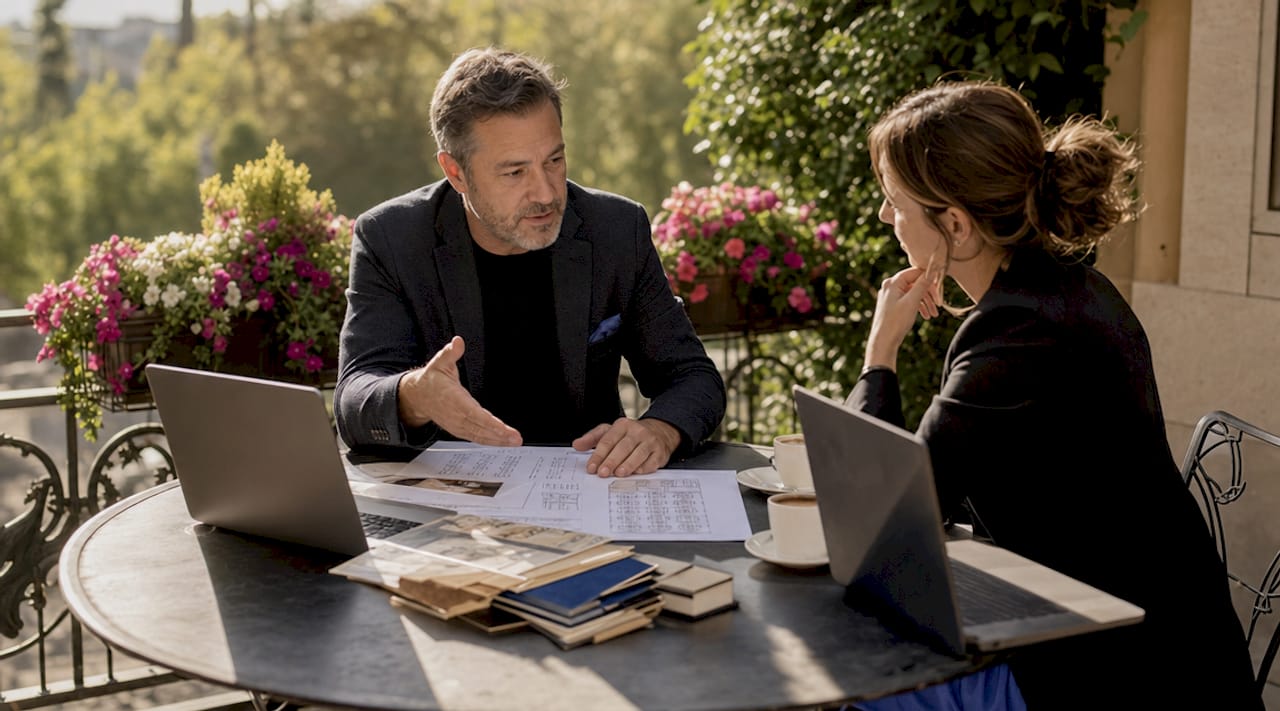
Positioning strategy separates professionals from amateurs. A videographer working a ceremony thinks in angles: a wide shot from the back of the aisle, a tight shot from a side position near the officiant, and a second camera covering guest reactions. Experienced videographers move rhythmically with the ceremony to capture family reactions discreetly, maintaining an unobtrusive presence throughout. The goal is to be invisible to guests while being everywhere the story is happening.
The moments between scripted events carry enormous emotional weight. A grandmother wiping a tear during the processional, a best man's nervous laugh, a flower girl losing interest halfway down the aisle. These unscripted details are what bring the story alive beyond static footage, and capturing them requires constant attention and anticipation rather than a fixed camera position.
Pro Tip: Ask your videographer how many camera operators will be present during the ceremony. A single operator cannot simultaneously cover the couple, the officiant, and guest reactions. Two cameras are the minimum for comprehensive ceremony coverage.
Here is what a professional videographer manages simultaneously during your ceremony:
- Monitoring audio levels on wireless lavalier microphones placed on the officiant or groom
- Adjusting camera positions between ceremony phases without blocking guest sightlines
- Tracking lighting changes, particularly for outdoor ceremonies where cloud cover shifts exposure
- Anticipating emotional peaks like the first look at the altar, the ring exchange, and the first kiss
- Communicating silently with a second shooter to coordinate angles without disrupting the ceremony
What makes audio quality the most crucial factor in ceremony videography?
Audio quality is the single most important technical element in a wedding film, and it is also the element most couples never think to ask about. 41% of negative reviews of wedding videographers cite audio issues as the primary complaint. That number reflects a real gap between what couples expect and what underprepared videographers deliver.
The reason audio matters so much comes down to rewatchability. You can watch a slightly shaky shot and still feel the emotion. You cannot recover vows that were recorded as muffled noise under ambient crowd sound and venue reverb. Vows and speeches provide narrative anchors that heighten emotional impact and rewatchability, making clean audio capture non-negotiable for a film that holds up over decades.
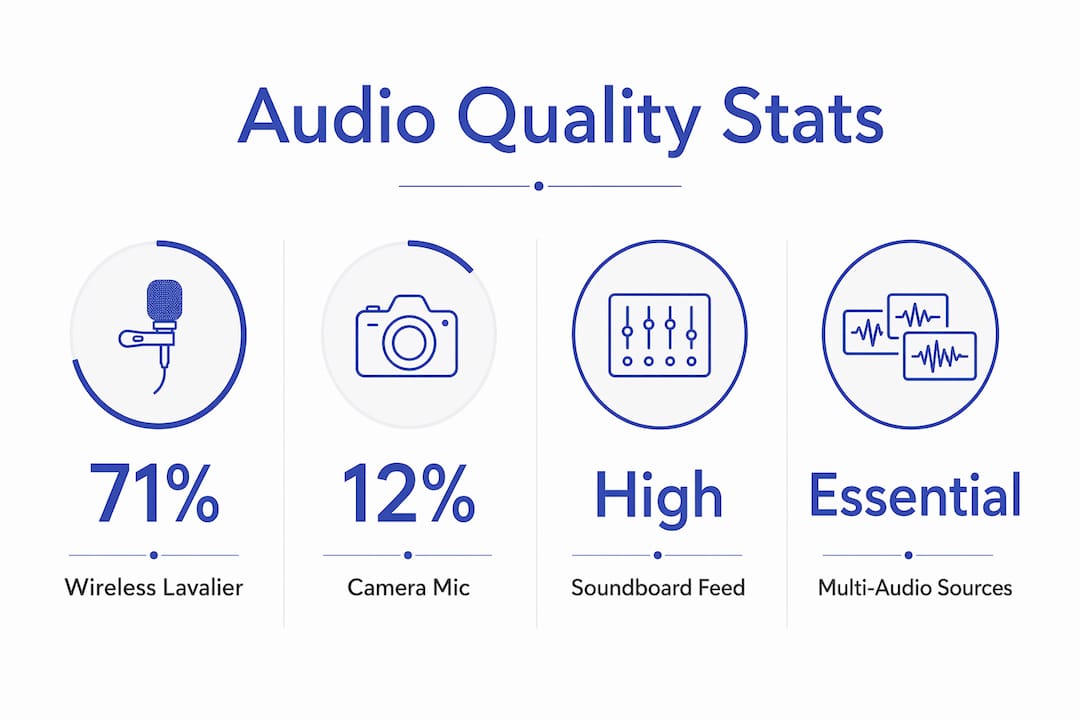
The technical gap between amateur and professional audio capture is significant. Wireless lavalier mics increase usable vow audio from 12% to 71% compared to relying on camera-mounted microphones. That is not a marginal improvement. It is the difference between a film you watch once and one you share with your children.
Most couples assume the venue's PA system handles audio automatically. Venues' PA systems often provide the highest quality audio but are underutilized by many videographers who either do not request a board feed or lack the equipment to connect to it. A professional uses multiple redundant sources: a lavalier on the officiant, a second recorder as backup, and a direct feed from the venue's soundboard when available.
| Audio method | Coverage quality | Best use case |
|---|---|---|
| Camera-mounted microphone | Low, picks up ambient noise | Backup only, never primary |
| Wireless lavalier microphone | High, captures direct speech | Primary source for vows and officiant |
| Venue soundboard feed | Very high, clean signal | Ideal when venue permits access |
| Handheld recorder near altar | Medium, directional capture | Redundancy for outdoor ceremonies |
Pro Tip: When interviewing videographers, ask specifically: "How many audio sources do you run during the ceremony, and what is your backup plan if a lavalier fails?" Any hesitation or vague answer is a red flag.
How does a videographer coordinate with other vendors during the ceremony?
Vendor coordination is where ceremony videography either succeeds or breaks down. A videographer working in isolation from your photographer and planner creates conflicts that show up in the final film as blocked angles, missed moments, and awkward positioning. Videographers work closely with photographers and planners pre-wedding to coordinate timing and spatial arrangements for smooth coverage.
The videographer vs. photographer relationship during a ceremony requires clear communication about who owns which position at each phase. The photographer typically takes priority at the altar for the ring exchange and first kiss, while the videographer works from a secondary angle that does not block the photographer's shot. Without this agreement in advance, both vendors end up competing for the same space at the worst possible moment.
Here is how professional vendor coordination works in practice during a ceremony:
- Pre-wedding walkthrough: The videographer visits the venue with the photographer and planner to map camera positions, identify lighting challenges, and confirm movement restrictions set by the venue or officiant.
- Shot list alignment: The videographer and photographer share their priority moments so neither misses a key shot because the other was in the way.
- Timeline confirmation: The planner provides the ceremony rundown so the videographer knows exactly when to shift positions between the processional, readings, vows, and recessional.
- Dynamic adjustment: During the ceremony itself, the videographer reads the room and adjusts positioning when the ceremony flow shifts unexpectedly, such as when an officiant moves or a reading runs longer than planned.
- Post-ceremony debrief: After the ceremony, the videographer confirms with the planner which moments from the reception require the same level of coverage, maintaining continuity across the full wedding film.
This level of coordination does not happen by accident. It requires a videographer who treats your wedding as a collaborative production, not a solo assignment. The pre-wedding collaboration among vendors prevents conflicts and maximizes the capture of key moments across the entire event.
What deliverables do couples receive from ceremony videography?
The final products from ceremony videography vary by package and videographer, but understanding what you should expect helps you evaluate whether a quote reflects genuine value. Ceremony edits range from 20 to 45 minutes, covering the processional through the recessional, with the full edit preserving every reading, vow, and musical moment in sequence.
Most couples receive two distinct formats. The highlight reel runs three to five minutes and is built for sharing on social media or showing guests who were not present. The full ceremony edit is the archival version, the one you watch on anniversaries and show your children. Both serve different purposes and neither replaces the other.
Vows and speeches function as the emotional spine of the full film. Editing around real dialogue creates more emotionally resonant films than any music-only montage. When your vows are captured cleanly and cut alongside close-up reactions from your partner and family, the result is a film that carries genuine emotional weight rather than just visual beauty.
| Deliverable format | Typical length | Primary purpose |
|---|---|---|
| Highlight reel | 3 to 5 minutes | Social sharing, quick emotional recap |
| Full ceremony edit | 20 to 45 minutes | Archival, complete narrative preservation |
| Speeches edit | 5 to 15 minutes | Preserving toasts and readings separately |
| Same-day edit | 3 to 6 minutes | Played at reception for immediate impact |
Cinematic editing and sound design transform raw footage into a film that feels intentional rather than recorded. Understanding cinematic videography techniques helps couples recognize the difference between a vendor who shoots and exports versus one who crafts a narrative from your ceremony footage. Color grading, music licensing, and audio mixing all contribute to a final product that holds up as a piece of filmmaking, not just a home video.
Key takeaways
A wedding videographer's role during the ceremony is to capture authentic emotion, clean audio, and coordinated coverage that photographs alone cannot preserve.
| Point | Details |
|---|---|
| Audio is the priority | Wireless lavaliers raise usable vow audio from 12% to 71%, making mic setup non-negotiable. |
| Coordination prevents gaps | Pre-wedding alignment with photographers and planners stops conflicts and missed moments. |
| Positioning drives storytelling | Multiple camera angles covering the couple, officiant, and guests create emotional depth. |
| Deliverables serve different needs | Highlight reels and full ceremony edits each serve distinct purposes and both matter. |
| Regret is common without video | 75% of couples who skip videography later wish they had captured the audio and motion. |
What I've learned after years of ceremony coverage
After covering dozens of ceremonies in San Antonio and beyond, the thing that surprises couples most is how much of the videographer's work happens before the ceremony even starts. The positioning decisions, the audio checks, the conversation with the officiant about mic placement. By the time guests are seated, the technical foundation is already set.
The misconception I hear most often is that videography is just filming. Couples sometimes ask why they need a dedicated videographer when their photographer "also does video." The two disciplines require completely different skill sets during a ceremony. A photographer freezes a moment. A videographer manages time, sound, and movement simultaneously across a 30-minute event with no second takes.
The other thing I want couples to understand is that audio loss is permanent. If a lavalier fails and there is no backup, your vows are gone. Not degraded. Gone. That is why I consider redundant audio systems a baseline requirement, not an upgrade. When you ask the right questions before booking, you find out quickly whether a videographer treats audio as an afterthought or as the foundation of the film.
The couples who get the most from ceremony videography are the ones who treat their videographer as a creative collaborator from the first planning call, not a vendor who shows up on the day. That relationship changes what ends up on screen.
— Todd
See how Larsonprophotography captures your ceremony story
Larsonprophotography brings the same attention to audio, positioning, and vendor coordination described in this article to every wedding ceremony we cover in San Antonio. Our videography packages include wireless lavalier systems, multi-camera ceremony coverage, and pre-wedding planning sessions with your photographer and planner to confirm every detail before your day arrives. Browse our client work and packages to see how ceremony films look when storytelling and technical precision work together. If you are ready to talk through your ceremony coverage needs, we make it easy to connect and get your questions answered before you commit to anything.
FAQ
What is the main role of a videographer during a ceremony?
The role of videographer during ceremonies is to capture motion, sound, and emotion through expert positioning, audio equipment, and real-time storytelling. This goes beyond recording to include coordinating with vendors, managing multiple audio sources, and anticipating unscripted moments.
How many cameras does a wedding videographer need for a ceremony?
Two cameras are the minimum for comprehensive ceremony coverage, with one covering the couple and one capturing guest reactions. A single operator cannot simultaneously cover all key angles without missing critical moments.
Why do couples regret skipping wedding videography?
Around 75% of couples who skip videography later regret it because photographs cannot capture the audio of vows, the sound of laughter, or the motion of the processional. These sensory elements are only preserved through video.
What audio equipment should a wedding videographer use?
A professional videographer uses wireless lavalier microphones, a venue soundboard feed when available, and at least one backup recorder. This redundancy raises usable vow audio from 12% to 71% compared to camera-mounted microphones alone.
How long is a typical ceremony video edit?
Ceremony edits typically run 20 to 45 minutes for the full version, covering the processional through the recessional. Highlight reels run three to five minutes and are built for sharing, while the full edit serves as the archival record of your ceremony.