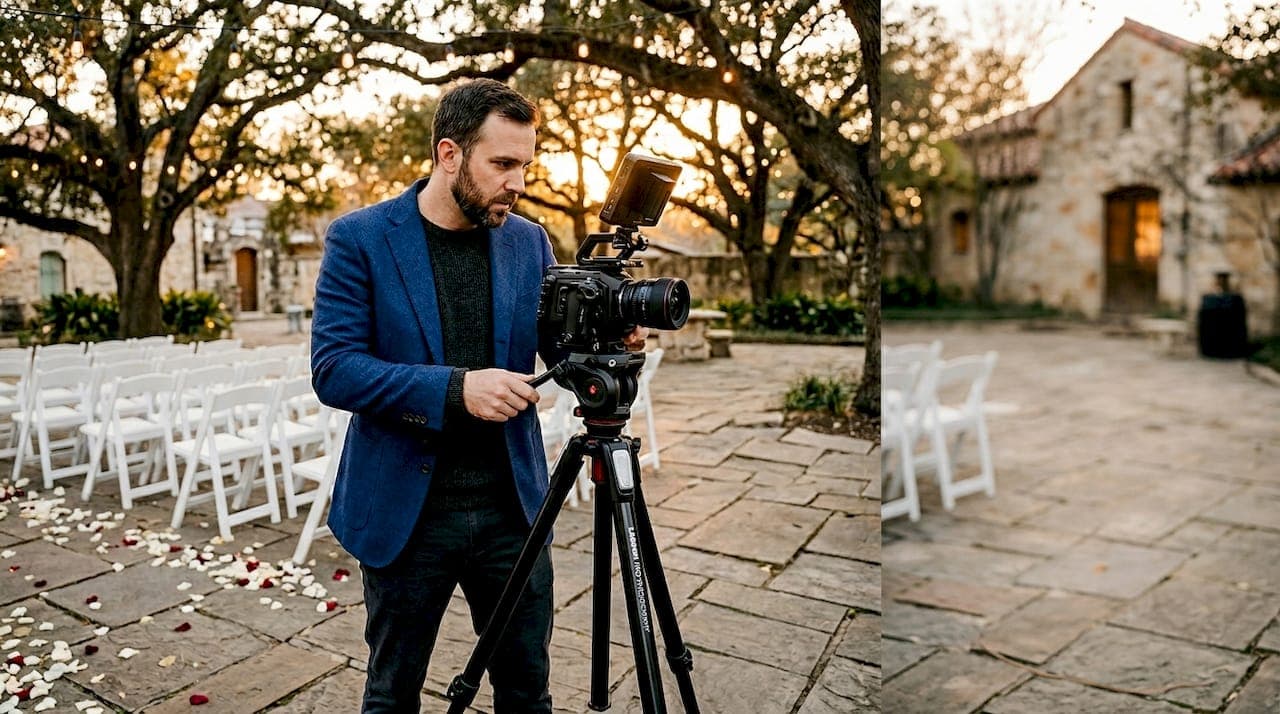
Most couples spend months planning every last detail of their wedding, from the flowers to the cake, yet often overlook the one thing that lets them relive it all: video. It turns out 35 to 75% of couples regret not hiring a videographer, even though only 37% of US couples book one. Photos freeze a moment beautifully, but they can't carry the tremor in a voice during vows, the burst of laughter during a best man speech, or the way a first dance actually felt. This guide walks you through exactly what professional wedding videography offers, what it costs in San Antonio, and how to make every frame count on your big day.
Table of Contents
- What sets professional videography apart from DIY
- The art and science of capturing your story
- San Antonio wedding videography: What you get for your investment
- Video captures what photos miss: Beyond the highlights
- Reliability and peace of mind: How professionals handle challenges
- Our take: Why video memories matter more than you think
- Capture your memories with confidence
- Frequently asked questions
Key Takeaways
| Point | Details |
|---|---|
| Professional gear matters | Top-quality video requires cinematic cameras, audio, and lighting professionals bring. |
| Editing takes expertise | Great wedding films are crafted through careful planning, multiple cameras, and extensive editing time. |
| Video captures emotion | You relive voices, movement, and emotion that photos alone miss with a professional video. |
| Peace of mind | Pros handle technical issues, backups, and vendor coordination so you can enjoy your day stress-free. |
| Regret prevention | Most couples who skip video wish they hadn’t—investing in pro videography means capturing memories for a lifetime. |
What sets professional videography apart from DIY
With the regret of missed memories in mind, let's see why professional videography offers so much more than phone videos or a friend with a camera.
The most obvious difference is gear. A guest capturing footage on an iPhone is limited by a tiny sensor, a built-in microphone that picks up crowd noise over your vows, and no way to stabilize the shot when they get emotional. Professional videographers use cinema-grade cameras like the Sony FS7 and Canon EOS C100, paired with a full kit of lenses including 24-70mm f/2.8 zooms and 50mm or 85mm primes for low-light close-ups. They add gimbals and monopods for smooth, flowing movement, drone systems for sweeping aerial shots of your San Antonio venue, and dedicated audio rigs like the Rode Wireless GO II and Sennheiser EW wireless lavalier mics clipped to the officiant and groom.
Audio is where most DIY wedding footage fails completely. Ceremonies and receptions are acoustically challenging spaces with music, crowd noise, and varying distances between speakers and cameras. Professionals run direct feeds from the DJ's audio board, use handheld backup recorders like the Zoom H5 or H6, and plant wireless mics on key speakers. The result is crisp, clear audio that actually captures the words that matter most. A phone in the fourth row captures an echo. A pro captures history.
Lighting is another major separator. Receptions often happen in dimly lit ballrooms or candlelit courtyards where consumer cameras produce grainy, washed-out footage. Professionals dial in high ISO settings with cameras built for low-light performance and avoid disruptive on-camera flash lights that ruin the romantic atmosphere. When supplemental lighting is needed, they use subtle LED panels positioned off to the side so guests never feel like they're in a documentary shoot.
Beyond gear, professionals carry insurance, use cameras with dual SD card slots for automatic backup recording, and bring redundant equipment to every job. If one camera fails mid-ceremony, a second is already rolling. That kind of backup protocol doesn't exist when your cousin volunteers to film with his DSLR.
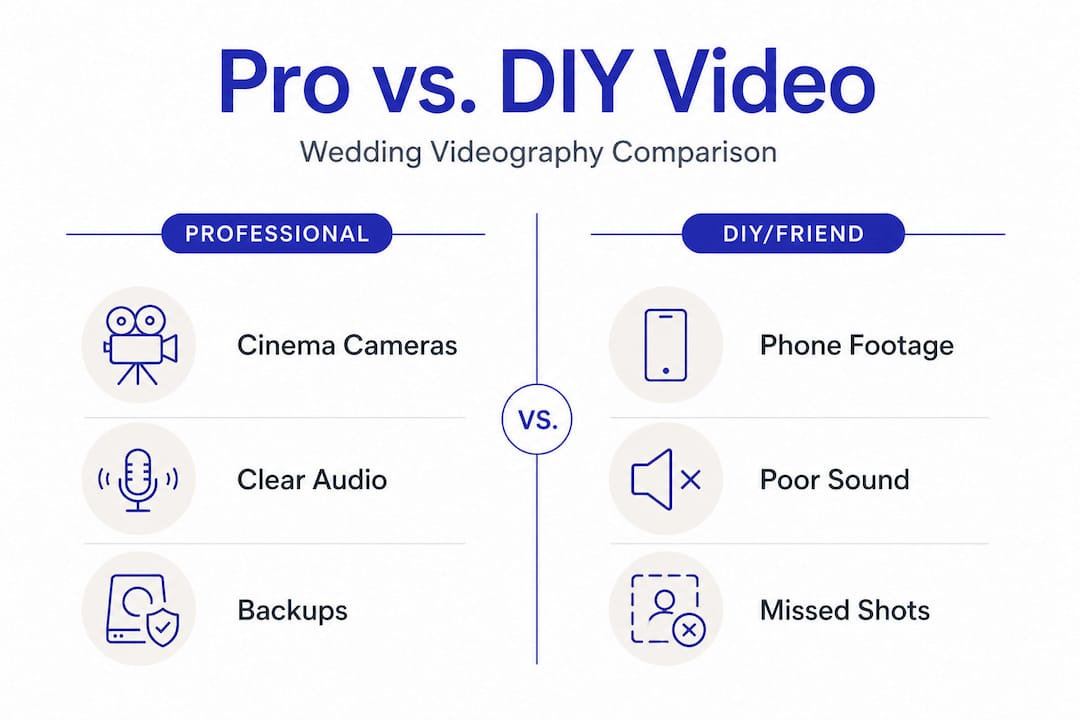
Comparison: professional vs. DIY videography
| Factor | Professional videographer | DIY/friend with camera |
|---|---|---|
| Camera quality | Cinema-grade, multiple cameras | Smartphone or basic DSLR |
| Audio capture | Wireless mics, board feeds, recorders | Built-in mic, poor room sound |
| Low-light handling | High ISO, proper lenses | Grainy, blurry footage |
| Stabilization | Gimbals, tripods, monopods | Shaky, uneven handheld |
| Backup equipment | Dual SD slots, spare gear | None |
| Insurance and licensing | Yes, including drone FAA license | Rarely |
| Post-production | Professional editing suite | Basic or none |
Pro Tip: Don't trust memory-making to untested gear or someone who has never shot a wedding before. The learning curve for wedding videography is steep, and you only get one take on the ceremony.
Professionals also stay current on wedding photography trends, which means the visual language of your film feels fresh and timeless rather than dated.
The art and science of capturing your story
Knowing professionals bring top gear is only part of the story. The techniques and planning they use create wedding films you'll cherish for generations.
Multi-camera setups are the backbone of professional wedding films. A typical setup involves at least two cameras, one locked on a wide safety shot from a tripod or monopod to capture every moment without interruption, and a second camera operated handheld or on a gimbal for dynamic, emotional close-ups. Using multi-camera methodologies like shooting at 24 frames per second for a cinematic film look, and switching to 50 or 60 frames per second for slow-motion inserts of the bouquet toss or first kiss, creates a rhythm that feels emotionally powerful rather than like raw documentary footage.
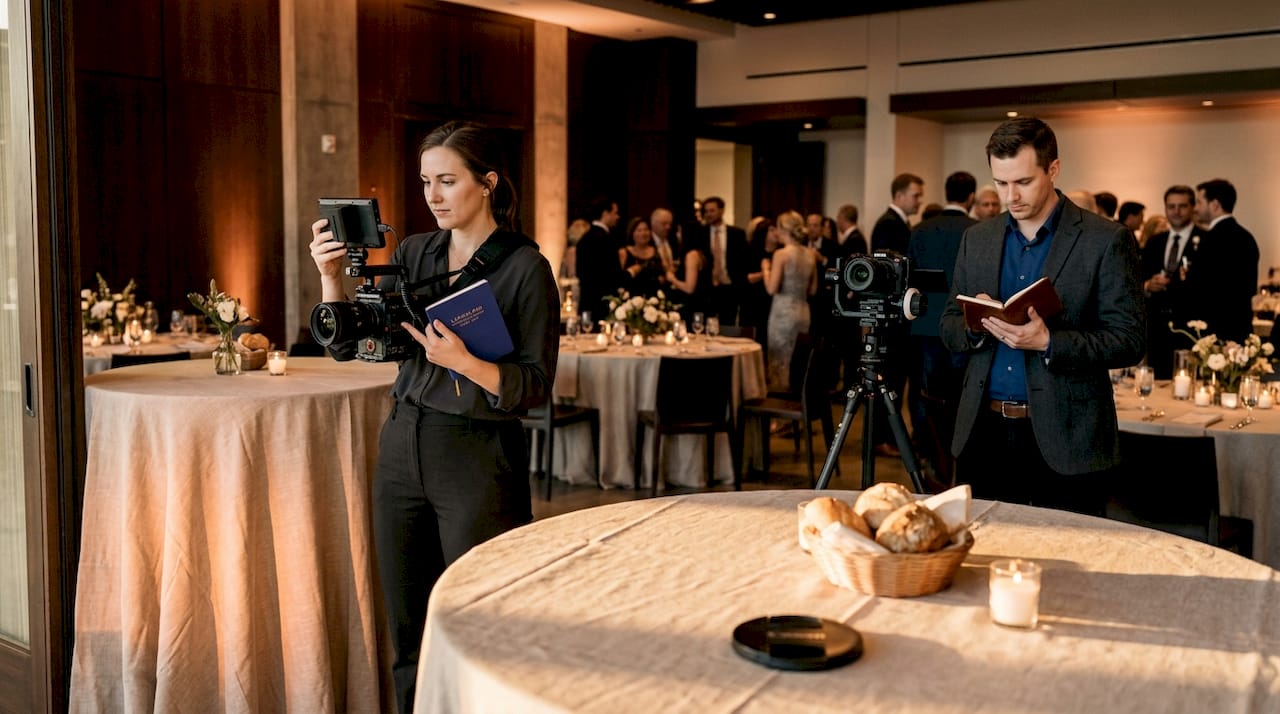
Pre-production planning is just as important as what happens on the day. A good videographer sits down with you weeks before the wedding to build a detailed shot list and event timeline. They coordinate with your photographer, DJ, and officiant to know exactly when the bouquet walk starts, when speeches will happen, and how the lighting changes during the reception entrance. This coordination means they're in position for every critical moment rather than scrambling to react.
Here's what goes into capturing your story beyond pointing a camera:
- Scouting the venue for best camera positions and lighting conditions
- Meeting with your photographer to ensure both teams move without blocking each other
- Capturing B-roll footage: details like the rings, the dress, venue decor, and candid guest reactions
- Recording multiple audio sources simultaneously as a safety net
- Noting natural moments like a parent wiping away tears or flower girls giggling before the processional
Post-production is where raw footage becomes a film. Professional editors typically spend 40 to 80 hours editing a single wedding film, working through color grading, music licensing, audio syncing, narrative pacing, and assembling the highlight reel. Color grading alone can take hours per scene to ensure consistent tone and mood across footage shot under wildly different lighting conditions throughout the day.
Pro Tip: Great videography tells the emotional and visual narrative of your wedding day. Prepare a wedding shot checklist and share it with your videographer so nothing important gets missed.
San Antonio wedding videography: What you get for your investment
Once you understand the artistry involved, it helps to see exactly what you'll get from a professional videography package in San Antonio.
Professional wedding videography in San Antonio is a genuine investment. Local packages range from $2,500 to $8,000 or more, with most comprehensive packages covering 8 to 12 hours of coverage, two videographers working simultaneously, a polished highlight reel of 3 to 10 minutes, drone aerial footage, and delivery within 6 to 12 weeks. For context, Stryde Studios starts at around $2,900 for a base package, while Nitro Media offers cinematic packages ranging from $4,999 to $8,000.
San Antonio videography package comparison
| Package tier | Price range | Coverage | Deliverables |
|---|---|---|---|
| Entry level | $2,500 to $3,500 | 6 to 8 hours | Highlight reel, 1 videographer |
| Mid tier | $3,500 to $5,500 | 8 to 10 hours | Highlight + full edit, 2 videographers, drone |
| Premium | $5,500 to $8,000+ | 10 to 12 hours | Cinematic film, extras, same-day edit option |
Before signing any contract, ask these specific questions:
- How many cameras will be used on the day?
- Is drone footage included, and does the videographer hold FAA Part 107 certification?
- How long until I receive the finished film?
- What is your backup plan if a camera or audio source fails?
- Do you have liability insurance?
- Have you filmed at my specific venue before?
- What file formats will the final footage be delivered in?
Knowing the answers upfront saves frustration later and helps you compare packages on equal terms rather than just by price.
Video captures what photos miss: Beyond the highlights
Knowing what's included and what you'll invest, here's why video delivers memories that still photos just can't match.
Still photography is breathtaking. It freezes a perfectly composed moment in time. But a photo of your father walking you down the aisle can't play the sound of his voice cracking, or show the way his shoulders shook when he handed you over. Video carries all of that.
"Couples who skip the videographer often say the same thing afterward: they wish they could hear their own vows again. Photos remind you it happened. Video makes you feel it again."
The regret rate among couples who skip videography runs between 35 and 75%, which is striking when you consider how little it registers as a priority during the planning phase. You're focused on flowers and catering, not on the fact that your grandmother's toast will exist only in the fuzzy memory of people who had champagne.
Here's how to get the most out of your wedding film:
- Brief your videographer in advance. Share a list of key people and moments you want captured, including elderly relatives, special traditions, and anyone giving a toast.
- Wear your microphone without fussing. If your videographer clips a lavalier mic to the groom or officiant, trust them and move naturally.
- Slow down during vows. Speak clearly and at a pace that lets both the audio recording and your partner absorb every word.
- Let candid moments happen. Don't try to look great on camera constantly. The real moments, the spontaneous laughter, the happy tears, are what make a wedding film worth rewatching.
- Trust the process. A skilled videographer knows when to step in and when to stay invisible. Give them space to work, and you'll be amazed by what they capture.
Check your essential wedding photo checklist alongside your video planning so both teams are aligned. And if you want to stay current on what's shaping modern wedding films, the wedding trends blog covers how couples in 2026 are approaching both photo and video.
Reliability and peace of mind: How professionals handle challenges
Trusting a pro comes with assurance. Here's how professional videographers ensure they deliver, even when things go wrong.
Weddings rarely go exactly as planned. The outdoor ceremony runs late because of a thunderstorm. The reception venue has dimmer lighting than anyone expected. A microphone battery dies mid-vow. Professionals anticipate all of this and build redundancy into every layer of their work.
What separates true professionals when things go sideways:
- Dual SD card slots mean footage is written to two cards simultaneously, so a corrupted card never destroys irreplaceable footage
- RAID backup systems store copies of raw files during post-production so hard drive failure doesn't wipe out your entire wedding film
- Multiple microphone sources running at once, including board feeds, wireless lavs, and handheld recorders, ensure that if one fails, others pick up the slack
- Low-light cameras capable of shooting clean footage at ISO 3200 to 6400 mean that a dark reception hall doesn't result in unwatchable footage
- FAA Part 107 drone certification ensures aerial footage is captured legally and safely, even over populated San Antonio venues
- Liability insurance protects you and the venue in the unlikely event of an equipment accident
- A strict one-wedding-per-day policy means your videographer is fully present and rested for your day, not rushing from another venue across town
Vendor coordination is also part of what you pay for. Professionals communicate with your coordinator, photographer, caterer, and DJ before the event so everyone operates on the same timeline. This reduces the risk of the cake cutting happening while the videographer is still setting up for the first dance.
Our take: Why video memories matter more than you think
Here's something we've noticed after working with couples across San Antonio: before the wedding, almost everyone ranks videography below flowers, catering, and even invitations on the priority list. After the wedding? The ranking flips completely.
The couples who invested in video watch their films on anniversaries, during quiet evenings, and especially after losing someone who was there. Video holds voices. It holds the way your grandmother laughed, the look on your partner's face when you appeared at the end of the aisle, and the exact words you said when you made your promises. Those are the things you can't reconstruct from memory alone, no matter how vivid the day felt.
There's also something emotionally different about motion. A beautiful photo of your first dance tells you it happened. The video of that same dance, with your song playing and your faces visible and your parents watching from the edge of the floor, puts you back inside the moment. That's a fundamentally different kind of memory preservation.
We've also observed that couples underestimate how quickly the day itself becomes a blur. You're moving from one thing to the next, managing nerves, talking to guests, staying present with your partner. You miss things. You don't realize you missed them until much later. A professional videographer is capturing what you didn't have time to notice, and delivering it back to you weeks later when you finally have time to breathe.
Explore what this looks like in practice on our wedding videography page. The difference between reading about it and seeing a finished film is exactly the kind of shift we're talking about.
Capture your memories with confidence
Your wedding day deserves more than a collection of blurry phone clips from guests who were also trying to enjoy themselves. Professional videography is the investment that keeps paying forward, year after year, in ways you genuinely can't predict on the day you book it.
At Larson Pro Photography, we specialize in capturing San Antonio weddings with the full depth of professional video and photography. Browse our San Antonio wedding videography services to see sample films, pricing tiers, and the kind of storytelling we bring to every event. You can also explore galleries from real client weddings to see how we handle everything from intimate ceremonies to grand receptions. If you're earlier in the planning process, our engagement videos are a beautiful way to get comfortable in front of the camera before your big day arrives. Reach out today and let's start building your story.
Frequently asked questions
What is typically included in a professional wedding videography package?
Most San Antonio videography packages cover 8 to 12 hours of filming, two videographers, a polished highlight reel, drone footage, and delivery within 6 to 12 weeks. Specific package inclusions vary based on provider and budget tier.
How much should you budget for professional videography in San Antonio?
Expect to spend between $2,500 and $8,000 or more for a comprehensive package. Most couples find that mid-tier packages in the $3,500 to $5,500 range cover everything they need.
Why do so many couples regret not hiring a videographer?
Video captures vows, laughter, speeches, and candid moments that photos simply cannot preserve. With 35 to 75% of couples expressing this regret, skipping video is consistently one of the most common planning mistakes.
What makes professional videographers more reliable than friends or amateurs?
Professionals bring backup gear, insurance, drone licenses, and multi-source audio setups to every job. Their vendor coordination and backup protocols ensure your footage is safe regardless of what goes wrong on the day.