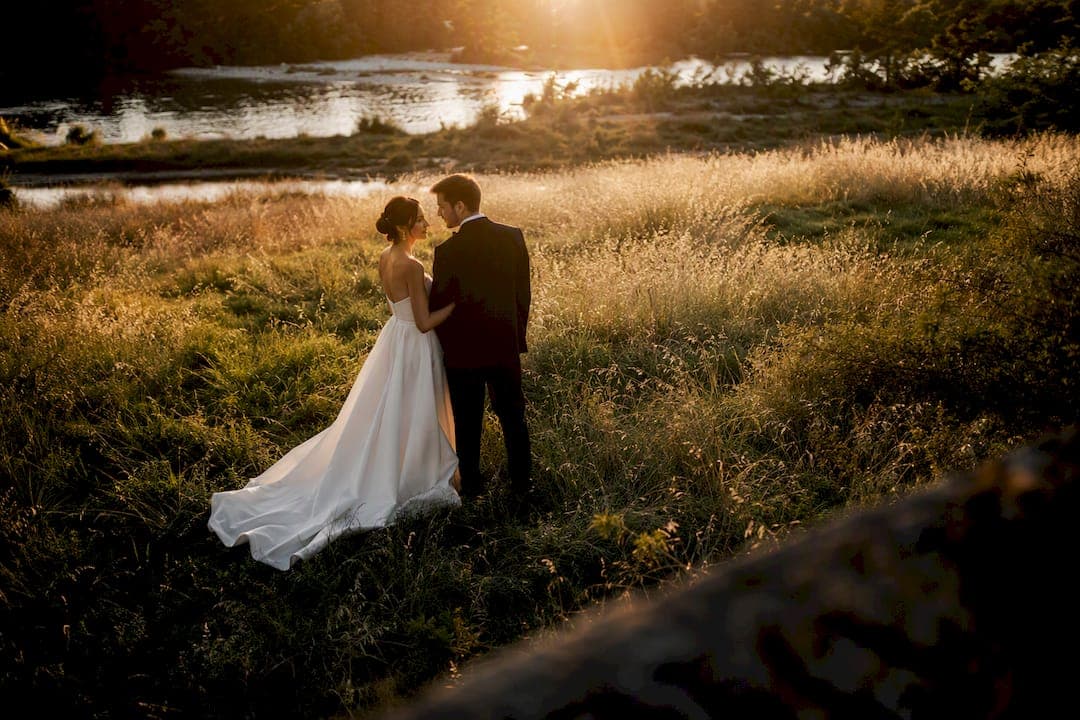
Light and airy wedding photography produces bright, soft, low-contrast images with pastel-leaning color and open, breathable composition. It works best for daytime or outdoor ceremonies, well-lit venues, and neutral color schemes. It trades strict color fidelity for a romantic, elevated mood, so if you want images that look exactly like the room felt in person, ask your photographer how far they push the effect.
TL;DR:
- Achieving the light and airy style depends heavily on on-site lighting decisions, such as prioritizing diffuse natural light and avoiding midday sun.
- Consistent editing that lifts shadows and reduces contrast is crucial, but it must preserve texture and avoid overexposure or washed-out images.
- Selecting a venue with large windows, neutral walls, and open layouts greatly facilitates the style, while dark or heavily patterned spaces pose challenges.
- Planning a dedicated golden hour portrait window and opting for light-colored decor can enhance the soft, romantic mood of the photos.
- Vetting a photographer requires full galleries, not just highlight reels, to assess their ability to handle varied lighting and maintain style consistency.
Table of Contents
- What Makes Light and Airy Wedding Photography Different?
- How Photographers Actually Create the Light and Airy Look
- What Editing Choices Create the Light and Airy Effect?
- How Should You Plan Your Wedding for This Style?
- How Do You Vet a Photographer for This Style?
- A Studio Note on Delivering Consistent Galleries
- What Couples Get Wrong About This Style
- Ready to Book a Light and Airy Wedding Gallery?
- Sources
- FAQ
What Makes Light and Airy Wedding Photography Different?
The style has a specific visual signature, and once you know what to look for, you'll spot it instantly in a portfolio. It's defined by soft, bright, romantic imagery built on natural, diffused light, higher exposure, and reduced contrast. Photographers sometimes call it fine art, bright and airy, or filmic photography, and the labels overlap more than they differ.
Look for these markers when you're evaluating galleries:
- Exposure: brighter than a standard "correct" exposure, with skin tones lifted rather than punchy.
- Contrast: noticeably flatter, so shadows are soft gray instead of deep black.
- Color palette: pastel-leaning, often with a slight warmth or a cool, muted cast rather than saturated primary colors.
- Composition: generous negative space and a sense of "air" around the subjects, not tight, cluttered framing.
Compare that to dark and moody wedding photography, which leans into deep shadows, rich saturated tones, and dramatic contrast for a cinematic feel. True-to-color photography sits in between: minimal stylization, exposure and white balance corrected to match what your eye actually saw. None of these styles is objectively better. They're different emotional bets, and the right one depends on your venue, your personality, and how you want to feel flipping through your album in ten years.
How Photographers Actually Create the Light and Airy Look
The look starts long before editing. It's built on-site, frame by frame, through decisions most couples never notice a photographer making.
- Chasing diffused light. Photographers favor open shade, window light, and golden hour, the window shortly after sunrise or before sunset when sunlight turns soft and directional instead of harsh. Midday sun creates hard shadows under eyes and noses that no amount of editing fully fixes.
- Protecting highlights while lifting shadows. This is the technical heart of the style, and it's the part amateurs get wrong. The goal isn't to blow out every bright area; it's to preserve texture in a wedding dress or a cloudy sky while still opening up shadow detail so the image reads as luminous rather than murky.
- Choosing lenses and framing that simplify the background. Wide-aperture prime lenses (think f/1.4 to f/2.8) blur distracting backgrounds into soft color and let the subject breathe against negative space.
- Shaping light indoors. In dim receptions or overcast conditions, photographers use bounce flash or reflectors to mimic the softness of natural light rather than firing direct, flat flash straight at the subject.
Pro Tip: Ask a prospective photographer how they handle a dark reception hall. If the answer is "I just boost exposure in editing," that's a red flag. The best light and airy shooters solve lighting problems on location, not just on a laptop.
Our own approach to golden hour portraits follows this exact sequence: find the light first, then compose around it.
What Editing Choices Create the Light and Airy Effect?
Editing finishes what good shooting starts. A skilled editor working in a light and airy style typically makes a consistent set of moves across an entire gallery, not just the hero shots picked for social media.
Expect to see:
- Lifted shadows that open up dark areas without turning them flat gray.
- Reduced overall contrast for a softer, more film-like tonal curve.
- Careful highlight protection so lace, veils, and skies keep visible texture.
- A slight desaturation toward pastel tones rather than punchy, saturated color.
- Consistent white balance across every scene, indoors and out.
Here's the part that separates a real light and airy gallery from a poorly edited one: the style is not the same as overexposure. If every image looks washed out, with flat skin tones and no visible detail in the dress or florals, that's a technical failure dressed up as an aesthetic choice. Real editing preserves texture and believable skin, it just does so in a brighter, softer register.
When you're vetting a photographer, don't judge them on ten polished portfolio images. Ask to see two or three full, unedited galleries from real weddings. A heavy reliance on one-click presets tends to show up as inconsistency: gorgeous window-light shots next to a muddy, over-brightened reception dance floor. Presets can stylize color, but they can't fix a poor lighting decision made on location.
How Should You Plan Your Wedding for This Style?
You have more control over your final gallery than most couples realize, and the decisions happen months before the photographer ever picks up a camera.
Venue matters more than people expect. Venues with large windows, neutral or white walls, and open layouts make the light and airy look dramatically easier to achieve. Dark wood-paneled ballrooms or heavily patterned wallpaper fight against it no matter how skilled your photographer is.
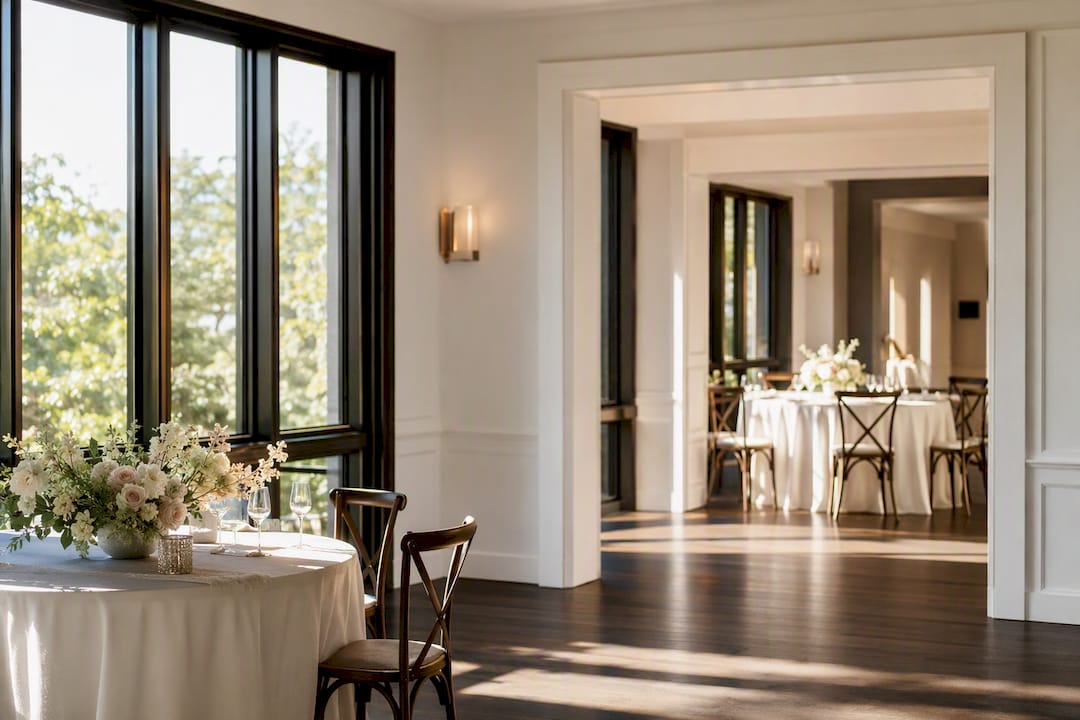
Timeline decisions matter just as much as decor. Build a golden hour portrait window into your day-of schedule, and treat it as non-negotiable, the same way you'd protect your ceremony start time. Rushed portraits squeezed between dinner courses rarely produce your best images, regardless of style.
Styling choices reinforce the mood. Pastel florals, light-colored attire, and neutral tabletop palettes support the low-contrast, breathable look. Bold jewel tones or heavily saturated centerpieces can dominate a bright frame and clash with the intended softness.
A few concrete swaps if you're stuck with a less-than-ideal setup:
- Trade a dark, heavy backdrop for a plain wall, sheer curtain, or open doorway.
- Move large group photos into open shade rather than direct sun, which causes squinting and harsh shadows.
- If your reception venue is dim, ask your planner about supplemental uplighting in warm, neutral tones.
Our guide on outdoor wedding photography walks through venue and timing choices in more depth.
How Do You Vet a Photographer for This Style?
Hiring the right person comes down to asking sharper questions, not just scrolling a feed of pretty photos.
- Request full-day galleries, not highlight reels. Anyone can produce ten stunning frames from a wedding. Ask for the complete delivered set to check for consistency between the ceremony, the dim reception, and everything in between.
- Ask direct questions about mixed lighting. How do they handle a reception with string lights and low ambient light? Can they show you a real gallery from a similarly dim venue?
- Confirm the editing workflow and turnaround. Do they edit every image individually, or apply a single preset across the board? What's the realistic delivery timeline?
- Put deliverables in writing. Your agreement should specify the number of edited images, whether you'll see raw or unedited previews, and any guidance on albums or wall art.
A Studio Note on Delivering Consistent Galleries
At Larsonprophotography, consistency is the whole game. We protect highlight detail while lifting shadows on nearly every frame, and we hold white balance steady across a ceremony, a reception, and everything between. You can see this approach across our wedding photography trends coverage and our best light for portraits guide. One habit worth stealing: build a firm 10 to 15 minute golden hour window into your timeline and defend it like you would your ceremony start time.
What Couples Get Wrong About This Style
Most engaged couples treat light and airy as a filter choice, something applied after the fact. That's backwards, and it's the single biggest gap between what people expect and what actually happens on a wedding day. The look is decided far more by venue, timeline, and light management than by any editing preset, and venue and styling are consistently underestimated variables in how a gallery ultimately turns out.
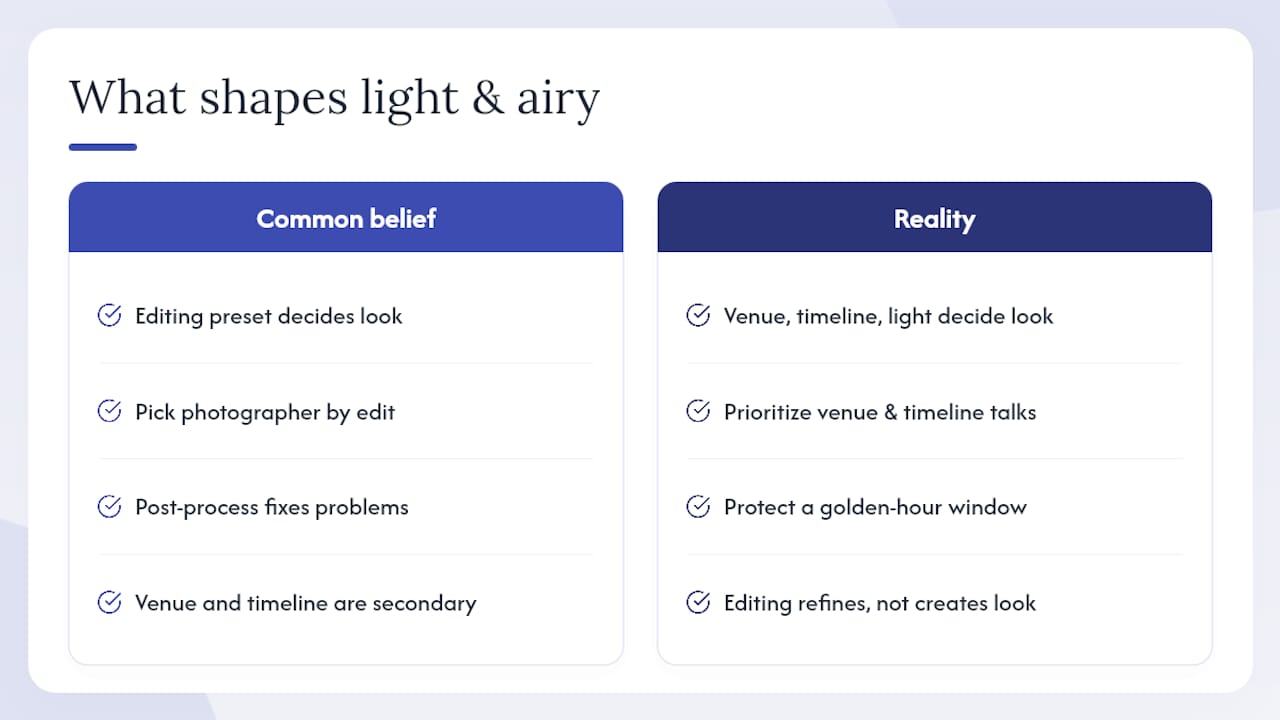
Conventional wedding advice spends too much time on "find a photographer whose editing style you love" and not nearly enough on "pick a venue and timeline that actually support that style." A phenomenal photographer working in a dark, wood-paneled reception hall with a rushed 15-minute portrait slot will always produce a weaker gallery than a good photographer working in a bright venue with a protected golden hour window.
If you take one thing from this guide, prioritize the timeline and venue conversation before you even start comparing portfolios. The emotional goal here is tranquility and romance, not drama, and that goal is easier to hit when the conditions are set up to succeed rather than fixed later on a laptop.
— Todd
Ready to Book a Light and Airy Wedding Gallery?
Every wedding gallery is built around the light of your specific day, blending an editorial eye with documentary instincts so portraits feel bright and romantic without losing texture and detail. In a first consultation, we'll walk through your venue, your timeline, and sample full galleries so you can see exactly how we handle everything from open-shade portraits to dim reception halls, not just the highlight reel.
If you're also considering coverage for your engagement session or want a highlight film alongside your photos, we offer engagement sessions and wedding videography as well. Availability for wedding dates fills months in advance, especially during peak golden-hour-friendly seasons, so the best next step is to check your date and book a wedding photography consultation directly.
Sources
- What Is Light and Airy Wedding Photography?
- Light and airy photography: tips, techniques, and examples (Adorama ALC)
- Light and Airy photography 101 — Mastin Labs (Photoism)
FAQ
Is $4,000 a Lot for a Wedding Photographer?
It depends heavily on your market and what's included, and mid-range pricing for full-day professional coverage can vary significantly. Larsonprophotography's current wedding photography pricing is available directly on the wedding services page since packages vary by coverage and add-ons.
How Do You Photograph Light and Airy Images?
Photographers prioritize soft, diffused natural light, such as open shade or golden hour, and expose to protect highlight detail while intentionally lifting shadows rather than simply overexposing the frame.
What Is the 30-5 Rule for Weddings?
Definitions of this rule vary across the wedding industry, and it isn't a standardized photography term, so ask your photographer or planner directly what timeline rule they mean before relying on it.
How Do You Edit a Photo to Look Light and Airy?
Common edits include raising shadows, reducing overall contrast, protecting highlight texture, and shifting color slightly toward pastel tones while keeping white balance consistent, all while preserving visible detail in skin, fabric, and florals rather than washing it out.